



Solear - Uso de las pentatónicas

Lesson time: (9min 45sec)
Rob Luft muestra cómo usa la escala pentatónica mayor en sus solos de guitarra jazz, y por qué pensarla como fa mayor en lugar de re menor pentatónica mantiene clara la armonía.
Course preview
This lesson is part of the course Toca guitarra jazz auténtica
Watch a preview of the full course below.
Lesson transcript:
The Essential Pentatonic Scale on Guitar
I should just finish by saying, coming back to the most essential scale of all on the guitar, which is, of course, the pentatonic scale.
Intro to the Pentatonic Scale
Now, this is a shape that every guitarist comes across when they start thinking about improvising.
- If we're in F major, we're going to be using a D minor pentatonic shape.
- This shape is familiar to us all; it's that box on the 10th fret.
I personally prefer people to think of it as F major pentatonic rather than D minor pentatonic, because that can create confusion in guitar study. We are so used to calling it a D minor pentatonic, but actually, it's F major pentatonic at its core.
Fingering Approach
So how would I approach fingering this? Maybe I'd finger it here. This sound is closely associated with the harmony of the time:
- That's F6 and F6, 9th.
- We add the G on the third fret of the E string.
If I play the pentatonic scale starting on F, you can hear how closely those two sounds are associated with each other. Remember, there's no seventh.
Historical Context
Later on in jazz history, you get people like Coltrane running up and down scales, creating this sort of "sheets of sound" effect.
- We're not going for any of this wall of sound approach.
- We're much more essentializing, going for just a pentatonic approach.
Django Reinhardt was an amazing proponent of the pentatonic scale, particularly the F major pentatonic scale. He used simple phrases, such as this one, where he'd emphasize the 6th and the 9th. You can really see how ergonomically friendly that is as well.
Using that over an F major chord, particularly over an F sixth chord, you can really hear those qualities of D and G emphasized.
Additional Pentatonic Shapes
So bear that in mind when you're playing over an F major chord.
What other sorts of pentatonic shapes can I suggest?
- I'd love to suggest this one, which is simply an F major triad with the 6th added.
- Musicians like Django, Thelonious Monk, and other musicians of the 30s and 40s used this a lot.
These little phrases... it's kind of almost like a D minor seventh sound superimposed over an F. You get this lovely texture.
If you alternate that with a C6, you get a lovely cascading sort of wall of major sixth chords. It's very much reminiscent of the era.
Superimposing Chords
You can superimpose both of those. You can even take a B flat 6, a C6, and an F6, and just play them one by one over an F6 chord to create a lovely macro picture of the harmony.
Django was great at this. Sometimes he'd do little sweeps where he'd sweep down the arpeggio, creating a lovely cascading wall of arpeggios.
You can imagine how satisfying that sounds over an F6, 9th.
Important Melodic Cells
Finally, one really important melodic cell to take is:
- We call it a 1, 2, 3, 5, where we take the root, the 2nd, the 3rd, and the 5th of F major.
It's really nice and again, creates a macro picture because you can repeat it octave after octave in a very friendly way on the guitar. You really can slide around with that.
Django's Limitations
We must not forget that Django himself didn't even have the advantage of using either of these two fingers; he was playing just with two fingers.
It's a great exercise in limitation, improvising over a chord sequence, such as this one, just with two fingers.
- I mean, I can't do it.
- I've often tried in the past as an exercise in limitation to improvise melodically just with two fingers.
It's astonishingly difficult, but it gives you a window into why Django was so famous for using phrases like that one I showed you, because it works with two fingers.
It's always worth remembering this when you're playing things like the harmonic minor, trying to improvise with just two fingers.
You get a real window into Django's mind. I'm miles away from that guy, how he managed to achieve such fluency and virtuosity just with his index and middle fingers is astonishing.
Our Capabilities
But we don't necessarily have the same limitations, so we can use all four fingers.
With the pentatonic scale, you can create many of the sounds that Django was using.
- Like I say, the 1235 is a great one.
- The major arpeggio with the sixth cycling around that is also useful.
Descending the Scale
The final thing to mention about the pentatonic scale is descending it.
But rather than descending it note by note, try skipping one note and then cycling back on yourself. This is very typical of Django, creating these little patterns and melodic devices, almost like a sequence.
Do this in all positions.
"Apologies for my 13th fret; it doesn't work."
I'm always trying to find ways to play it slightly more legato or just in a more ergonomically friendly way that I can really get moving in a rapid manner.
Conclusion
So there you have it! You have some techniques for the major pentatonic scale, along with ideas about the harmonic minor scale.
We have arpeggios, and different little four-note cells.
I think there's a wealth of material to take away that you can work on.
Remember, it's a constant process of improvement, listening to the greats, the jazz legends, and maybe working out phrases of their work.
Transcription is incredibly important in the history of jazz.
We're all in the ongoing process of extending our capabilities as players and jazz improvisers.
Always reference back to Django and Stefan Grappelli, his long-standing bandmate. I hope that the techniques I've presented here can be of use in your development!
About the instructor
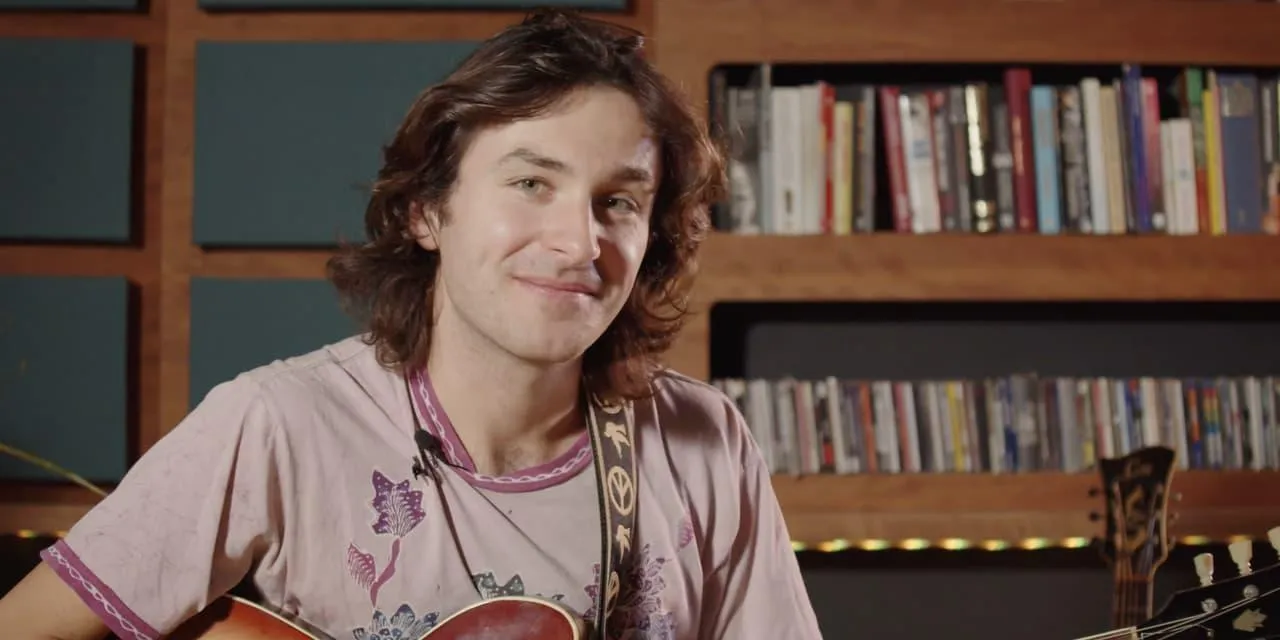
Rob Luft es un músico galardonado de Londres, ampliamente descrito como uno de los guitarristas de jazz contemporáneo jóvenes más destacados y talentosos del Reino Unido. Elogiado por The Times como llamado 'a lograr grandes cosas en el futuro', Rob ganó el Kenny Wheeler Jazz Prize de 2016 en asociación con Edition Records, y obtuvo el 2.º premio en el Montreux Jazz Guitar Competition de 2016. Su álbum de debut, 'Riser', se publicó en julio de 2017 y fue objeto de un amplio reconocimiento de la crítica en los medios de jazz europeos. John Fordham escribió en The Guardian que es un 'debut muy sofisticado, aunque, dados los logros de alma vieja de Luft desde su temprana adolescencia, deberíamos haberlo visto venir'. '¡Tan joven y con tanto talento!' - Jamie Cullum, BBC Radio 2 (UK) '...un talento extraordinario!' - Julian Joseph, BBC Radio 3 (UK) 'El virtuosismo de los tres [guitarristas Al di Meola, John McLaughlin y Paco de Lucia] recuerda al londinense de 23 años Rob Luft, celebrado como un nuevo "Wunderkind"' - Spiegel Online (D) En Play Authentic Jazz Guitar, Rob abre el lenguaje armónico, el fraseo y los instintos improvisadores que hay detrás de ese sonido de 'alma vieja', mostrándote cómo piensa realmente el mástil para que puedas empezar a encontrar tu propia voz en el jazz. read more