



Cómo tocar la segunda mitad

Con
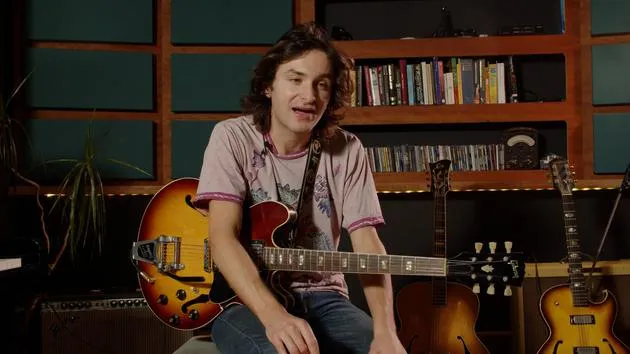
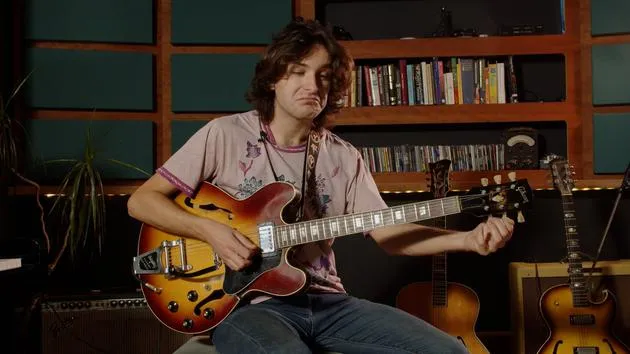
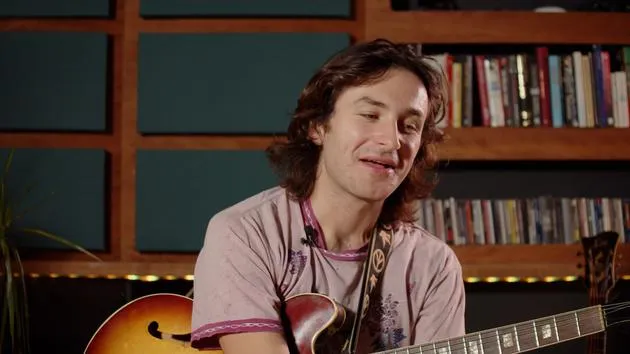
Rob LuftRob Luft trabaja la segunda mitad más difícil de la pieza, navegando los movimientos 2-5-1 de Do mayor a La menor y la modulación que sigue.
Qué incluye el curso
28 lecciones (2h 7m) · 1 gratis
01. ¿Por qué estudiar a Django Reinhardt?
3:45
02. Acordes y armonía - Sección A
11:06
03. Acordes y armonía - Sección B
2:21
04. Técnicas de mano derecha - Europea vs. Americana
5:04
05. Cómo crear el feel de swing
1:51
06. Recorrido por la melodía
9:10
07. Solear - Arpegios y encierros cromáticos
Lección gratis10:40
08. Improvisación - La escala bebop de menor armónica
8:27
09. Solear - Uso de las pentatónicas
9:45
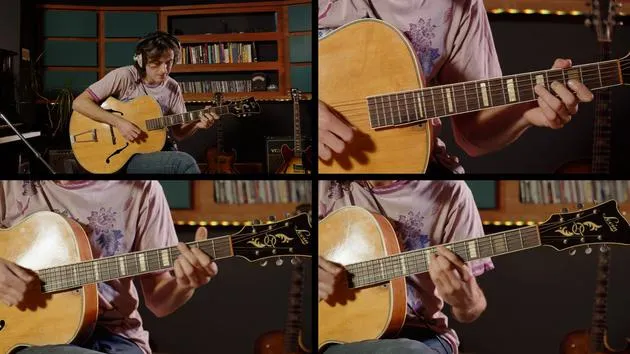
10. Clouds - Interpretación (pantalla dividida con acompañamiento)
3:48
11. Clouds - Interpretación
3:49
12. Clouds - Interpretación (versión simplificada)
2:40
01. ¿Por qué estudiar a Joe Pass?
2:23
02. Introducción al juego en solitario y la armonía paralela
4:00
03. Líneas disminuidas y "terceras sicilianas"
5:19
04. Tocar a tempo con voicings pianísticos
5:22
05. Cómo tocar la segunda mitad
Estás aquí5:06
06. Hybrid picking frente a fingerstyle
5:57
07. November in Norway - Interpretación
2:29
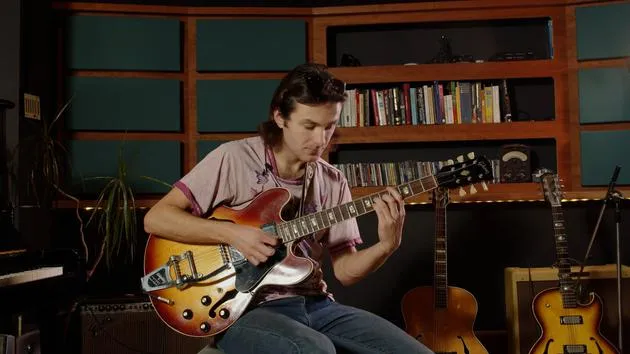
08. November in Norway - Interpretación (simplificada)
1:27
Transcripción de la lección
Music Lesson: Understanding Chord Progressions and Pedal Points
Introduction
Now, because this is the hard bit, is where the chord transitions occur. This part is really challenging.
Chord Transitions
We're going to move between:
- C Major
- A Minor
We're going to use a 2-5-1 progression to transition from C Major to A Minor, which would be:
- B half diminished (adding an E natural in the melody, giving us an 11th)
- B minor 7 flat 5, add 11 (a bit of a mouthful)
- E7 into A minor
Joe's cleverly modulating into E Major, leading into this A minor over G, which gives a sort of Stairway to Heaven moment transitioning into F# minor 7 flat 5, then to E7, and finally to E add 9 and G sus, the most holy of all chords.
The Beauty of the Transition
The way in which he does it is beautiful. He creates the illusion of everything happening at once when it's not.
Let me demonstrate it for you:
-
Slow tempo:
- 1, 2, 3, 4.
-
Faster tempo:
- 1, 2, 3, 4.
As you see, we then move seamlessly out of time.
Repeating the Phrase
We repeat our first phrase, arpeggiating the C Major moving into a 2-5-1 into D here, adding a phrasal bar melody. Then, we have these little movements here.
Joe loved those wide voicings, very pianistic.
Understanding Pedal Point
This is what we call pedal point.
- Definition:
- Pedal point is usually associated with a bass player, such as a double bass player holding a note (let's say an E).
- Over the top of that E, you play A minor and then you play E7.
- The bass player holds the E, and you play A minor again while the bass player continues holding the E. You're changing your chord between shifts.
Then, the pedal point resolves.
Inverted Pedal Point
What Joe Pass was a master of was inverted pedal point.
- The pedal no longer sits in the bass but in the melody.
- You get the C pedal on the top while the chords move beneath it.
- I would always have a C on top of my voicing, but Joe would move these little two-note voicings around underneath it.
It's really beautiful and creates the feeling of "the swan on the water."
- The swan appears calm while underneath it's paddling like crazy.
- This C on top creates a stillness and beauty, which is a hallmark of Joe's playing.
- These inverted pedal points allow you to imagine the chords underneath, moving through G, F, E minor, D minor, while he's just using these little two-note voicings to give the impression that all of that is happening.
Mastering Tempo Rubato
Like I say, Joe is moving in and out of time so effortlessly. That's an important art to master in jazz known as tempo rubato.
Definition of Rubato:
- Rubato is an Italian word meaning "stolen tempo."
- It's a good way to think about playing out of time.
Concept:
- You're stealing rhythm from the next bar and putting it into the bar that you're currently in, which means you may lose some time to the next bar.
- That's the art of playing rubato: it's about stealing time.
Conclusion
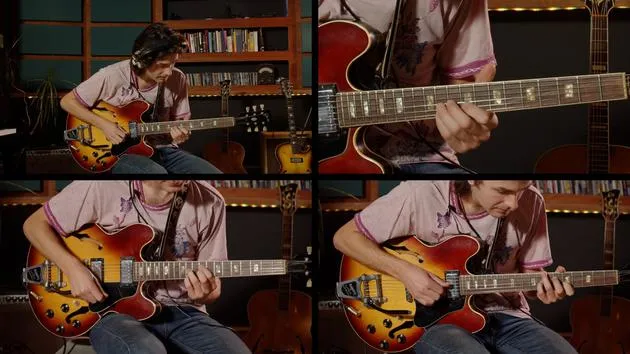
To finish, I could put it all together and play a complete version for you.
28 lecciones
2h 7m de lecciones en vídeo estructuradas
Funciones de vídeo avanzadas
Ralentiza, repite un pasaje, sigue la partitura
Móvil, tablet y ordenador
Practica donde quieras
Garantía de satisfacción 100%
30 días de garantía de devolución
Conoce a tu gurú
Conoce a tu gurú
Rob Luft es un músico galardonado de Londres, ampliamente descrito como uno de los guitarristas de jazz contemporáneo jóvenes más destacados y talentosos del Reino Unido. Elogiado por The Times como llamado 'a lograr grandes cosas en el futuro', Rob ganó el Kenny Wheeler Jazz Prize de 2016 en asociación con Edition Records, y obtuvo el 2.º premio en el Montreux Jazz Guitar Competition de 2016. Su álbum de debut, 'Riser', se publicó en julio de 2017 y fue objeto de un amplio reconocimiento de la crítica en los medios de jazz europeos. John Fordham escribió en The Guardian que es un 'debut muy sofisticado, aunque, dados los logros de alma vieja de Luft desde su temprana adolescencia, deberíamos haberlo visto venir'.
'¡Tan joven y con tanto talento!' - Jamie Cullum, BBC Radio 2 (UK)
'...un talento extraordinario!' - Julian Joseph, BBC Radio 3 (UK)
'El virtuosismo de los tres [guitarristas Al di Meola, John McLaughlin y Paco de Lucia] recuerda al londinense de 23 años Rob Luft, celebrado como un nuevo "Wunderkind"' - Spiegel Online (D)
En Play Authentic Jazz Guitar, Rob abre el lenguaje armónico, el fraseo y los instintos improvisadores que hay detrás de ese sonido de 'alma vieja', mostrándote cómo piensa realmente el mástil para que puedas empezar a encontrar tu propia voz en el jazz.







