



Improvisación - La escala bebop de menor armónica

Lesson time: (8min 27sec)
Rob Luft muestra cómo improvisar sobre un II-V menor usando la escala menor armónica y su modo dominante frigio, ese sonido con sabor a Django que resuelve en el acorde menor.
Course preview
This lesson is part of the course Toca guitarra jazz auténtica
Watch a preview of the full course below.
Lesson transcript:
Understanding the D Harmonic Minor Scale and Its Applications
The Scale in Focus
And what scale am I actually using there? This is where Django taps into his heritage as a European Romany, or Roma Gypsy. The dominant chords that resolve to the relative minor will almost invariably use the harmonic minor scale.
D Harmonic Minor and A7
So, he'll be using not just any harmonic minor, but D harmonic minor over an A seventh chord. How does he do that?
- Just remind yourself that this is the D harmonic minor scale, a beautiful scale.
- It may sound, at first listening, completely related to a D minor chord.
Discovering New Sounds
If you descend from this scale to the fifth (to the A), you encounter a new mode. A mode simply means a scale starting on a certain degree of a parent scale.
- Here, our parent scale is D harmonic minor.
- Starting on its fifth degree (A), we discover a new scale sound that is very Spanish and flamenco-like.
We call this the Phrygian Dominant mode. It sounds like this, and it truly captures that flamenco quality, very folky, closely related to world music and Eastern European music.
Resolving Chords
This scale resolves beautifully from A7 to D minor. You can take any core note from the scale, descend it, and resolve from A to A, creating a satisfying sound transition from A7 to D minor.
The Septatonic Scale
However, there's a challenge with this scale: it's a septatonic scale, meaning it has seven notes per octave.
- While we all know about pentatonic scales, which have five notes per octave, a septatonic scale includes seven notes before repeating the octave.
- The notes are: A, B flat, C sharp, D, E, F, G, A.
Playing in Jazz
In jazz, we typically play eighth-note phrases, and this presents a problem. To effectively descend from octave to octave in one bar, we need to add one more note.
Time Signature Consideration
- In 4/4 time, with four beats in a bar (four quarter notes), if we want to play an eight-note phrase to resolve rhythmically from beat one to beat one, we must add an extra note.
- Django would add the F (as well as the flat seventh G), and the major seventh G sharp.
This addition allows for easy descending from octave to octave.
The Bebop Scale
We call this combined sound the bebop scale. It's important to note that although it's termed "bebop," this scale was present in music before and after the bebop era.
- It's simply the sound of an A Phrygian dominant with both the flat seventh and the major seventh, creating an eight-note scale.
Top Tip for Jazz Musicians
My top tip for playing this scale, indeed for all scales in jazz, is:
- If you ascend a scale, it often sounds like mere practice.
- If you descend the same scale, it sounds like music.
This descending technique can quickly transform your sound, especially with the bebop scale.
Additional Techniques
- Be aware of playing the scale in different positions. You can begin on the seventh fret of the D string for a woodier sound, or the 10th fret of the B string.
- Incorporating occasional slides can help create that swinging jazz articulation.
For instance, I often slide from an off beat to an on beat, like from the second eighth note of the bar to the third eighth note, to enhance the swing feel.
Conclusion
So, when playing in the relative minor, using the D harmonic minor scale over an A seventh chord resolves beautifully to D minor.
The Art of Improvisation
Great jazz improvisers like Charlie Parker, Miles Davis, Django Reinhardt, and Louis Armstrong often utilized a little turn, starting with the first three notes and then turning back, essential for rhythmic resolution.
We've explored the harmonic minor and looked at arpeggios on dominant chords starting from the third; it's an exciting approach!
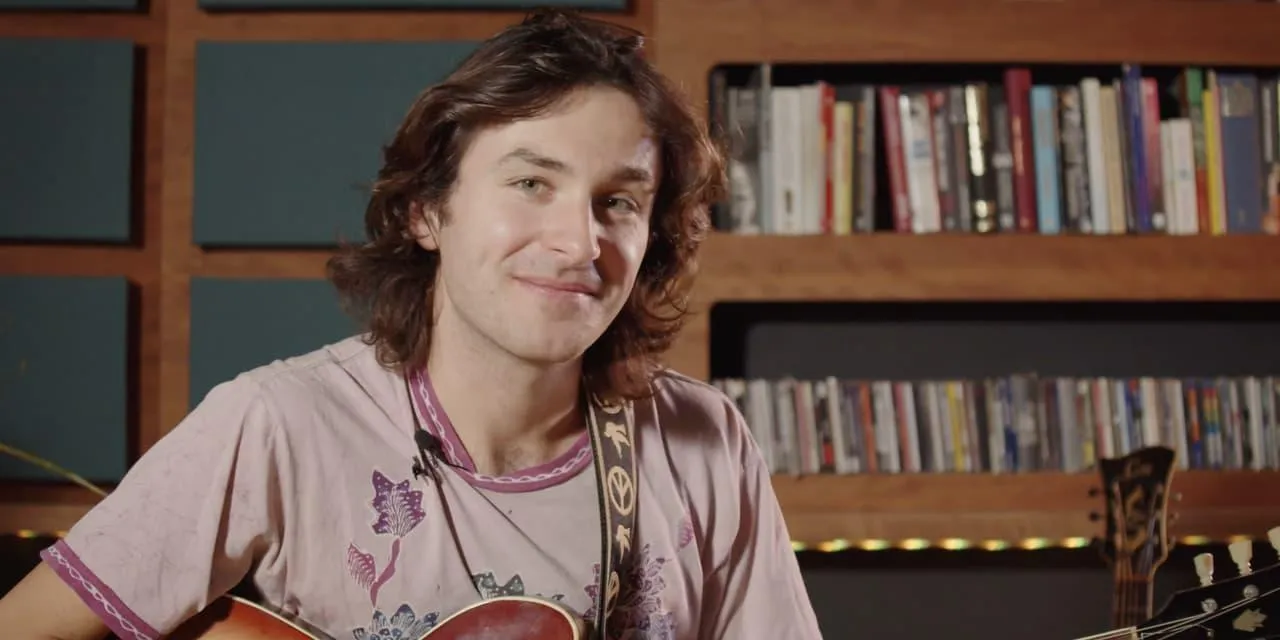
About the instructor
Rob Luft es un músico galardonado de Londres, ampliamente descrito como uno de los guitarristas de jazz contemporáneo jóvenes más destacados y talentosos del Reino Unido. Elogiado por The Times como llamado 'a lograr grandes cosas en el futuro', Rob ganó el Kenny Wheeler Jazz Prize de 2016 en asociación con Edition Records, y obtuvo el 2.º premio en el Montreux Jazz Guitar Competition de 2016. Su álbum de debut, 'Riser', se publicó en julio de 2017 y fue objeto de un amplio reconocimiento de la crítica en los medios de jazz europeos. John Fordham escribió en The Guardian que es un 'debut muy sofisticado, aunque, dados los logros de alma vieja de Luft desde su temprana adolescencia, deberíamos haberlo visto venir'. '¡Tan joven y con tanto talento!' - Jamie Cullum, BBC Radio 2 (UK) '...un talento extraordinario!' - Julian Joseph, BBC Radio 3 (UK) 'El virtuosismo de los tres [guitarristas Al di Meola, John McLaughlin y Paco de Lucia] recuerda al londinense de 23 años Rob Luft, celebrado como un nuevo "Wunderkind"' - Spiegel Online (D) En Play Authentic Jazz Guitar, Rob abre el lenguaje armónico, el fraseo y los instintos improvisadores que hay detrás de ese sonido de 'alma vieja', mostrándote cómo piensa realmente el mástil para que puedas empezar a encontrar tu propia voz en el jazz. read more