



Cómo improvisar sobre los cambios de acordes

Lesson time: (6min 23sec)
Course preview
This lesson is part of the course Toca guitarra jazz auténtica
Watch a preview of the full course below.
Lesson transcript:
Improvisation Techniques in Jazz
Now, when it comes to talking about improvising, it's much the same thing as I've been discussing with Django Reinhardt and Joe Pass.
Understanding Chords
- If there's a B seventh chord with a C in the bass, that's going to create a flat nine sound:
- B7, B9
- This will require us to play that diminished arpeggio starting on the D sharp third.
One more time, and that's symmetrical. You can repeat that every three frets on an A all the way up to a C. By the same token, you can do it an octave below.
This all works very well over a B seventh chord.
Moving to E Major
When it gets to E major, it's E major 7 arpeggios all the way. That's very nice! You get this lovely movement of:
- B flat half diminished:
- I'm just using simple half diminished chord tones here, the same thing but maybe down here.
I also love to use this four-note shape which would start on the fourth, which would be E flat. I talked about this in reference to playing over major chords in F major. Here, we're over a half diminished chord.
I found a four-note grouping that sort of outlines the sound without being an arpeggio.
- It's an E flat, E, A flat, B flat.
- This is over a B flat half diminished chord.
- It's a pattern that repeats at the octave.
If you can really get some speed out of that, it's incredibly guitar-friendly and outlines the sound of B flat half diminished in an interesting way. You can use the same shape over the E flat seventh.
Non-Functional Section
Then, we're into this non-functional section that suddenly modulates to A.
- Here, I like to use C sharp minor pentatonic back to my rock and roll roots:
- E major pentatonic
- C sharp minor pentatonic
You'll hear it sounds really nice over this bit. If I just demonstrate, any pattern will sound great over those two chords.
Transition to C Sharp Diminished
Then, we're into a C sharp diminished over F or C sharp 7 over F, which creates a kind of F diminished sound. Here, we're looking again at the diminished arpeggio.
Next, D major 7 over F sharp can kind of be thought of as F sharp minor.
- Again, you're basically playing C sharp 7, F sharp minor, C sharp 7, F sharp minor.
- It's very much the same thing; it could even be for both of those chords, F sharp harmonic minor.
We'll cover them both: F sharp harmonic minor all the way.
Conclusion: The Turnaround
Then we've got a turnaround with a B7, and we're back to E major.
- On the B7, I like to play in the style of Django:
- A B7 at 9 arpeggio starting on the D sharp.
So you get this:
- And then we're back to E major there for four bars.
- It then transitions into C sharp minor territory.
I enjoy these little patterns where I descend through the minor pentatonic in a sort of sequence.
Again, it's really very friendly as a guitarist.
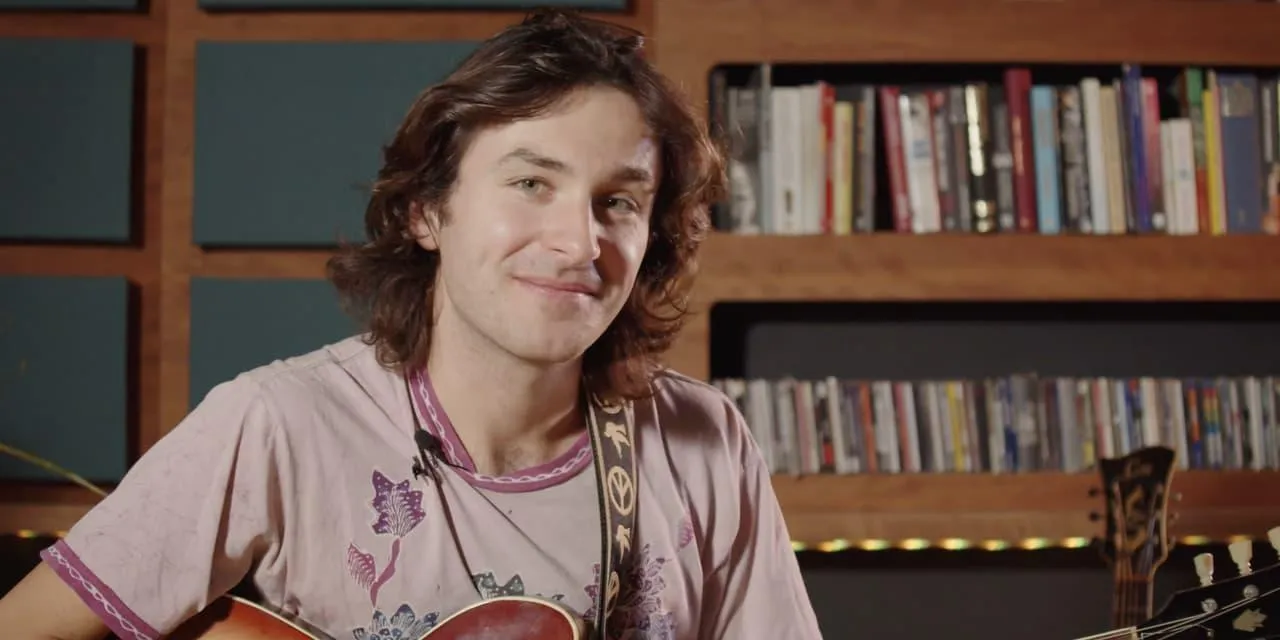
About the instructor
Rob Luft es un músico galardonado de Londres, ampliamente descrito como uno de los guitarristas de jazz contemporáneo jóvenes más destacados y talentosos del Reino Unido. Elogiado por The Times como llamado 'a lograr grandes cosas en el futuro', Rob ganó el Kenny Wheeler Jazz Prize de 2016 en asociación con Edition Records, y obtuvo el 2.º premio en el Montreux Jazz Guitar Competition de 2016. Su álbum de debut, 'Riser', se publicó en julio de 2017 y fue objeto de un amplio reconocimiento de la crítica en los medios de jazz europeos. John Fordham escribió en The Guardian que es un 'debut muy sofisticado, aunque, dados los logros de alma vieja de Luft desde su temprana adolescencia, deberíamos haberlo visto venir'. '¡Tan joven y con tanto talento!' - Jamie Cullum, BBC Radio 2 (UK) '...un talento extraordinario!' - Julian Joseph, BBC Radio 3 (UK) 'El virtuosismo de los tres [guitarristas Al di Meola, John McLaughlin y Paco de Lucia] recuerda al londinense de 23 años Rob Luft, celebrado como un nuevo "Wunderkind"' - Spiegel Online (D) En Play Authentic Jazz Guitar, Rob abre el lenguaje armónico, el fraseo y los instintos improvisadores que hay detrás de ese sonido de 'alma vieja', mostrándote cómo piensa realmente el mástil para que puedas empezar a encontrar tu propia voz en el jazz. read more