



Tocar a tempo con voicings pianísticos

Lesson time: (5min 22sec)
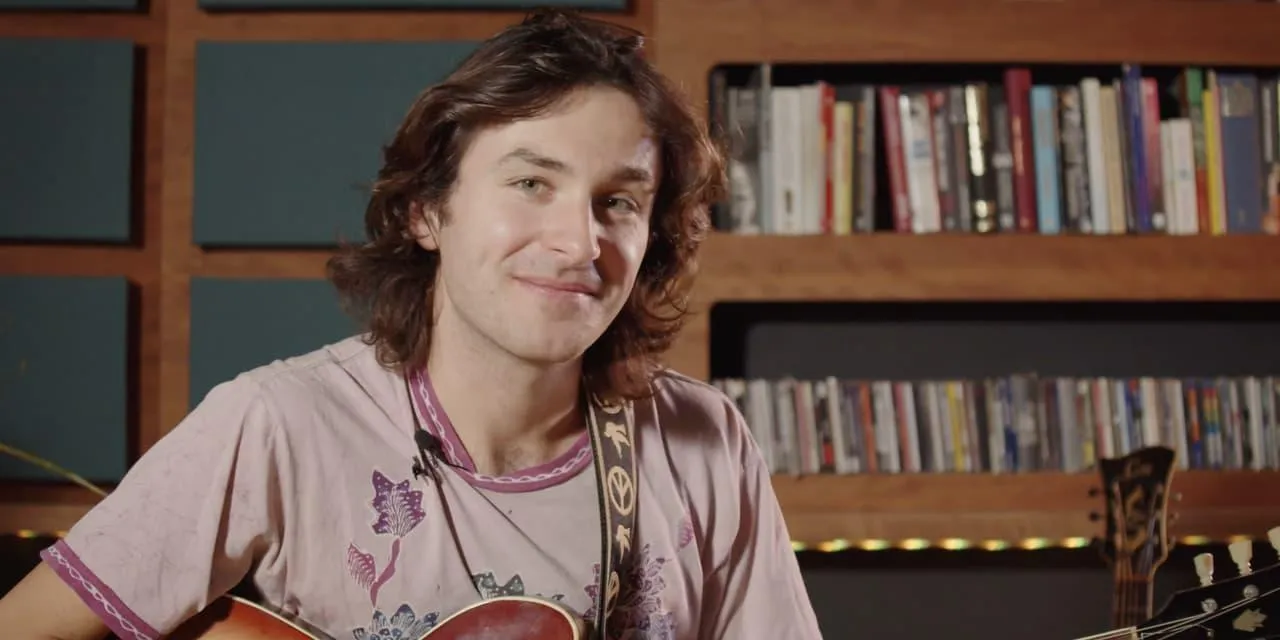
Rob Luft toca la sección a tempo estricto en lugar de rubato, manteniendo el pulso de swing bajo sus voicings de acordes pianísticos.
Course preview
This lesson is part of the course Toca guitarra jazz auténtica
Watch a preview of the full course below.
Lesson transcript:
Juggling Time and Melody in Music
Now here's where it gets interesting because we're going to move into time now, and this is where the juggling act really begins.
Creating the Feeling of Swing
- You've got to keep the movement of the swing, you know, the 1, 2, 3, 4, 2, 3.
- You've got to keep that chugging along underneath you without explicitly playing it.
- The goal is to create that feeling of swing.
Demonstration
So, I'll just demonstrate to you what I'm going to do for the next eight bars here.
"I'm going to give it a sort and moving out of time."
At the end of the eight bars, what am I actually doing? In my head, I'm imagining the swing, and I'm sure that when you're listening to that, you can feel where the tempo is.
- It's very clearly in 4/4 time.
- It's very clearly in that sword-swinging style.
Juggling Elements
It just requires a little bit of, I guess, facility to juggle those elements.
-
The melody is pretty simple on its own.
- The melody sounds like this: it's a pretty simple melody.
- There's nothing too complicated there.
-
We've got to get that melody with the chord sequence underneath it.
- So, we've got these chords:
- F sharp
- F diminished (three-note voicing)
- E flat diminished
- D minor (with maybe the flat 5 added)
- C major (quite wide voicings).
Pianistic Influence
It's very pianistic. You know, Joe was a very pianistic guitarist. He was obviously inspired by the great jazz pianists, people like:
- Bill Evans
- Red Garland
- Art Tatum (the stride pianists)
I think he had the sound of piano in his head, and these close position voicings sort of emulate that pianistic sound.
Understanding Instrument Differences
- Piano players often lay notes out as: F, A, C, E.
- Whereas on guitar, we might play: F, A, C, E.
On a piano, it's super easy. However, a more common voicing on guitar might be:
- F, C, E, A.
Just the nature of the instrument and the shapes that we grab.
Tertial Voicings
Here are some tertial voicings for you:
- F sharp half diminished
- We need to catch that melody note moving down to a D.
- F diminished with the D in the melody.
So in time, that's going to sound like...
"Do that one more time, maybe a little bit slower."
1, 2, 3, 4.
You see, it is possible to juggle those elements.
- Some of the chords I'm not even playing.
- I'm just playing a bass note.
But it's that illusion of movement. Joe really was a master illusionist in the sense that he wouldn't always state the whole composed information.
- He would simply allude to it, and it gives you the impression that it's all happening.
Closing Thoughts
So here you hear it at a bit more velocity, you get this...
About the instructor
Rob Luft es un músico galardonado de Londres, ampliamente descrito como uno de los guitarristas de jazz contemporáneo jóvenes más destacados y talentosos del Reino Unido. Elogiado por The Times como llamado 'a lograr grandes cosas en el futuro', Rob ganó el Kenny Wheeler Jazz Prize de 2016 en asociación con Edition Records, y obtuvo el 2.º premio en el Montreux Jazz Guitar Competition de 2016. Su álbum de debut, 'Riser', se publicó en julio de 2017 y fue objeto de un amplio reconocimiento de la crítica en los medios de jazz europeos. John Fordham escribió en The Guardian que es un 'debut muy sofisticado, aunque, dados los logros de alma vieja de Luft desde su temprana adolescencia, deberíamos haberlo visto venir'. '¡Tan joven y con tanto talento!' - Jamie Cullum, BBC Radio 2 (UK) '...un talento extraordinario!' - Julian Joseph, BBC Radio 3 (UK) 'El virtuosismo de los tres [guitarristas Al di Meola, John McLaughlin y Paco de Lucia] recuerda al londinense de 23 años Rob Luft, celebrado como un nuevo "Wunderkind"' - Spiegel Online (D) En Play Authentic Jazz Guitar, Rob abre el lenguaje armónico, el fraseo y los instintos improvisadores que hay detrás de ese sonido de 'alma vieja', mostrándote cómo piensa realmente el mástil para que puedas empezar a encontrar tu propia voz en el jazz. read more