



Groove y sensación de tiempo
Con
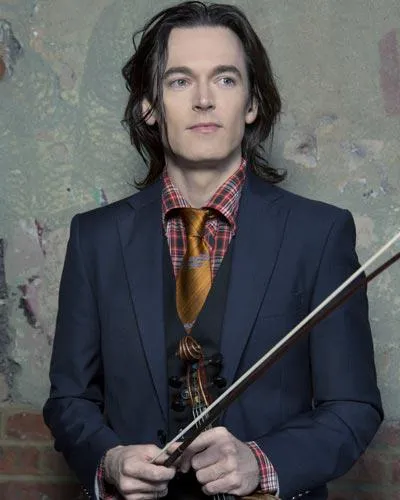
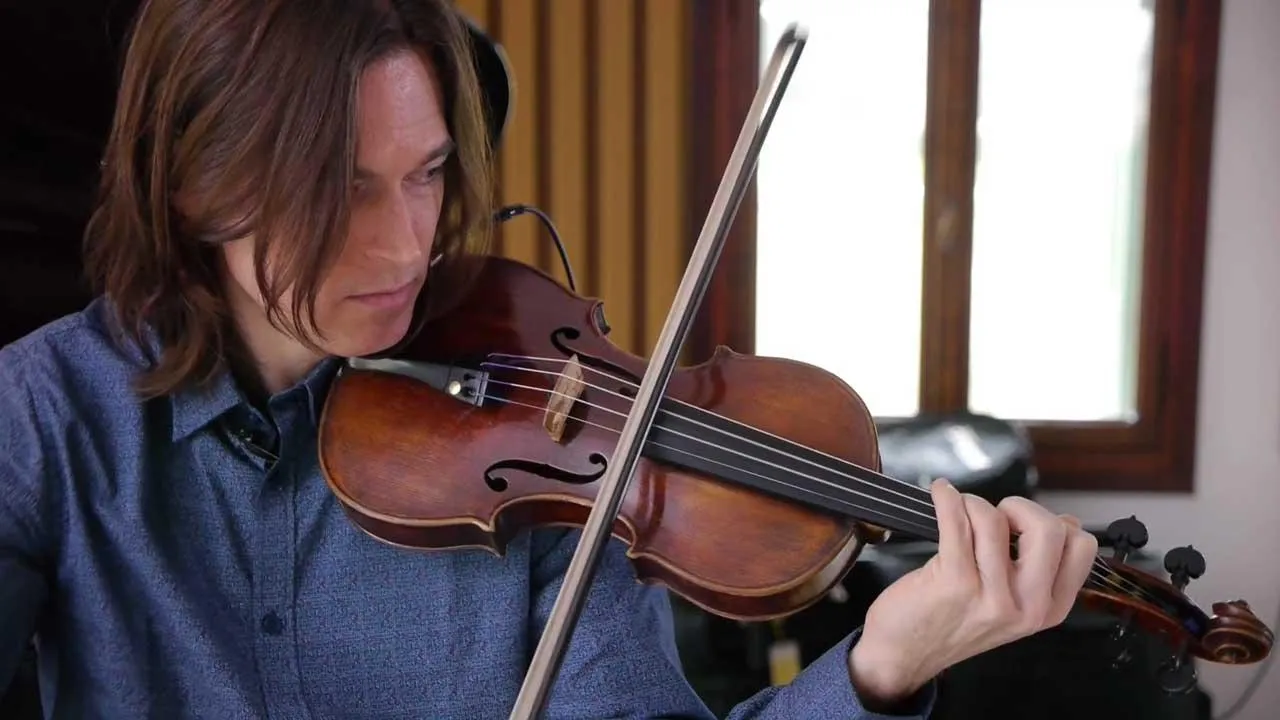
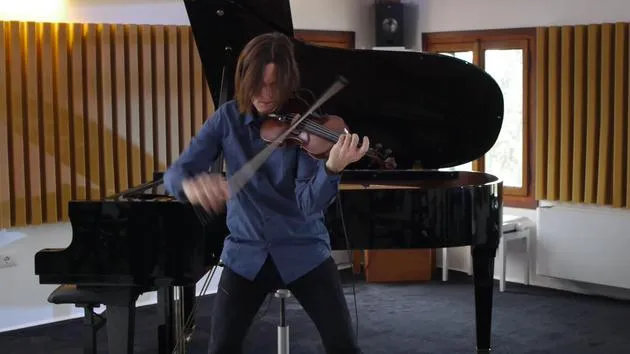
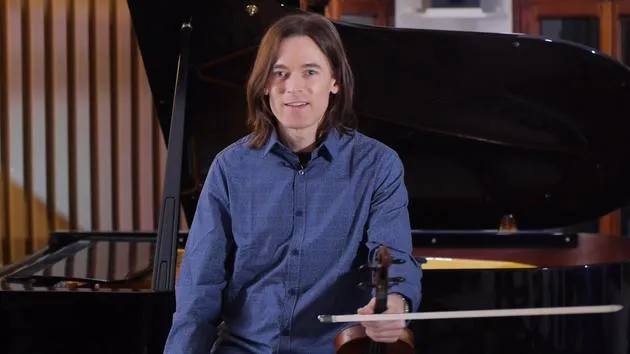
Zach BrockZach Brock profundiza en el ritmo y el groove en el violín, demostrando cómo tocar detrás y delante del pulso para moldear tu sensación de tiempo.
Qué incluye el curso
24 lecciones (2h 32m) · 1 gratis
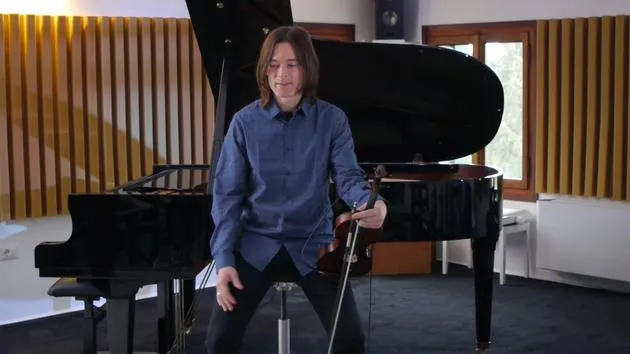
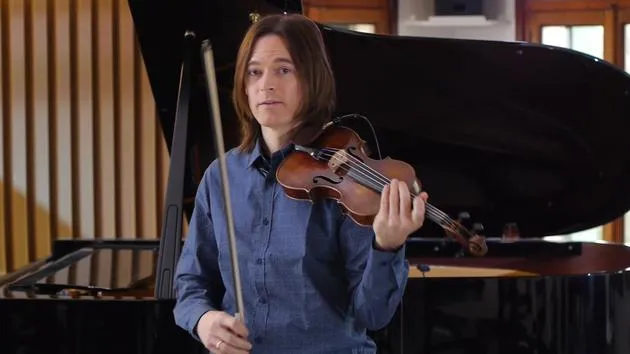
Transcripción de la lección
Exploring Time Feel in Music
Introduction
A lot of stuff that I've been playing in this course so far has been using a lot of unorthodox bowings for some of you out there. You might notice that the way I'm playing certain melodies does not sound like a straight classical interpretation, no straight eighth notes.
The Importance of Rhythm
We've talked a little bit about melody and harmony. Now, I want to discuss rhythm in a couple of different ways. Rhythm can manifest as:
- Playing triplets
- Using a dotted quarter note followed by an eighth note
These rhythmic ideas can serve as a springboard for all kinds of improvisatory concepts.
Time Feel and Groove
Before diving deeper into rhythm, I want to emphasize the concept of time feel on the violin. This can also be referred to as "groove."
If you're a classical player who has never experimented with other types of music, approaching this idea might feel daunting. You likely have a strong technical facility on your instrument, but you may find that even when you play the right notes, something doesn't sound quite right when you try to play along with a recording.
Observations from Various Genres
Folk players, such as:
- Bluegrass players
- Scottish players
- Irish fiddle players
These musicians already have a distinctly different kind of time feel compared to classical music. For example:
- Irish fiddle players: Their playing often grooves with a unique feel.
- Bluegrass players: They embody their own type of groove, which differs from the Irish style.
Both genres are "groovy," but they are unique in their expression.
From a jazz perspective, I find the term "pocket" incredibly useful. It represents a comfortable approach to time feel, applicable whether you're playing ripping Celtic fiddle or grooving to a D'Angelo record.
Traditional Perspectives on Rhythm
For many classical players, the approach to time and rhythm is often rigid:
- You might be accustomed to thinking in terms of measures and rests.
- Each beat (one, two, three) correlates with a vertical line in sheet music.
This perspective treats rhythm as a vertical mark, locking into a grid. While this is "correct," it can also be very challenging to play in this way, requiring countless hours of metronome practice.
Your First Assignment: Rethinking Time
Here's your first assignment regarding time feel:
-
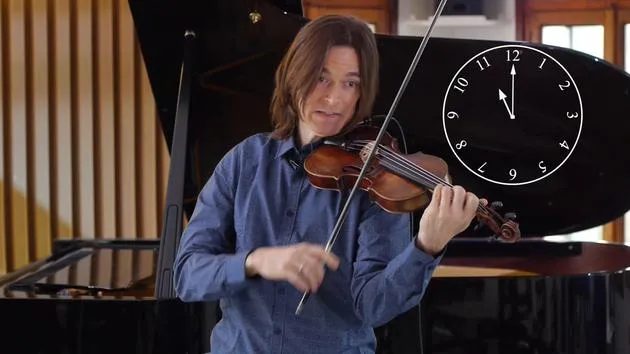
Visualize Time: Instead of thinking of time as a linear progression, consider it like a tennis ball or a watch.
Using the watch analogy:
-
12:00: Perfectly on the beat
-
11:00: A little ahead of the beat
-
1:00: A little behind the beat
Practical Application
If you're an orchestra player working on excerpts, I challenge you to set your watch:
- 1:00 or 11:00
As I visualize the watch face, I aim to place notes slightly ahead or behind the suggested beat.
Example Exercise
Let's return to our trusty G major scale.
- If you're trying to play accurately, you might find yourself subdividing too much to maintain groove.
Attempt to play the G major scale:
- Play it one 16th note after a simple click of a metronome.
For instance: Da da, da da, da.
You might find it roughly executed, but that's not the main point. Now try shortening the distance by incorporating a tiny rest.
Exploring "Laying Back"
From my studies with jazz players, I've learned the importance of "laying back." Many string players tend to play on top of the beat. As an advanced improviser:
- You can play various styles that dance around the beat, but it's crucial to control this tendency.
Expression Through Timing
This control can broaden your horizons as an improviser:
- Play in front of, on, or behind the beat in various degrees. This enhances your level of self-expression, much like playing different modes on a G major scale.
Reflection and Assignment
For your assignment:
- Think about your watch or any circular concept of time (like a golf ball or basketball).
- Take some modal ideas or just a plain scale and explore with them at a slower tempo to maintain deliberation.
Record yourself while doing this! For many of you, this will be new territory. You might be astonished by the transformation in your sound when you approach it deliberately, patiently, and accurately.
24 lecciones
2h 32m de lecciones en vídeo estructuradas
Funciones de vídeo avanzadas
Ralentiza, repite un pasaje, sigue la partitura
Móvil, tablet y ordenador
Practica donde quieras
Garantía de satisfacción 100%
30 días de garantía de devolución
Conoce a tu gurú
Conoce a tu gurú
Aclamado como "el violinista improvisador preeminente de su generación", Zach Brock es un violinista y compositor cuya música bebe de las tradiciones del jazz, la música clásica, la música del mundo y la música popular.
Zach recibió su primer Grammy en 2017 por su trabajo en el álbum Culcha Vulcha de Snarky Puppy. Su reconocimiento como líder de banda ha crecido con actuaciones en salas como el Carnegie Hall y festivales como "Tudo e Jazz" en Brasil, mientras que su reputación como acompañante se ha extendido a través de su trabajo con el legendario bajista Stanley Clarke, el supergrupo instrumental contemporáneo Snarky Puppy y los maestros del jazz Phil Markowitz y Dave Liebman.
Zach ha realizado diez grabaciones como líder o co-líder y es el primer violinista en grabar para el prestigioso sello holandés de jazz Criss Cross. También ha representado al Departamento de Estado de EE. UU. como Embajador Musical en las Islas Salomón, ha actuado como solista invitado en las bandas sonoras de dos largometrajes del Festival de Sundance y actualmente es Artista en Residencia en la Temple University de Filadelfia.
En su curso aprenderás a improvisar al violín directamente desde la fuente: cómo aborda Zach la melodía, el ritmo y la armonía, y cómo empezar a encontrar tu propia voz tal como él lo ha hecho junto a Snarky Puppy y más allá.







