



Empezar con una canción
Con
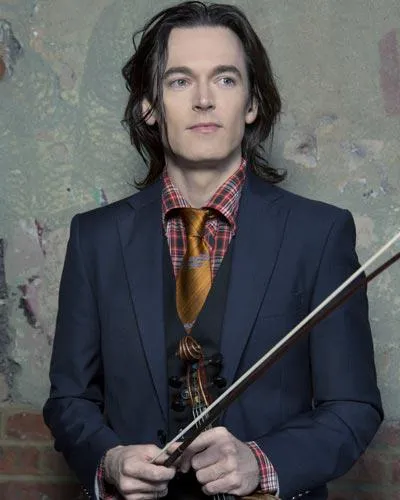
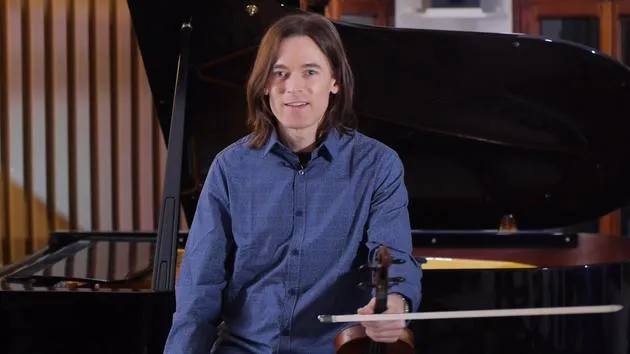
Zach BrockZach te pone en marcha con un ejercicio que te ayudará a liberar tu forma de tocar de la partitura, pero que también beneficiará a músicos experimentados, permitiéndoles entender mejor las melodías que interpretan al alejarse de ellas.
Qué incluye el curso
24 lecciones (2h 32m) · 1 gratis
Transcripción de la lección
Introduction to Improvisation Through Folk Music
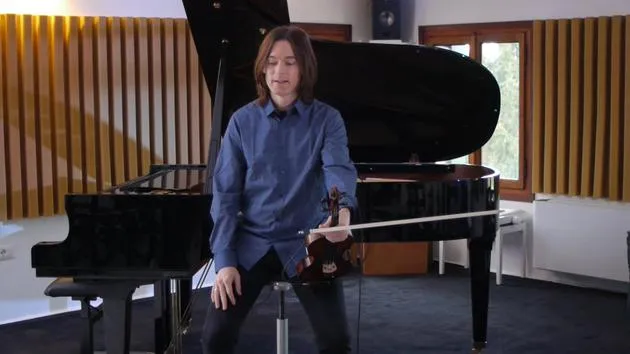
Let's not start from a totally dry, technical perspective. Let's start from a song, a folk song.
My Journey into Improvisation
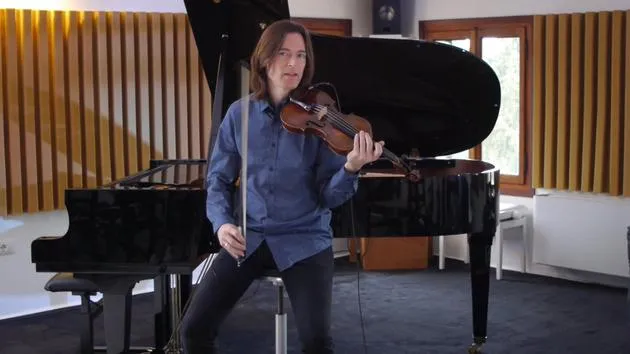
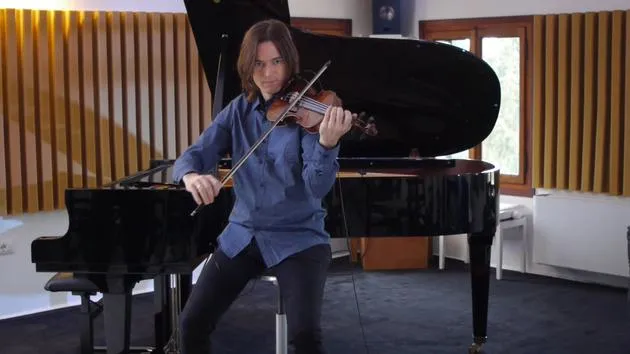
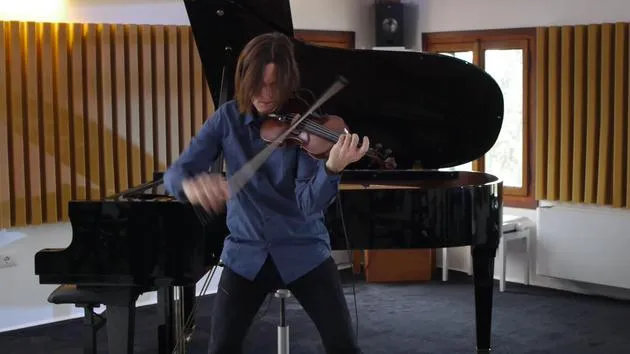
Actually, the way that I got started improvising was through studying Suzuki violin while playing in a family band with my mom and dad. We played a lot of folk music.
So, I think that maybe my first improvisation happened something like this:
"If I was a little kid, I would just play it really straight, right? You know, I would probably play it even straighter than that as a little kid."
My first moments of improvisation probably just started with varying the phrase.
- I'm not thinking about scales, chords, or rhythms.
- I'm completely using my ear.
- I'm thinking about how somebody might sing it, something really, really natural.
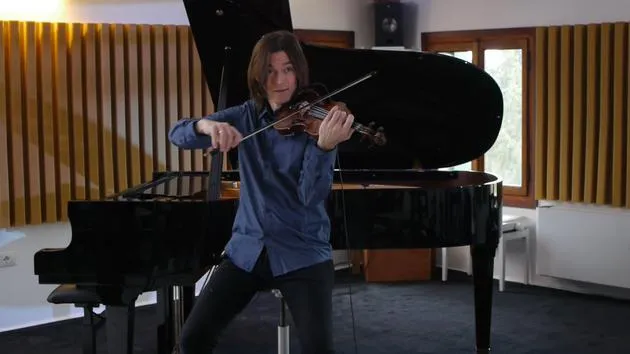
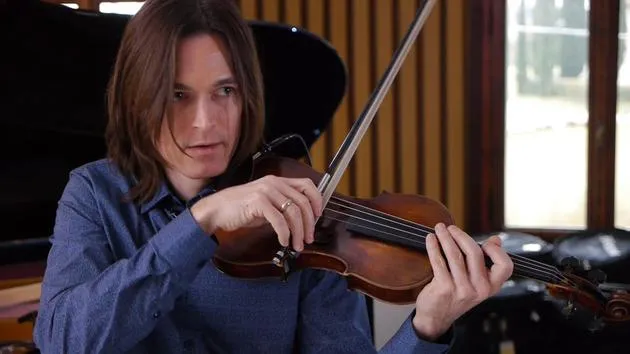
For example, instead of going straight to the pitch, I might slide just a little bit into that first note. To me, this sounds more vocal than starting on a straight pitch.
From there, I just got more and more excited.
Embrace the Process
Okay, that's not on the page, but I added that because I'd heard somebody do it. Then, maybe I went:
"I don't know. I probably wasn't doing really advanced stuff when I was a kid."
But here's the key:
- Take something you already know and mess around with it.
For you classical violinists out there, you all know what I mean:
- You could take a little snippet and make little variations.
- What if I went... [insert variation]?
Have fun with it!
Overcoming Doubts in Improvisation
By the way, some of you might be really excited about getting into improvisation, obviously, you're watching this course, so you are! However, there's often a little voice inside your head saying,
"I don't know, maybe this is going to really screw up my playing from before."
This is a natural fear that a lot of people experience.
You don't have to worry about that!
When you take something you already know and expand it by making your own variations, you actually become clearer and more aware of the original source.
It's similar to progressing in classical music:
- When you move from just playing repertoire to becoming aware of differences in vibrato and phrasing between composers (e.g., Mozart and Brahms), it doesn't mean that playing Brahms will ruin your Mozart.
- In fact, it reinforces what you already know by highlighting the differences, allowing you to become more specific.
So, don't worry about improvisation hurting what you already know!
For Folk Players
For some folk players out there, you might be used to playing off the page, but feel like every time you play a tune, it goes something like this:
- Play the A section,
- Then the B section,
- A section again,
- B section again,
- Guitar player plays A, B... and it goes around like that.
You can still improvise!
Your First Improvisation Exercise
The first thing I'd like you to try is this:
- Take a song melody, a piece that you already know.
- Spend 5 to 10 minutes messing around with little parts of the melody.
Change something!
- Play a different rhythm.
- Change the dynamics.
- Start altering the notes.
I want you to take something that you already know and start to see where it leads you.
If you feel like continuing to play, just keep going!
We're going to talk about much more advanced concepts in this course, but I wanted to start from this place.
24 lecciones
2h 32m de lecciones en vídeo estructuradas
Funciones de vídeo avanzadas
Ralentiza, repite un pasaje, sigue la partitura
Móvil, tablet y ordenador
Practica donde quieras
Garantía de satisfacción 100%
30 días de garantía de devolución
Conoce a tu gurú
Conoce a tu gurú
Aclamado como "el violinista improvisador preeminente de su generación", Zach Brock es un violinista y compositor cuya música bebe de las tradiciones del jazz, la música clásica, la música del mundo y la música popular.
Zach recibió su primer Grammy en 2017 por su trabajo en el álbum Culcha Vulcha de Snarky Puppy. Su reconocimiento como líder de banda ha crecido con actuaciones en salas como el Carnegie Hall y festivales como "Tudo e Jazz" en Brasil, mientras que su reputación como acompañante se ha extendido a través de su trabajo con el legendario bajista Stanley Clarke, el supergrupo instrumental contemporáneo Snarky Puppy y los maestros del jazz Phil Markowitz y Dave Liebman.
Zach ha realizado diez grabaciones como líder o co-líder y es el primer violinista en grabar para el prestigioso sello holandés de jazz Criss Cross. También ha representado al Departamento de Estado de EE. UU. como Embajador Musical en las Islas Salomón, ha actuado como solista invitado en las bandas sonoras de dos largometrajes del Festival de Sundance y actualmente es Artista en Residencia en la Temple University de Filadelfia.
En su curso aprenderás a improvisar al violín directamente desde la fuente: cómo aborda Zach la melodía, el ritmo y la armonía, y cómo empezar a encontrar tu propia voz tal como él lo ha hecho junto a Snarky Puppy y más allá.







