



Pensar los arpegios de otra manera
Con
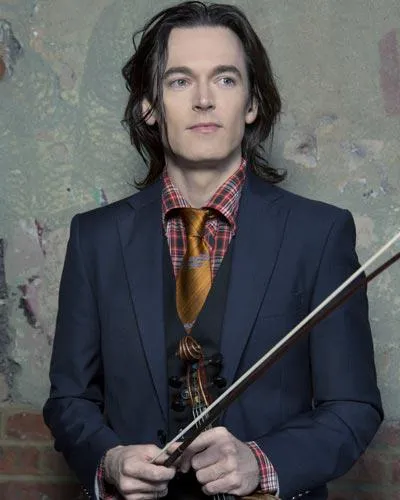
Zach BrockZach habla de pensar los arpegios como 'voicings' de acordes, lo que te permite pensar en términos de armonía
Qué incluye el curso
24 lecciones (2h 32m) · 1 gratis
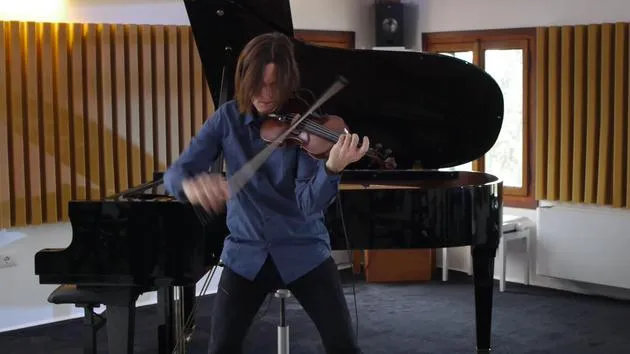
Transcripción de la lección
Understanding Arpeggios in a Harmonic Context
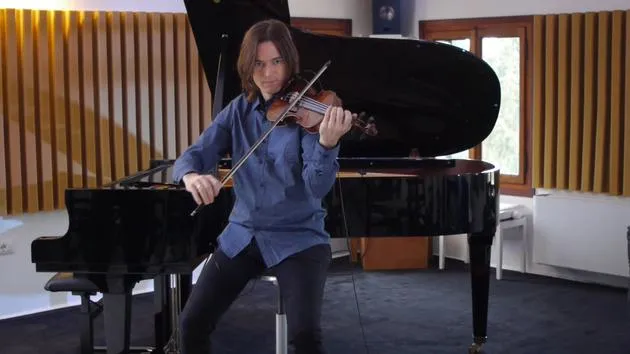
You're all familiar with arpeggios. One thing that oftentimes, as string players, we're not so aware of, is where those arpeggios are coming from in a harmonic context.
Chord Progressions
Now, maybe you might even hear this chord progression. If you don't hear that chord progression, then you've got some work to do.
-
G Major Triad (I chord):
- I'm playing in G once again. This is a G major triad.
-
C Major Triad (IV chord):
- Then I'm playing in C.
- C is the fourth degree of G, so that's what people refer to as the IV chord.
-
D Major Arpeggio (V chord):
- Then I played the arpeggio, D, a D major arpeggio off of the fifth degree. That's the V.
And then we hear that it's going back to this.
Exploring Arpeggios
There are myriad books, exercises, and resources discussing all of this different stuff. I want to show you a few things that you can do with these basic arpeggios that you already know. This arpeggio that I'm playing is a major third followed by a minor third with the root on top.
Exercise 1: Play Arpeggios from Each Scale Degree
- I want you to take a G major scale and play an arpeggio starting off of each degree like we did the modes.
- Demonstration: You hear the harmony in that.
Harmony is just stacking scales, initially in thirds. As we start to voice them or change the intervals within that, it can become a lot more complicated.
For string players who are not used to thinking about stacking harmony like that, because it's a bit more of a technical concern for us than, say, a piano player, it's important to start doing this with your scales. This is how you start to relate your melodies to harmony.
Exercise 2: Varying Directions
I want you to do the same exercise, but in different directions:
- Up, Up, Up: (as previously demonstrated)
- Down, Down, Down
- Up, Down, Up, Down
- Down, Up, Down, Up
Demonstration:
- Going down, down.
- Now go slow and really think about this.
This may feel unfamiliar and can be frustrating, so remember: go really slow and be accurate.
Identifying Triad Qualities
Now, I want you to:
- Pick a scale, perhaps one you've been practicing in the modes, and play the triads off of each scale degree.
- Listen to those harmonies.
Exercise 3: Determine Harmonic Quality
After you get the technical part under control and play the right accidentals, identify the quality of each triad:
- Harmonic Qualities:
- Major triads
- Minor triads
- Augmented triads
- Diminished triads
When playing a major scale, you will not come across any augmented triads. As you play triads through the G major scale, identify each one across all 12 keys.
- First triad: Major
- Second triad: Minor
- Third triad: Minor
- Fourth triad: Major
- Fifth triad: Major
- Sixth triad: Minor
- Seventh triad: Diminished
Advanced Exploration
You might be more advanced and have gone through all of this, but have you done this with all of your melodic minor scales? What about your harmonic minor and, of course, harmonic major?
As we get into different tonalities, each one has its own inherent harmony. Playing the triads and then seventh chords will enable you to hear the harmony that comes with each scale.
24 lecciones
2h 32m de lecciones en vídeo estructuradas
Funciones de vídeo avanzadas
Ralentiza, repite un pasaje, sigue la partitura
Móvil, tablet y ordenador
Practica donde quieras
Garantía de satisfacción 100%
30 días de garantía de devolución
Conoce a tu gurú
Conoce a tu gurú
Aclamado como "el violinista improvisador preeminente de su generación", Zach Brock es un violinista y compositor cuya música bebe de las tradiciones del jazz, la música clásica, la música del mundo y la música popular.
Zach recibió su primer Grammy en 2017 por su trabajo en el álbum Culcha Vulcha de Snarky Puppy. Su reconocimiento como líder de banda ha crecido con actuaciones en salas como el Carnegie Hall y festivales como "Tudo e Jazz" en Brasil, mientras que su reputación como acompañante se ha extendido a través de su trabajo con el legendario bajista Stanley Clarke, el supergrupo instrumental contemporáneo Snarky Puppy y los maestros del jazz Phil Markowitz y Dave Liebman.
Zach ha realizado diez grabaciones como líder o co-líder y es el primer violinista en grabar para el prestigioso sello holandés de jazz Criss Cross. También ha representado al Departamento de Estado de EE. UU. como Embajador Musical en las Islas Salomón, ha actuado como solista invitado en las bandas sonoras de dos largometrajes del Festival de Sundance y actualmente es Artista en Residencia en la Temple University de Filadelfia.
En su curso aprenderás a improvisar al violín directamente desde la fuente: cómo aborda Zach la melodía, el ritmo y la armonía, y cómo empezar a encontrar tu propia voz tal como él lo ha hecho junto a Snarky Puppy y más allá.







