



52nd Street Blues - Añadir cromatismo

Lesson time: (2min 53sec)
Decora una melodía de blues bebop en saxo alto con notas de paso cromáticas -del tipo que Charlie Parker usaba para disfrazar y adornar un tema- con Ollie Weston.
Course preview
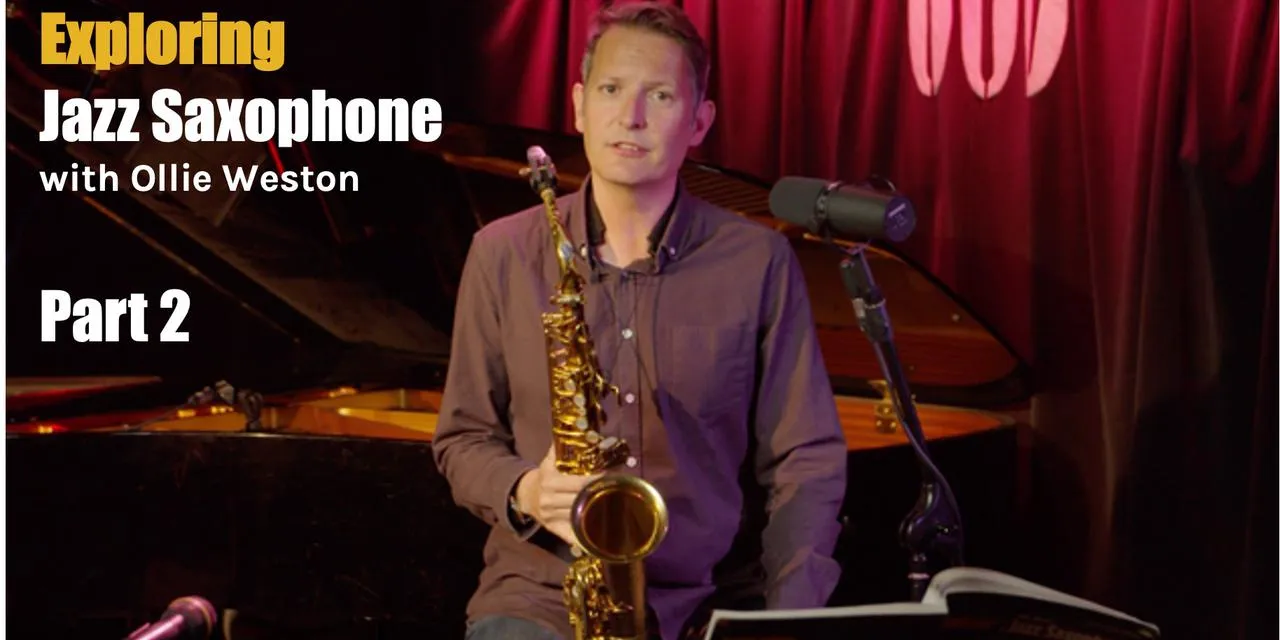
This lesson is part of the course Explorando el saxofón jazz: Parte 2 - Solear sobre canciones y secuencias de acordes
Watch a preview of the full course below.
Lesson transcript:
Understanding Bebop Blues
So hopefully you can hear some relationship between earlier blues tunes that we've played and this 52nd Street bebop blues. We're still centered around chords one, four, and five, although we will look at ways to expand that.
What's Different About Bebop?
Bebop introduces a few key differences:
- Rhythmic Emphasis: A little bit more rhythmic emphasis.
- Detail in the Head: A little bit more detail in the melody.
Chromaticism in the Melody
First, I'm going to look at the chromaticism in the melody. For example, when I play my first phrase:
An earlier musician might have just played three A's at that point, but Charlie Parker wanted to disguise the melody. He aimed to decorate it a little more and embellish it.
- The sharp 5, that G sharp, adds a little more detail to the melody.
The same concept applies to the next phrase. I've talked before about the contrast between the minor and major third within the blues:
- Minor third: A
- Major third: C#
Parker plays them both and then does exactly the same thing on the G7 chord, where I have a B flat resolving up to the third. So suddenly, you have familiar lines based on concepts that you will understand and have experienced before, but with an extra layer of detail.
The Effectiveness of Bebop
Our first phrase, instead of potentially sounding perfectly functional, sounds really effective. It resonates more in a bebop style than it did beforehand.
Rhythmic Ideas in Bebop
Rhythmically, a few ideas in bebop are:
- Keep the Music Short and Bouncy: The word "bebop" is an onomatopoeic expression of the phrasing and the language.
For my last phrase of the opening line, I want to make my last notes really short. If I play them too long, it loses some of its punch, some of its effectiveness.
Key Takeaway: Get your articulation really secure on these tunes:
- Really feel those offbeat notes.
- Aim for really nice, short phrase endings.
About the instructor
Desde que se graduó en el Leeds College of Music (BA Hons) y en la Guildhall School of Music (Post Graduate Diploma in Performance), Ollie ha construido una carrera intensa y variada en la música. Como saxofonista ha actuado en directo y en estudio con artistas tan diversos como Amy Winehouse, Tim Minchin, Bonobo, Frank Turner, la London Jazz Orchestra, la Hackney Colliery Band, el Ambient Jazz Ensemble y la Nelson Riddle Orchestra. También es colíder del cuarteto de jazz 'Time Is Of The Essence', y compone y arregla material para esta y otras agrupaciones. Ollie está activo en la educación musical, actualmente como responsable del curso del departamento de jazz de la Guildhall School of Music and Drama (escuela junior), donde dirige conjuntos de jazz, big band y clases de teoría. Ha escrito una serie de libros 'Exploring Jazz' para Schott Music que se publican en todo el mundo y figuran en los temarios de examen del Reino Unido. Ollie también ha impartido talleres para la Oxford University, Pro Corda Strings y BABSWE, así como en las escuelas de verano de la Guildhall School of Music. En sus cursos Exploring Jazz Saxophone, Ollie te lleva desde los primeros pasos hasta improvisar con confianza sobre canciones y secuencias de acordes, desarrollando las habilidades de improvisación que ponen a tu alcance el vocabulario de un auténtico músico de jazz. read more