



Tocar con un cantante
Con
Chris HaighChris Haigh comparte estrategias prácticas para tocar el violín junto a un cantante, desde rellenar los huecos entre frases vocales hasta por qué conviene evitar el unísono.
© 2011 Schott Music Ltd, London

Qué incluye el curso
28 lecciones (2h 28m) · 1 gratis
Transcripción de la lección
Working with a Singer
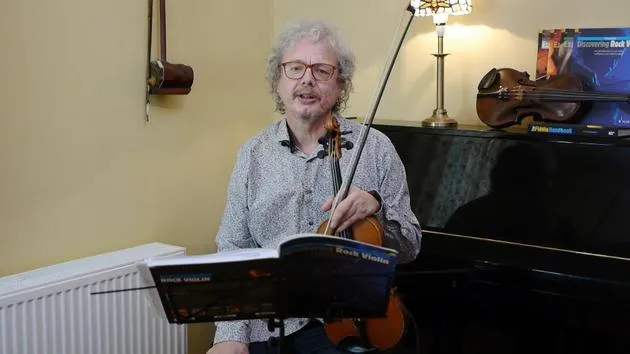
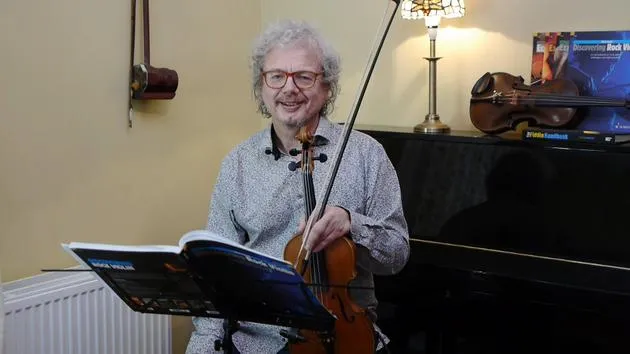
Hi. In this lesson, we're going to talk about working with a singer.
Understanding the Conflict
Now, no matter what kind of band you're in, if you've got a singer in the band, then there's a potential conflict between what you want to do and what the singer wants to do. You have to find various successful strategies for navigating this.
- The singer wants to be the center of attention.
- They want to be at the front and do not want you stealing the spotlight.
- To succeed as a band, you need to find ways around this problem.
Example Melody
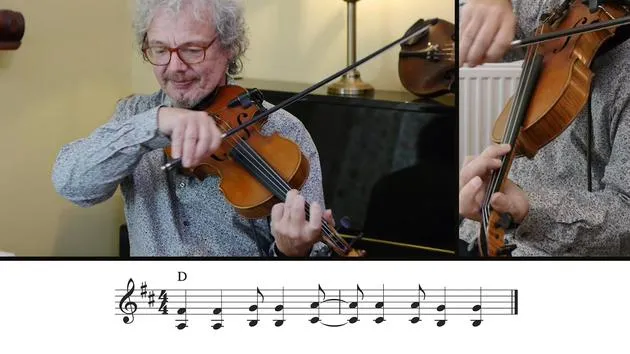
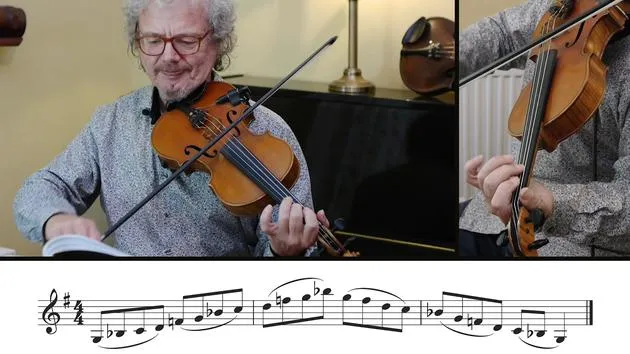
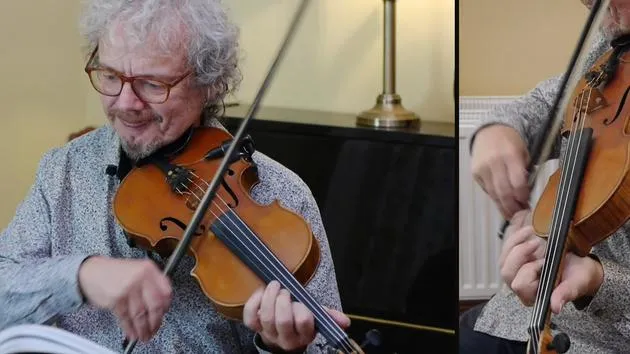
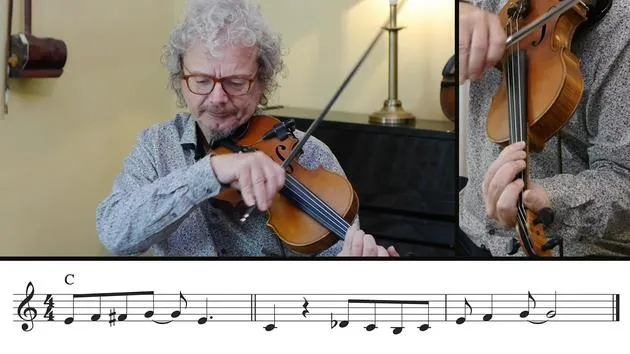
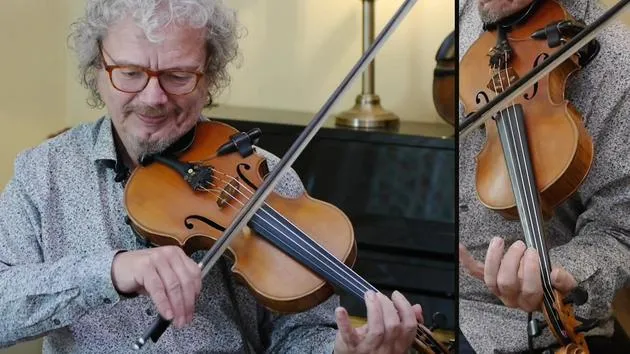
We're going to use an example of a simple little melody where the vocal line is taken here by a keyboard. So just have a listen to this.
Unison Playing
The simplest and most unimaginative approach a violinist could take is to play in unison with the vocalist. Generally, this is not something I recommend for a few reasons:
- Chances are, one of you is going to deviate slightly from the melody.
- If you're playing separately, this is not a problem. But if you're in unison, it's a big problem.
- One of you might be slightly out of tune (and it'll always be the singer).
If you have two things going in unison and one is out of tune, you're both going to sound bad. You will be blamed by the singer, and you will blame the singer. Thus, unison has its place occasionally, but it should not be your general strategy.
Successful Strategies
Playing in the Gaps
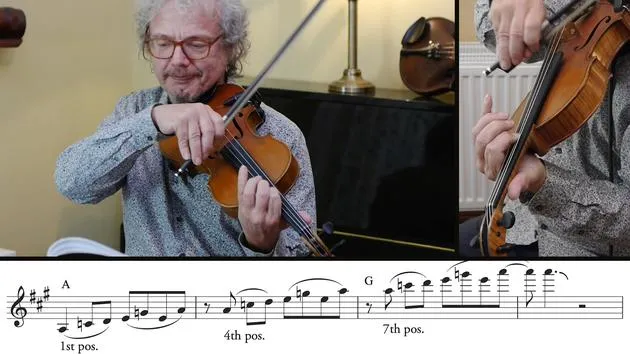
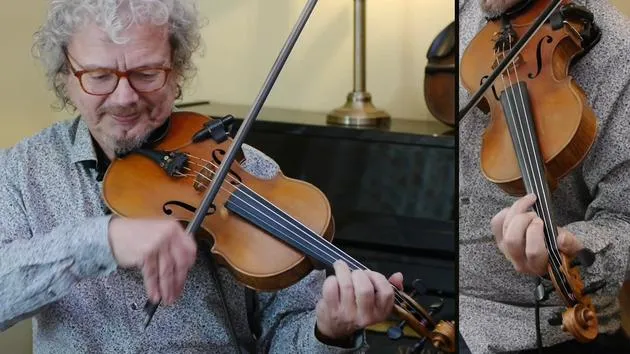
Probably the simplest successful strategy is to play in the gaps between the singer's phrases. Let me give you an example of that.
- Listen for the ends of those phrases.
- Come in quickly after the phrase ends.
- Be snappy about coming out when the vocal phrase starts again.
Repeating a Hook
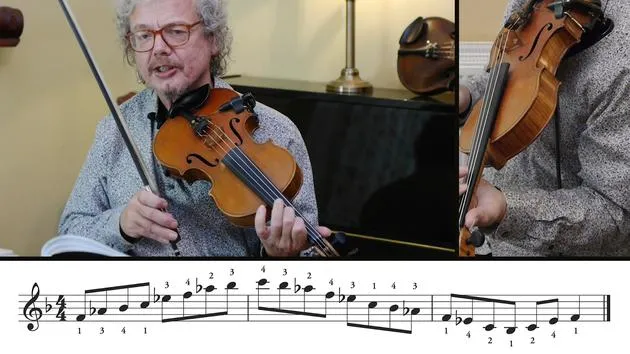
Another approach is to find a little hook or melody that you can repeat in those gaps. Let's try that.
- This method works well, but it might not always be effective if the chord sequence is complex.
- It's good to have some flexibility.
Consider a mixture of the two: use a similar phrase, but alter it slightly as you go through.
Longer Lines in Vocal Phrases
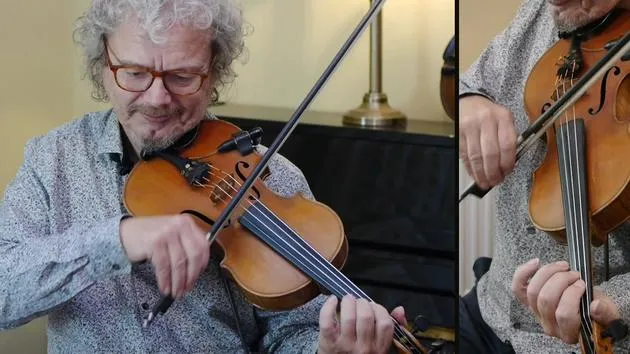
You don't always have to stop when the singer is singing. You can play long, fairly low lines during the vocal phrases and become busier in the gaps. Let's try that out.
Playing Harmony
Another approach is to play harmony with the singer. This helps alleviate a couple of problems:
- If intonation is not exact, being in harmony is less problematic than unison.
- Slight alterations to the melody are again less of an issue.
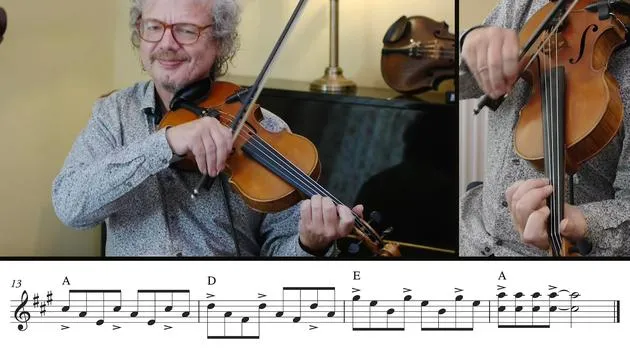
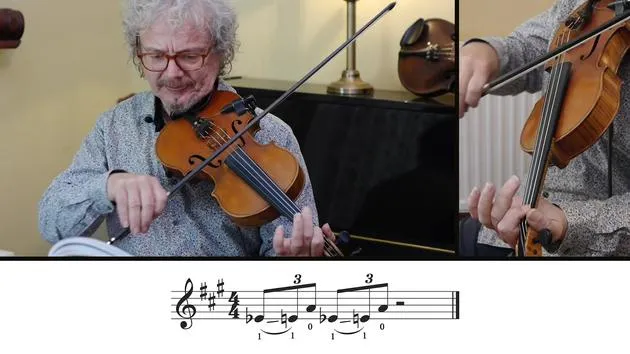
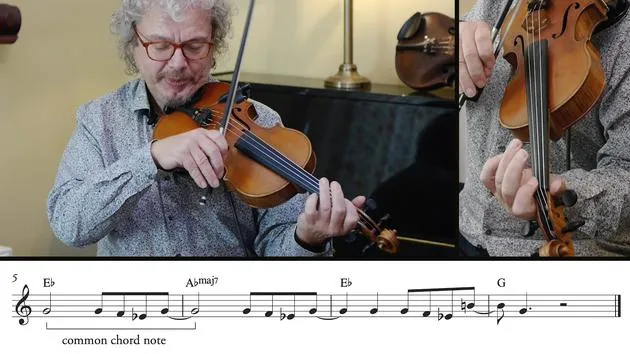
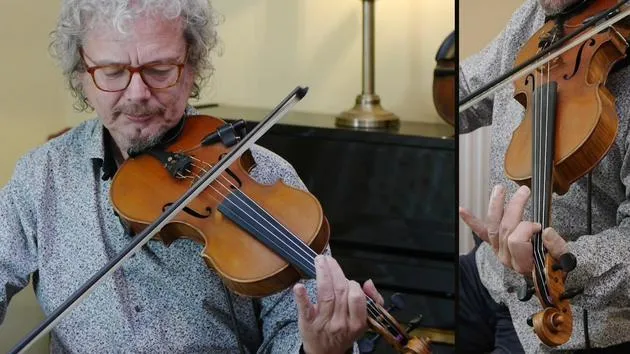
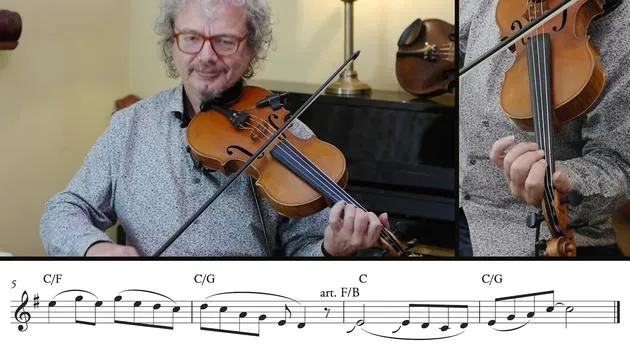
Let's try playing a third above the melody line.
- On one note, I didn't follow an absolute harmony. In bar six, the melody note is a G, and the harmony would have been a B. However, because it's a C chord, I played a C note (this is the major seventh note I was avoiding).
- It's important, when harmonizing, not to mechanically follow the harmony all the time. Be aware of what the chords are doing and what notes might not be appropriate.
Mixture of Strategies
Now let's try a mixture of harmonizing and doing improvised fills.
Conclusion
That is a series of different strategies you can use when working around a singer.
It's crucial to understand all of them and to use them to some extent. You may find yourself, as I have over many years, playing the same songs with the same singers countless times.
If you are playing the same part every time, you'll likely get bored.
- Always try to find new ways of backing without annoying the singer or the audience.
- You'll discover you can play the same song repeatedly without losing interest.
Assignment
Your assignment for this lesson is to find one or two songs from other sources that feature just a singer and a very simple backing (maybe just guitar or piano).
Try to work out, using these different strategies, the kinds of parts you could play in that song.
28 lecciones
2h 28m de lecciones en vídeo estructuradas
Funciones de vídeo avanzadas
Ralentiza, repite un pasaje, sigue la partitura
Móvil, tablet y ordenador
Practica donde quieras
Garantía de satisfacción 100%
30 días de garantía de devolución
Conoce a tu gurú
Conoce a tu gurú
Chris Haigh es violinista profesional desde hace 25 años, con experiencia en muchos géneros distintos. Ha tocado en más de 75 álbumes, trabajando con artistas como Alison Moyet, Bob Geldof, All About Eve, Michael Ball, David Soul, Oumou Sangare, The Quireboys, Riverdance, Morcheeba, James Galway y Steps.
Ha tocado swing y jazz con The Kimbara Brothers, Diz Disley, Le Jazz, The Hot Club of London y los Quecumbar Allstars, y lidera una banda de swing soviético de siete integrantes, The Kremlinaires.
Chris imparte clases y talleres sobre técnica de violín de jazz y ha enseñado violín de jazz en las universidades de Middlesex, Brunel y Newcastle y en el Truro College. Entre sus créditos como autor figuran nueve libros de violín, entre ellos The Fiddle Handbook.
También dirige Fiddling Around (fiddlingaround.co.uk), probablemente la fuente de información sobre violín más completa y visitada de la red.







