



Fraseo dentro de un solo
Con
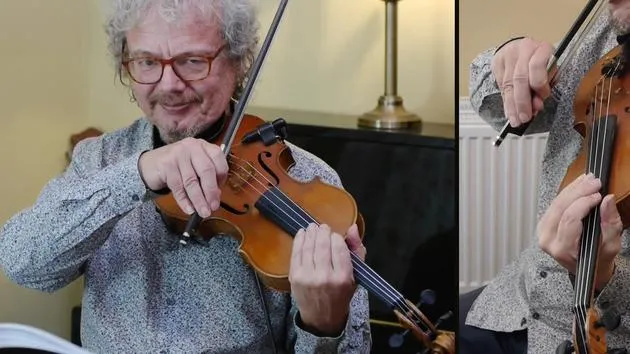
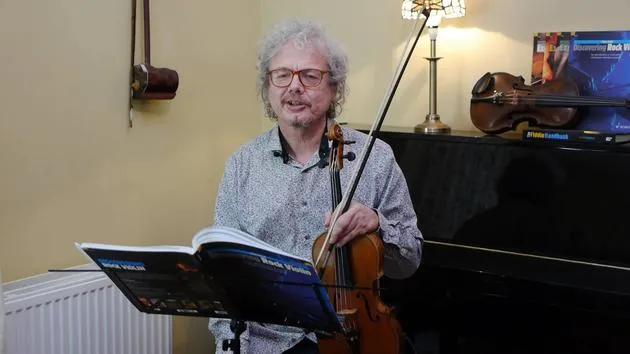
Chris HaighChris Haigh sobre el fraseo dentro de un solo: usar pausas y espacio, en lugar de tocar sin parar, para que tus líneas respiren y sigan siendo musicales.
© 2011 Schott Music Ltd, London
Qué incluye el curso
28 lecciones (2h 28m) · 1 gratis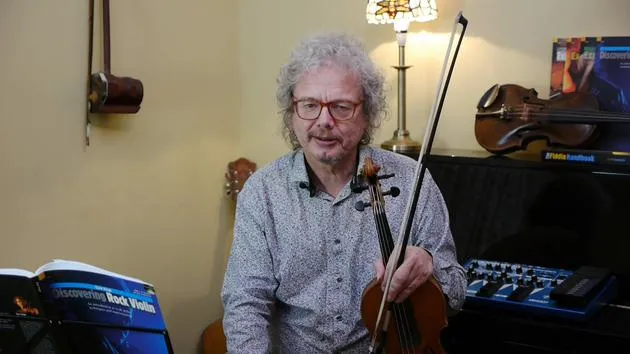
Transcripción de la lección
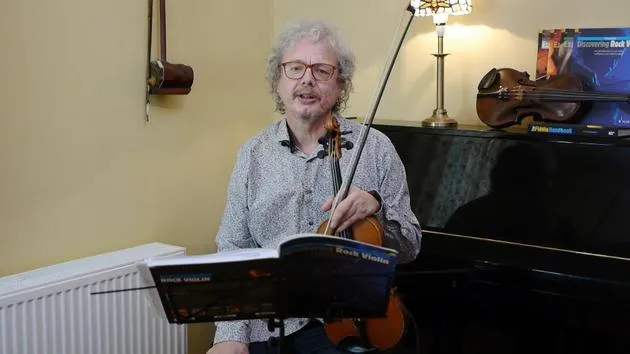
Music Lesson: Understanding Phrasing in Solos
Introduction
In this lesson, we're going to look at phrasing within a solo.
What Do We Mean by Phrasing?
Occasionally, you may have met a person, perhaps in a shop or at a party, who talks continuously and without a break. This person can be extremely annoying.
You kind of shut off almost straight away when you realize that there's not going to be a pause, not even any punctuation or full stops.
The Parallel in Music
You do sometimes come across soloists who have the same attitude: they just play continuously, and it starts to sound like burbling after a while. So, it's important to think about how you're going to phrase what you're playing.
Example of Musical Bad Manners
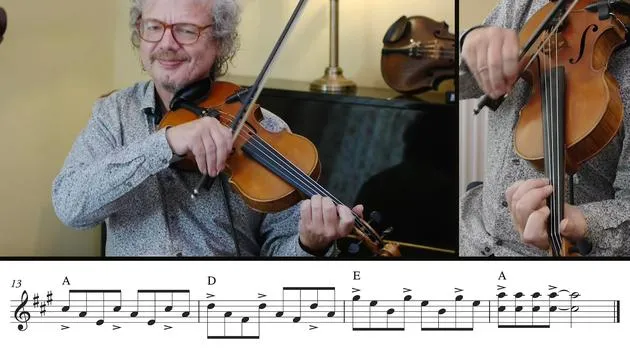
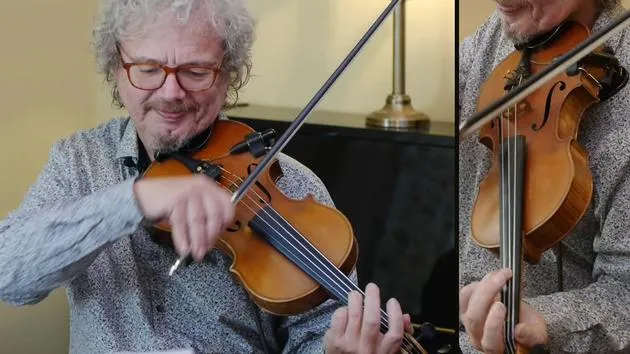
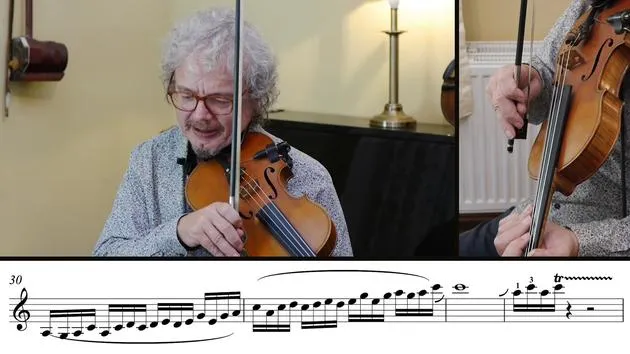
I'm going to give you an example of what I would call musical bad manners, where I'm really going to play without any pausing.
- Now, I could probably sustain that for around 20 minutes, but by that time:
- The film crew would have left
- My career would have been virtually over
- The neighbors would be hammering on the door with axes and flaming torches
So, it's really not a good idea to play in that kind of absolutely continuous fashion.
Breaking Up Music into Phrases
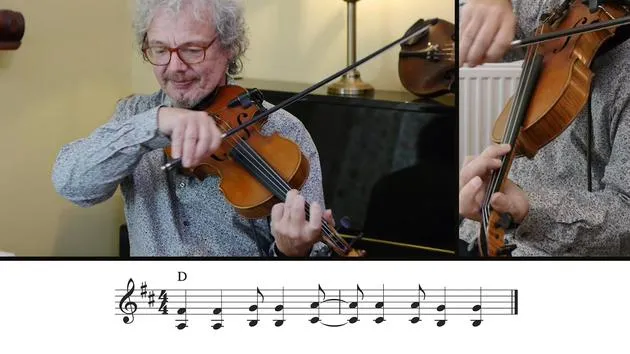
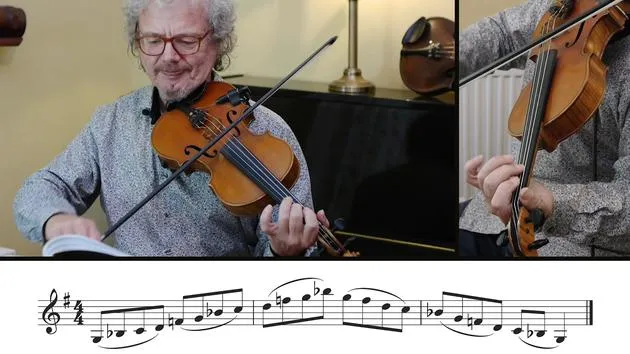
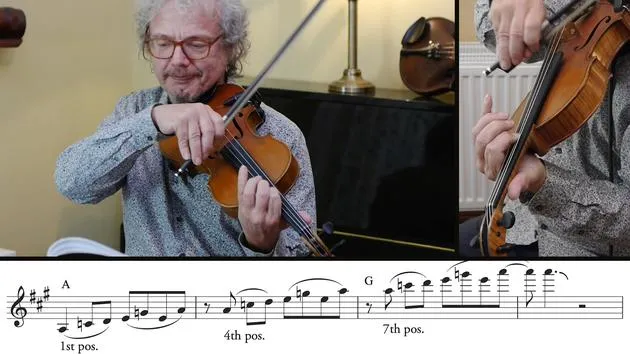
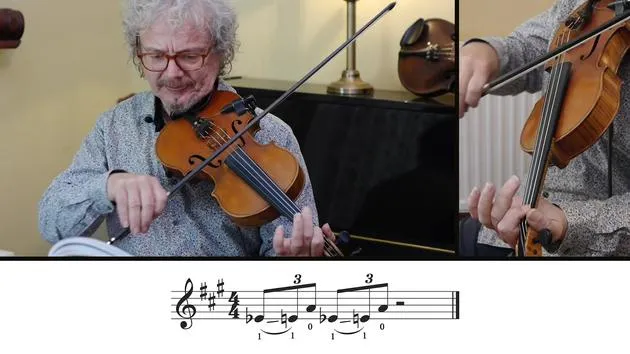
Let's have a look at breaking that length of music up into four different phrases. I think you'll agree, that's much better.
- It makes a lot more sense
- It gives you time to think
- It provides the audience with the opportunity to contemplate the beauty of what you've been playing
Varying Phrase Lengths
Do try to break your music up into phrases, and better still, try not to use the same phrase length all the time; vary your phrase lengths.
Exploring Note Lengths
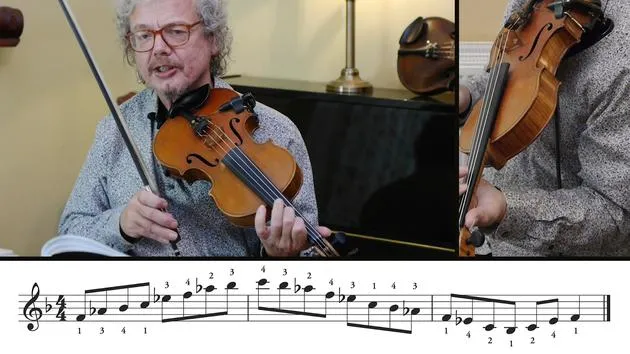
Now let's look at varying not just the phrase length, but also the length of notes. It's all too easy to sink into just playing quarter notes and eighth notes.
- So, let's incorporate some longer notes and some shorter notes as well.
- This keeps the audience guessing to some extent, making it much more interesting.
The Importance of Repetition
Finally, an important thing to think about is the idea of repeating your phrases.
- Repetition, when you're improvising, is not a bad thing; it's a good thing.
- All too often, I hear people playing in a very unconfident way, always thinking that whatever they do next will be better than what they just did.
Simplifying Through Repetition
The way around this is to simplify what you're doing. As soon as you get a good idea, do it several times and maybe develop it on the third or fourth time. This will make it sound like you actually mean what you say and that you know what you're doing.
Assignment
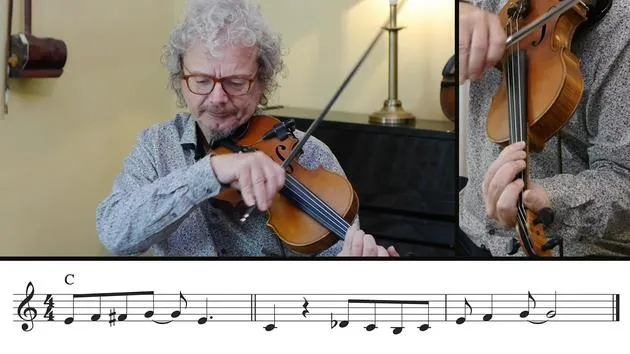
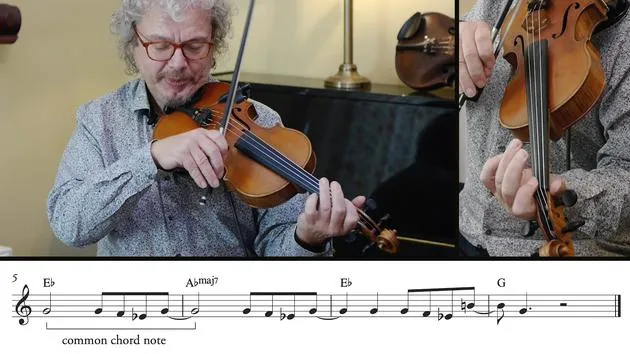
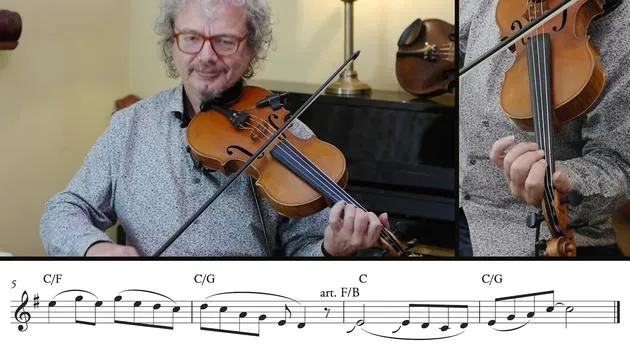
Here's an example of a bit of repetition. I think you'll agree that then we've really started to sound confident about what we're doing.
Your assignment for this lesson is to, using this backing track:
- Try out the different strategies we've covered with your own improvisations
- Think a lot about the phrasing that you're using
See you in the next lesson!
28 lecciones
2h 28m de lecciones en vídeo estructuradas
Funciones de vídeo avanzadas
Ralentiza, repite un pasaje, sigue la partitura
Móvil, tablet y ordenador
Practica donde quieras
Garantía de satisfacción 100%
30 días de garantía de devolución
Conoce a tu gurú
Conoce a tu gurú
Chris Haigh es violinista profesional desde hace 25 años, con experiencia en muchos géneros distintos. Ha tocado en más de 75 álbumes, trabajando con artistas como Alison Moyet, Bob Geldof, All About Eve, Michael Ball, David Soul, Oumou Sangare, The Quireboys, Riverdance, Morcheeba, James Galway y Steps.
Ha tocado swing y jazz con The Kimbara Brothers, Diz Disley, Le Jazz, The Hot Club of London y los Quecumbar Allstars, y lidera una banda de swing soviético de siete integrantes, The Kremlinaires.
Chris imparte clases y talleres sobre técnica de violín de jazz y ha enseñado violín de jazz en las universidades de Middlesex, Brunel y Newcastle y en el Truro College. Entre sus créditos como autor figuran nueve libros de violín, entre ellos The Fiddle Handbook.
También dirige Fiddling Around (fiddlingaround.co.uk), probablemente la fuente de información sobre violín más completa y visitada de la red.







