



Ritmo básico 1
Con
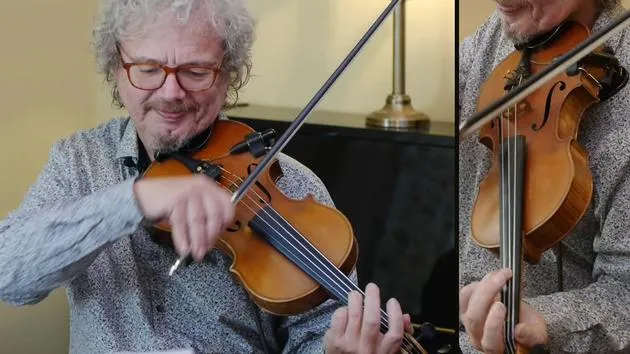
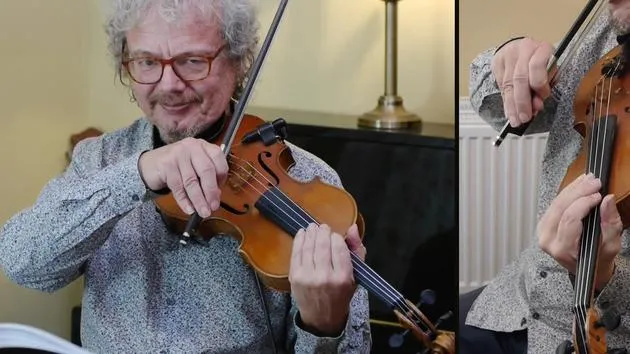
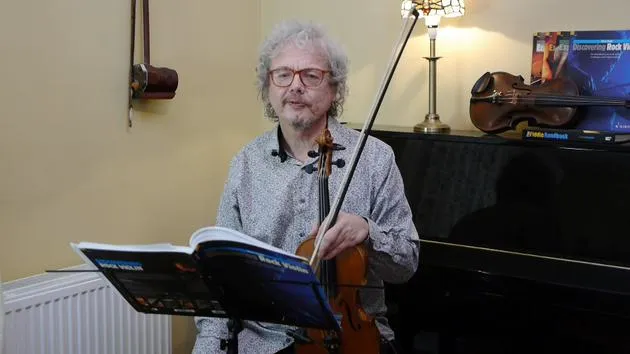
Chris HaighChris Haigh cubre lo esencial del violín rock, centrándose en cómo integrarte en una banda y tocar la parte rítmica en lugar de solear todo el tiempo.
© 2011 Schott Music Ltd, London
Qué incluye el curso
28 lecciones (2h 28m) · 1 gratis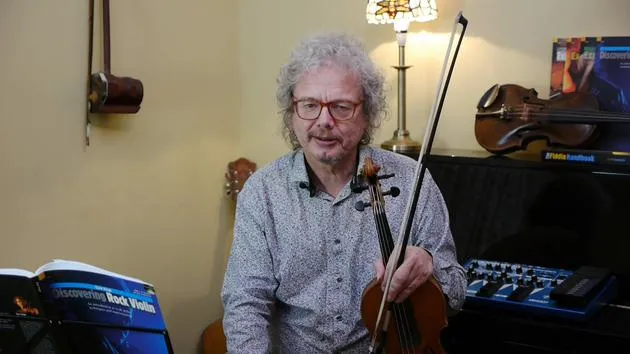
Transcripción de la lección
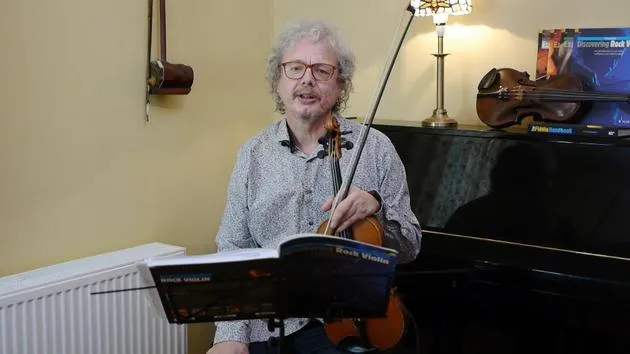
Rock Violin Basics
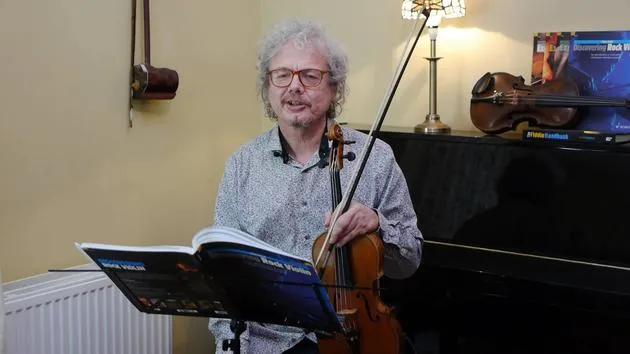
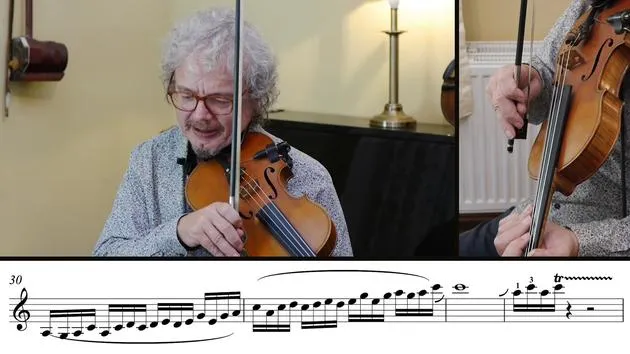
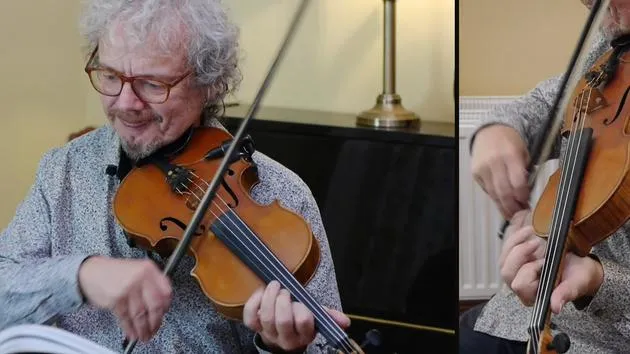
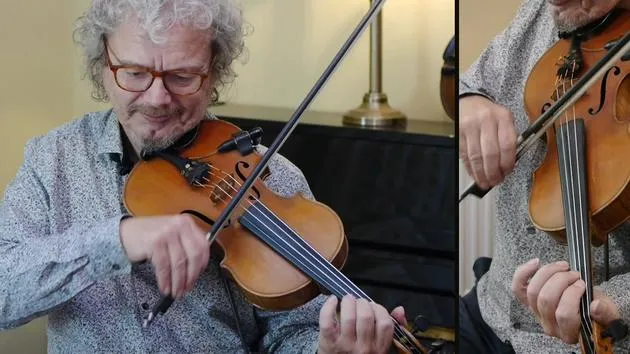
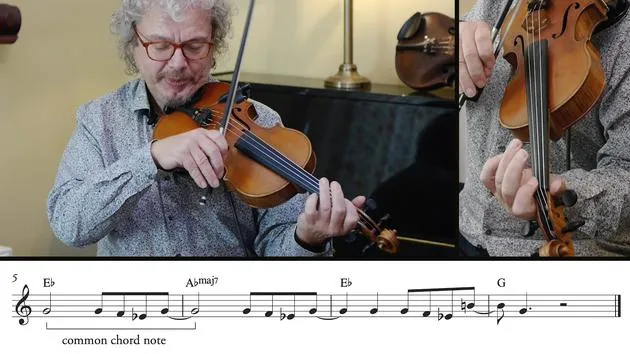
In this lesson, we're going to look at the very bare bones of rock violin playing. We'll interpret rock very loosely to cover various situations where you're playing in a band.
Performance Mindset
Some of you will want to turn up to 11 and shred right away, and there will be quite a lot of that towards the end of this course. However, if you expect that to define your rock violin career, be prepared for a short but glorious journey.
You've got to find ways of playing in a band where you're not at the front all the time, soloing constantly. Especially if you have a singer, they may quickly want to reduce your spotlight.
Playing as Part of the Rhythm Section
I've been in this situation and learned a lot from it. So let's explore some simple ways to be an effective part of the rhythm section.
Chord Sequence
Let's start off with a simple chord sequence.
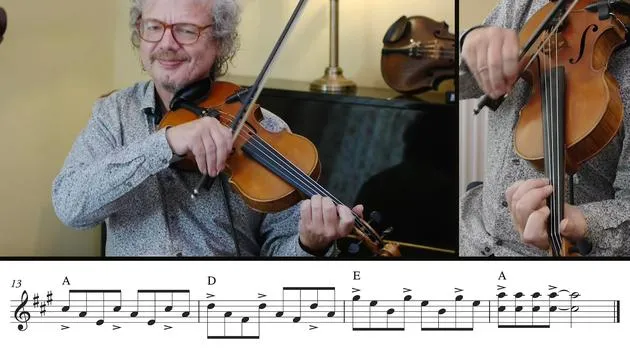
- We've got three chords today: IV and V.
- In this case, we're working with A, D, and E.
Question: What can you do whilst those chords are playing?
-
Single Notes on the Roots
- First, we'll try playing single notes on the roots.
-
Eighth Notes
- Next, we'll play eighth notes. This gives us a lot more notes while still focusing on the roots.
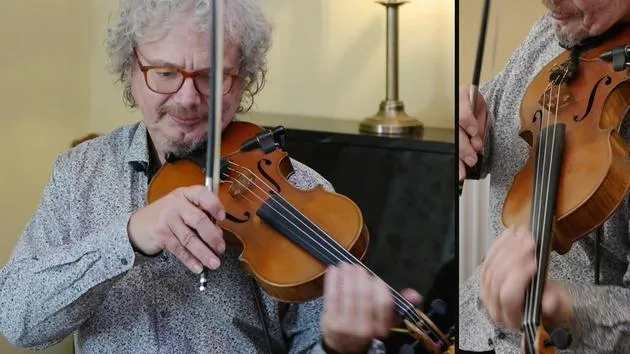
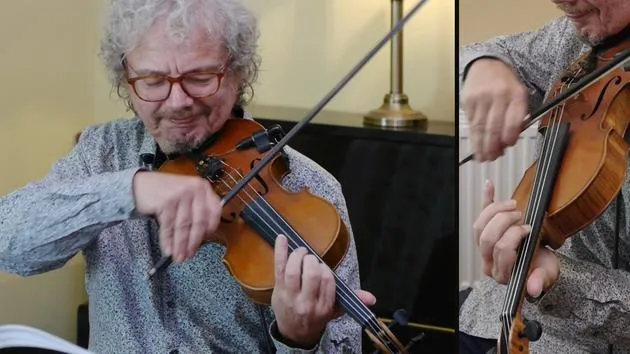
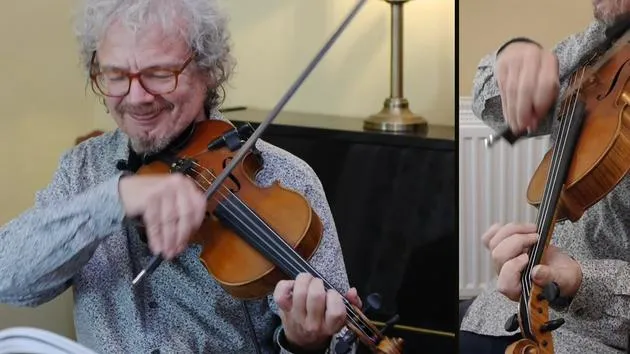
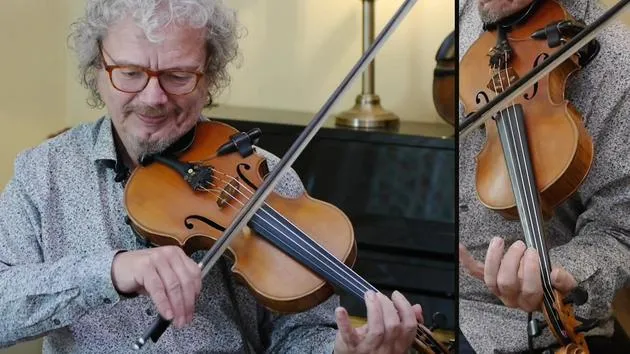
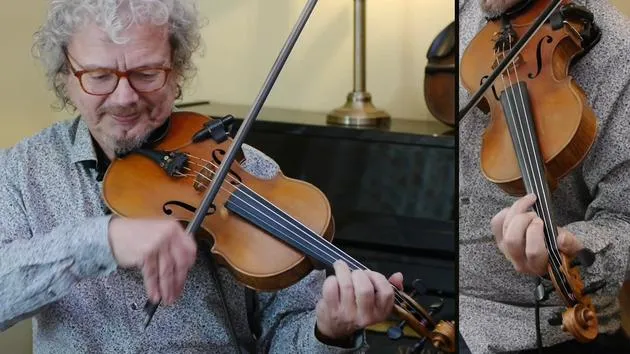
- Remember to strike down at the heel for a punchy rhythmic effect.
-
Accentuation
- Let's increase our accents:
- da da da da da da da da da da da da da.
- Again, maintain that heel strike.
- Let's increase our accents:
-
Playing Arpeggios
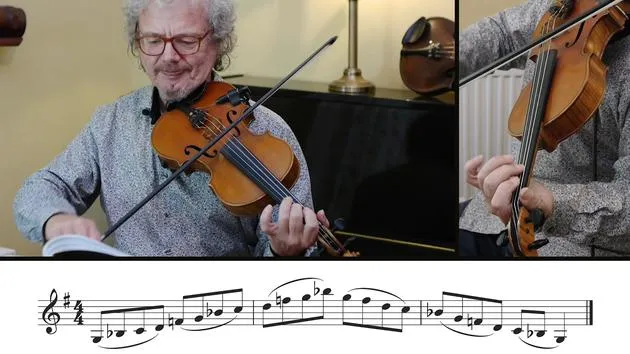
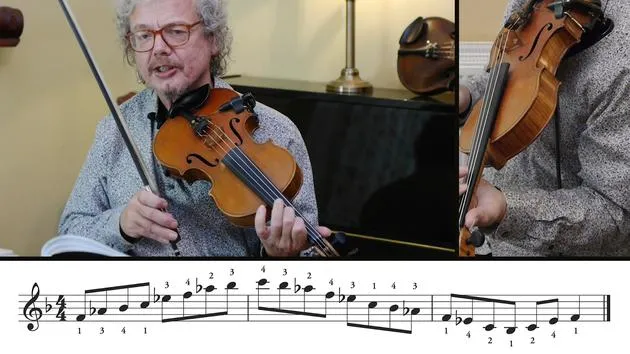
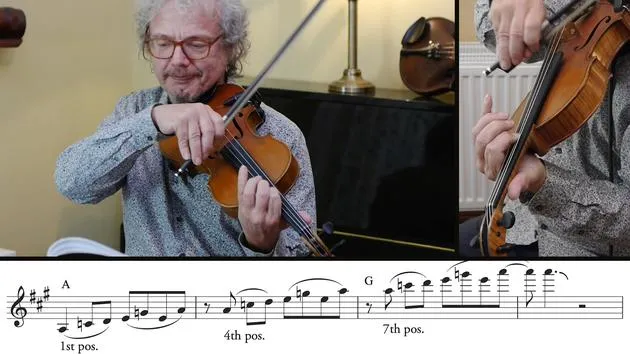
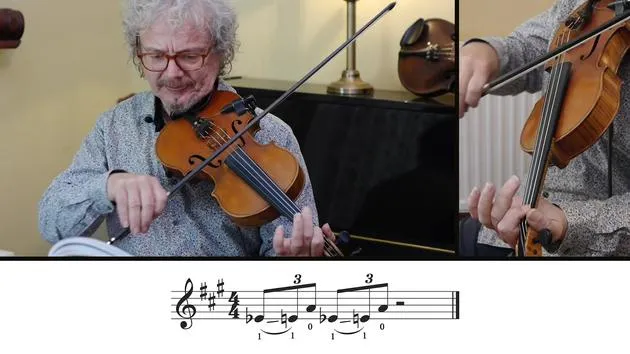
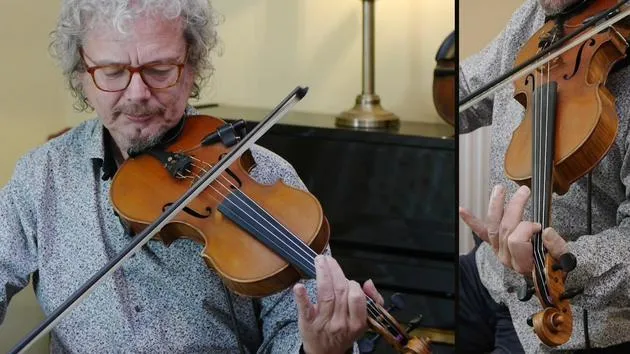
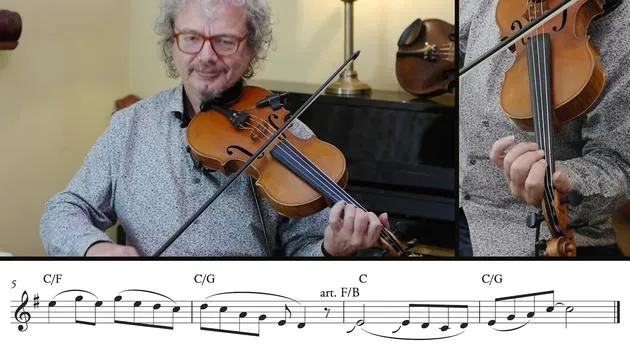
- This time, we'll move to playing arpeggios, which include the root, third, and fifth:
- Go up and down the arpeggio for each chord.
- Instead of going up and down, try going down and up.
- This time, we'll move to playing arpeggios, which include the root, third, and fifth:
-
Accents with Rhythm
- Now, let's use the roots again but focus on the accents:
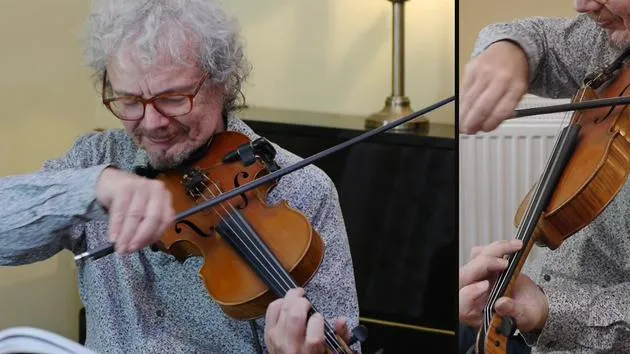
- Hear all down bows: da da da.
- This consistency increases attack.
- Now, let's use the roots again but focus on the accents:
Two-Bar Patterns
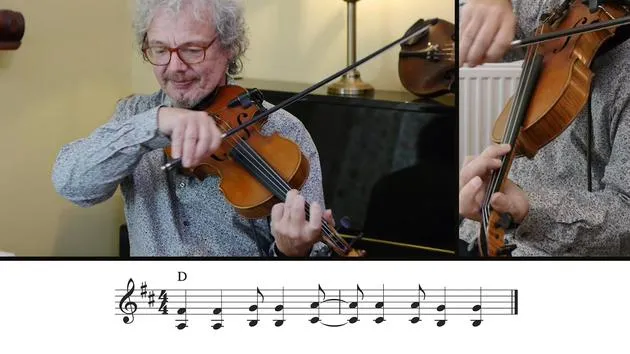
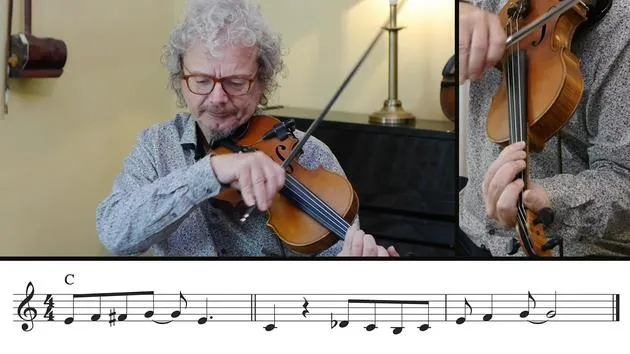
Now we'll shift gears with a two-bar long pattern:
- da da da da da da da da da da da da.
- This will involve a different chord sequence: two bars of A, followed by two bars of D.
Next, let's create another two-bar pattern, differing between the two bars:
- You'll have off beats, and then a burst of notes at the end.
Application
With the chords, you can see we've explored various approaches to both the notes and rhythms.
- These notes and rhythms will lock in with the rhythm section, drums, bass, and guitar, keeping you busy and happy without overshadowing the singer.
Assignment
For this lesson, here are your tasks:
-
Practice Patterns
Review all the different patterns we've covered. Play them along with the backing tracks, ensuring you use the correct bowing and accentuation. -
Create Your Own Patterns
Using the backing tracks, experiment with creating your own similar patterns. -
Identify Songs
Listen for songs on the radio or in your collection that have a similar feel. Try creating patterns that suit those songs, no matter what key they happen to be in.
Happy practicing!
28 lecciones
2h 28m de lecciones en vídeo estructuradas
Funciones de vídeo avanzadas
Ralentiza, repite un pasaje, sigue la partitura
Móvil, tablet y ordenador
Practica donde quieras
Garantía de satisfacción 100%
30 días de garantía de devolución
Conoce a tu gurú
Conoce a tu gurú
Chris Haigh es violinista profesional desde hace 25 años, con experiencia en muchos géneros distintos. Ha tocado en más de 75 álbumes, trabajando con artistas como Alison Moyet, Bob Geldof, All About Eve, Michael Ball, David Soul, Oumou Sangare, The Quireboys, Riverdance, Morcheeba, James Galway y Steps.
Ha tocado swing y jazz con The Kimbara Brothers, Diz Disley, Le Jazz, The Hot Club of London y los Quecumbar Allstars, y lidera una banda de swing soviético de siete integrantes, The Kremlinaires.
Chris imparte clases y talleres sobre técnica de violín de jazz y ha enseñado violín de jazz en las universidades de Middlesex, Brunel y Newcastle y en el Truro College. Entre sus créditos como autor figuran nueve libros de violín, entre ellos The Fiddle Handbook.
También dirige Fiddling Around (fiddlingaround.co.uk), probablemente la fuente de información sobre violín más completa y visitada de la red.







