



Riffs de metales
Con
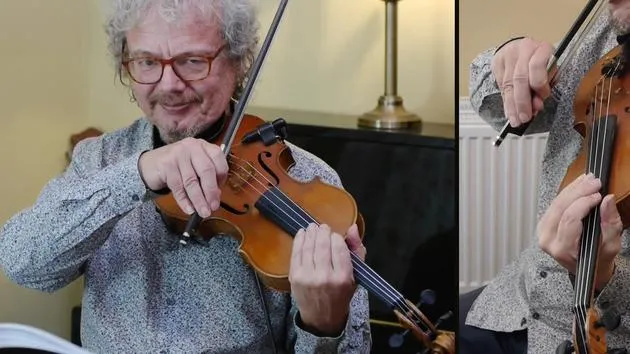
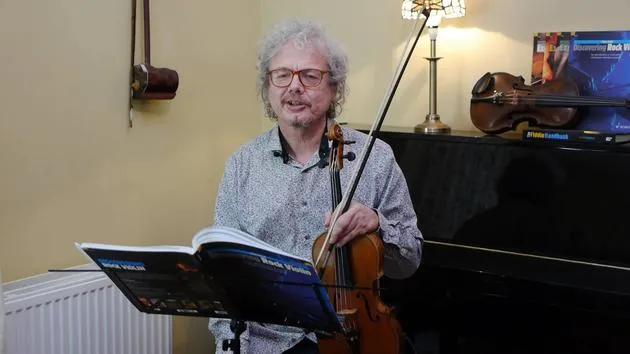
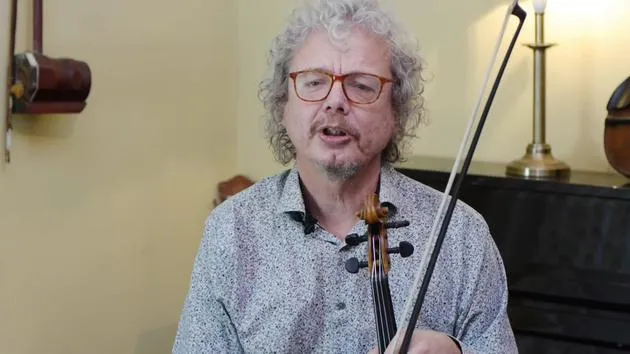
Chris HaighChris Haigh muestra cómo usar el violín como una sección de metales de bajo coste, escribiendo partes de violín contundentes y sincopadas que suenan como varios metales tocando al unísono.
© 2011 Schott Music Ltd, London
Qué incluye el curso
28 lecciones (2h 28m) · 1 gratis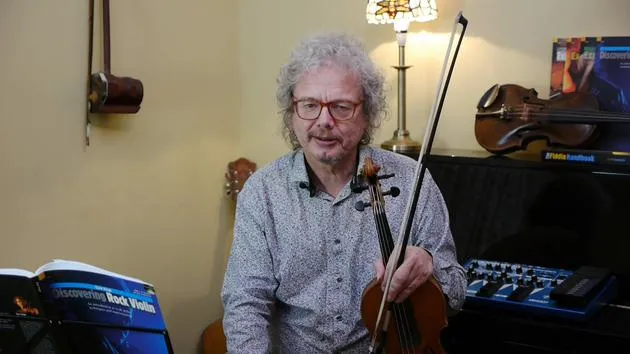
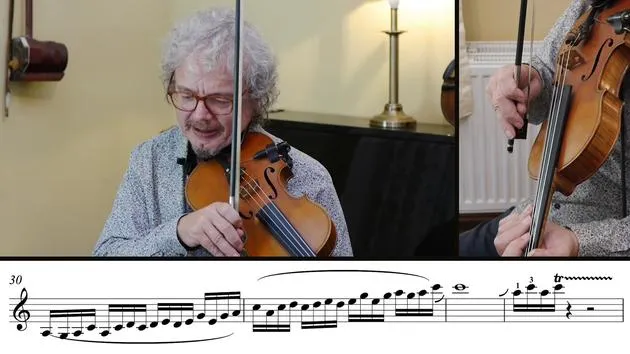
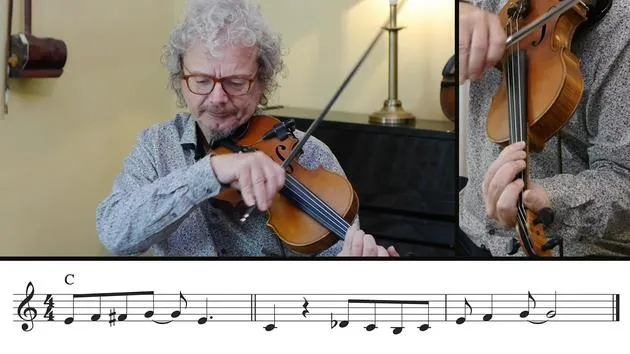
Transcripción de la lección
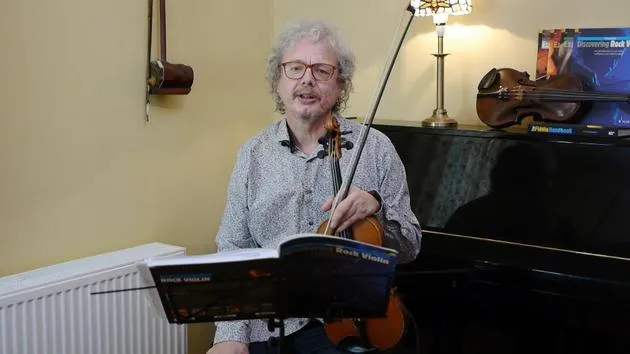
Lesson Focus: Violin as a Budget Horn Section
In the last lesson, we looked at the violin as a budget string quartet. Now, we're going to explore the violin as a budget horn section.
Understanding Horn Sections
Horn sections typically consist of:
- 2 to 6 brass players
- Carefully arranged, punchy parts
- Harmonized, locked-together sounds
Contribution to Songs:
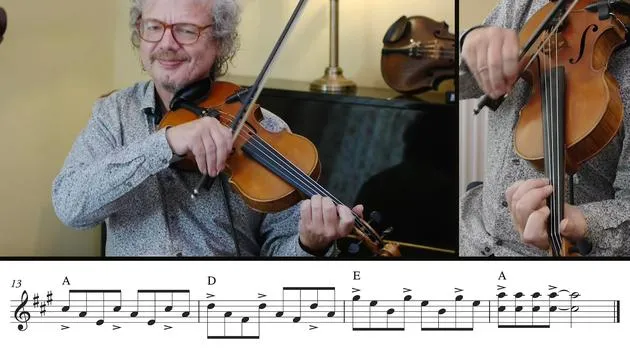
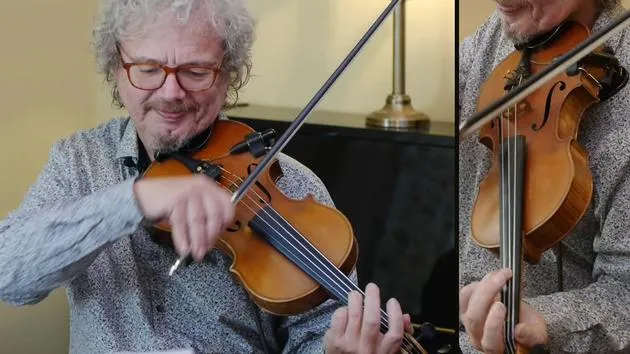
Horn sections can make a significant contribution to a song. The fiddle can achieve a similar effect in a more budget-friendly way.
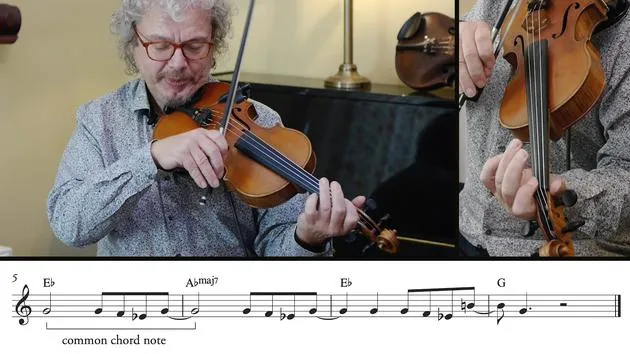
Creating Fiddle Horn Parts
When creating a horn part for the fiddle, consider the following:
-
Simplicity:
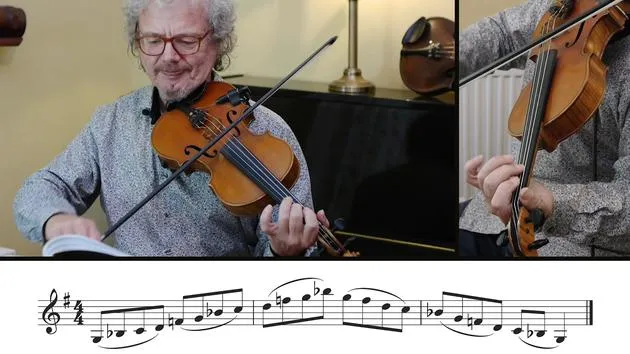
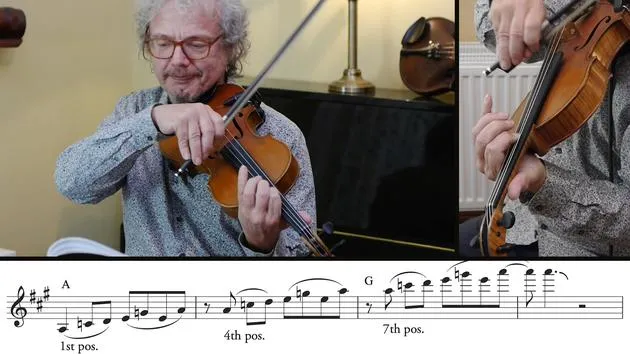
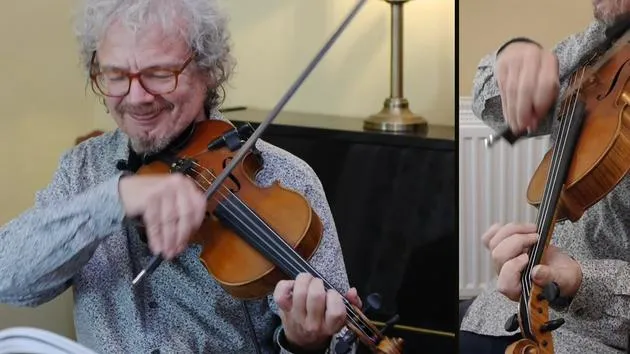
Imagine not just yourself playing it, but three or four people playing in unison or harmony. -
Percussiveness:
The rhythm should have a strong, percussive quality. -
Space:
Ensure there is plenty of space within the arrangement. -
Syncopation:
Incorporate syncopated rhythms to add interest.
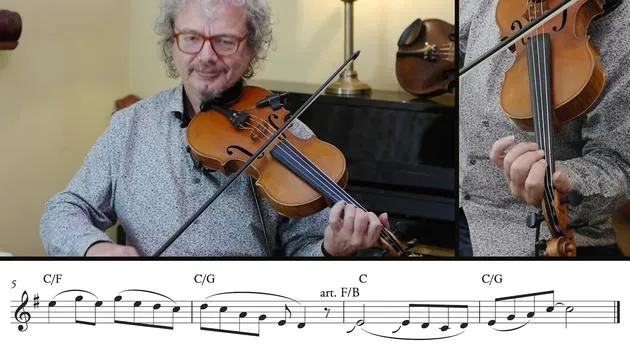
Examples of Fiddle Horn Parts
-
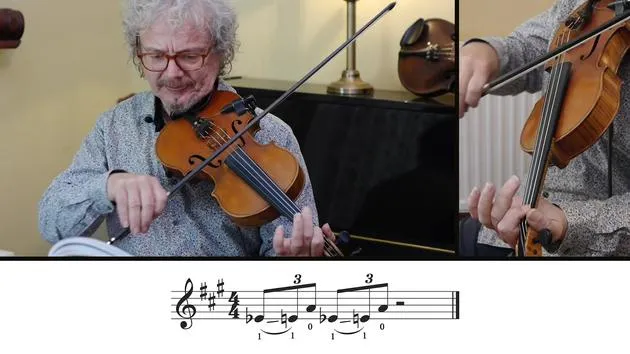
Using Octaves:
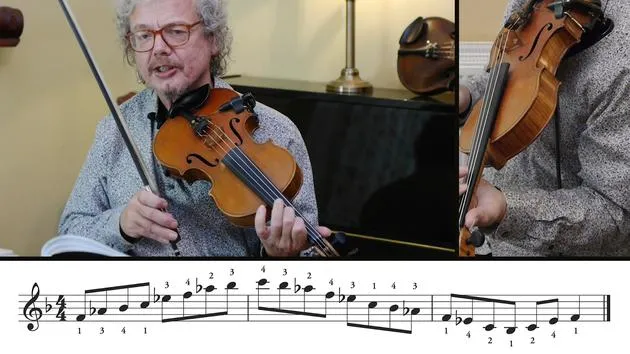
This technique can help to fatten up the sound. -
Harmony of Twin Paths:
Let's hear that in conjunction with the chords.
A Note on History: Dex's Midnight Runners
Before we play the final tune in this lesson, it's important to mention a band called Dex's Midnight Runners.
-
Era:
1980s in Britain, led by Kevin Rowland. -
Musical Style:
They had an unusual, ragtag, folky lineup but achieved hits, including "Come On Eileen," featuring a banjo and a brass section.
Interesting Anecdote:
At one point, Kevin Rowland wanted to include a fiddle section alongside the brass. He brought in three fiddle players and was so impressed with the fiddles that he suggested the brass section relearn and incorporate cello and viola. Understandably, the brass players were frustrated and decided to leave, resulting in a fiddle section without the brass.
Final Tune: Commemorating the Fiddle vs. Brass Battle
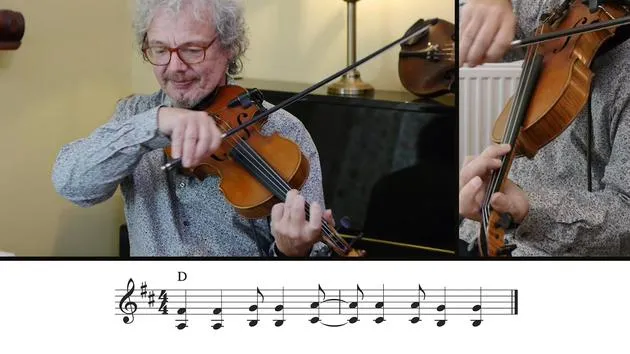
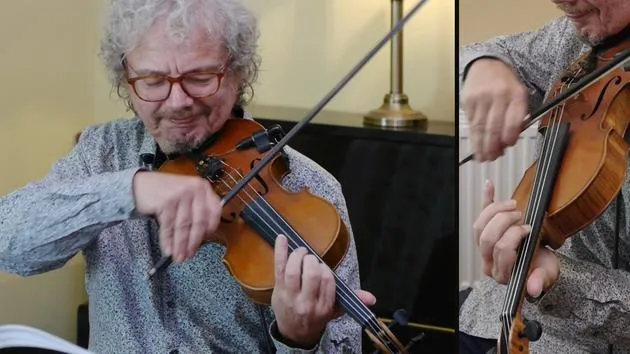
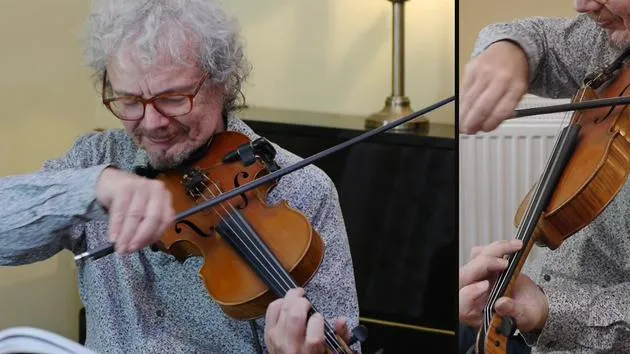
We're finishing off with a little tune that commemorates the epic battle between the fiddle section and the brass section in Dex's Midnight Runners.
Your Assignment
-
Brass Parts:
Using the G and D backing chords, try to create your own brass parts. -
Learning "Brass Doff":
Look at the tune that we just played and see if you can learn it. -
Pop Songs Practice:
Find some pop songs you know and try adding your own brass section fiddle parts to those songs.
Happy practicing!
28 lecciones
2h 28m de lecciones en vídeo estructuradas
Funciones de vídeo avanzadas
Ralentiza, repite un pasaje, sigue la partitura
Móvil, tablet y ordenador
Practica donde quieras
Garantía de satisfacción 100%
30 días de garantía de devolución
Conoce a tu gurú
Conoce a tu gurú
Chris Haigh es violinista profesional desde hace 25 años, con experiencia en muchos géneros distintos. Ha tocado en más de 75 álbumes, trabajando con artistas como Alison Moyet, Bob Geldof, All About Eve, Michael Ball, David Soul, Oumou Sangare, The Quireboys, Riverdance, Morcheeba, James Galway y Steps.
Ha tocado swing y jazz con The Kimbara Brothers, Diz Disley, Le Jazz, The Hot Club of London y los Quecumbar Allstars, y lidera una banda de swing soviético de siete integrantes, The Kremlinaires.
Chris imparte clases y talleres sobre técnica de violín de jazz y ha enseñado violín de jazz en las universidades de Middlesex, Brunel y Newcastle y en el Truro College. Entre sus créditos como autor figuran nueve libros de violín, entre ellos The Fiddle Handbook.
También dirige Fiddling Around (fiddlingaround.co.uk), probablemente la fuente de información sobre violín más completa y visitada de la red.







