



Big Blues
Con
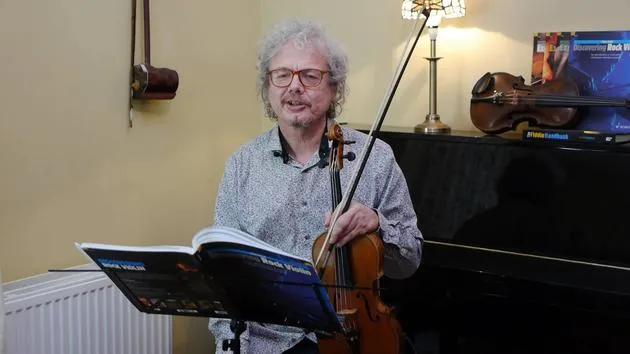
Chris HaighChris Haigh desglosa la secuencia de blues de 12 compases al violín: el patrón de acordes I, IV y V que se repite y convierte una melodía en un blues de verdad.
© 2011 Schott Music Ltd, London
Qué incluye el curso
28 lecciones (2h 28m) · 1 gratis
Transcripción de la lección
Lesson on the Blues
Introduction
Hi! In this lesson, we're going to talk more about the blues. This time, instead of discussing blue notes and blues scales, we'll focus on the 12-bar blues sequence.
Blues can exist within various genres of music. However, when you add the 12-bar sequence, it becomes a proper blues.
The 12-Bar Sequence
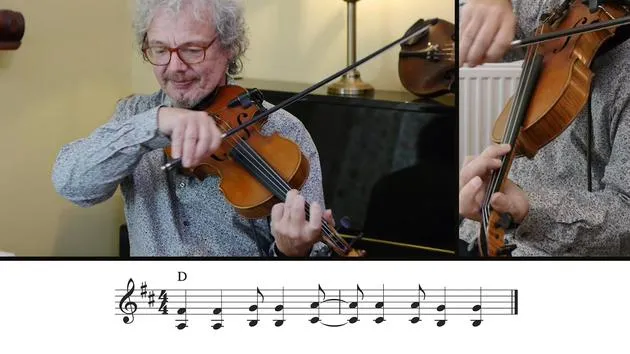
The 12 bars typically structure as follows:
- 4 bars of I
- 2 bars of IV
- 2 bars of I
- 1 bar of V
- 1 bar of IV
- 1 bar of I
- 1 bar of V
There are a few variations, but fundamentally, this is what the blues sequence is. You can often think of it as three repeated phrases, with each phrase being four bars long.
It's something you'll be very familiar with, even if you haven't been consciously aware of the blues.
Listening Exercise
First of all, let's have a listen to that sequence on its own.
Melody Practice
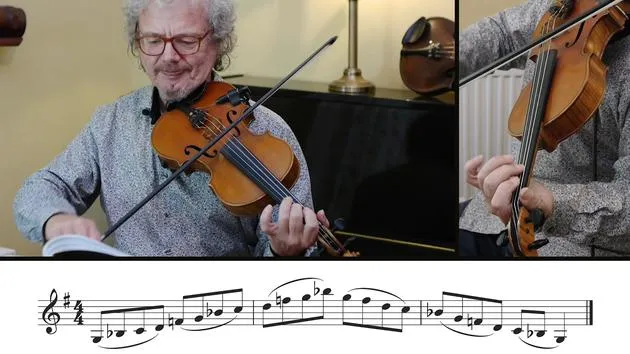
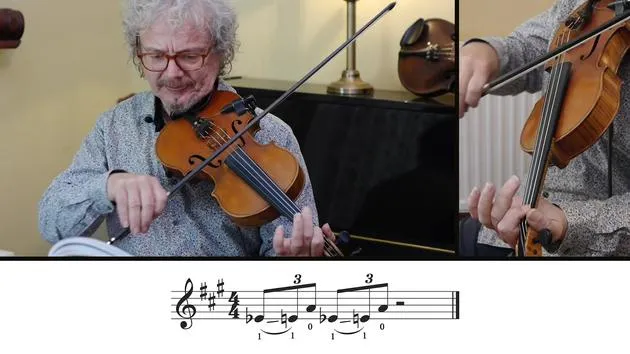
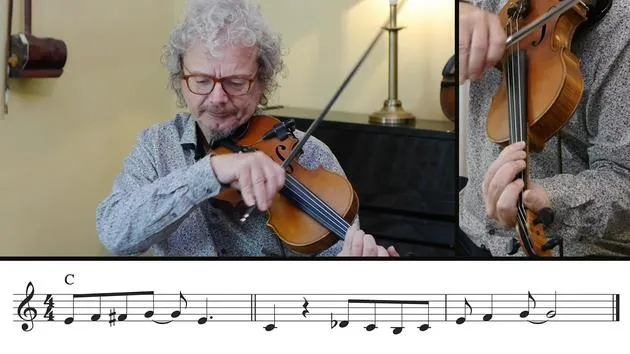
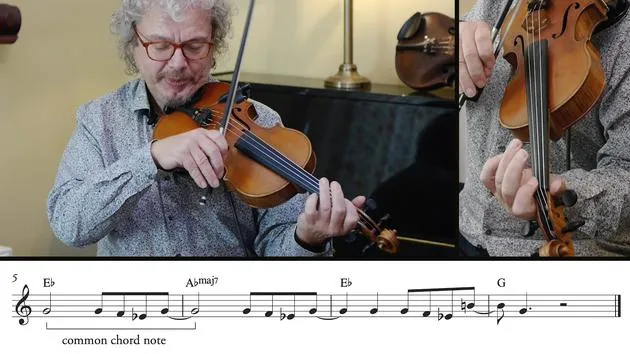
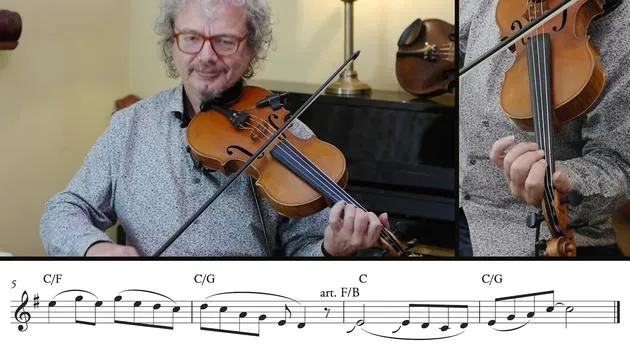
Okay, let's try playing something over that: a simple little melody using the E minor blues scale.
This format is very simple and adaptable. You can hear it in hundreds, if not thousands, of songs, particularly from the 50s and 60s.
Approaches to Playing Melody
There are two different approaches to playing melody or solos:
- Stick with the same scale/melody through the three different chords.
- Modify as you go through those chords.
Same Melody Approach
Let's first try something where we play the same thing three times. You can hear that it works well. Using the blues scale allows it to fit nicely over the three changing chords.
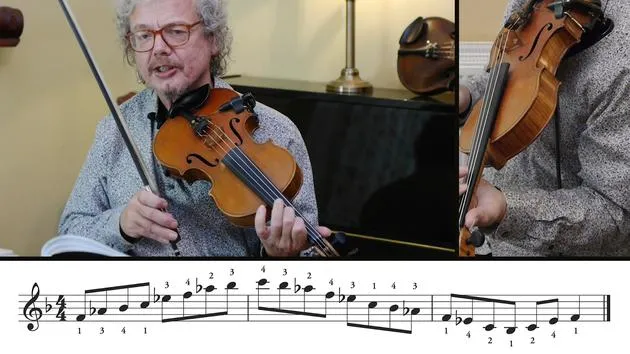
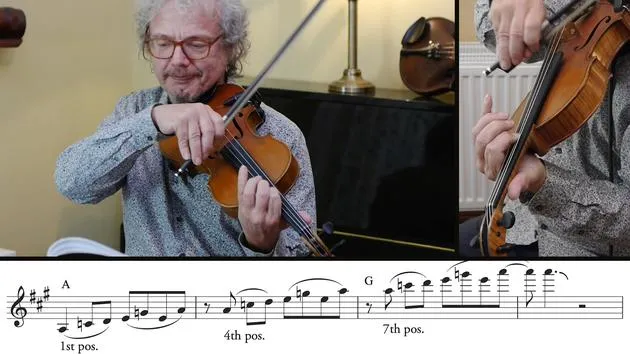
Let's do the same thing again, this time in the key of G using the G major blues scale.
Attention to Details
Now, the observant among you may have noticed that on the D chord, I went up to A. I took evasive action because the major blues scale can sometimes interfere with the pattern you're playing.
Whereas the minor blues scale usually manages all three chords, you often need just one note shift with the G major blues scale.
Minor Blues Scale
So far, we've discussed G major and G minor blues scales, and we haven't seen a minor chord yet. What do we do if the key of the song is in minor?
Let's use an example of a blues in A minor. For A minor, we'll play the A minor blues scale, which includes:
- Flattened third
- Flattened fifth
- Flattened seventh
Since the flattened seventh and flattened third are already in the minor scale, the only true blue note is the flattened fifth.
Tune Example
Let's hear this tune.
Incidentally, this tune is based on a composition by my friend, Nick Pickett. Back in the 60s, he had an instrumental violin hit called "Nine by Nine," which sold a million copies. Unfortunately, due to some unfortunate circumstances, he never received his royalties.
Conclusion
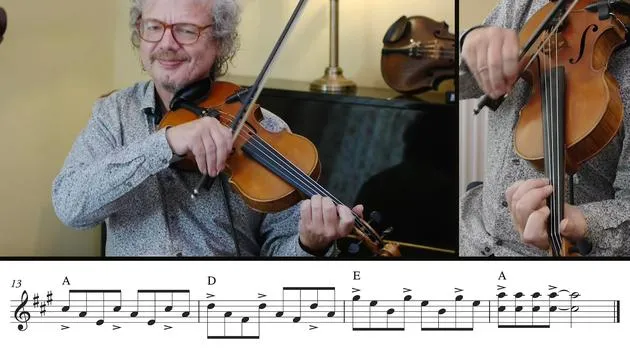
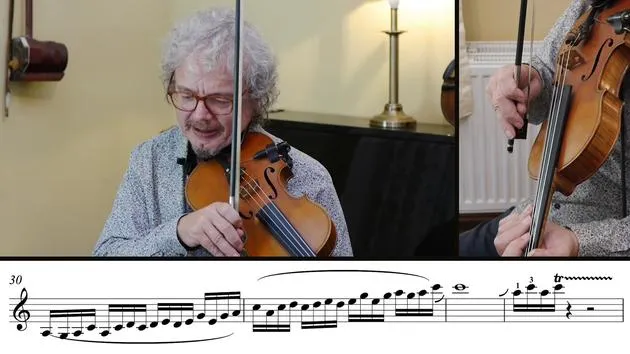
We're going to finish off this lesson with a tune called "Big Blues." This piece has a few tricky bits, to say the least, which I'll demonstrate.
Key Sections
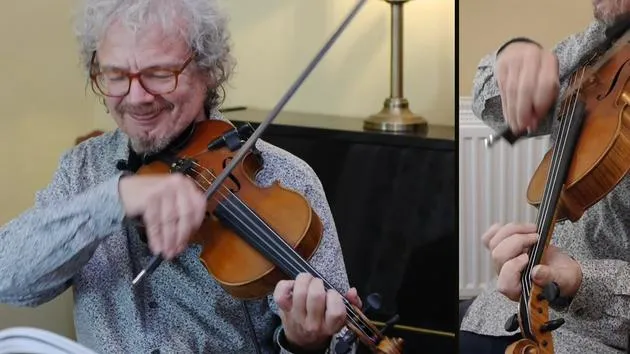
- Bar 30: Long, sweeping bows and should be played faster. It may take you some time to reach that speed.
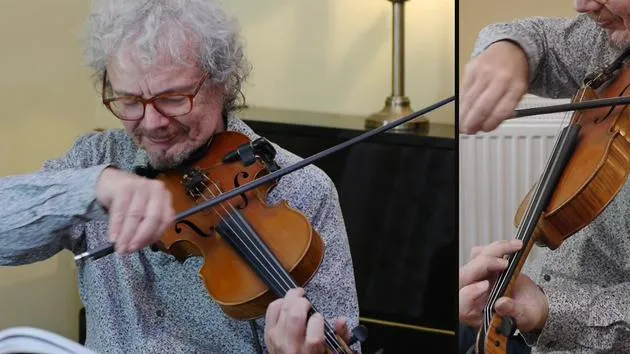
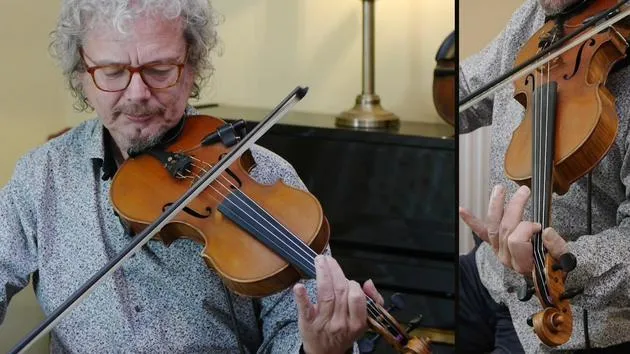
- Bar 38: This one involves third position, using the third and first finger.
- Bar 32: Needs to be faster, followed by a swooping upward motion.
Practice Tips
If there's a part of this tune or solo that feels too difficult, set it aside for now. Focus on finding a workaround or simplification that allows you to play the whole piece without getting stuck on one section.
This is a valuable lesson, not just for this book, but for life in general: if it's too difficult, it doesn't mean you can't do it eventually. It shouldn't stop you from giving the entire piece a try.
Final Recap
In this lesson, we covered:
- The blues in E
- The blues in G
- The blues in A minor
Practice all of these tunes and then try improvising on each using the correct scales. Finally, work through "Big Blues".
Take your time with the difficult sections and aim to play the full tune and solo. If you can't get it right away, set yourself a target, whether that's one day, one week, or even one month.
See you in the next lesson!
28 lecciones
2h 28m de lecciones en vídeo estructuradas
Funciones de vídeo avanzadas
Ralentiza, repite un pasaje, sigue la partitura
Móvil, tablet y ordenador
Practica donde quieras
Garantía de satisfacción 100%
30 días de garantía de devolución
Conoce a tu gurú
Conoce a tu gurú
Chris Haigh es violinista profesional desde hace 25 años, con experiencia en muchos géneros distintos. Ha tocado en más de 75 álbumes, trabajando con artistas como Alison Moyet, Bob Geldof, All About Eve, Michael Ball, David Soul, Oumou Sangare, The Quireboys, Riverdance, Morcheeba, James Galway y Steps.
Ha tocado swing y jazz con The Kimbara Brothers, Diz Disley, Le Jazz, The Hot Club of London y los Quecumbar Allstars, y lidera una banda de swing soviético de siete integrantes, The Kremlinaires.
Chris imparte clases y talleres sobre técnica de violín de jazz y ha enseñado violín de jazz en las universidades de Middlesex, Brunel y Newcastle y en el Truro College. Entre sus créditos como autor figuran nueve libros de violín, entre ellos The Fiddle Handbook.
También dirige Fiddling Around (fiddlingaround.co.uk), probablemente la fuente de información sobre violín más completa y visitada de la red.







