



Mit musikalischen Leitern arbeiten
Mit
Sister Bliss Teil des KursesVom Studio auf die Bühne: Wie Faithless ihren Live-Sound schufen20 Lektionen (1h 53m)Dein GuruSister Bliss
Das steckt im Kurs
20 Lektionen (1h 53m) · 1 gratis
01. Elektronik live sinnvoll umsetzen
11:22
02. Die Studio-Tracks erweitern
7:24
03. Raum schaffen
6:12
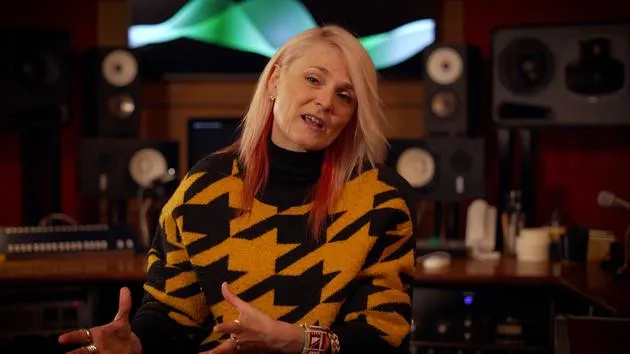
04. Synthetisch vs. live
4:17
05. Sounddesign der Show
7:28
06. Proben und Vorbereitung
8:56
07. Mit Session-Musikern arbeiten
7:50
08. Mit musikalischen Leitern arbeiten
Du bist hier3:18
09. Bühnenaufnahmen einbinden
3:24
10. Visuelles Design
7:59
11. Deine Setlist anpassen
5:18
12. Die Bedeutung der Crew
6:53
13. Front-of-House-Techniker
3:30
14. Live-Übertragungen
3:03
15. Aufnahmequalität
4:22
16. Internationale Tourneen
4:24
17. Zeitmanagement und Logistik
3:22
18. Wenn etwas schiefgeht
4:41
19. Vorspiele
5:19
20. Stress und persönliche Gesundheit
4:22
Transkript der Lektion
Transitioning from Studio to Live Performance
Sometimes it's quite a daunting thing to go from the studio to live if you've not really had any experience in this area.
The Role of Musical Directors (MDs)
There are people called MDs, or musical directors, who can make that job easy for you. They can:
- Take the things you've done in the studio
- Rearrange your stems
- Help point you in the right direction on what to embellish
- Suggest live musicians who can play parts that were recorded and so forth.
Early Experiences
We started off actually using a guy who was going to be our drummer, called Andy Gangardine. He ended up getting poached by the Spice Girls, so he only came to one rehearsal.
I think he might have started programming one song because he was au fait with the MPC, and we didn't really know how to work it. We used different sequences in the studio, not an MPC.
Literally, after one rehearsal, he disappeared off with the Spice Girls. I believe he's now with Chase and Status. This is his usual show, as well as his own band, The Baes.
He's an amazing drummer and an amazing MD, very experienced, having worked with loads of bands. We thought we needed that expertise.
Assembling the Band
After Andy, we started cobbling it together ourselves. Our MD was essentially Rollo. As we went on with different tours, Andy Treacy, our drummer, also did a lot of programming and helped with MD duties.
Ultimately, Rollo, who produced the records, was a non-instrumentalist. He could really listen to everything with clear ears, which was incredibly useful.
Rehearsals with Rollo
He would come to rehearsals, and we would rehearse the songs up to a certain point. Then he'd work out the bits he liked and didn't like, which is pretty much how I've worked with him in the studio for the last 30 years.
We would sit there bickering and arguing over hi-hats and things like that. Rollo brought that dynamic to the studio, which was really, really helpful. It allowed us to reflect on our playing from both the inside and the outside almost simultaneously.
Unique Approach
I don't know many producers that would do this ? produce a record and then come back to produce a live band. This is quite an unusual situation, but you can employ MDs from the outside.
There are definitely quite a few around, and they'll be up to speed on the best ways for electronic artists, in particular, to translate studio work into the live arena.
Challenges of Electronic Music
It is always the most complex musical form. In my eyes, it's different from a band where you sit in a room and play a song that gets recorded. Electronic music just doesn't work that way.
The layering, coming back to bits of music at different times, the overdubbing, and the complexity of beats and filtering create challenges.
Live Performance Solutions
How on earth do you recreate that in the live arena? Well, obviously now we live in a world of Ableton and other methods.
With tools like Novation and Kontakt, as well as other great samplers, we can take the sounds we've created in the studio and present them in a live setting much more effectively.
20 Lektionen
1 Std. 53 Min. strukturierte Videolektionen
Erweiterte Videofunktionen
Verlangsamen, Passagen loopen, mitlesen
Handy, Tablet & Desktop
Üben, wo du willst
100 % Zufriedenheitsgarantie
30 Tage Geld-zurück-Garantie
Lern deinen Guru kennen
Lern deinen Guru kennen
„Sister Bliss hat nie aufgehört, Musik zu schreiben. Sie ist eine versierte Komponistin für Film und Fernsehen, eine Club-DJ und eine Fürsprecherin der Kreativbranche.“ Billboard
Ayalah Bentovim, alias Sister Bliss, ist eine der erfolgreichsten britischen Dance-Künstlerinnen der vergangenen 25 Jahre und die musikalische Kraft hinter Faithless.
Gemeinsam mit dem legendären Frontmann Maxi Jazz und dem Produzenten Rollo Armstrong gründete sie Faithless: eines der erfolgreichsten Electronic-Acts ihrer Generation, mit einer über zwei Jahrzehnte reichenden Karriere, die 8 Alben (3 davon auf Platz 1) und sechs Top-10-Singles umfasste. Bis heute hat Faithless weltweit über 15 Millionen Tonträger verkauft und ist rund um den Globus vor Millionen Menschen live aufgetreten, als Headliner von Festivals, Stadien und Arenen. Die Band hat mit Künstlern wie Jazzie B, Boy George, Cat Power und Dido zusammengearbeitet, ohne sich je anzupassen, und bewegt sich mühelos durch ein eklektisches Spektrum von Genres.
Im Laufe einer 25-jährigen Karriere, die sie von der britischen Underground-Clubszene zu ausverkauften Arena-Shows und Festival-Headliner-Slots rund um die Welt führte, ist Sister Bliss zu einer der langlebigsten und einflussreichsten weiblichen Electronic-Künstlerinnen der britischen Dance-Musik geworden.
Sie kommt gerade von der Veröffentlichung des ersten Faithless-Studioalbums seit zehn Jahren, dem mit Spannung erwarteten 'All Blessed' - Faithless' Liebeserklärung an die elektronische Musik, die die Band in Bestform präsentiert. Das Album erreichte Platz 6 der Charts, und die Singles fanden zusammen mit ihren Premieren-Remixes breite Unterstützung bei BBC Radio 1, Radio 2 und BBC 6 sowie bei Kiss FM und Capital.
Als klassisch ausgebildete Multiinstrumentalistin hat sie zudem die Musik für zahlreiche Fernseh-, Film- und Theaterproduktionen geschrieben. Zu ihren Credits zählen der Film Knife Fight aus dem Jahr 2012 mit Rob Lowe unter der Regie des zweifachen Oscar-Preisträgers Bill Guttentag, Auftragsarbeiten für Sex & The City 2, Chasing Amy, Danny Boyles The Beach, A Life Less Ordinary, der gefeierte britische Film The Hide, Crossing The Line sowie die BAFTA-prämierten Fernsehdramen Life Begins (ITV) und The Poison Tree (ITV).
Für das Theater hat Bliss die Musik zu The Black Album und The Emperor Jones am National Theatre in London geschrieben und außerdem ein Originalstück für die London Sinfonietta komponiert, das beim Fuse Festival in Großbritannien aufgeführt wurde.
Kürzlich hatte sie eine Hauptrolle in der großen BBC1-Primetime-Show 'This is My Song', in der sie die Teilnehmenden betreute und ihre finalen Aufnahmen produzierte.
2019 veröffentlichte sie unter dem Namen 'R PLUS' ein neues gemeinsames Album mit Rollo und Dido - 'The Last Summer', nach einem prall gefüllten Sommer voller Festival-Headliner-DJ-Sets rund um die Welt, darunter Auftritte bei Bestival, Exit Festival, Glastonbury, Creamfields, Ibiza und darüber hinaus.
Ihre überaus erfolgreiche wöchentliche Radiosendung und ihr Podcast 'Sister Bliss in Session' werden an über 100 Sender in 43 Ländern weltweit ausgestrahlt. Kürzlich moderierte sie als Gast die gefeierte Sendung von Gilles Peterson auf BBC 6 Music und vertritt regelmäßig Ana Matronic in der Sendung Dance Devotion auf BBC Radio 2.
Außerdem präsentierte sie eine fünfteilige Reihe auf dem Sender Scala Radio von Bauer Media, in der sie klassische und elektronische Musik miteinander verband und die bei den New York Festival Radio Awards im Wettbewerb gegen 30 Länder die Bronze-Auszeichnung gewann.
Derzeit unterrichtet sie im MA-Masterstudiengang der Tileyard Studios, unter anderem in Modulen zu Songwriting, Produktion und dem Schreiben nach kommerziellem Briefing, und betreut einzelne Masterstudierende - dasselbe praxisnahe Wissen, das sie in Studio to Stage teilt, wo sie genau aufschlüsselt, wie Faithless aus ihren Platten eine stadionfüllende Liveshow machte.







