



Proben und Vorbereitung
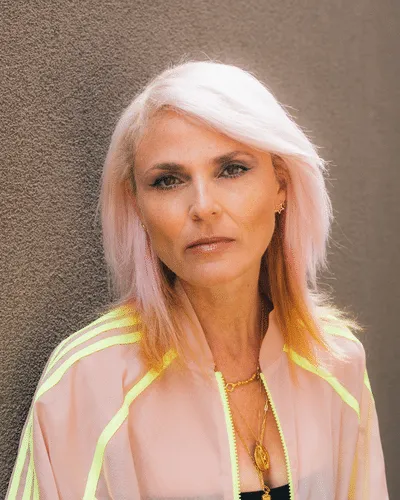
Mit
Sister Bliss Teil des KursesVom Studio auf die Bühne: Wie Faithless ihren Live-Sound schufen20 Lektionen (1h 53m)Dein GuruSister Bliss
Das steckt im Kurs
20 Lektionen (1h 53m) · 1 gratis
01. Elektronik live sinnvoll umsetzen
11:22
02. Die Studio-Tracks erweitern
7:24
03. Raum schaffen
6:12
04. Synthetisch vs. live
4:17
05. Sounddesign der Show
7:28
06. Proben und Vorbereitung
Du bist hier8:56
07. Mit Session-Musikern arbeiten
7:50
08. Mit musikalischen Leitern arbeiten
Gratis-Lektion3:18
09. Bühnenaufnahmen einbinden
3:24
10. Visuelles Design
7:59
11. Deine Setlist anpassen
5:18
12. Die Bedeutung der Crew
6:53
13. Front-of-House-Techniker
3:30
14. Live-Übertragungen
3:03
15. Aufnahmequalität
4:22
16. Internationale Tourneen
4:24
17. Zeitmanagement und Logistik
3:22
18. Wenn etwas schiefgeht
4:41
19. Vorspiele
5:19
20. Stress und persönliche Gesundheit
4:22
Transkript der Lektion
Music Performance and Rehearsal Insights
It might be a military operation, but it's still involving actual people and emotions.
The Challenge of Communication
I personally found it quite difficult in rehearsals sometimes because I had written the music. I kind of knew where I wanted things to fall, but people didn't necessarily know that. Maybe I didn't express myself in the way that I should have done.
- People found me brusque in the early days, but it was more like:
- "I don't want to have 15 different decisions about this."
- "This happens here and this happens there," and people need to not take that personally.
It depends on the context: If you're in a band with the people who made the record or you're working with session musicians, you have to find a way to speak to people that gets them on board and makes them feel part of it.
In our band, it's a very odd mix of an autocracy and a democracy all at the same time. We want the musicians to bring their A game and their musicianship and knowledge. And they do, which is really exciting!
- "Oh my God, I love that. Play that again."
- And it wasn't on the record, it wasn't something I played.
It's about letting go of ego and doing what's best for the music, which is really important.
The Rehearsal Process
That's something you find out in rehearsal. The more you do it, the more you become like a well-oiled machine. It was very exciting when we reached a certain level of playing where even in rehearsal, familiarity with the song meant that everybody would relax. They weren't just trying to remember what bit came next; it just flowed.
- Key to Success: Practice, practice, practice!
Recording Rehearsals
Another important thing was to record the rehearsals and listen back to see what was working.
- It usually took us about three weeks to prepare for an arena run.
- The next level would be to do dress rehearsals and production rehearsals with everything that would happen during the show:
- Lighting rig
- Lasers
- Staging
- Risers that they build
It's very different from playing in a room that probably doesn't have much reverb. You're all close, and you can all see each other. Suddenly you put in a strobe, a laser, and a whole wall full of video screens, changing the way you feel.
Navigating the Chaos
You can get lost in the moment, thinking, "Oh my God, what bar am I on? Are we at the end of the song or the beginning?" Some of our songs have very long, repetitive sections.
It was really hard to keep your place in the song, which is why learning it and getting it right in rehearsal was crucial. Once you bring in production elements, it changes everything.
- There's this sort of nervousness that comes when all these things are firing off, altering your perception.
- It changes the way I hear music when I hear it with flashing lights going off while trying to remember what I'm doing.
Prepping for a Show
The way of prepping for a show was making sure you actually played the show in a rehearsal space. We'd go to places like Light Structures in Wakefield or a big film studio in Acton.
- You need enough space to hang a whole show, considering all the rigging and production you'd take on tour.
For example, in venues like Brixton Academy, having a very high proscenium arch allows you to put on a big show, but you really need to be inside that show to know how to respond as a musician.
Safety Considerations
Even the positioning of the lights matters.
- "Mate, that's just flashing so much. I can't see what sound I'm pressing or my keyboards."
- If there's a strobe in the drummer's face, it can be very disorienting for him.
We had a tech with epilepsy who actually had a fit. This highlights the importance of being aware that some people might have underlying conditions you know nothing about.
Suddenly the lights are going, and you realize it's dangerous.
Testing the Waters
We often did shows in less important places where critics wouldn't necessarily be. For example, we went to Thessaloniki, which had a great reception.
- It was also a place where we could tweak the show in front of a live audience, knowing that when we played at Wembley Arena, it would be amazing.
In a way, we deliberately played in slightly more obscure cities at the beginning of a tour to get the machine running. We knew that when we came into the full glare of the media in other countries, the show would be firing on all cylinders.
The Importance of Timing
It's crucial not to schedule your major show where critics would be writing about you at the start of the tour, straight out of rehearsals.
- Everything can change in front of an audience.
- You can see them getting engaged in something you thought might be a bit boring in rehearsals.
We often lengthened sections based on audience reaction, running it a bit longer, going back, and reprogramming.
A Responsive Show
Our show needed to be responsive. We used to create variations on the fly, adapting elements based on live feedback.
- "Sometimes as a musician, you're inside it, and it's very hard to make decisions."
You may love what you're playing, but getting lost in your own musicality can cause you to lose the audience's interest. Maintaining engagement throughout the show is vital.
Reflecting on the Performance
Different moods, tempos, and energies are important. You can be introspective and heartfelt, then shift to something punky and explosive.
However, it's essential not to be self-congratulatory, as that can read poorly to a crowd.
I tend to be hypercritical; I often only heard what was wrong with the show.
- After a performance, we could all get excited, but I would list things we could improve, which wasn't the right time to do it.
Tip: Save your pointers for later.
- If you notice things, bring them up the next day.
- Make notes or mental reminders to address concerns without being a downer immediately after the show.
Sometimes, you all have had an awful show and can vent together, but even then, timing matters.
- Over-criticism can drain the energy from the excitement of a performance.
I know that from bitter experience.
20 Lektionen
1 Std. 53 Min. strukturierte Videolektionen
Erweiterte Videofunktionen
Verlangsamen, Passagen loopen, mitlesen
Handy, Tablet & Desktop
Üben, wo du willst
100 % Zufriedenheitsgarantie
30 Tage Geld-zurück-Garantie
Lern deinen Guru kennen
Lern deinen Guru kennen
„Sister Bliss hat nie aufgehört, Musik zu schreiben. Sie ist eine versierte Komponistin für Film und Fernsehen, eine Club-DJ und eine Fürsprecherin der Kreativbranche.“ Billboard
Ayalah Bentovim, alias Sister Bliss, ist eine der erfolgreichsten britischen Dance-Künstlerinnen der vergangenen 25 Jahre und die musikalische Kraft hinter Faithless.
Gemeinsam mit dem legendären Frontmann Maxi Jazz und dem Produzenten Rollo Armstrong gründete sie Faithless: eines der erfolgreichsten Electronic-Acts ihrer Generation, mit einer über zwei Jahrzehnte reichenden Karriere, die 8 Alben (3 davon auf Platz 1) und sechs Top-10-Singles umfasste. Bis heute hat Faithless weltweit über 15 Millionen Tonträger verkauft und ist rund um den Globus vor Millionen Menschen live aufgetreten, als Headliner von Festivals, Stadien und Arenen. Die Band hat mit Künstlern wie Jazzie B, Boy George, Cat Power und Dido zusammengearbeitet, ohne sich je anzupassen, und bewegt sich mühelos durch ein eklektisches Spektrum von Genres.
Im Laufe einer 25-jährigen Karriere, die sie von der britischen Underground-Clubszene zu ausverkauften Arena-Shows und Festival-Headliner-Slots rund um die Welt führte, ist Sister Bliss zu einer der langlebigsten und einflussreichsten weiblichen Electronic-Künstlerinnen der britischen Dance-Musik geworden.
Sie kommt gerade von der Veröffentlichung des ersten Faithless-Studioalbums seit zehn Jahren, dem mit Spannung erwarteten 'All Blessed' - Faithless' Liebeserklärung an die elektronische Musik, die die Band in Bestform präsentiert. Das Album erreichte Platz 6 der Charts, und die Singles fanden zusammen mit ihren Premieren-Remixes breite Unterstützung bei BBC Radio 1, Radio 2 und BBC 6 sowie bei Kiss FM und Capital.
Als klassisch ausgebildete Multiinstrumentalistin hat sie zudem die Musik für zahlreiche Fernseh-, Film- und Theaterproduktionen geschrieben. Zu ihren Credits zählen der Film Knife Fight aus dem Jahr 2012 mit Rob Lowe unter der Regie des zweifachen Oscar-Preisträgers Bill Guttentag, Auftragsarbeiten für Sex & The City 2, Chasing Amy, Danny Boyles The Beach, A Life Less Ordinary, der gefeierte britische Film The Hide, Crossing The Line sowie die BAFTA-prämierten Fernsehdramen Life Begins (ITV) und The Poison Tree (ITV).
Für das Theater hat Bliss die Musik zu The Black Album und The Emperor Jones am National Theatre in London geschrieben und außerdem ein Originalstück für die London Sinfonietta komponiert, das beim Fuse Festival in Großbritannien aufgeführt wurde.
Kürzlich hatte sie eine Hauptrolle in der großen BBC1-Primetime-Show 'This is My Song', in der sie die Teilnehmenden betreute und ihre finalen Aufnahmen produzierte.
2019 veröffentlichte sie unter dem Namen 'R PLUS' ein neues gemeinsames Album mit Rollo und Dido - 'The Last Summer', nach einem prall gefüllten Sommer voller Festival-Headliner-DJ-Sets rund um die Welt, darunter Auftritte bei Bestival, Exit Festival, Glastonbury, Creamfields, Ibiza und darüber hinaus.
Ihre überaus erfolgreiche wöchentliche Radiosendung und ihr Podcast 'Sister Bliss in Session' werden an über 100 Sender in 43 Ländern weltweit ausgestrahlt. Kürzlich moderierte sie als Gast die gefeierte Sendung von Gilles Peterson auf BBC 6 Music und vertritt regelmäßig Ana Matronic in der Sendung Dance Devotion auf BBC Radio 2.
Außerdem präsentierte sie eine fünfteilige Reihe auf dem Sender Scala Radio von Bauer Media, in der sie klassische und elektronische Musik miteinander verband und die bei den New York Festival Radio Awards im Wettbewerb gegen 30 Länder die Bronze-Auszeichnung gewann.
Derzeit unterrichtet sie im MA-Masterstudiengang der Tileyard Studios, unter anderem in Modulen zu Songwriting, Produktion und dem Schreiben nach kommerziellem Briefing, und betreut einzelne Masterstudierende - dasselbe praxisnahe Wissen, das sie in Studio to Stage teilt, wo sie genau aufschlüsselt, wie Faithless aus ihren Platten eine stadionfüllende Liveshow machte.







