



Melodie mit den Tönen H, C und D
Mit
Tommy Webb
Das steckt im Kurs
50 Lektionen (1h 52m) · 1 gratis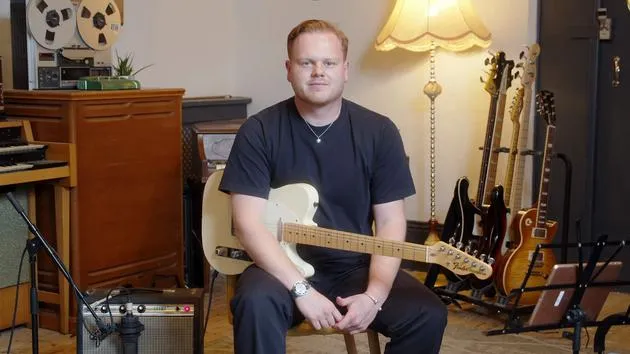
01. Einführung in den Indie-Gitarrensound
Gratis-Lektion2:09
02. Melodie mit den Noten H und C
3:45
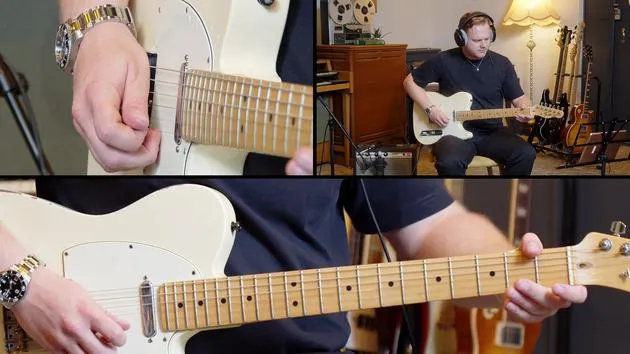
03. Melodie mit den Tönen H und C (Aufführung)
0:55
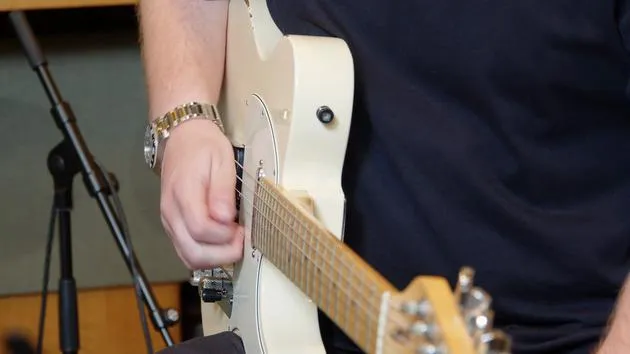
04. Melodie mit Wechselschlag
2:36
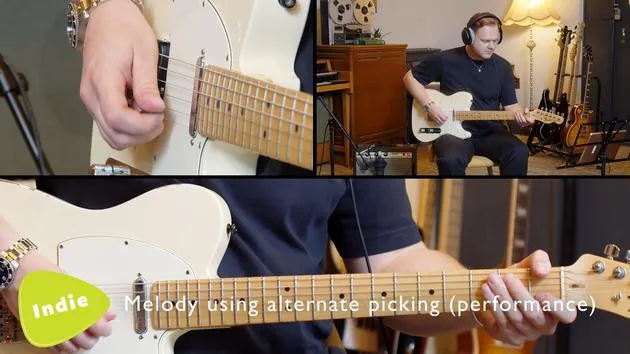
05. Melodie mit Wechselschlag (Performance)
0:55
06. Melodie mit Alternate Picking und der Note D
2:47
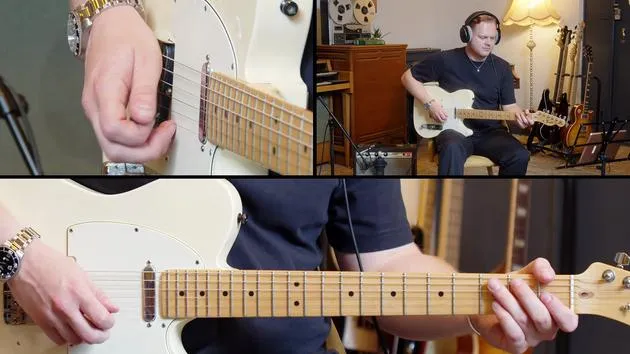
07. Melodie mit Wechselschlag und der Note D (Aufführung)
0:51
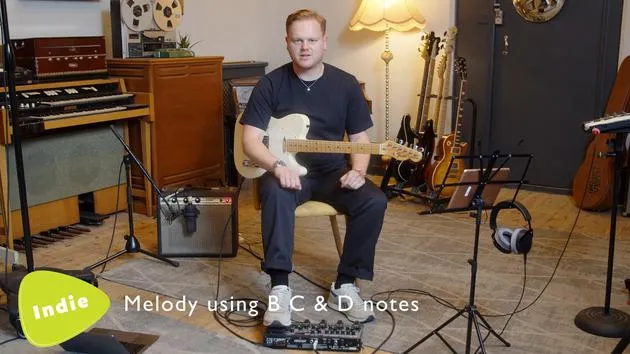
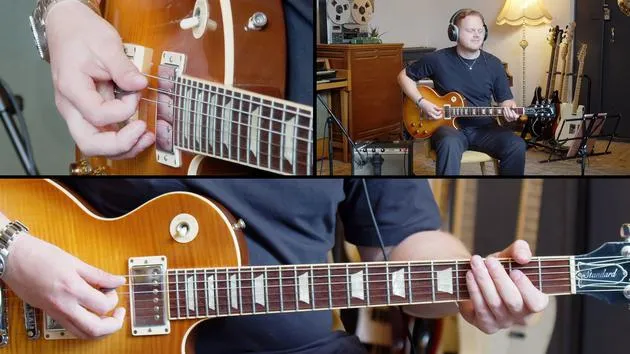
01. Melodie mit den Tönen H, C und D
Du bist hier4:16
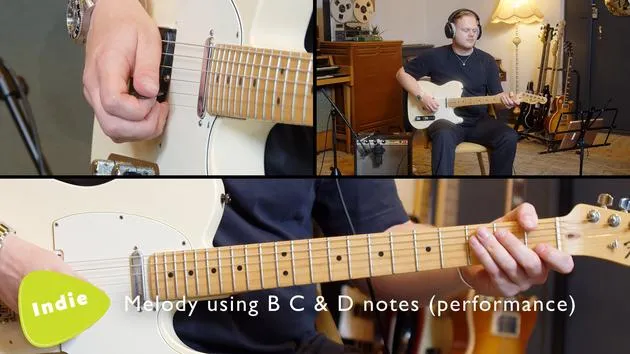
02. Melodie mit den Noten B, C und D (Performance)
0:58
03. Melodie mit der Note E
2:08
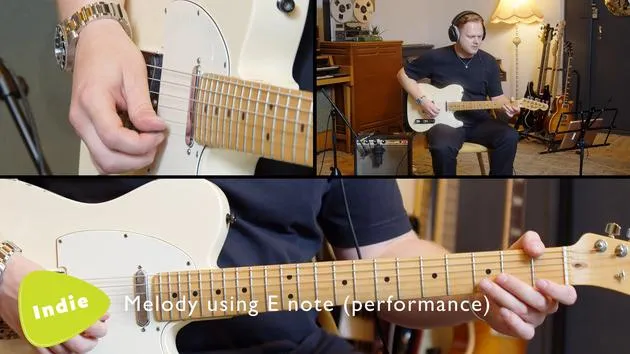
04. Melodie mit der Note E (Aufführung)
0:46
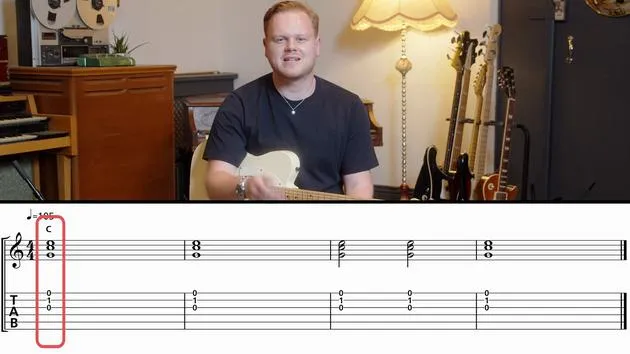
05. Rhythmuspart mit dem C-Akkord
2:00
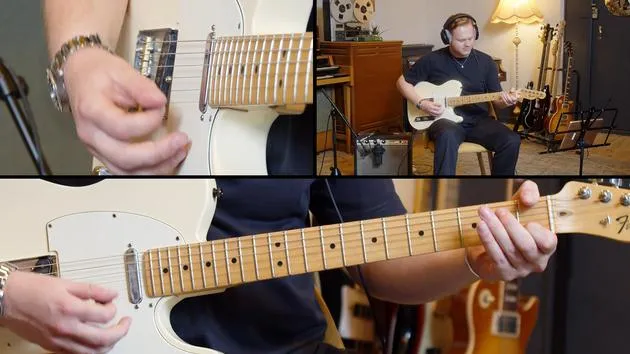
06. Rhythmuspart mit dem C-Akkord (Aufführung)
0:48
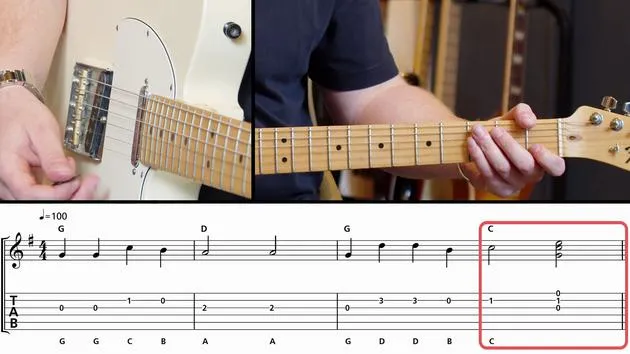
07. Parka Life Takte 5-8
1:57
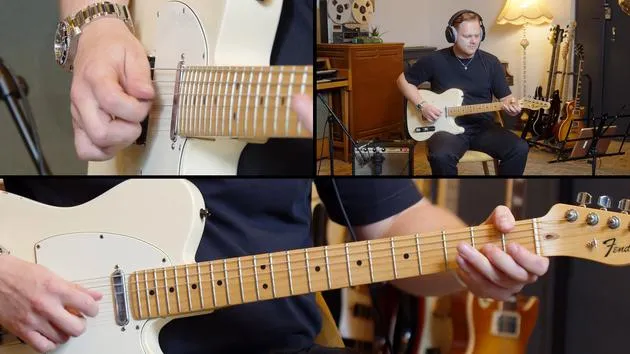
08. Parka Life Takte 5-8 (Performance)
0:50
09. Zusammenfassung des Indie-Abschnitts
0:21
01. Rhythmuspart mit dem e-Moll-Akkord
2:37
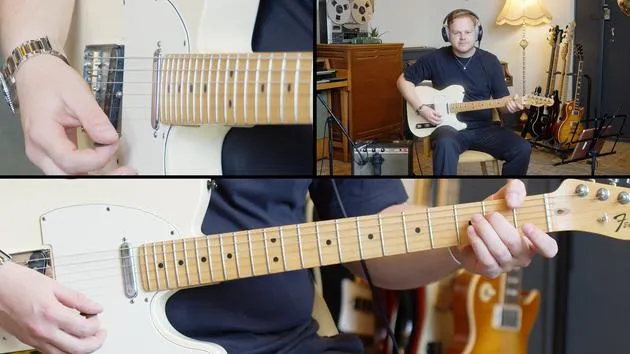
02. Rhythmuspart mit e-Moll-Akkord (Aufführung)
0:51
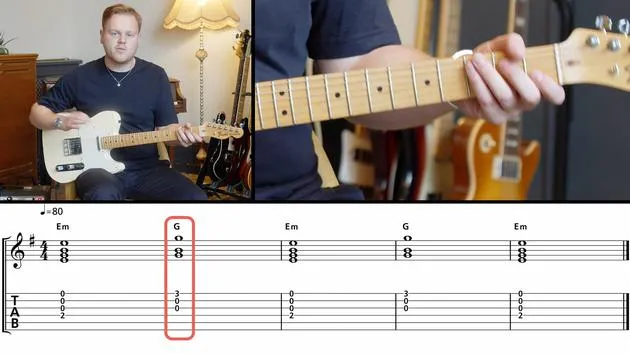
03. Rhythmus-Part mit den Akkorden e-Moll und G
1:59
04. Rhythmus-Part mit e-Moll- und G-Akkorden (Interpretation)
1:14
05. Represent Takte 9-16
4:15
06. Represent Takte 9-16 (Darbietung)
1:36
07. Zusammenfassung des Hip-Hop-Abschnitts
0:32
01. Einführung in die Stücke
1:00
02. Rock City
5:51
03. Rock City (Darbietung)
0:50
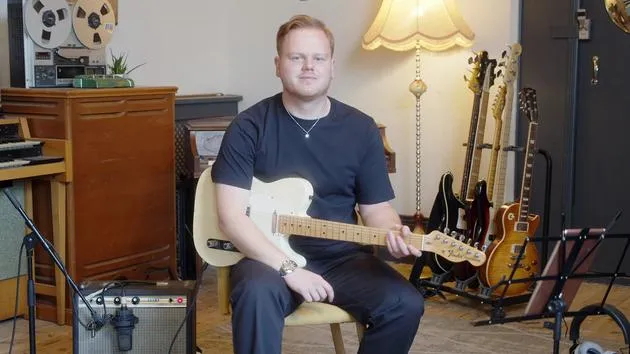
04. Party People
7:20
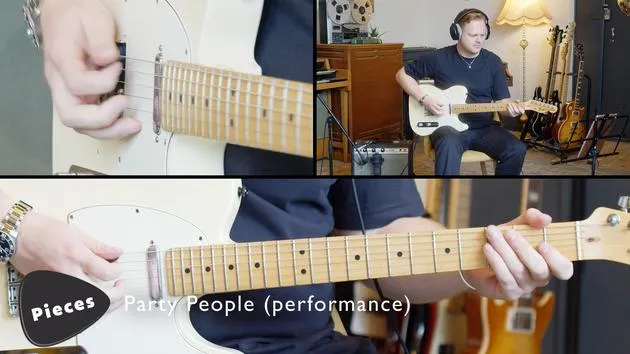
05. Party People (Interpretation)
0:46
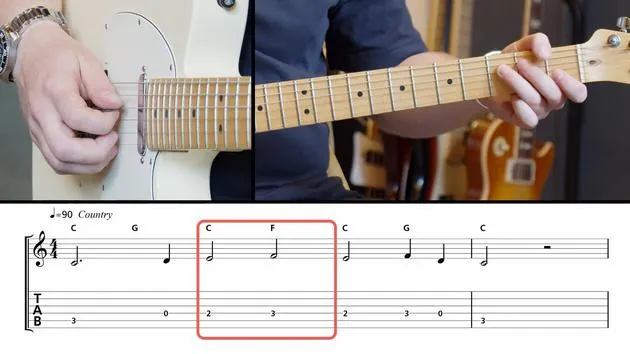
06. Road to Nashville
6:08
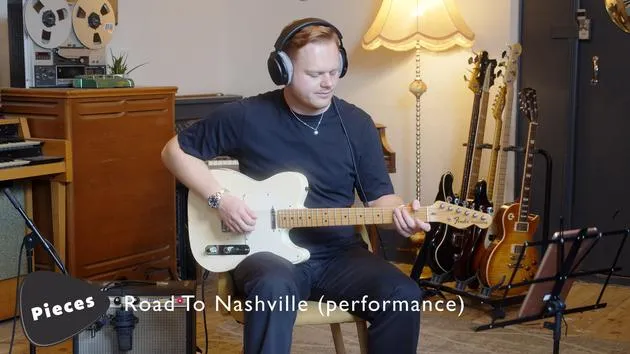
07. Road to Nashville (Aufführung)
0:47
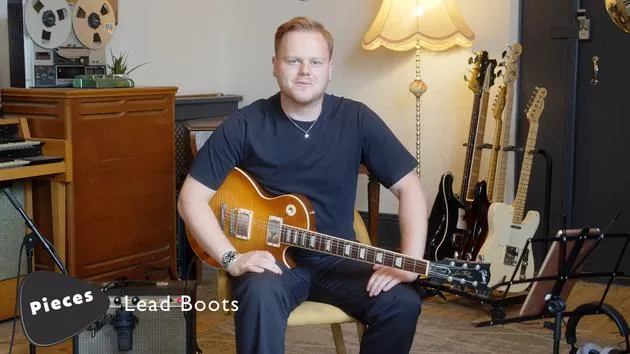
08. Lead Boots
6:33
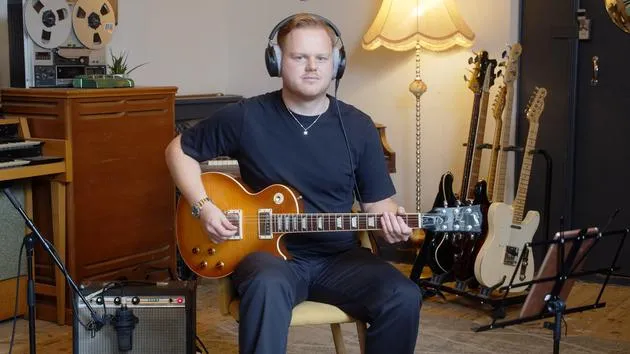
09. Lead Boots (Interpretation)
0:49
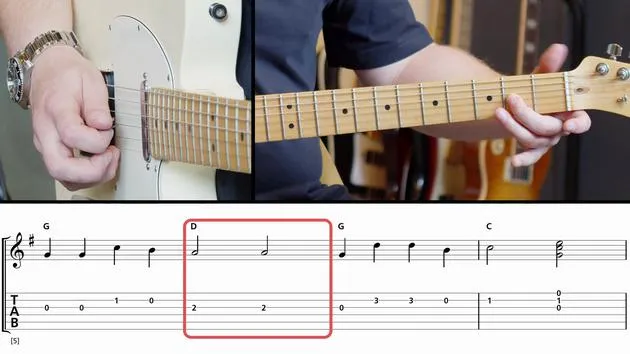
10. Parka Life
5:01
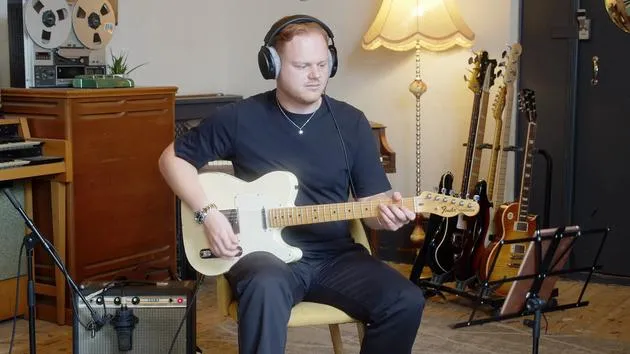
11. Parka Life (Performance)
0:43
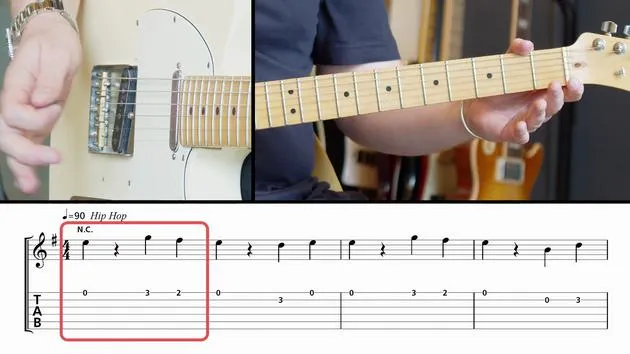
12. Represent
5:23
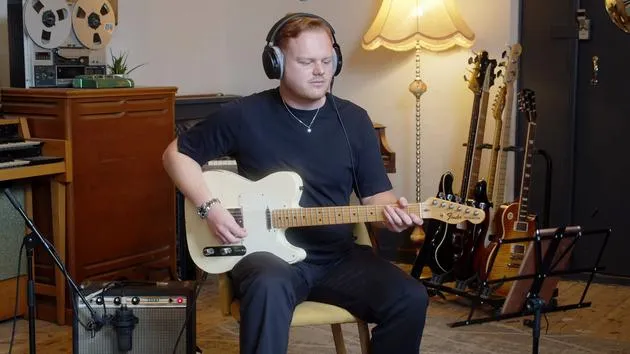
13. Represent (Performance)
0:46
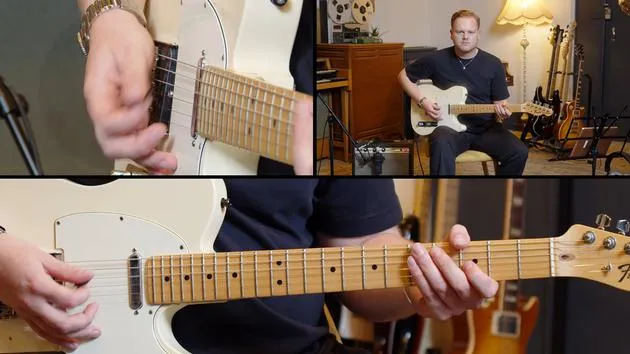
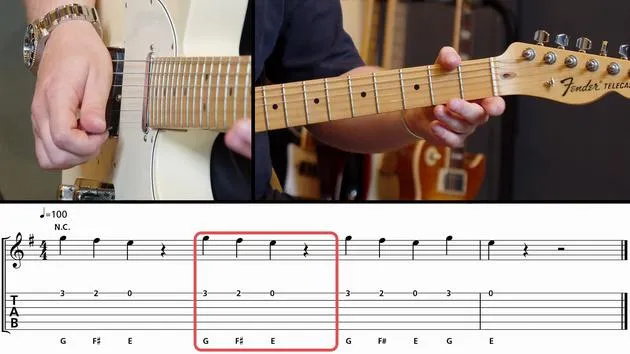
Transkript der Lektion
Indie Music and Guitar Techniques
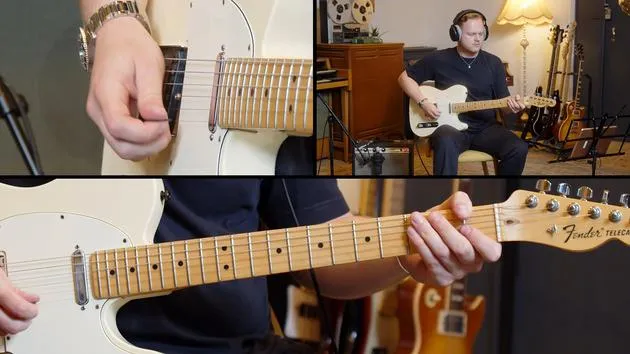
We discussed earlier that indie music uses a lot of different sounds, and that's what makes the style so interesting. We can achieve these sounds by using a pedal.
Essential Pedal Sounds
On my board, the main kinds of sounds are:
- Overdrive or Distortion: This changes the amp from being clean to really rocky and big.
- Modulation: This warps the signal, allowing you to get those stranger, more experimental sounds. You can hear the wobble in the notes.
- Delay: This acts like an echo. Imagine going under a tunnel and shouting; the note repeats and carries on.
In indie music, it's very common for guitarists to turn them all on and just make some noise.
Multi-Effects vs. Individual Pedals
You can get pedals individually or as a multi-effects unit, which means multiple pedals in one. I like that option because it's easy to carry around and ready to go. However, you can also build your own boards by buying one sound at a time:
- Distortion: This might just be one box that you then plug into a modulation box, which is a different unit.
- It doesn't always have to come as one unit.
Of course, if you don't have this equipment, it's not the end of the world. These are just tools we can experiment with later on as you get deeper into your guitar playing.
Reinforcing Guitar Skills
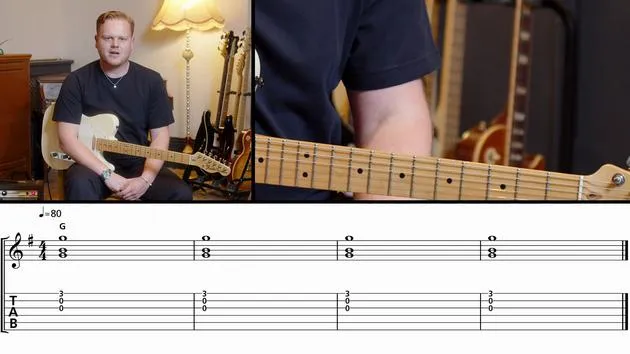
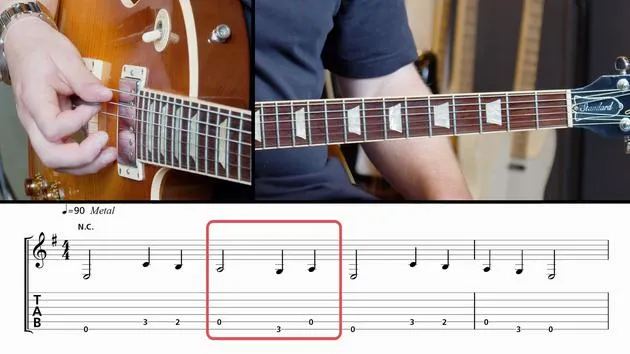
Looking at Example One in Indie Part Two, we're not learning anything new; we're reinforcing the skills we've already picked up along this course.
Analyzing the Example
- We can see a mixture of rests, note lengths, and different notes on the neck.
- We're including the new D that we learnt on the B string, but taking a first look:
- We have quarter notes alternating between fretted notes and rests.
- We'll play the open B string going to C, but in between, we've got a quarter note rest.
Using Both Hands for Muting
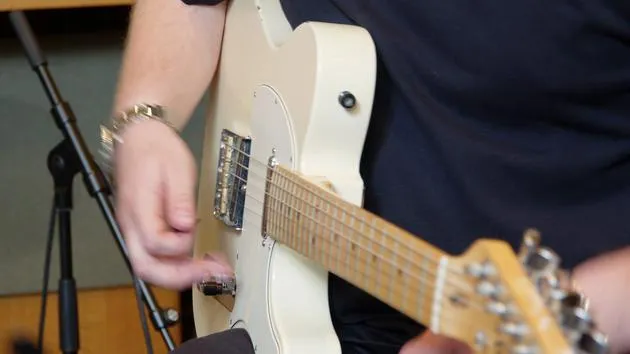
Now is a great time to start using both hands when fretting notes. Here's how to do it:
- Lift up your finger from the note to stop it.
- Use your palm on the bridge to stop the note as well.
- You can also use other fingers if you're playing an open string.
What I'm doing here is applying no pressure; I'm just resting my hand on top of the string to stop the note.
Practice Exercise
Let's take some time to play with that.
- Play the open B string.
- Use a finger to stop the note.
Key Tip: Keep your finger resting and don't lift it up; otherwise, the note will come back. Very slightly, but it's noticeable.
Moving Through the Example
In Bar Two, we've got that new D note. We will:
- Use alternate picking, going from D to the first fret, then C to the open string.
- In Bar Three, we've got half notes and quarter notes. We know this now, and we're getting really familiar with it, so we'll blast through it.
Steps for this bar:
- Second fret: on the G string (which is A)
- Open B, back to that A on the G string
- Finish off with a whole note, open G
This is simple stuff for us, and we should be really comfortable with it.
Tempo Practice
Now, we're going to try and go from start to finish at a slightly slower tempo. Then you can build up to the tempo of the backing track.
Let's give it a go together:
Key Skills: Muting
The key skill we're practicing here is muting with both hands.
- I would like you to practice muting with your left hand, then with your right, and lastly, both together.
- Let's practice that on the low E string.
Getting Comfortable with Muting
Practice first with your left hand, then your right, and then both to achieve a really deadened sound. You can practice this in any spare time you have‚ maybe when you first pick up the guitar.
Final Tip: You only need to do it a handful of times to get it under your fingers, but it's a great technique to start working on.
50 Lektionen
1 Std. 52 Min. strukturierte Videolektionen
Erweiterte Videofunktionen
Verlangsamen, Passagen loopen, mitlesen
Handy, Tablet & Desktop
Üben, wo du willst
100 % Zufriedenheitsgarantie
30 Tage Geld-zurück-Garantie
Lern deinen Guru kennen
Lern deinen Guru kennen
Tommy Webb ist ein in London ansässiger Gitarrist, der einen BA(Hons)-Abschluss in Gitarre an der Academy of Contemporary Music in Guildford absolvierte, wo er bei Sandy Beales (One Direction, Wheatus) und Nicolas Meier (Jeff Beck) studierte. Sein eigenes Spiel bewegt sich frei zwischen Rock, Pop, Indie, Hip-Hop, Country und Metal – genau dem Terrain, das seine Gitarrenmethoden abdecken.
Tommy hat landesweit mit einer großen Bandbreite an Künstlern und Bands gearbeitet, darunter Jarki Monno und Indira May, und teilte sich Bühnen und Sessions mit den Gitarristen Paul Murray (Jess Glynne, Zak Abel) und Adam Chetwood (Paolo Nutini, Mark Ronson) sowie den Schlagzeugern Alex Woodward (Black Honey), Luke Robinson und “Bambi Music” (N-Dubz, Lethal Bizzle, Wretch 32, Tinie Tempah).
Auf der Bühne trat er im Jazz Cafe als Vorband der Soulsängerin Jocelyn Brown auf, dazu in Clubs und auf Festivals wie Ronnie Scott's, Troy Bar, The Watford Colosseum, Camden Assembly, Kensington Roof Gardens, Notting Hill Arts Club, Meraki Festival und Sundown Festival.
Auf Platte und im Radio hat Tommy Live-Sessions für BBC Three Counties Introducing, Vibe FM und Pulse 88 eingespielt, mit Tracks, die auf BBC Radio 1 und Radio 2 liefen. Aufgenommen hat er in Studios wie South Lanes Brighton, Hempstead Road und Titan Studios mit Produzenten wie Steph Carter (Gallows, Lyoness) und TMS / Froe Barnes (Lewis Capaldi, Dua Lipa).
In seinen Gitarrenmethoden gibt Tommy all dieses Wissen eines aktiven Musikers an dich weiter – er lehrt die Techniken, Sounds und das Feeling hinter echten Stilen, von Rock und Pop über Indie, Hip-Hop und Country bis Metal –, damit du die Musik spielen kannst, die du wirklich liebst.







