



Musik in der TV-Branche
Das steckt im Kurs
16 Lektionen (2h 16m) · 1 gratis
Transkript der Lektion
The Journey Through the 90s and Beyond
The 90s Era
"The 90s, you know, the Rapinoe brothers owned the 90s when it came to all of that sound. By the end of the 90s, you don't come out rich. You don't come out alive from the 90s. No, but you come out rich or remembering who you were."
Transition to Television
But you started to also move into TV. You were a producer for the BBC's "Get Your Act Together" and "Full Frontal" on Channel Four.
How Did That Happen?
"I don't know. I guess I was a right mistake. Because I was in the studio one night. Stephen Budd had a friend called Malcolm Gary, and they were in the studio. He saw me and said, 'You should be on a TV show, Charlie!' Sure, if you pay me, I'll be on a TV show."
- It was the proto X Factor type of show on BBC1.
- People were voting for talent and following it; it was a bit like Star Academy, really.
That took me then to be... I don't know what I was doing. I was sort of a host on a Channel 4 show that was going after Big Brother. I was on TV for a while in England. It was a good break. That was a right mistake.
The Journey Through TV
"I didn't look into the camera. I didn't know what to do at all. I just stayed there. You know, you look funny, I suppose."
And that's how I started, really. Then, I went to work for Sony, then to a guy called Daniel Morricone, who was a soundtrack writer. After that, I went into Decca and then found myself unemployed and unemployable again.
The Zeitgeist of X Factor
I had a call in the Zeitgeist of X Factor in 2009, 2010, from another case, another right mistake, which was Maria de Filippi. I was invited to work for her in a big Italian show on Canale Cinque, the equivalent of ITV, called "D'Amici," which is based on Fame Academy.
Who is Maria?
"Maria is very much the perfect mistake because while Simon Cowell is a record industry guy who goes into TV and is owned by TV, he didn't change the TV industry. Simon changed a good part of the face of TV."
- Maria comes from TV; she's the equivalent of Oprah Winfrey.
- A very interesting woman, highly intelligent.
- She owned the TV industry and transitioned into the music industry.
- She became a reference for new talent in Italy.
"She had no clue in the beginning. When she called me, she said, 'I don't know anything about this industry. How does it work?'"
The Unconventional Star
Maria is an odd star, she's a non-star who becomes a star.
- She doesn't look into the camera.
- She sits on the stairs in the middle of the audience and does things that no TV host would do, not just in Italy but worldwide.
- Androgynous looking, very blonde, with a deep gravelly voice.
- "She's a woman of contrast and a star in herself."
My Role with Maria
What was I doing with her?
- I was a judge on the show.
- I helped her out with some castings.
- I was a liaison for her on the record side for a couple of years.
Initially, I was there for the casting, as that's what I really enjoyed. When she asked me to be on air, I realized I couldn't manage myself. "It's difficult."
The Challenges of Transitioning
As someone who works behind the scenes, you lose track when thrust into the front.
- You know how to make decisions for the person out there but realize you can't do so for yourself.
- "That's why you become a bit of a schizophrenic, really."
Thoughts on Music Talent Shows
Quality versus Commercial Success
"What's your take on these music talent TV shows? Are they developing good quality commercial pop, or...?"
To me, quality doesn't exist. Quality is personal. Whatever you think is good for me might be a piece of crap for you. Music talent shows are what they are; they're TV shows, not music shows.
- "A music show is Jules Holland. X Factor is a TV show."
- I'm not saying that they're wrong or that there's bad stuff on it, but sometimes it's important to define what it actually is.
Emotional Appeal and Audience Engagement
"Well, if you don't cry, obviously, in those shows, there's a problem."
- They cater to the lowest common denominator.
- You need a story; possibly some familial drama.
- "Somebody like Keith Richards would likely not go there."
The Comparison
"It's like putting McDonald's versus a caviar house."
- It doesn't really provide much room for the right mistake, does it?
- Unless you're so mistaken that it works.
Craft versus Star Power
"That's why it's quite perfect, I think. X Factor and those shows are perfect for musicians. It's about the craft."
Unfortunately, I don't know what to do with a great singer. Tell him to go and play in a piano bar or do musicals.
The Nature of Stardom
"There are few stars who came out of X Factor. That's why it's called the X Factor."
- Harry Styles is obviously a star.
- Will Young is a bit of a star.
- "It is what it is. But it's a conveyor belt; it's a production chain."
Finding Value in the Process
"That's okay. Well, it's a way of monetizing a pop A&R process, isn't it?"
Yes, it is. With Maria, I was much more interested in her as a star or character. I was fascinated by this person who does things unconventionally.
- "There won't be another like her, just as there won't be another Sinatra."
- She knows exactly how to make the right mistakes, like not looking into the camera at the right time. Perfect.
16 Lektionen
2 Std. 16 Min. strukturierte Videolektionen
Erweiterte Videofunktionen
Verlangsamen, Passagen loopen, mitlesen
Handy, Tablet & Desktop
Üben, wo du willst
100 % Zufriedenheitsgarantie
30 Tage Geld-zurück-Garantie
Lern deinen Guru kennen
Lern deinen Guru kennen
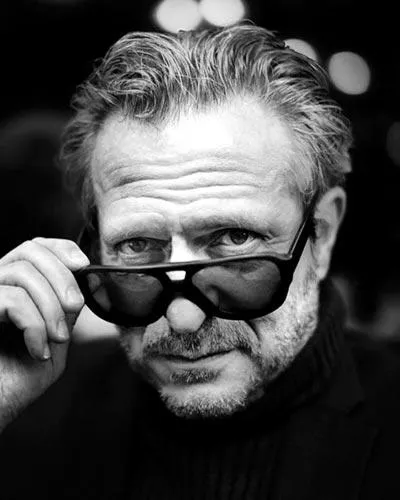
Charlie begann seine Karriere in der Musikindustrie als frisch gebackener Anwalt und veranstaltete Konzerte, indem er Künstler wie Iggy Pop und Patti Smith vor ein radikales italienisches Universitätspublikum brachte.
Nach seiner Arbeit im legendären Record Plant NYC und dem Eintauchen in die House-Szene gründete er mit Marco Sabiu die Rapino Brothers, zog 1990 nach London und blickte nie zurück. Dort eroberten sie das Jahrzehnt im Sturm, produzierten und nahmen Platten auf. Nach ihrem ersten Hit mit Kym Mazelles Love Me The Right Way steckten sie hinter Take Thats erstem Hit und produzierten, mischten und feilten in den 1990er-Jahren an zahlreichen großen Pop-Acts, von Kylie bis Primal Scream.
1997 war Charlie der „On-Air“-Produzent von „Get Your Act Together“ der BBC, gefolgt von „Full Frontal“ auf Channel 4. Von 1999 bis 2004 war er A&R Director bei Sony Music International.
Seine Energie lässt nie nach. Über die Jahre hat er seine Zeit aufgeteilt zwischen Management-Beratung für Ennio Morricone, Beratung für das Magazin Rolling Stone, Arbeit an Soundtracks und Produktionsberatung für Filme und Spiele (darunter Iggy Pop dafür zu gewinnen, die Voice-overs für das Videospiel Driver 3 zu übernehmen) sowie dem Verpflichten und Managen von Acts über sein Joint-Venture-Label mit Sony, Stud Records.
In Get signed! zieht Charlie den Vorhang zurück auf jahrzehntelange Erfahrung in Produktion und A&R, um dir genau zu zeigen, worauf Labels hören, wie du deinen Act formst und präsentierst und was wirklich nötig ist, um aufzufallen und einen Vertrag zu bekommen.







