



Leben in New York (86)
Das steckt im Kurs
16 Lektionen (2h 16m) · 1 gratis
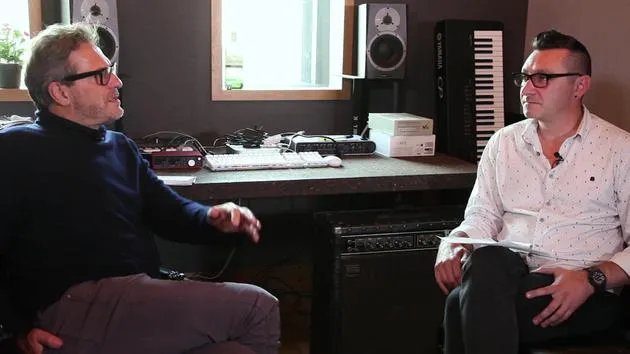
Transkript der Lektion
Music and New York in the 80s
I wanted to go to New York in '86. I really wanted to have a unique experience. I had a little bit of money, so I thought, "Let's go to New York for a while."
I was fascinated by New York and started hanging out there. I got a job as a janitor in a big recording studio called the Record Plant. Additionally, I worked as a bartender, which was really my favorite job at the end of the day.
The Shakedown Studio Experience
I spent time at Shakedown Studio, where the world-famous Arthur Baker was producing music. At that time, Shakedown was much more like a bar. The recording studio served as the hub for musicians and people connected to music.
- Cyan hours: Record companies used to hang out in studios, socialize, and have a drink, something that is missing in today's industry.
- The Hub: This place has a bar as the hub. You meet people there and think, "Why don't we go and make some music?" It was a vibrant atmosphere.
Today, it has become a lot more sterile. Music has shifted into a job rather than a passion.
Artists and the Club Scene
What kind of artists were coming through the studio during this time?
- It was mainly DJs from the days of Danceteria and other great clubs in New York.
- New York was at the peak of its decline around this time because many clubs went bankrupt.
In the mid-'80s, New York was a really dirty and dangerous place, but it was fantastic. It was one of the best cities I've ever been to, it was like a "fun dump." I lived in Union Square, which at the time wasn't a great idea. It was a loft in Union Square, very cheap, and a great place for artists and creative people to hang out.
Recognizing Talent
I don't consider myself a creative person or particularly talented. My talent lies in recognizing the talent in others and helping them achieve success.
- On Creativity: I believe everyone is creative. There are creative people who know how to execute ideas, while many do not.
- For instance, the guy who works at the gas station could have a better idea than you or me combined, but we know how to execute those ideas.
A Breeding Ground for Understanding
New York provided a breeding ground to understand how things were happening, especially in the clubs. It was inexpensive to live there, and you could enjoy great clubs like Jackie's and the Roxy Garage, where DJs like David Morales were pushing the boundaries with their turntable antics.
A Strong Interest in Music
I've had a strong interest in music, appreciating it across genders and genres. I never confined myself to one style.
- I enjoyed everything from the Sex Pistols to ABBA to Donna Summer.
The idea of compartmentalizing music into genres is something I find terrible. To me, pop music encompasses everything, from Sinatra to the Sex Pistols, Pink Floyd, Marvin Gaye, and even One Direction.
- On Genre Perception: I find the notion of "cool" pop music or genre distinctions to be borderline fascist. It creates divisions: black, white, red, if you don't fit into one category, you're relegated to another.
I remember spending my money on records and sometimes having to buy ABBA and hide it because it wasn't cool enough. It was a struggle not to be judged for my musical taste.
16 Lektionen
2 Std. 16 Min. strukturierte Videolektionen
Erweiterte Videofunktionen
Verlangsamen, Passagen loopen, mitlesen
Handy, Tablet & Desktop
Üben, wo du willst
100 % Zufriedenheitsgarantie
30 Tage Geld-zurück-Garantie
Lern deinen Guru kennen
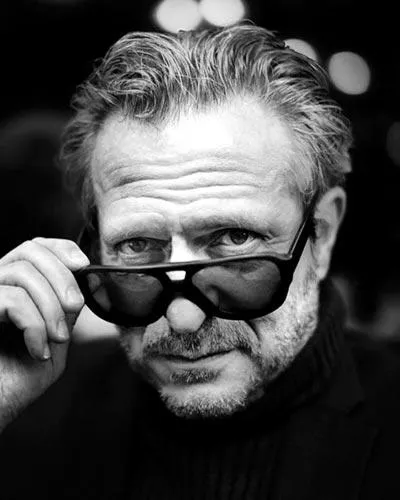
Lern deinen Guru kennen
Charlie begann seine Karriere in der Musikindustrie als frisch gebackener Anwalt und veranstaltete Konzerte, indem er Künstler wie Iggy Pop und Patti Smith vor ein radikales italienisches Universitätspublikum brachte.
Nach seiner Arbeit im legendären Record Plant NYC und dem Eintauchen in die House-Szene gründete er mit Marco Sabiu die Rapino Brothers, zog 1990 nach London und blickte nie zurück. Dort eroberten sie das Jahrzehnt im Sturm, produzierten und nahmen Platten auf. Nach ihrem ersten Hit mit Kym Mazelles Love Me The Right Way steckten sie hinter Take Thats erstem Hit und produzierten, mischten und feilten in den 1990er-Jahren an zahlreichen großen Pop-Acts, von Kylie bis Primal Scream.
1997 war Charlie der „On-Air“-Produzent von „Get Your Act Together“ der BBC, gefolgt von „Full Frontal“ auf Channel 4. Von 1999 bis 2004 war er A&R Director bei Sony Music International.
Seine Energie lässt nie nach. Über die Jahre hat er seine Zeit aufgeteilt zwischen Management-Beratung für Ennio Morricone, Beratung für das Magazin Rolling Stone, Arbeit an Soundtracks und Produktionsberatung für Filme und Spiele (darunter Iggy Pop dafür zu gewinnen, die Voice-overs für das Videospiel Driver 3 zu übernehmen) sowie dem Verpflichten und Managen von Acts über sein Joint-Venture-Label mit Sony, Stud Records.
In Get signed! zieht Charlie den Vorhang zurück auf jahrzehntelange Erfahrung in Produktion und A&R, um dir genau zu zeigen, worauf Labels hören, wie du deinen Act formst und präsentierst und was wirklich nötig ist, um aufzufallen und einen Vertrag zu bekommen.







