



Der richtige Fehler
Das steckt im Kurs
16 Lektionen (2h 16m) · 1 gratis
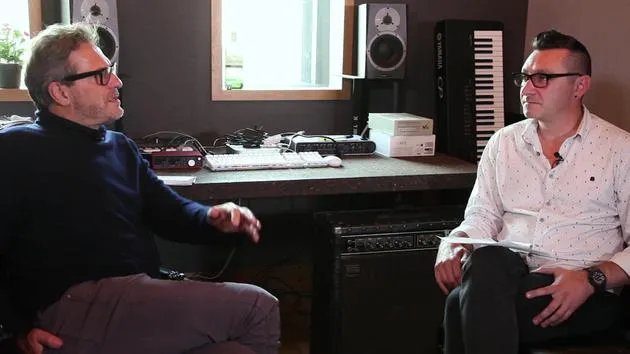
Transkript der Lektion
Music Production Insights: The Power of Mistakes and Innovation
You know, when you listen to stuff, you're in front of the desk like that. What the hell am I gonna do here? And then we go to sleep.
Let's take a NAP.
That was 4:00 in the afternoon. And we have this nap, and Marco wakes up and wakes me up.
I got it! Think Motown.
Yeah. I'll tell you what. Get me Freedom by Wham. And you know, we went and bought at the time to shop, uprise or whatever. Freedom by Wham, which was a very synthetic Motown. Motown always works.
So we basically did a Motown record. While D is asking for a cool dance record, DNR is asking for a cool dance.
Cool dance record.
You know, Balearic. The band. I don't even know what they wanted to do, poor guys, because we hadn't met them; we didn't know them at the time.
And we come up with a Motown record that has nothing to do with what they're supposed to have.
Swimming Against the Tide.
Yeah, what a shit tide we were facing. I still remember that later on, Mike McCormack and Nick Raymond, we sent the demo, which we did basically in five hours.
Sampling Insights.
And I won't tell you what we sample because everything is sampled in that record. We could hide our samples very well. And about sampling, something funny happened, if I may digress.
I realized actually one day we sampled ourselves.
You did?
Yeah, I remember it was, I think, a Junior Vasquez record. I love this snare. I sampled the snare like that.
You idiot.
That's us now. I mean, the bastard has sampled us, and we resampled us. What have you done?
So that's how, again, technology enables this possibility. And there's even a humorous side, you know, in which really you sampled yourself out of somebody else's record, which I thought was funny.
The Creation of a Hit.
So, five hours, you cut this Motown record. Allegedly, Mike and Nick walked into the R and R meeting and they said, "You know, I can't believe those two Italian pricks have delivered a number one because."
Completely unexpected. They were like, what a simple idea really, that without that four-hour nap, we would never have had.
But it's against... and then there's a mistake on that record which I think really made it because we opened probably on the MIDI, some output.
A Happy Accident.
And there's a vocal loop that came out by complete mistake, which I can play if you want.
That sounds good.
Let's use it as a riff.
That was a mistake. It just... a complete event that happened because somebody left the thing open, you know? The mute was... an arm, you know? That's what happened.
The Right Mistake.
And very... the right mistake again. It's the right mistake again, which is pretty much my philosophy sometimes.
Music is a sort of... it's like mathematics. It's an exact science, you know? And the only way to be successful is to get out of the exact.
The problem is it's very easy to be wrong, and it's very easy to make mistakes.
The Secret Lies in the Right Mistake.
The secret lies in doing the right mistake. Seizing that opportunity. Rolling Stones, they're all about the right mistake because they're never on time.
If you think about it, you know, the timing on the Stones is pretty much relative. It's a relative concept. But they're always out of time on time.
Because Keith comes in where, when Charlie gets the hi-hat, you know, he plays the hi-hat on the fourth, he gets out and he comes in one nanosecond behind.
That's the Right Mistake.
Quincy Jones had an example as well. Quincy Jones is an example in Rock With You.
You know, "I wanna rock with you all night."
That's a Bad Note.
It's not exactly musical, but I know that Quincy, whom I met later on with Ennio Morricone, told me that he was taping everything. Taping everything, you know, all the sessions and then used to go back.
"Oh, no, no, no, no, no. You did that at five minutes on that reel that. I want that."
The Perfect Mistake.
The perfect mistake, which was Cher Believe. Why was the mistake? Where was the mistake in it? The autotune.
Yeah, that thing. Yeah, that was Steve Allen. Because it was the programmer at the time, there was this thing called Autotune came out, which was a blessing for everybody.
Especially...
The Most Boring Part.
The most boring thing for a producer is dealing with the singer, you know? The only variable takes, you know, that kind of thing. Then in the field I was in, you're not exactly perfect pitch.
So, you know, pitch perfect or... perfect pitch.
Yeah, pitch perfect. Pitch perfect. And, you know, Autotune was just, you know, a blessing so much that we had a prototype of it, I could say, which was given by...
We were in quite a big setup at this point, you know? We were buying equipment.
And the guy who used to give us equipment, "There's this piece of software. You gotta see, guys," because he knew how bored we were with doing, singing.
"Oh, God, now I have to deal with this."
And he sent this piece of software, and I immediately called an important A and R. She's a sort of a mentor for me, which is... the other guy we were talking to was Chris Briggs.
I said, "Briggs, you gotta see this piece of software."
He called me up. "This is a miracle. This is a blessing. This is the second coming."
"Finally."
It was like, you know, watching Moses opening the Red Sea. That was autotune for us.
"Ah, you know, I don't have to fix it anymore, you know, or redo it."
One button. One button.
And what happened really? I think that the engineer, the programmer, was trying to set up the autotune and so he went like... he did the effect and kept it in.
"Record companies, are you mad?"
No, no, no, no, no, no, no, no. That's what makes it a hit.
And if you think about it, that's why it's a hit.
The Legacy of a Mistake.
Yeah, yeah. Is that, you know, autotune, which we started a style really, that is a fundamental record. Without that record with the autotune bit, most of Bjorn Borg, the tennis player.
I bet you that when you know, the backhand with two hands, he invented it.
How many coaches must have told him at the time in the 70s, "No, no, no, no, no, no, no, no. The backhand is like that."
I'm not going back like that. I use my tennis racket like a baseball bat. Brilliant.
And that's... you can call it a mistake or thinking laterally or thinking out of the box, you know, out of the rules.
You learn all your rules and all your chops, and then you throw them away to do something else.
If You Are an Artist...
If you are an artist, you know Robert Mapplethorpe, the flower. Everybody can photograph flowers. It's not difficult, is it?
So Why Are Mapplethorpe's Flowers Special?
Why? The flowers in Robert Mapplethorpe's work are the most beautiful flowers you'll ever see. Because you'll see a different view, a different point of view, which they couldn't... without that, a professional photographer would never imagine.
The Raw Talent.
Robert Mapplethorpe wasn't a professional or didn't study photography. He had a guy who was doing the prints for him.
"He couldn't do it."
He didn't know how to do it. It was that raw talent. He gave him a different view on things, you know?
It's powerful, you know, when you are a talented person, which is completely uneducated and doesn't really go through the system and thinks in a very anarchic way and gives things that you didn't expect.
Bringing Freshness.
Brings the freshness. Brings the freshness. Keep it crisp.
But coming back, you know, that record was for us a major success and went straight to number one.
You know, it was right behind I Will Always Love You, which wouldn't have moved with a nuclear bomb.
So, iRistar, the RCA, they find themselves number one with what's his name?
"Newston's I Will Always Love You."
And number two, we take that.
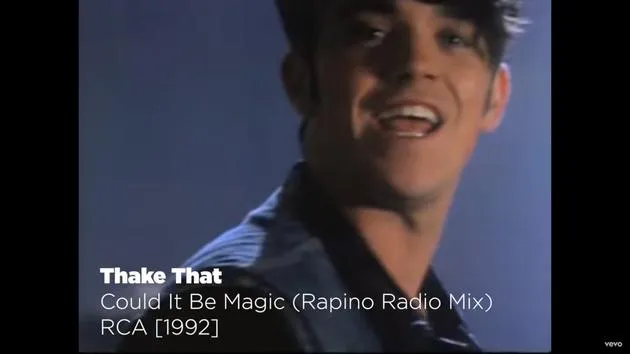
Could it be magic? That changed. I think it really changed the career of the band because they became what a boy band is supposed to be.
Not Cool, But Mainstream.
Not cool. Why don't we cool gay? Who cares? Mainstream, mainstream, small town, fall on the floor.
People love it, and it became popular, and popular is very cool to be.
16 Lektionen
2 Std. 16 Min. strukturierte Videolektionen
Erweiterte Videofunktionen
Verlangsamen, Passagen loopen, mitlesen
Handy, Tablet & Desktop
Üben, wo du willst
100 % Zufriedenheitsgarantie
30 Tage Geld-zurück-Garantie
Lern deinen Guru kennen
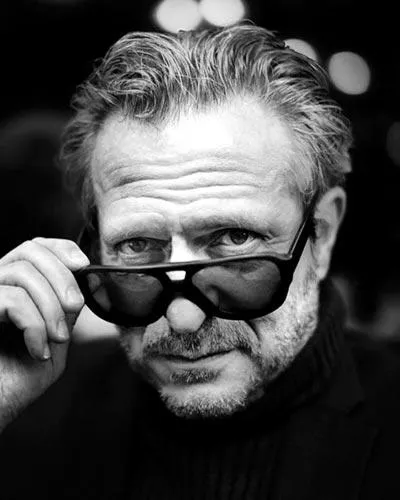
Lern deinen Guru kennen
Charlie begann seine Karriere in der Musikindustrie als frisch gebackener Anwalt und veranstaltete Konzerte, indem er Künstler wie Iggy Pop und Patti Smith vor ein radikales italienisches Universitätspublikum brachte.
Nach seiner Arbeit im legendären Record Plant NYC und dem Eintauchen in die House-Szene gründete er mit Marco Sabiu die Rapino Brothers, zog 1990 nach London und blickte nie zurück. Dort eroberten sie das Jahrzehnt im Sturm, produzierten und nahmen Platten auf. Nach ihrem ersten Hit mit Kym Mazelles Love Me The Right Way steckten sie hinter Take Thats erstem Hit und produzierten, mischten und feilten in den 1990er-Jahren an zahlreichen großen Pop-Acts, von Kylie bis Primal Scream.
1997 war Charlie der „On-Air“-Produzent von „Get Your Act Together“ der BBC, gefolgt von „Full Frontal“ auf Channel 4. Von 1999 bis 2004 war er A&R Director bei Sony Music International.
Seine Energie lässt nie nach. Über die Jahre hat er seine Zeit aufgeteilt zwischen Management-Beratung für Ennio Morricone, Beratung für das Magazin Rolling Stone, Arbeit an Soundtracks und Produktionsberatung für Filme und Spiele (darunter Iggy Pop dafür zu gewinnen, die Voice-overs für das Videospiel Driver 3 zu übernehmen) sowie dem Verpflichten und Managen von Acts über sein Joint-Venture-Label mit Sony, Stud Records.
In Get signed! zieht Charlie den Vorhang zurück auf jahrzehntelange Erfahrung in Produktion und A&R, um dir genau zu zeigen, worauf Labels hören, wie du deinen Act formst und präsentierst und was wirklich nötig ist, um aufzufallen und einen Vertrag zu bekommen.







