



Die häufigsten Akkorde
Mit
Tom Bekeny
Das steckt im Kurs
20 Lektionen (1h 18m) · 1 gratis
Transkript der Lektion
Understanding Chords for Bluegrass
The next thing I want to talk to you about is chords. Chords are really important to know when playing in a bluegrass band.
When you're not playing a solo or a lead, and when you're not playing countermelodies or what's called backup behind a vocalist, you'll be chopping chords and helping to keep time for the band. You'll actually be playing chords more than you're doing anything else in a band context.
Chord Basics
I won't get too much into the theory of how chords are constructed, but here's the short version:
- A chord (specifically, a major chord) is three notes sounded together, forming a major triad.
- Additionally, a minor triad is built on top of the major triad.
In a lot of bluegrass music, early country, and folk music, you can play many songs just by knowing three chords. Let's focus on the key of A and the three basic chords:
- A major
- D
- E
I'll have chord diagrams available on the website.
You can often play what's called an E dominant seventh, which looks like this:
- Start with an E chord (E note of the E chord).
- Take that down two frets (or a whole step) to get the flatted seventh.
This creates the tension that wants to resolve back to A.
Basic Bluegrass Chop
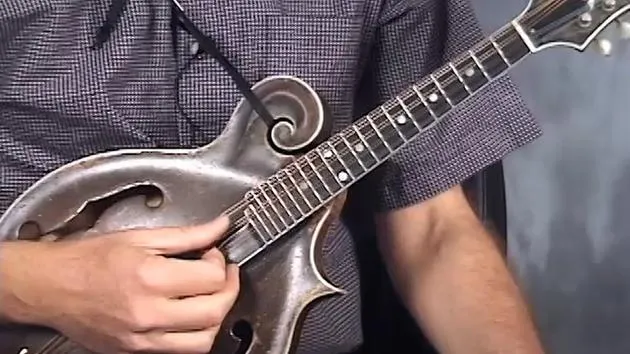
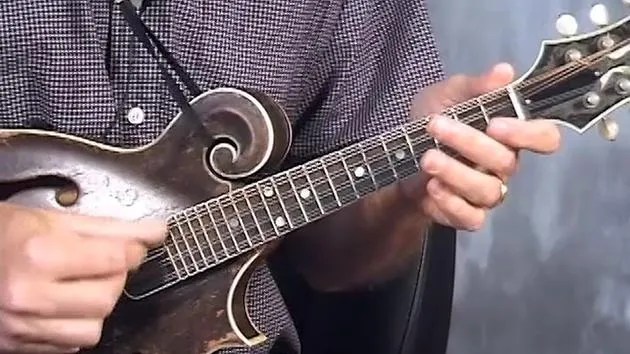
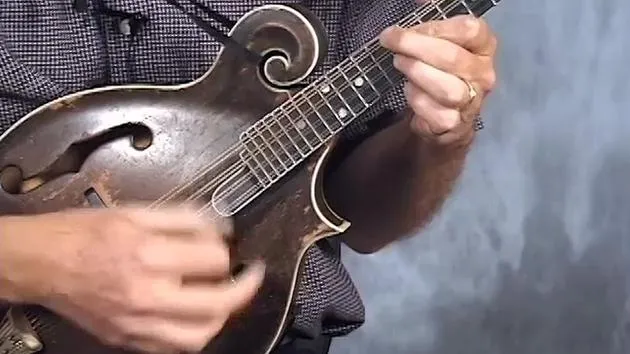
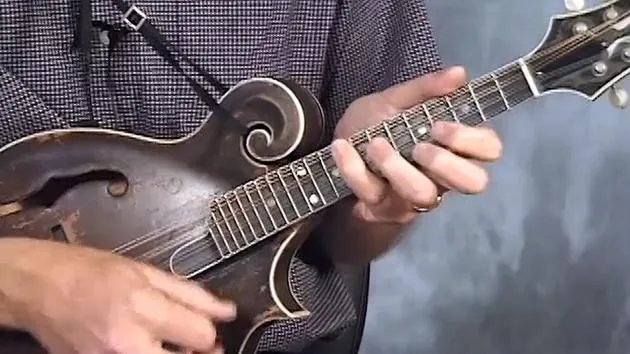
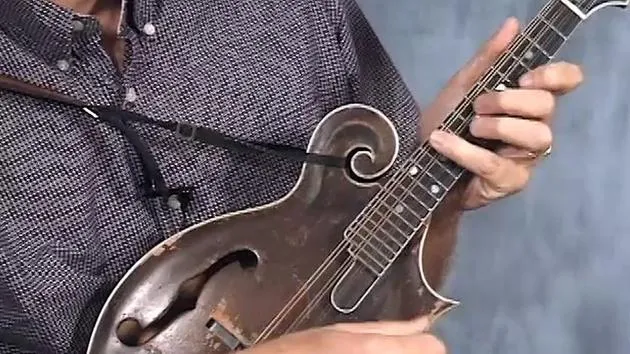
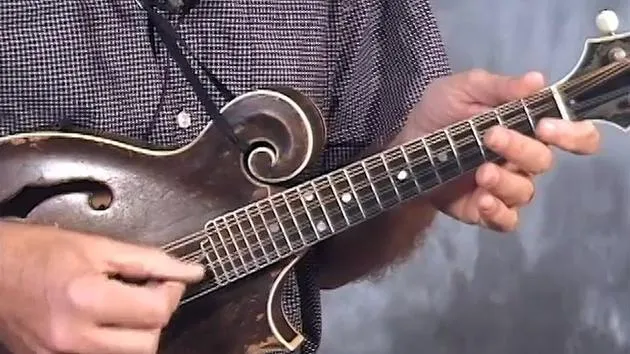
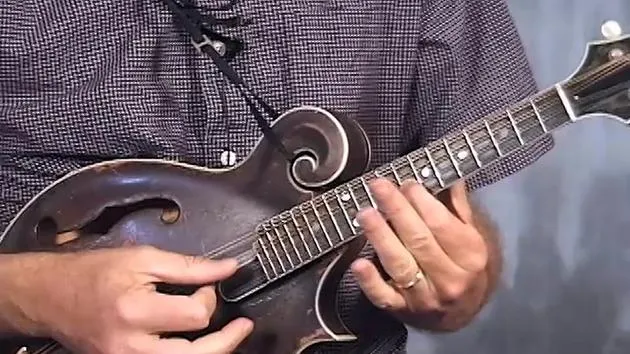
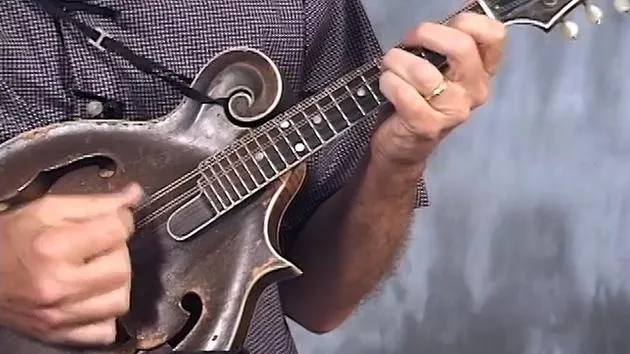
Now, let's get into more detail about how to make this chord. The chord I'm going to show you is the basic bluegrass chop, which produces a very percussive sound. In a bluegrass band, you'll be the closest thing they have to a drum, especially in a traditional context.
A Chord
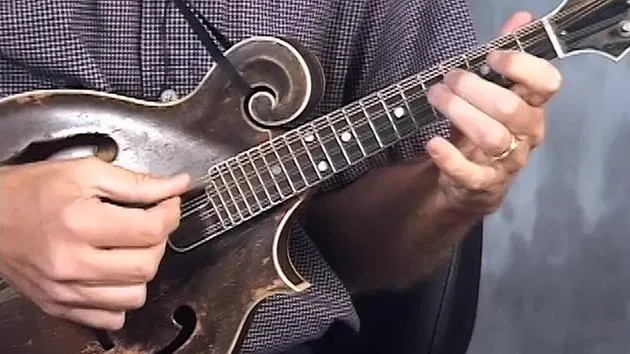
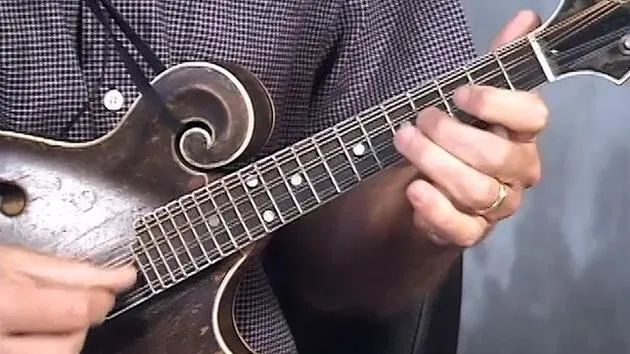
To play an A chord:
- Middle finger: Place it on the fifth fret of the E string (A note).
- Index finger: Put it on the fourth fret of the A string.
- Ring finger: Goes to the seventh fret of the D string.
- Pinky: Reach all the way down to the ninth fret on the G string.
This combination creates the shape for the basic bluegrass major chord (A chord). It may be quite a stretch for you when you're learning it, but if you stick with it, you'll get the hang of it. Initially, you might feel some fatigue, but it will become easier over time.
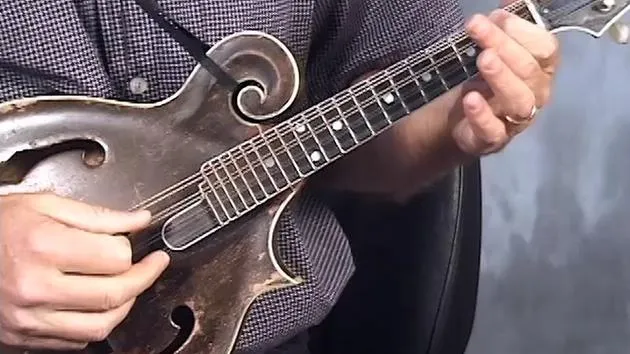
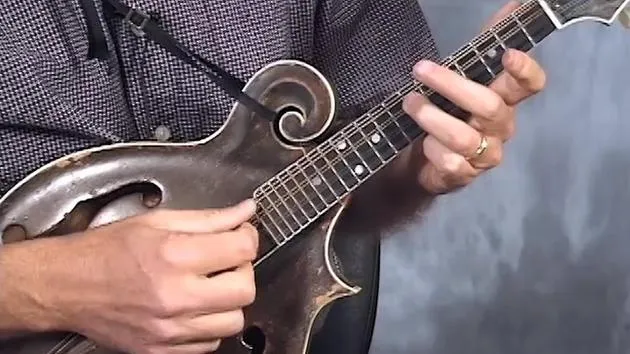
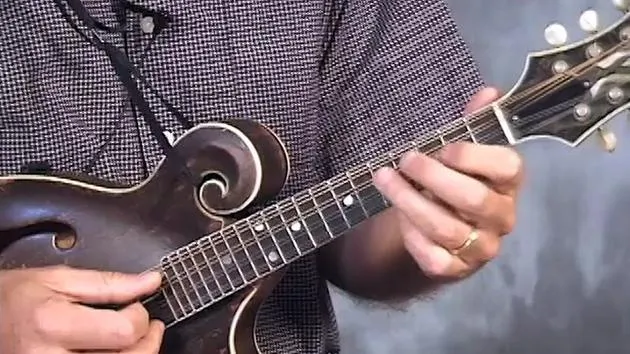
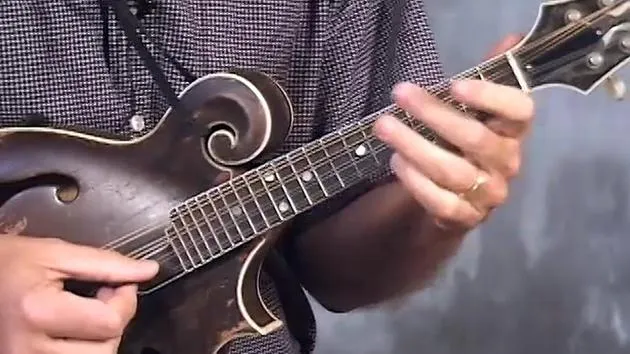
D Chord
Now, to get the D chord, follow this process:
- Move everything up in the same relationship.
- Take the current shape off and retain the three fingers in the same formation.
For the D chord:
- Middle finger: On the fifth fret of the A string.
- Index finger: On the fourth fret of the D string.
- Ring finger: On the seventh fret of the G string.
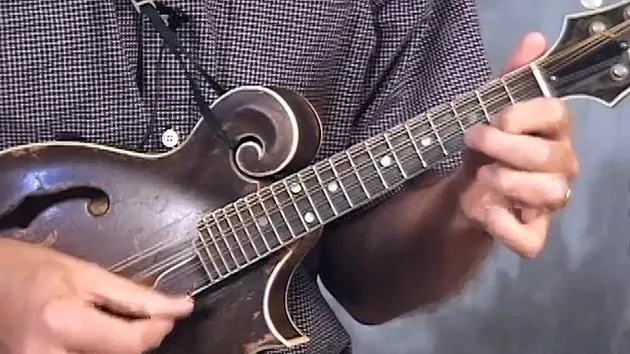
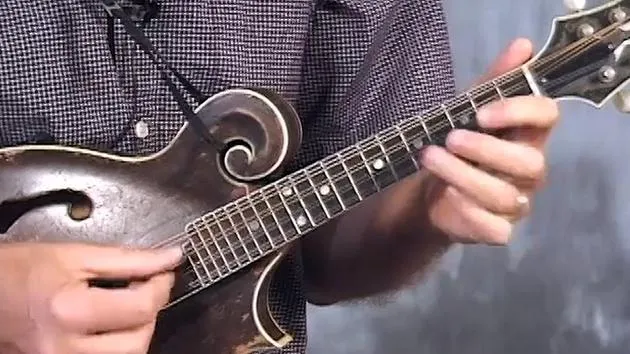
E Chord
To form your E chord:
- Simply move your D shape up two frets.
So now you have:
- D
- E
By following these steps, you'll be well on your way to playing chords in a bluegrass band!
20 Lektionen
1 Std. 18 Min. strukturierte Videolektionen
Erweiterte Videofunktionen
Verlangsamen, Passagen loopen, mitlesen
Handy, Tablet & Desktop
Üben, wo du willst
100 % Zufriedenheitsgarantie
30 Tage Geld-zurück-Garantie
Lern deinen Guru kennen
Lern deinen Guru kennen
Tom Bekeny ist Mandolinist, Fiddler und erfahrener Mandolinenlehrer, der seit über 40 Jahren in den USA und im Ausland aufgetreten ist und unterrichtet hat - wenn er also aufschlüsselt, wie man spielt, lernst du von jemandem, der ein ganzes Leben sowohl auf der Bühne als auch im Unterrichtsraum verbracht hat.
Er war Mandolinist in Bands der San Francisco Bay Area wie Done Gone, Tenbrooks und einer frühen Version der Grant Street String Band mit Laurie Lewis. Er trat mit Peter Rowan, den Rowan Brothers, David Grisman, George Cole, der Sängerin Lua Hadar und Jerry Garcia auf. Tom spielte fast 20 Jahre lang Mandoline in der hochgelobten Kathy Kallick Band und hat seit 1988 den Fiddle-Platz in High Country inne, Kaliforniens führender traditioneller Bluegrass-Band. Er hat mit vielen dieser Gruppen aufgenommen und wurde in der Sommerausgabe 2009 des Mandolin Magazine vorgestellt.
Tom spielt außerdem in der überaus beliebten traditionellen Bluegrass-"Jam"-Band Bangers and Grass, an der Seite von Bluegrass-Größen der Westküste wie Jim Nunally, Steve Pottier, Bill Evans und Chad Manning.
Über den Bluegrass hinaus spielt Tom Jazz-Mandoline mit seinem Trio The Missing Man Quartet (MM4), das geradlinigen Jazz mit originellen Arrangements spielt, die ihr Material aus der Welt des Jazz und den Standards des Great American Songbook schöpfen. 2013 veröffentlichte er ein Solo-CD-Projekt ("Jazzolin"), auf dem er Mandoline und Fiddle spielt, begleitet von Schlagzeug und Bass.







