



Bile 'Em Cabbage Down weiterentwickeln – Doppelgriffe
Mit
Tom Bekeny
Das steckt im Kurs
20 Lektionen (1h 18m) · 1 gratis
Transkript der Lektion
Music Lesson: Exploring "Biolum Cabbage Down" with Double Stops
We're going to work further with the tune Biolum Cabbage Down.
Objectives:
- Focus on right-hand picking technique
- Introduce the concept of double stops
What is a Double Stop?
In classical music, a double stop is when you "stop" a string with your finger, stopping two strings simultaneously.
- In other words, you play two notes, usually adjacent notes.
- For our purposes, any two notes played together, typically on adjacent strings, will be called a double stop.
Demonstration of "Biolum Cabbage Down" with Double Stops
Let me show you this version of Biolum Cabbage Down using double stops. It's a good starting point, as it's more interesting to sound two notes together.
- The second note of the double stop is a harmony note.
- Typically, when playing double stops:
- One note is a melody note
- The other is a harmony note
The tune with double stops sounds like this (a little slower):
Refer to the tablature, and see if you can pick up some of this just from listening to this DVD.
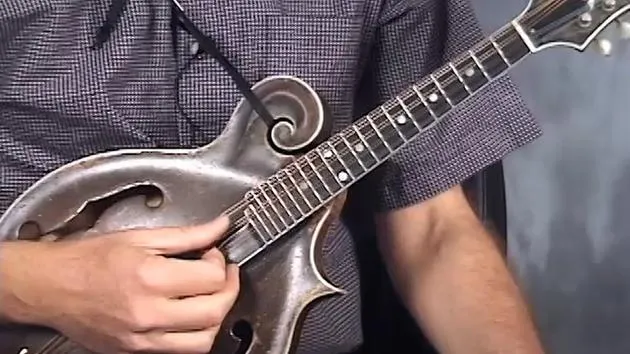
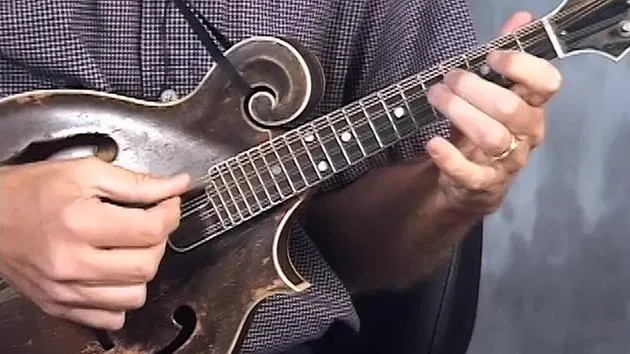
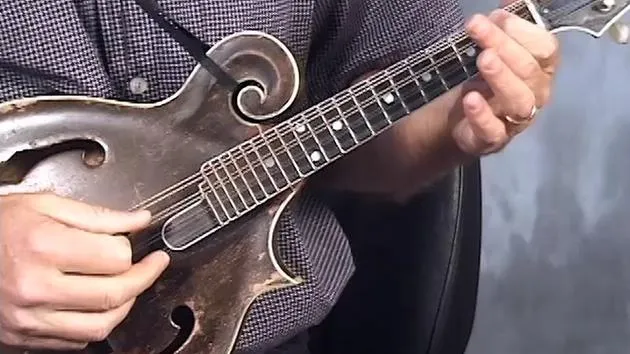
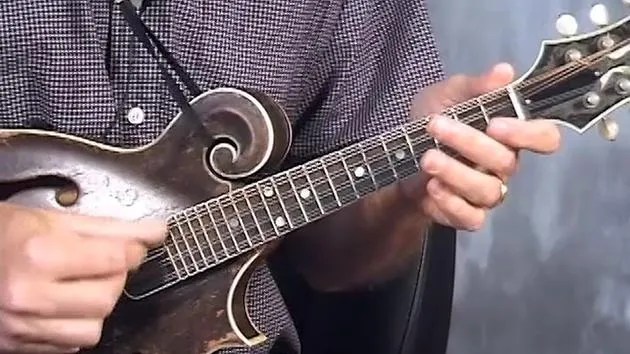
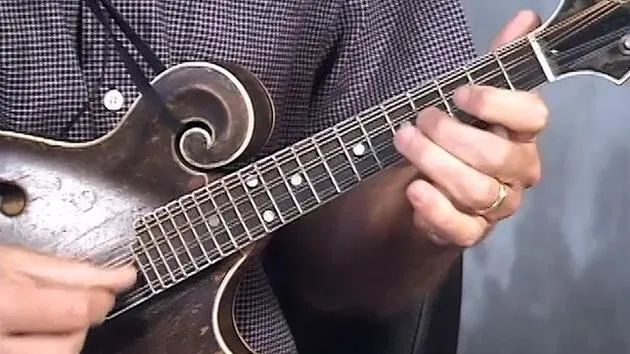
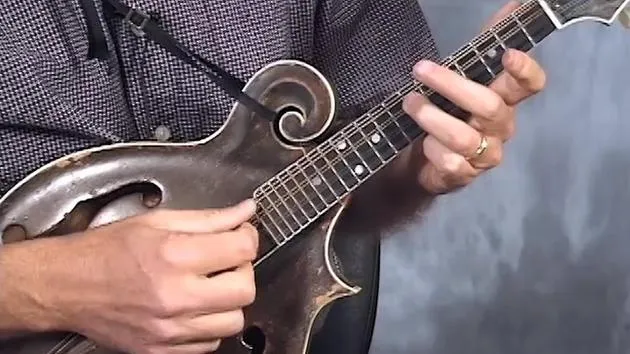
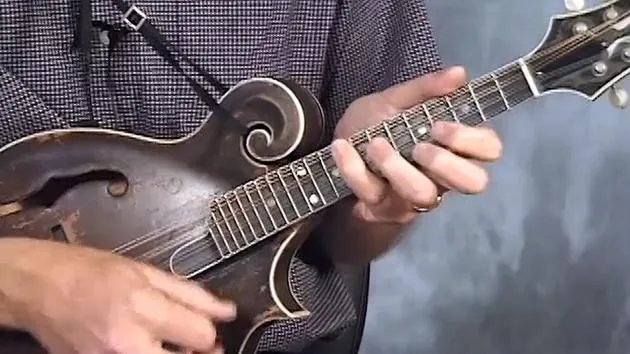
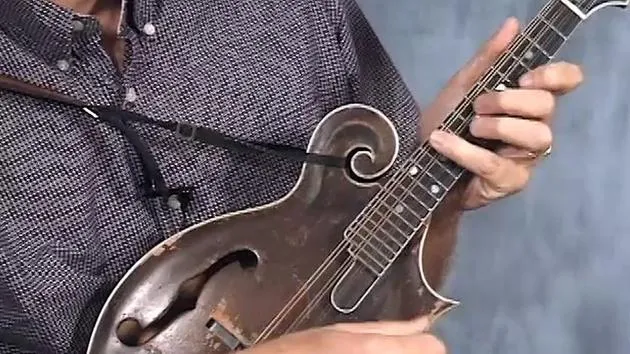
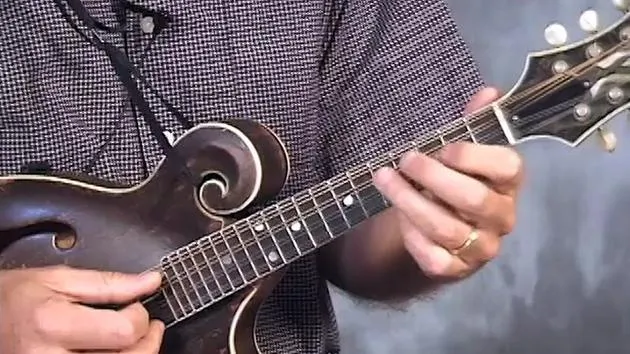
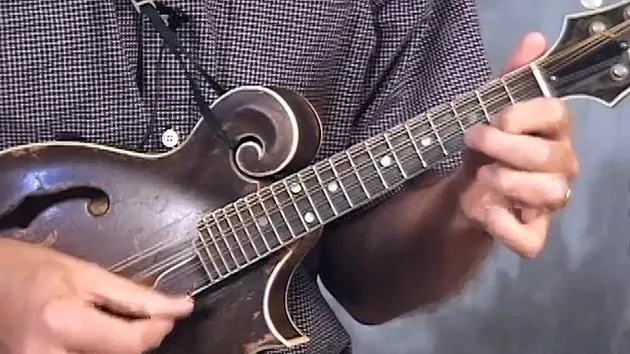
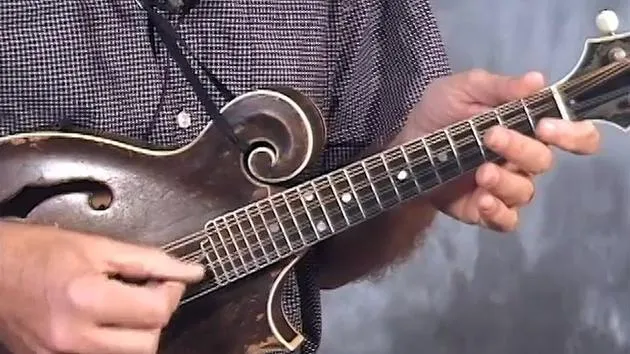
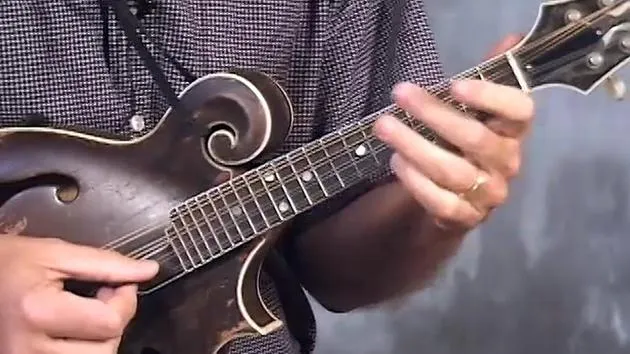
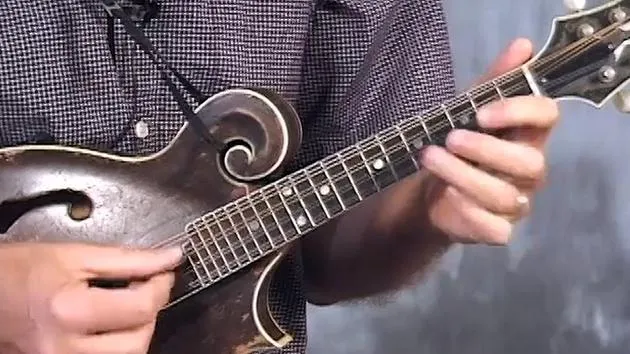
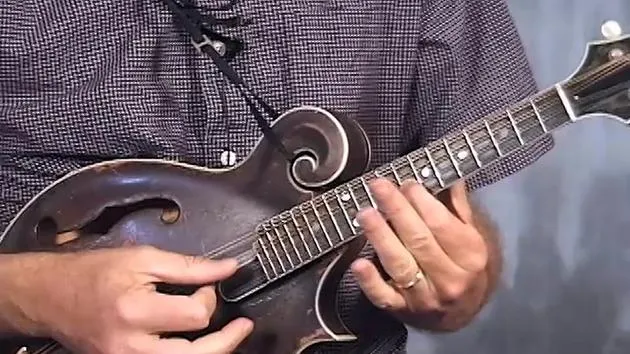
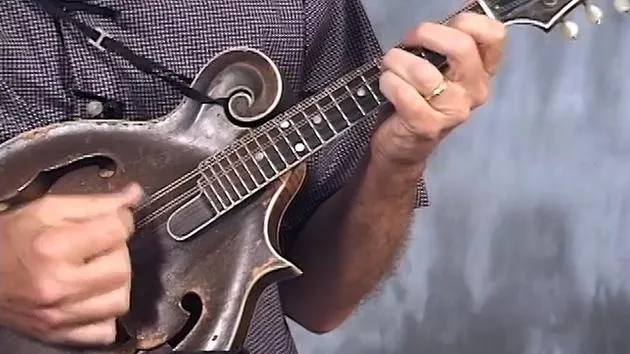
Finger Positions and Shapes
-
First Position:
- Fourth fret with middle finger
- Open E (first double stop)
-
Second Position:
- Fifth fret on the A string with ring finger
- Index fingers fretting on the second fret of E
-
Third Shape:
- Second fret with index finger and open E as the harmony note.
-
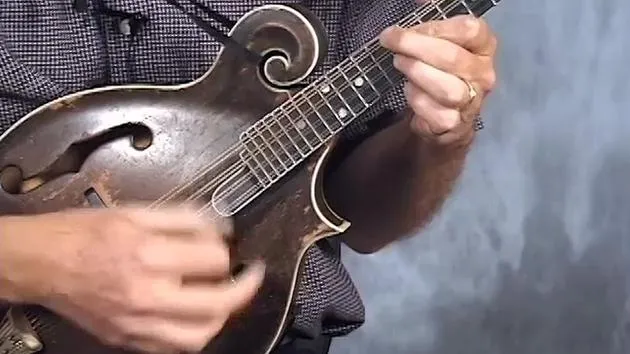
Fourth Position:
- Hitting two A notes:
- Open A
- A note on the D string (ring finger at the seventh fret)
- Hitting two A notes:
Technique Tips
- Keep your wrist loose:
- Playing tightly makes it hard to swipe across the strings properly.
Variations
You can play the same sequence but end with the last note an octave lower:
- Instead of playing the C# and E above, play them lower.
Right-Hand Technique
- Use the same rhythm with your right hand without bracing, almost like playing chords.
- This will enhance your playing as you sound better when it's sped up.
Setting the Tempo
One more thing about playing an instrumental:
A common tradition in old-time fiddle and bluegrass music is a particular way to set the tempo for the song. A typical way to kick this tune off might be:
"To set the tempo for the band, play a sequence called eight potatoes."
- This involves two measures of four beats each, hitting a double stop of a unison.
- For the first beat of each measure, slide up.
I will also have this written out in tablature for you, so you get the idea.
That's the idea for this lesson! Enjoy practicing!
20 Lektionen
1 Std. 18 Min. strukturierte Videolektionen
Erweiterte Videofunktionen
Verlangsamen, Passagen loopen, mitlesen
Handy, Tablet & Desktop
Üben, wo du willst
100 % Zufriedenheitsgarantie
30 Tage Geld-zurück-Garantie
Lern deinen Guru kennen
Lern deinen Guru kennen
Tom Bekeny ist Mandolinist, Fiddler und erfahrener Mandolinenlehrer, der seit über 40 Jahren in den USA und im Ausland aufgetreten ist und unterrichtet hat - wenn er also aufschlüsselt, wie man spielt, lernst du von jemandem, der ein ganzes Leben sowohl auf der Bühne als auch im Unterrichtsraum verbracht hat.
Er war Mandolinist in Bands der San Francisco Bay Area wie Done Gone, Tenbrooks und einer frühen Version der Grant Street String Band mit Laurie Lewis. Er trat mit Peter Rowan, den Rowan Brothers, David Grisman, George Cole, der Sängerin Lua Hadar und Jerry Garcia auf. Tom spielte fast 20 Jahre lang Mandoline in der hochgelobten Kathy Kallick Band und hat seit 1988 den Fiddle-Platz in High Country inne, Kaliforniens führender traditioneller Bluegrass-Band. Er hat mit vielen dieser Gruppen aufgenommen und wurde in der Sommerausgabe 2009 des Mandolin Magazine vorgestellt.
Tom spielt außerdem in der überaus beliebten traditionellen Bluegrass-"Jam"-Band Bangers and Grass, an der Seite von Bluegrass-Größen der Westküste wie Jim Nunally, Steve Pottier, Bill Evans und Chad Manning.
Über den Bluegrass hinaus spielt Tom Jazz-Mandoline mit seinem Trio The Missing Man Quartet (MM4), das geradlinigen Jazz mit originellen Arrangements spielt, die ihr Material aus der Welt des Jazz und den Standards des Great American Songbook schöpfen. 2013 veröffentlichte er ein Solo-CD-Projekt ("Jazzolin"), auf dem er Mandoline und Fiddle spielt, begleitet von Schlagzeug und Bass.







