



Anschlagsmuster
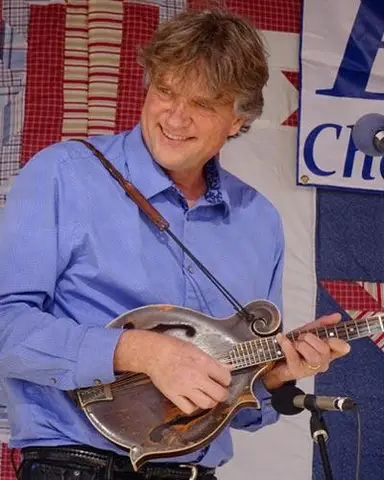
Lesson time: (2min 49sec)
Tom Bekeny zeigt den perkussiven Mandolinen-Chop, der eine Bluegrass-Band antreibt, indem er den Backbeat betont, um das Schlagzeug zu ersetzen.
Course preview
This lesson is part of the course Mandoline für Anfänger mit Tom Bekeny
Watch a preview of the full course below.
Lesson transcript:
Percussive Chord Playing in Bluegrass
In today's lesson, we'll be exploring a percussive approach to playing chords in a bluegrass band. The key focus will be on accentuating the backbeat.
Understanding the Backbeat
- If the music counts as 1 and 2 and 3 and 4, your playing will emphasize:
- 1 and 2 and 3 and four
- 1 and 2 and 3 and 4
To help you stay in time, you may want to lightly hit one of the low strings on "one."
Basic Percussive Technique
At its most pared-down version, you're just hitting the backbeat:
- 1 and 2 and
- 1 and 2 and
- 1 and 2 and
- 1 and 2.
This involves hitting a downstroke. You can make that chord very percussive to the point where it's hardly a note at all. Many contemporary bluegrass players employ this technique.
Exploring Different Sounds
- You can also create a sound that's more "ringy":
- Notice that this is hardly percussive at all.
- The middle ground might be a blend of both techniques.
Achieving the Percussive Effect
To get the percussive sound, you need to control all the strings:
- Cutting off the sound involves:
- Letting up on the strings without completely taking your fingers off.
- Instead of pressing down, release the tension slightly to let the strings come up to their normal height, which kills the sound.
Enjoying Rhythm in Bluegrass
Playing rhythm in a bluegrass band is really fun! There are many different sounds you can explore. Your palate will define how percussive you want to be.
Different Chord Varieties
- You may want the chords to be:
- A little more ringy
- More percussive
- Emphasize the downbeat
Another way to conceptualize this is "boom, chuck":
- boom, chuck, boom, chuck
- boom, chuck, boom, chuck
- Leave the boom off for variation.
Experimentation
These are elements you can experiment with during your practice. See what happens and discover what works best in the context of the music you're playing.
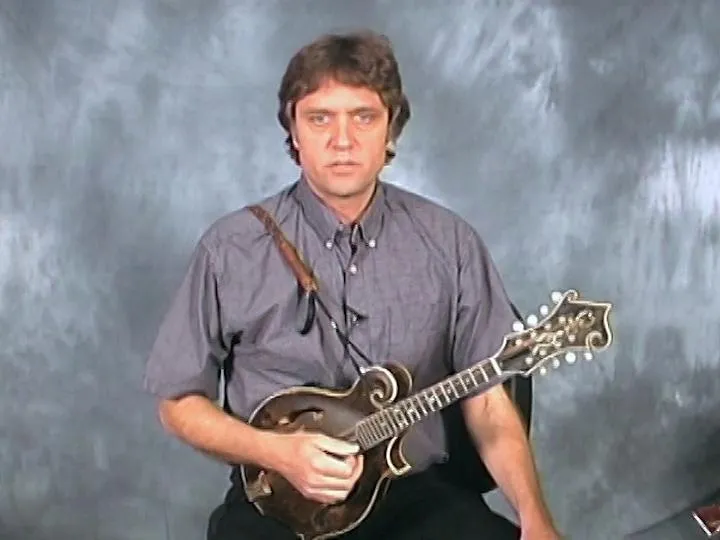
About the instructor
Tom Bekeny ist Mandolinist, Fiddler und erfahrener Mandolinenlehrer, der seit über 40 Jahren in den USA und im Ausland aufgetreten ist und unterrichtet hat - wenn er also aufschlüsselt, wie man spielt, lernst du von jemandem, der ein ganzes Leben sowohl auf der Bühne als auch im Unterrichtsraum verbracht hat. Er war Mandolinist in Bands der San Francisco Bay Area wie Done Gone, Tenbrooks und einer frühen Version der Grant Street String Band mit Laurie Lewis. Er trat mit Peter Rowan, den Rowan Brothers, David Grisman, George Cole, der Sängerin Lua Hadar und Jerry Garcia auf. Tom spielte fast 20 Jahre lang Mandoline in der hochgelobten Kathy Kallick Band und hat seit 1988 den Fiddle-Platz in High Country inne, Kaliforniens führender traditioneller Bluegrass-Band. Er hat mit vielen dieser Gruppen aufgenommen und wurde in der Sommerausgabe 2009 des Mandolin Magazine vorgestellt. Tom spielt außerdem in der überaus beliebten traditionellen Bluegrass-"Jam"-Band Bangers and Grass, an der Seite von Bluegrass-Größen der Westküste wie Jim Nunally, Steve Pottier, Bill Evans und Chad Manning. Über den Bluegrass hinaus spielt Tom Jazz-Mandoline mit seinem Trio The Missing Man Quartet (MM4), das geradlinigen Jazz mit originellen Arrangements spielt, die ihr Material aus der Welt des Jazz und den Standards des Great American Songbook schöpfen. 2013 veröffentlichte er ein Solo-CD-Projekt ("Jazzolin"), auf dem er Mandoline und Fiddle spielt, begleitet von Schlagzeug und Bass. read more