



Crotchets and Quavers
With
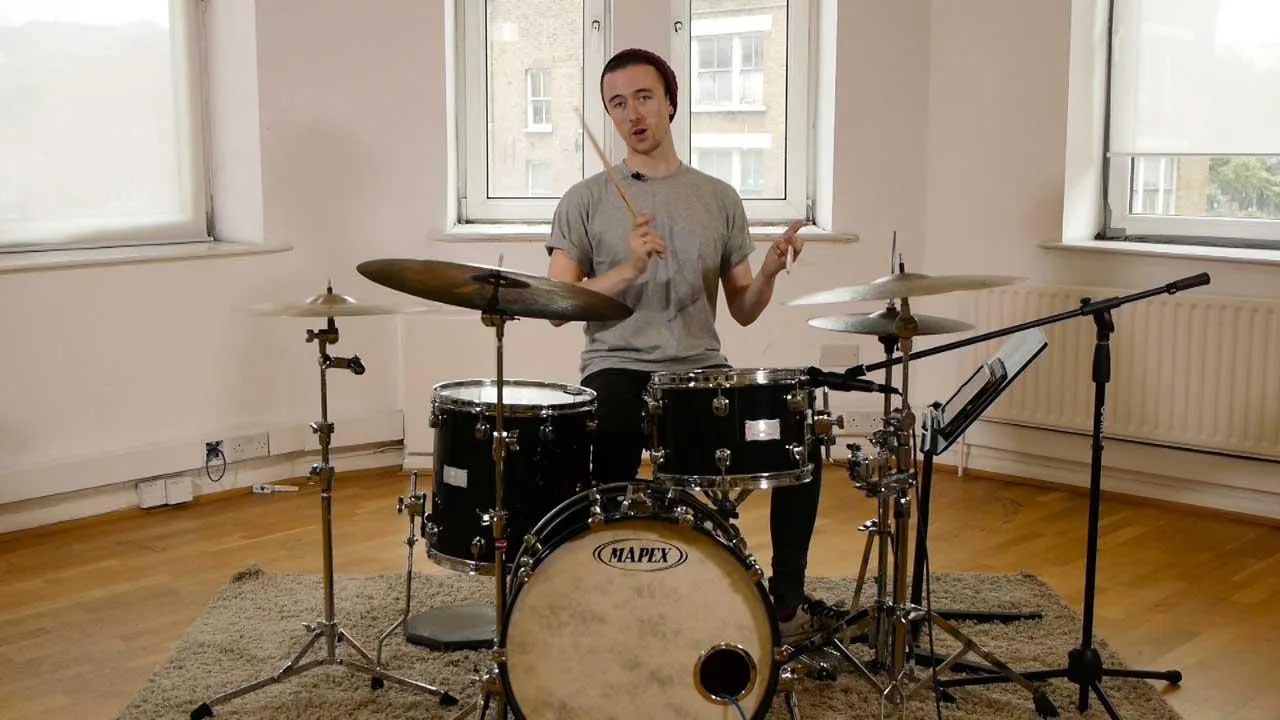
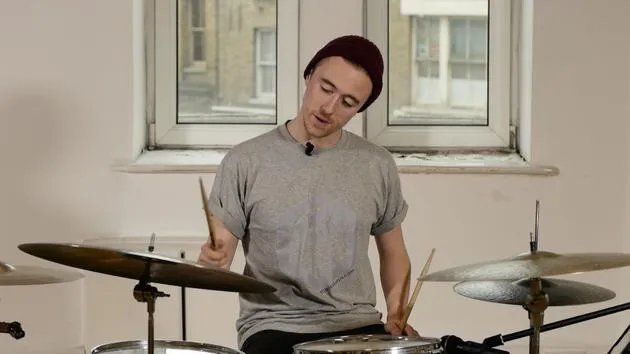
Harry PopeHarry Pope introduces two new note values - the crotchet and the quaver - and shows you how to count and play them between the bass drum and hi-hat.
What's in the course
15 lessons (1h 43m) · 3 free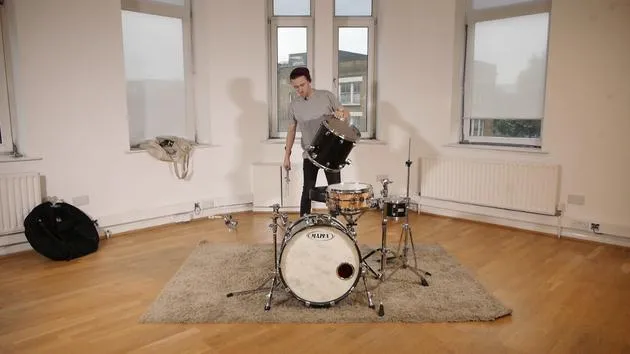
01. BONUS: Setting up the drum kit
Free lesson2:36
02. Meet Harry
Free lesson2:01
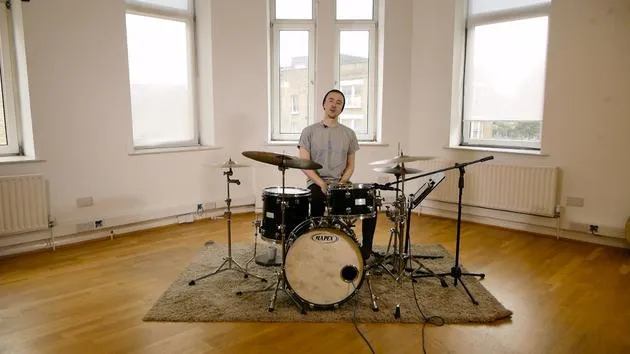
03. Getting Familiar With Your Kit
Free lesson13:15
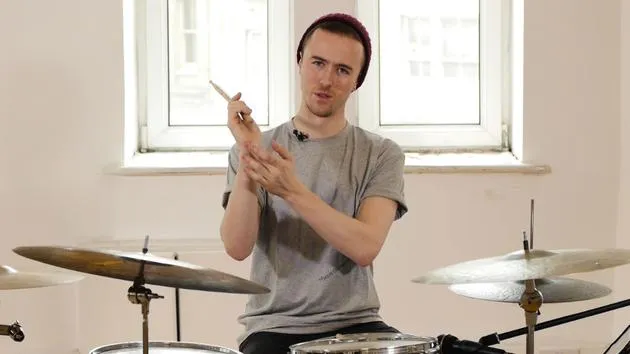
04. Stick and Foot Technique
10:18
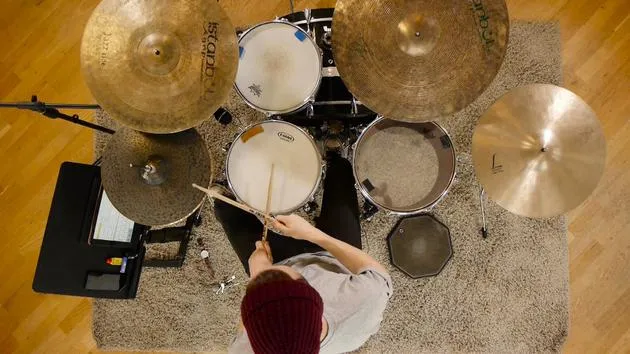
05. The Basic Beat
7:26
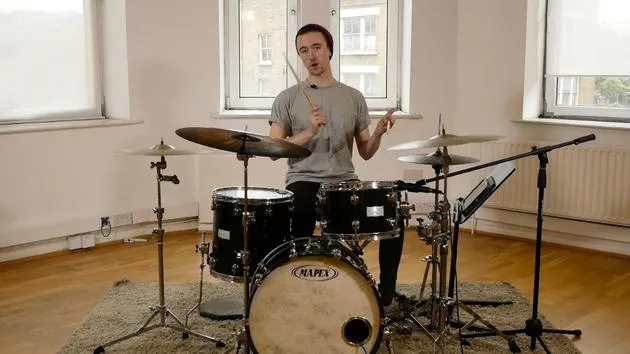
06. Crotchets and Quavers
You are here6:05
07. Varying the Beat
8:06
08. Rudiment #1 - Single Stroke Roll
9:39
09. BONUS: Fills using the single stroke roll
5:06
10. Rudiment #2 - Double Stroke Roll
7:11
11. BONUS: Fills using the Double Stroke Roll
4:14
12. Rudiment #3 - Paradiddles
5:53
13. Grooving With Paradiddles
7:03
14. Adding Semi-Quavers and Ornaments
7:28
15. Adding the Ride Cymbal and Open Hi-Hat
7:08
Lesson transcript
Lesson Four: Introduction to Quavers
Hello. Welcome back. This is lesson four.
Recap of Lesson Three
In lesson three, we learned to play a really basic rock beat like this.
- The actual notes we're playing are crotchets, and they last for one whole beat.
- So we're counting like this: 1, 2, 3, 4.
That's our pulse just there.
Introducing Quavers
Now what we're going to do is add a new value of note, a new type of note, and they're called quavers.
- A crotchet lasts one whole beat: 1, 2, 3, 4.
- A quaver lasts for half as much, meaning we can fit two quavers in one crotchet: 1 and 2 and 3 and 4 and.
So again, to summarize:
- Crotchets: One whole beat.
- Quavers: Half a beat.
Demonstration
To demonstrate that, I'm going to play crotchets on the bass drum: 1, 2, 3, 4.
Alongside that, I'm going to play quavers on the hi-hat so you can hear them both together:
1 and 2 and 3 and 4.
Does that make sense? I hope so.
New Beat with Added Quavers
In this next beat we're going to learn, it's essentially an evolution of the beat we learned before with just some added quavers.
-
The part for the bass drum and the snare drum remains the same: 1, 2, 3, 4.
-
The hi-hat will be playing quavers on all the beats:
1 and 2 and 3 and 4.
In time, it sounds like this:
1 and 2 and 3 and 4.
Practicing the Beat
Taking it very slowly:
1 and 2 and 3 and 4.
A good way to start is to get the hi-hat going first:
1 and 2 and 3 and 4 and.
Then, start adding the bass drum:
1 and 2 and 3 and 4 and.
Important Coordination Tips
So far, we have the bass drum and the hi-hat.
It's important to remember that, although the bass drum is playing on beat three because it's a crotchet, it's not playing on both of the quavers.
This is not what you're looking for:
1 and 2 and 3 and 4 and.
What we want is:
One crotchet on beat one and one crotchet on beat three.
So that would sound like:
1 and 2 and 3 and 4.
Sound Quality
It's also good to think about the sound we're getting from each instrument.
Now that we have the basic coordination together, aim for a nice, strong sound from the bass drum.
- I'm using heel up at this point.
- You can use heel down if you want, but heel up provides a nice focused sound: 1 and 2 and 3 and 4.
Adding the Snare Drum
Once we've got that together, let's start adding the snare drum:
1 and 2 and 3 and 4.
Repeat:
1 and 2 and 3 and 4.
This is the same beat we had before:
- 1 on the bass drum,
- 2 on the snare drum,
- 3 on the bass drum,
- 4 on the snare drum.
This may be simple, but that doesn't mean it can't sound really, really good.
Listening Example
Check out "Billie Jean" by Michael Jackson for an absolute lesson on how good this can sound. It's one of the most listened to and sampled beats in the world, and it is just brilliant.
Final Summary
To sum up:
- 1 on the bass drum
- 2 on the snare drum
- 3 on the bass drum
- 4 on the snare drum
- All in crotchets with quavers on the hi-hat: 1 and 2 and 3 and 4 and.
Overall, it sounds like this.
Key Takeaway
Remember:
- Crotchets last one whole beat.
- Quavers last half a beat.
It's crucial to get these subdivisions right because that's how the grooves are going to sound great.
Now that we've added the quavers, I'm going to leave you there.
Thank you very much for watching, and I will see you in lesson five!
15 lessons
1h 43m of structured video lessons
Advanced video features
Slow down, loop a passage, follow along
Mobile, tablet & desktop
Practise wherever you are
100% satisfaction guarantee
30-day money-back guarantee
Meet your guru
Meet your guru
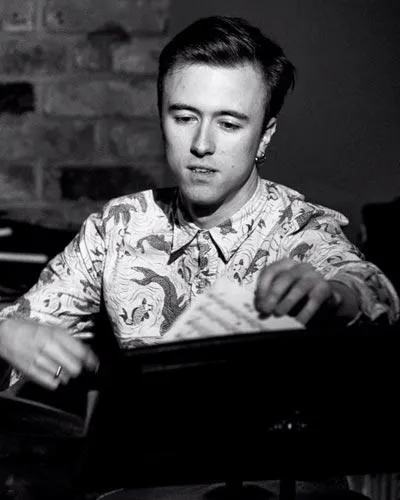
Harry Pope is a London drummer and a graduate of the jazz programme at Trinity College of Music. He has played with Brit Award winner Eddi Reader, guitarist Jim Mullen, Graeme Duffin of Wet Wet Wet, and the Royal Scottish National Orchestra Big Band. His beginner course starts from the kit up - posture, grip, timekeeping and your first grooves - at a pace that suits anyone picking up sticks for the first time.







