



Rudiment #2 - Double Stroke Roll
With
Harry Pope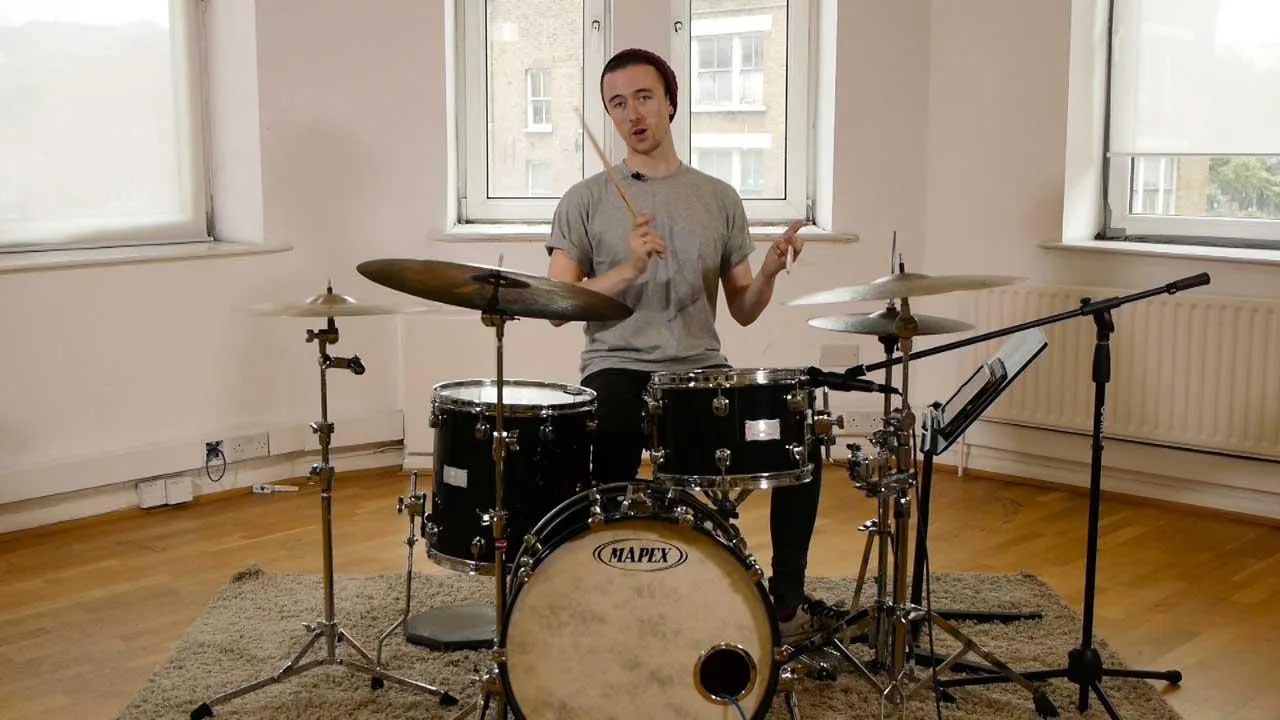
What's in the course
15 lessons (1h 43m) · 3 free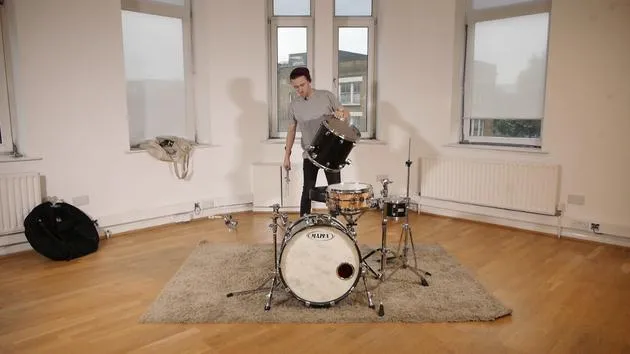
01. BONUS: Setting up the drum kit
Free lesson2:36
02. Meet Harry
Free lesson2:01
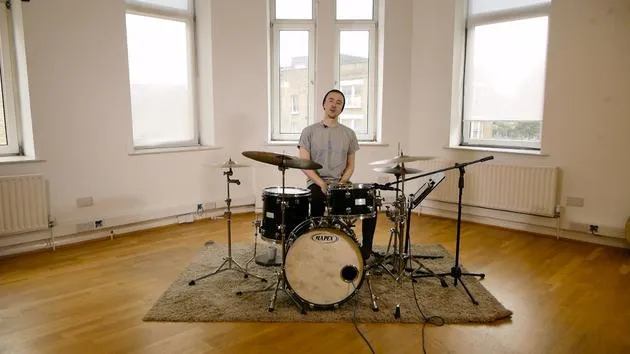
03. Getting Familiar With Your Kit
Free lesson13:15
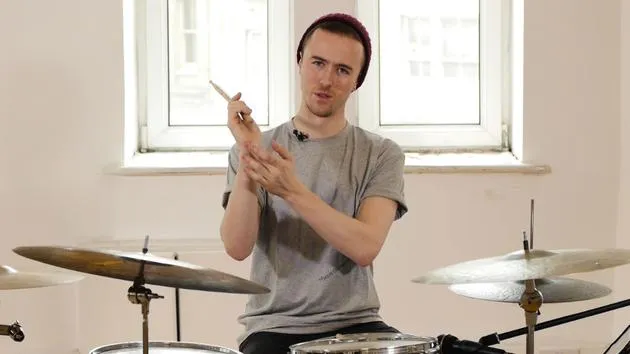
04. Stick and Foot Technique
10:18
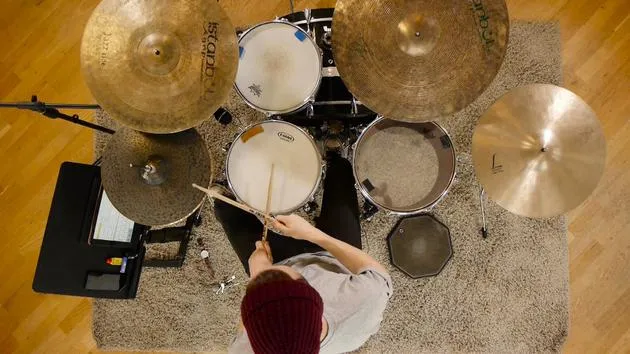
05. The Basic Beat
7:26
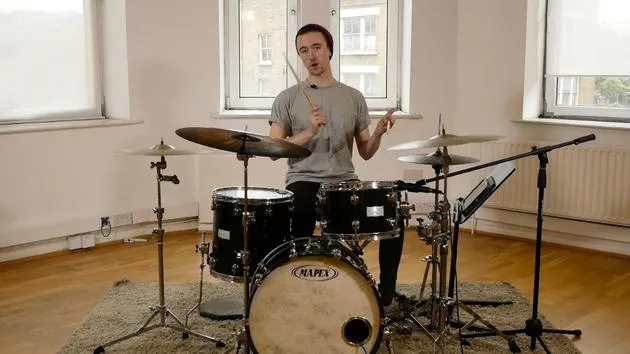
06. Crotchets and Quavers
6:05
07. Varying the Beat
8:06
08. Rudiment #1 - Single Stroke Roll
9:39
09. BONUS: Fills using the single stroke roll
5:06
10. Rudiment #2 - Double Stroke Roll
You are here7:11
11. BONUS: Fills using the Double Stroke Roll
4:14
12. Rudiment #3 - Paradiddles
5:53
13. Grooving With Paradiddles
7:03
14. Adding Semi-Quavers and Ornaments
7:28
15. Adding the Ride Cymbal and Open Hi-Hat
7:08
Lesson transcript
Double Stroke Roll Lesson
Introduction
Hey, welcome back! So, in our last lesson, we learned our first rudiment: the single stroke roll.
- Right, left, right, left, right, left.
We also learned about the subdivision semiquavers:
- 1e and 2e and 3e and a 4e.
- And crotchets last for a quarter of 1b.
Understanding the Double Stroke Roll
If the single stroke roll is a single stroke for each hand:
- Right, left, right, left.
The double stroke roll, quite tellingly, is a double stroke for each hand:
- Right, right, left, left, right, right, left, left.
Exercise: Double Strokes
Now, what we're going to do is the exact same exercise as we did in the last lesson for the single strokes, but for the double strokes.
-
Crotchets:
- First, we're going to play it in crotchets with the hi-hat on each crotchet as well.
- Focus on getting a nice consistent sound, always aiming for the center of the drum and ensuring no overlap between the snare and the hi-hat.
- Make sure they come down at the exact same time.
Okay, dead simple. Let's try that one more time.
-
Quavers:
- So that's crotchets. Now, let's try quavers.
- Hi-hat will stay on crotchets. Here we go:
- Quavers 1 and 2 and 3 and 4, and your hands are essentially flipping over each beat.
So again, quite simple. Let's try it in semiquavers.
-
Semiquavers:
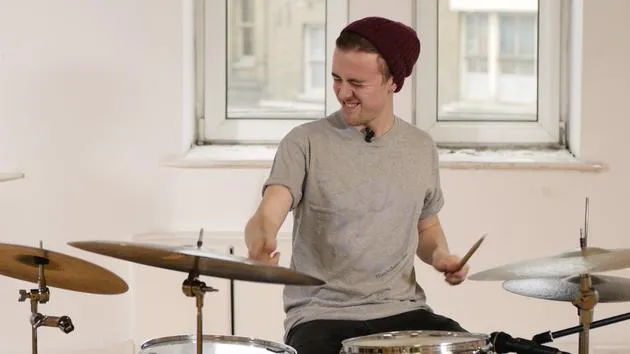
- Now, when we play double strokes, it's important, very, very important, to use the rebound.
- If you try to play two strokes while holding very tightly, you won't be able to play them quickly, which kind of defeats the point.
Let's simplify it:
- If you hold the sticks too tight and try to play, you're going to be playing each stroke with your arms. You really don't want that.
- The arms are for big movements, while the wrists are for medium movements.
- You can use your fingers to control the rebound for the quieter and quicker movements.
Now I'm going to demonstrate:
- I'll let the stick drop and then catch it again.
- Just down, and then I'm pulling back up with the fingers a little bit.
- It's not snatching; I'm just controlling the rebound so I don't have to wait for it to come back up.
This will be a work in progress. It won't be perfect straight away; it's just something to think about.
-
Practice Semiquaver Double Strokes with Hi-Hat:
- Now, let's try some semiquaver double strokes with the hi-hat:
- Right, right, left, left in semiquavers.
Let's see how it feels. It might feel quite difficult because you've got to manage the double strokes and add the hi-hat in as well. But I promise you, it'll be worth it!
Putting It All Together
Just like we did with the single strokes, we're going to try this as a fill.
- We're going to use our quaver beat for one measure.
- Then, we'll play three bars of that beat.
- In bar four, we'll play some double strokes in semiquavers.
Very, very simple. Let's just try it now. And... stop.
Conclusion
So again, I hope you can see that the stick is rebounding; it is coming off the drum. There's none of this:
- Listen to that. It sounds awful.
Instead:
- Down, catch.
- Too much effort. Remember, drummers are generally quite lazy.
- You don't want to use any more motion than you have to.
After doing it for half an hour, you'll be ruined if you overexert yourself. Get the same volume and more clarity by not using your big muscles for too much work.
Final Exercise
Let's try that whole exercise one more time. Then I'll leave you to practice it for a bit. And you will practice it!
- 1, 2, 3, 4.
- 2, 3, 4.
Cool! So, that's our double stroke roll again. We're playing it in semiquavers and using it as a fill between our beats.
Thanks very much for watching. I'll see you in the next video!
15 lessons
1h 43m of structured video lessons
Advanced video features
Slow down, loop a passage, follow along
Mobile, tablet & desktop
Practise wherever you are
100% satisfaction guarantee
30-day money-back guarantee
Meet your guru
Meet your guru
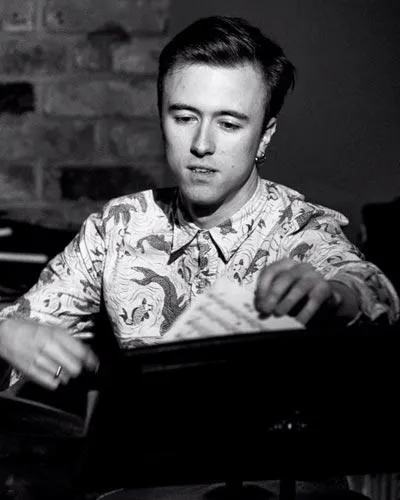
Harry Pope is a London drummer and a graduate of the jazz programme at Trinity College of Music. He has played with Brit Award winner Eddi Reader, guitarist Jim Mullen, Graeme Duffin of Wet Wet Wet, and the Royal Scottish National Orchestra Big Band. His beginner course starts from the kit up - posture, grip, timekeeping and your first grooves - at a pace that suits anyone picking up sticks for the first time.







