



Grooving With Paradiddles
With
Harry Pope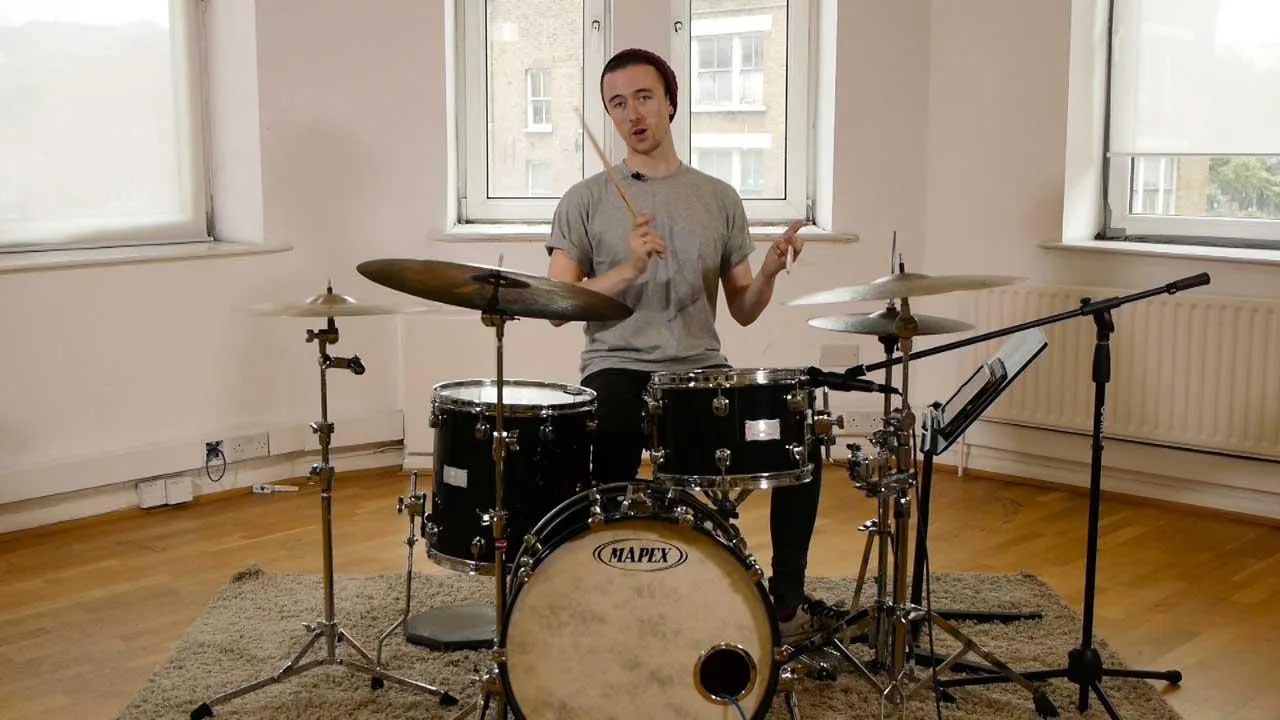
What's in the course
15 lessons (1h 43m) · 3 free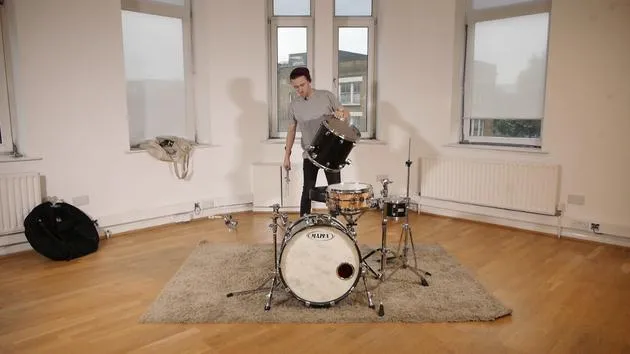
01. BONUS: Setting up the drum kit
Free lesson2:36
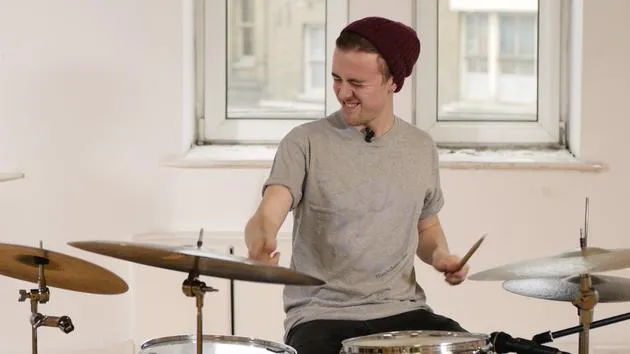
02. Meet Harry
Free lesson2:01
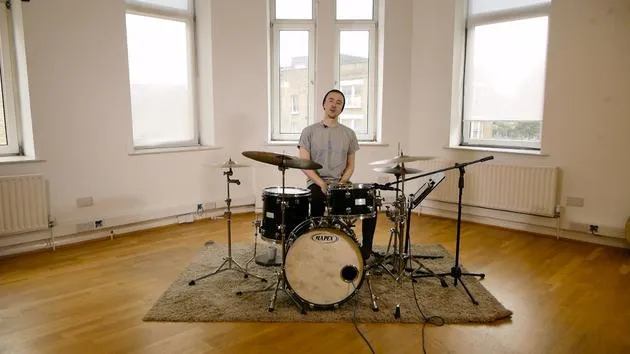
03. Getting Familiar With Your Kit
Free lesson13:15
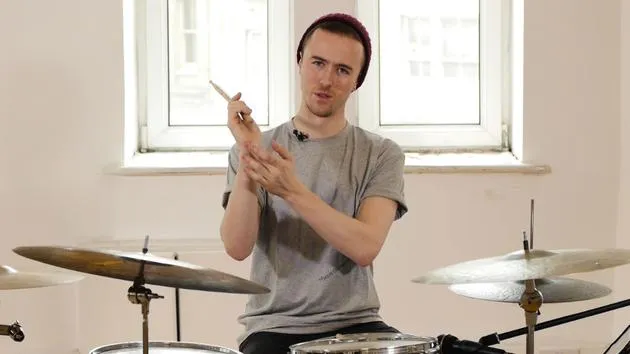
04. Stick and Foot Technique
10:18
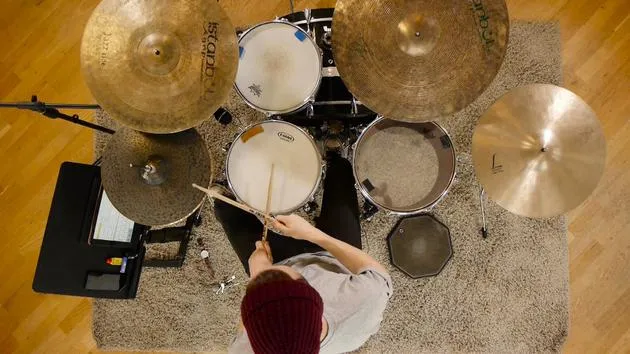
05. The Basic Beat
7:26
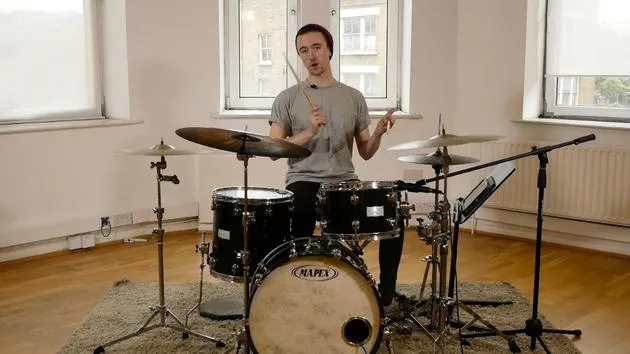
06. Crotchets and Quavers
6:05
07. Varying the Beat
8:06
08. Rudiment #1 - Single Stroke Roll
9:39
09. BONUS: Fills using the single stroke roll
5:06
10. Rudiment #2 - Double Stroke Roll
7:11
11. BONUS: Fills using the Double Stroke Roll
4:14
12. Rudiment #3 - Paradiddles
5:53
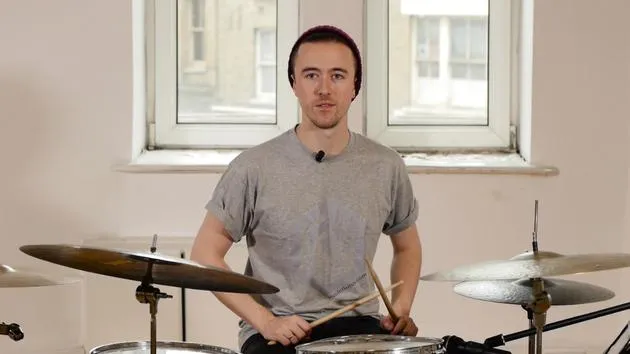
13. Grooving With Paradiddles
You are here7:03
14. Adding Semi-Quavers and Ornaments
7:28
15. Adding the Ride Cymbal and Open Hi-Hat
7:08
Lesson transcript
Welcome Back!
I hope you're still enjoying these lessons. You made it pretty far!
Playing with Paradiddles
What we're going to do just now is play a little bit more with those paradiddles. So far, we've played them between the floor tom and snare drum.
Explore the Sounds
Once you've got the paradiddle sticking down, try moving your hands around. Here are some tips:
- Experiment: Move the first note of each paradiddle around the drum kit.
- Have Fun: Kick around the drum kit and enjoy the process. You'll discover some cool sounds!
- Learn from the Pros: Check out Steve Gadd, many of his grooves are based on paradiddles and are played exceptionally well.
Speeding Up the Paradiddles
I'll give you an example of what paradiddles can sound like when you speed them up and make them sound clean. It may not be as clean as his, but here's what I can do:
- About 60-70% of that is just right, left, right, right, left, right, left.
Introducing Semiquavers
Now, let's learn our first beat that incorporates semiquavers.
- Right-Handed Paradiddle on Beat 1
- Left-Handed Paradiddle on Beat 2
Practice Basic Beats
- Here's how it flows:
1, 2, 2, 3, 4
1, 2, 3, 4
One, two, three, four.
This sticking is quite simple, but it sounds interesting when we move our hands around.
Adding the Bass Drum
Once you've got this together, add the bass drum on the first semiquaver of beats one and three:
- 1, 2, 3, 4.
Understanding Accents
Now, let's learn about another musical term: Accent.
- An accent is a note that is louder than the others.
Accenting Paradiddles
For example, if I accent the first note of each paradiddle, it would sound like this:
- Right-Handed: Accent the first note.
- Left-Handed: Accent the first note.
For the groove: Accent every left-handed paradiddle's first note. This would look like:
- Left, Right, Left, Left, Left, Right, Left, Left
When the bass drum comes in (on beats 1 and 3), it accentuates the sound further.
Hi-Hat Accents
To create a nice accent on the hi-hat:
- Use the shoulder of the stick instead of the tip.
- Hit it against the side, not the top.
This technique produces a rougher and messier sound.
Turning Exercises into Beats
As you practice, you'll notice that what starts as an exercise can evolve into a cool beat to play.
- Practice It: You don't have to play it fast! Just enjoy the process.
- Add Paradiddles Occasionally: If you're feeling bored, incorporate paradiddles. They sound cool and will significantly enhance your playing!
Conclusion
That's some applications for the paradiddle. I hope you enjoy them, and I'll see you next time. Thanks!
15 lessons
1h 43m of structured video lessons
Advanced video features
Slow down, loop a passage, follow along
Mobile, tablet & desktop
Practise wherever you are
100% satisfaction guarantee
30-day money-back guarantee
Meet your guru
Meet your guru
Harry Pope is a London drummer and a graduate of the jazz programme at Trinity College of Music. He has played with Brit Award winner Eddi Reader, guitarist Jim Mullen, Graeme Duffin of Wet Wet Wet, and the Royal Scottish National Orchestra Big Band. His beginner course starts from the kit up - posture, grip, timekeeping and your first grooves - at a pace that suits anyone picking up sticks for the first time.







