



Page 2 Analysis

With
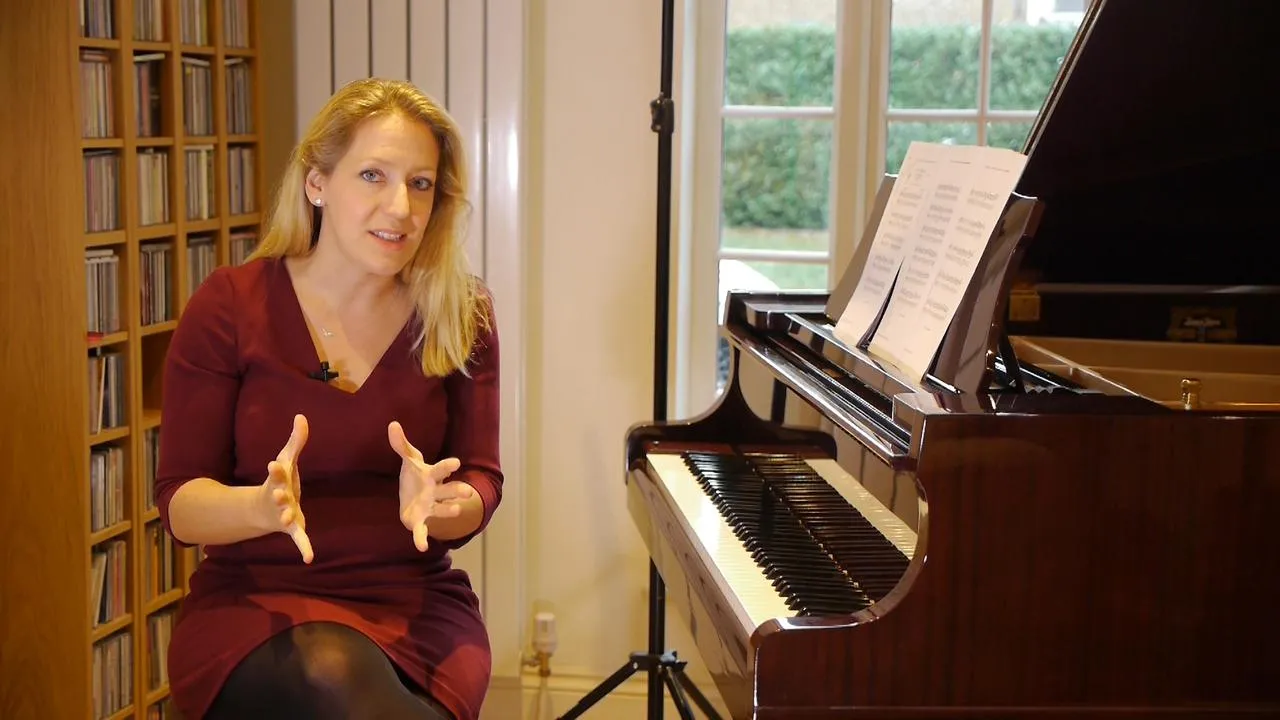
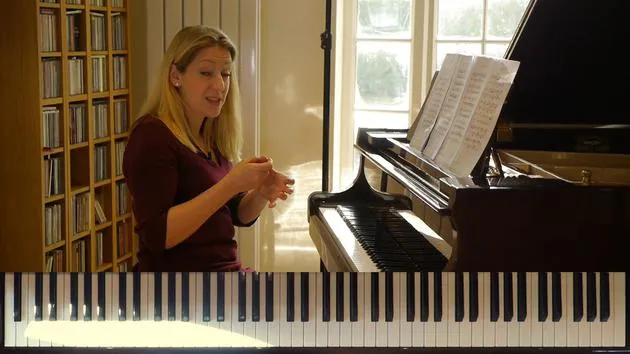
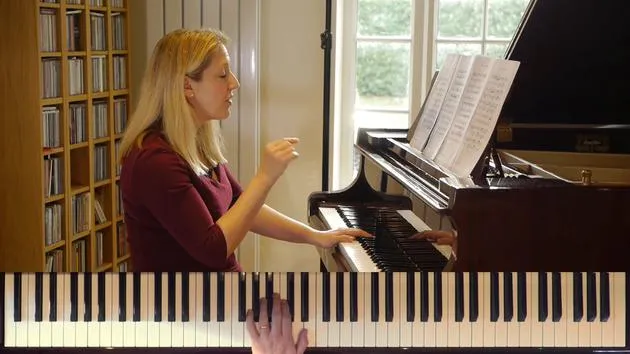
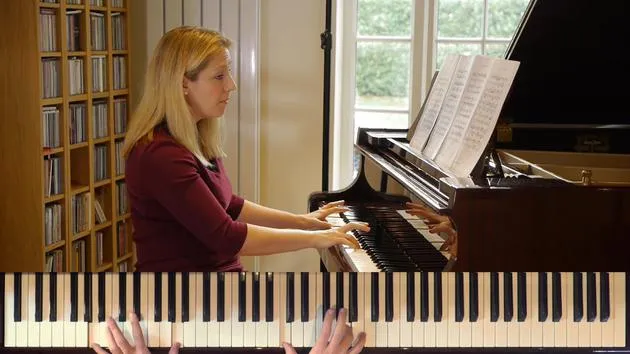
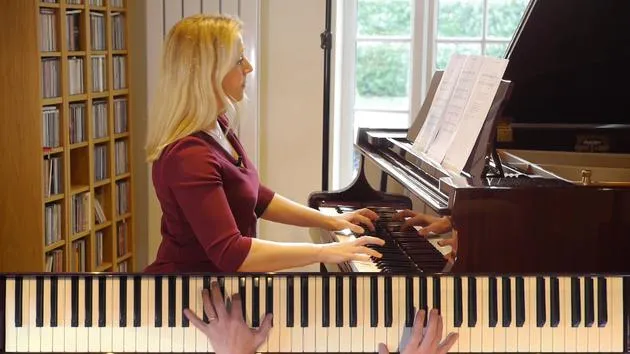
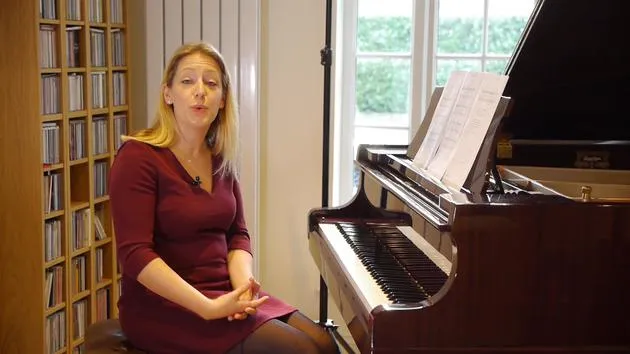
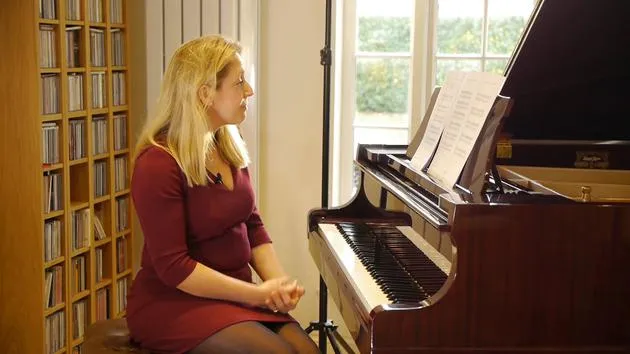
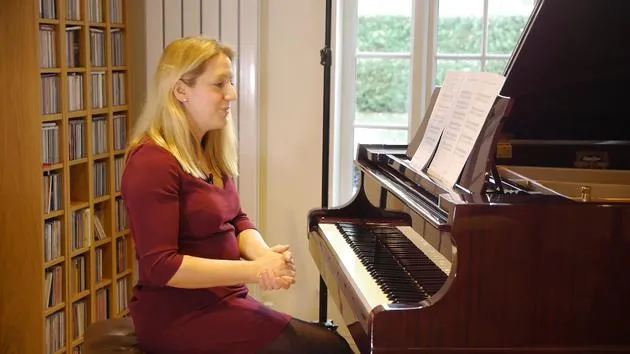
Annabel ThwaiteAnnabel Thwaite works through page 2 of Für Elise - the demisemiquavers and chordal voicing in bar 24, and shaping the Alberti bass accompaniment.
What's in the course
21 lessons (0h 57m) · 1 free
Lesson transcript
Music Lesson: Exploring Harmony and Melody
Let's move on now to the second page,
Demisemiquavers and Chordal Voicing in Bar 24
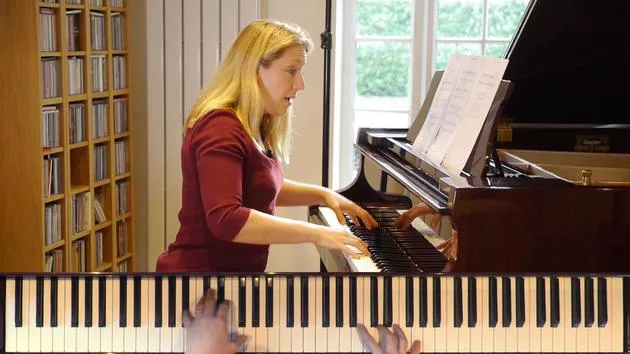
- Beautiful Idea: We have this beautiful idea of demisemiquavers and chordal voicing in bar 24.
- Wonderful Harmony: You could bring out the bass line or even the middle parts this time.
Classical Melody and Accompaniment
-
Alberti Bass:
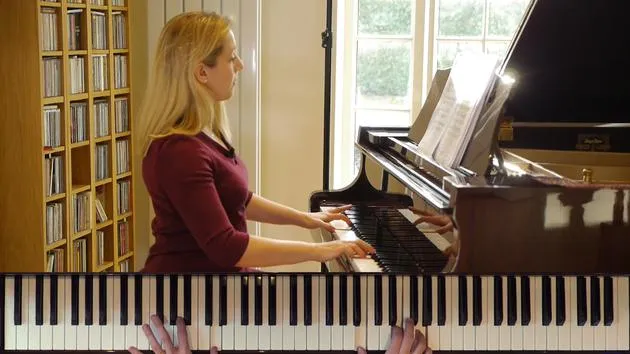
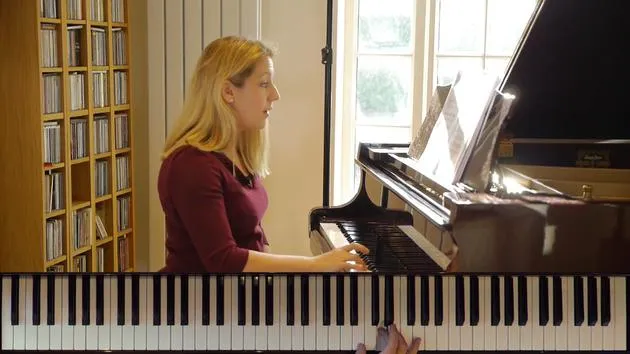
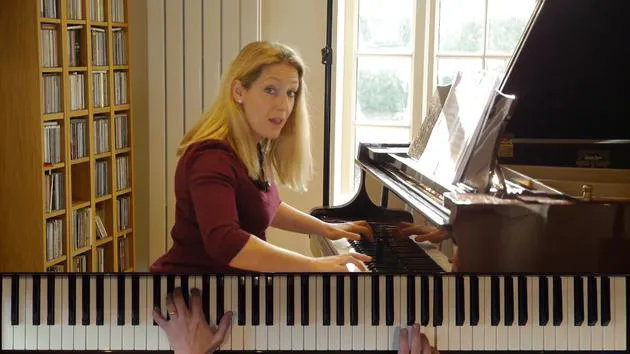
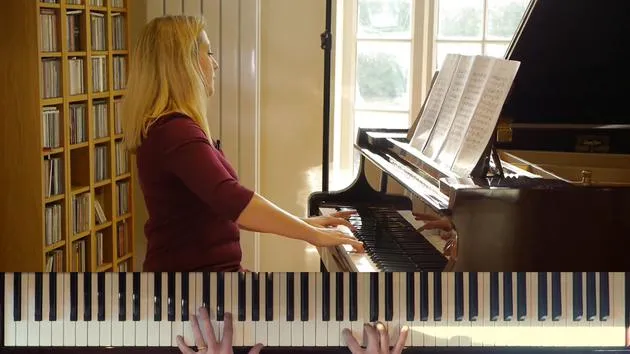
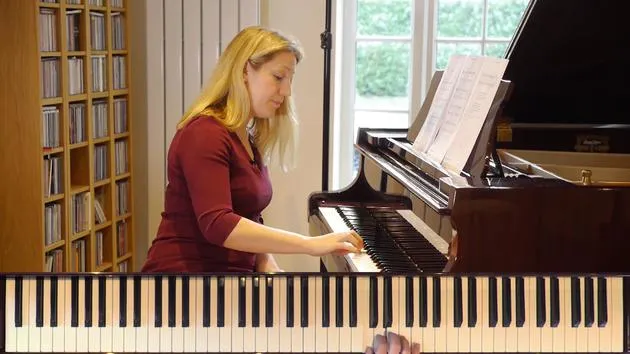
- The accompaniment now features an Alberti bass.
- An Alberti bass is literally a chord that is repeated in an arpeggiated fashion to keep the harmony going.
-
Historical Context:
- On the early style pianos, we weren't able to hold down the harmony with pedal or with resonance.
- This was the composer's way of keeping the harmony flowing.
-
Playing Technique:
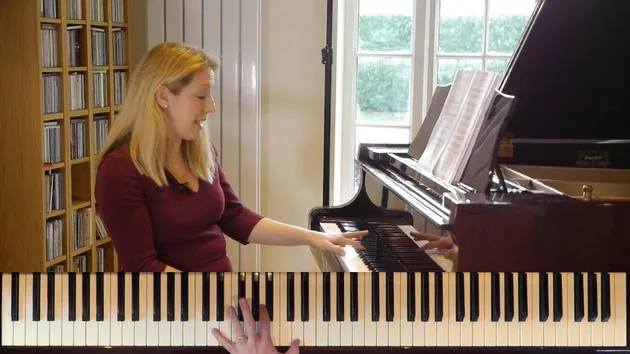
- Notice that my weight is on the first beat and less on the other notes.
- We certainly don't want to hear the other notes because it's not pretty and it's not stylistic.
- We want this beautiful buoyant texture bubbling away underneath so that the melody can just serenely move over the top.
Bar 28: The Appoggiatura
-
Leaning Note:
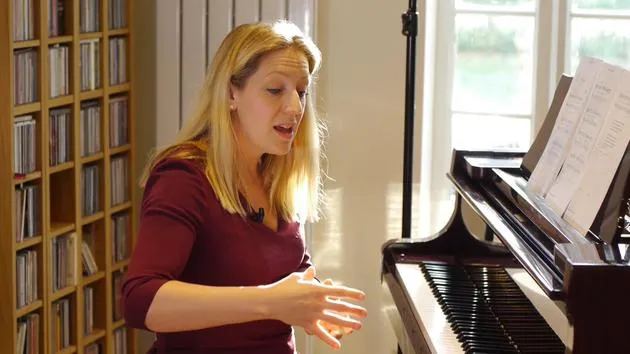
- I just want to mention a little bit about bar 28, that beautiful written out appoggiatura, which is a leaning note.
- That's a really nice moment, so I wouldn't gloss over that.
-
Ornamentation:
- Then we have a little ornament.
- Don't make too much of that either;
- it's just a little flick, a bit ornate, a bit of decoration.
Bar 31: The Turn
-
Difficulty Note:
- The turn at bar 31 is quite a difficult one.
- It's actually written out for you, so I don't think you need to worry too much about it.
-
Placement:
- Just notice that it occurs on the fourth semiquaver of the left hand, so it works organically and very neatly.
Bars 32 and 33: Keeping it Light
-
Tricky Passage:
- Let's have a look at bars 32 and 33.
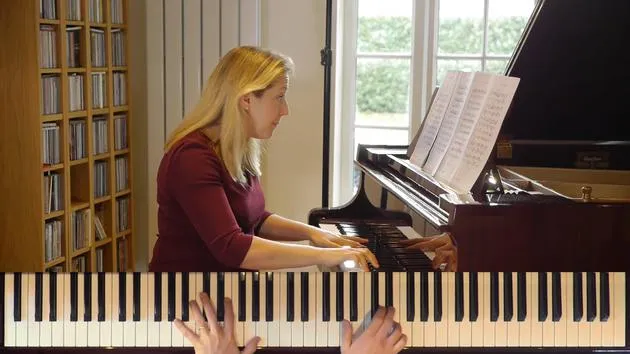
- This is quite tricky because we want to keep the thumb light.
-
Embellishment:
- All it is, though, is a sort of embellishment on this fifth.
- You have this alto part, so you want to keep the melody in that thumb very light and with direction.
Understanding Demisemiquavers
-
Structure:
- Now, try not to worry about those demisemiquavers; there's always a structure behind those complex passages.
- The structure is in the left hand, so those demisemiquavers will equal nicely and perfectly with the left hand.
-
Practice Tips:
- If we did it slowly, you could even take away the top note and practice that a few times.
- Then just add in the top part as if it were a bit of decoration.
Continuing the Theme
-
Repeating Theme:
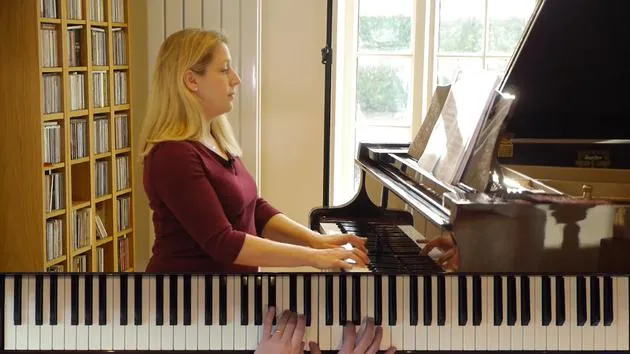
- We then carry on with the repeated theme.
- You might like to put in a few more little colors, a little bit of ebb and flow, and a little bit of conversation between the left hand and the right hand.
-
Masculine and Feminine:
- Perhaps the left hand could be more masculine and the right hand more feminine, or maybe it can be the other way around.
- Either way, add a little bit more color and a little bit of differentiation between the first time.
21 lessons
0h 57m of structured video lessons
Advanced video features
Slow down, loop a passage, follow along
Mobile, tablet & desktop
Practise wherever you are
100% satisfaction guarantee
30-day money-back guarantee
Meet your guru
Meet your guru
Recognised as one of Britain's most versatile and charismatic pianists, Annabel Thwaite enjoys a diverse career as a soloist, chamber musician, recording artist, educator and examiner, and has won all the major accompanying prizes, including the prestigious Kathleen Ferrier, Gold Medal, and Richard Tauber Piano Prizes. She has collaborated with renowned artists such as Roberto Alagna, Bryn Terfel, David Kempster and "Only Men Aloud!"
Annabel has recorded for Universal records with the "Scottish Tenor", whose album was nominated for a Classical Brit Award and is regularly played on Classic FM. Twice the accompanist for the Festival of Welsh Male choirs, her performances at the Royal Albert Hall were recorded by Sain and have been aired on S4C. She is also a film session pianist, having recorded at Abbey Road the music for the film "Awake", the BBC Jane Austen series "Emma", "The Secret Diaries of Miss Anne Lister" and, most recently, she has appeared on both Blue Peter and "The Rob Brydon Show".
"...no doubt helped by the obviously brilliant piano accompaniments from Annabel Thwaite...highly enjoyable."
In her MusicGurus courses - Learn Christmas Classics on Piano, Learn Classical Favourites on Piano, and Growing Chamber Groups and Small Ensembles - Annabel shares the musicianship behind that versatile career. You will learn how to bring well-loved Christmas and classical pieces to life at the piano, develop your touch and phrasing, and, drawing on her award-winning experience as an accompanist, discover how to listen, lead and play together when making music with other musicians in chamber groups and small ensembles.







