



Fingering

With
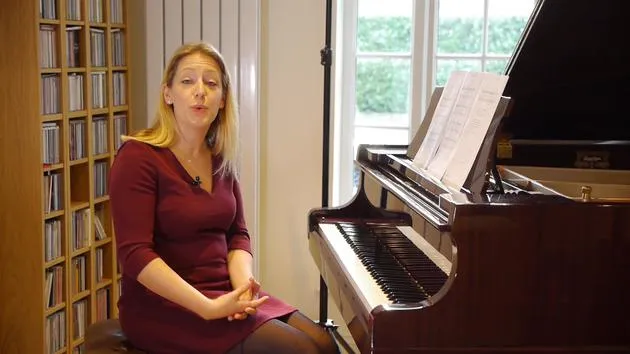
Annabel ThwaiteAnnabel Thwaite shares how she chooses fingering, aiming for the most natural hand position and even groupings, like three then four then five across a G major scale.
What's in the course
21 lessons (0h 57m) · 1 free
Lesson transcript
Understanding Fingering for Pianists
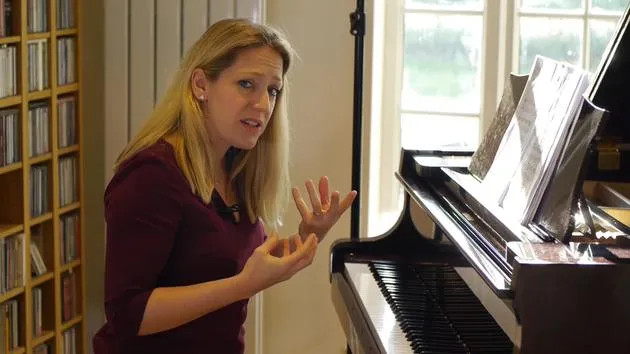
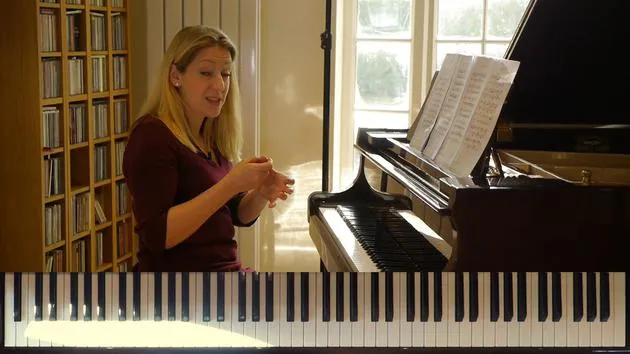
Let's talk briefly about fingering. As a pianist, I love to write on my score, and I often use fingering as a signpost of when my brain needs to sort of engage more about this turn or that turn. Thus, I use it with phrasing.
Purpose of Fingering
The reason we use fingering is to achieve the maximum effect with minimal effort. We are very lucky as pianists because we're quite symmetrical:
- Two thumbs
- Second finger
- Third finger
- Fourth finger
- Fifth finger
Natural Hand Position
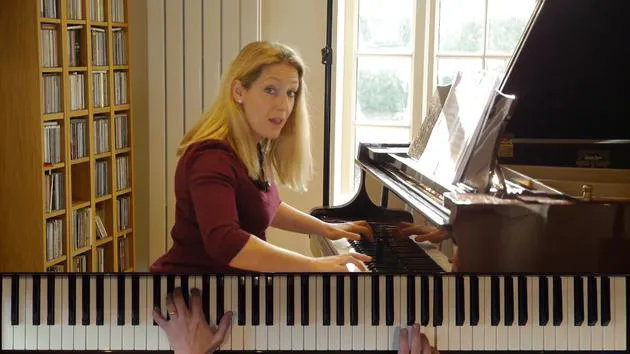
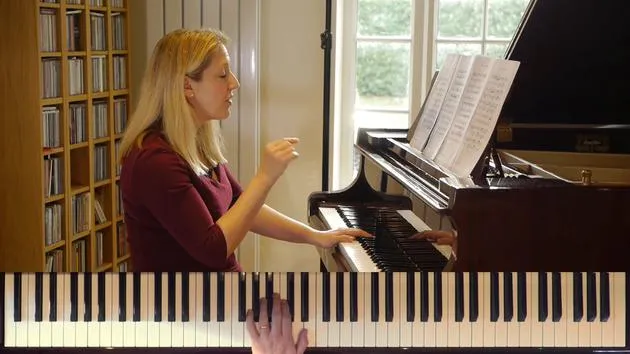
We should be very free. There's a variety of schools of playing, but the most notable one emphasizes achieving the most natural hand position.
Example: C Major Chord
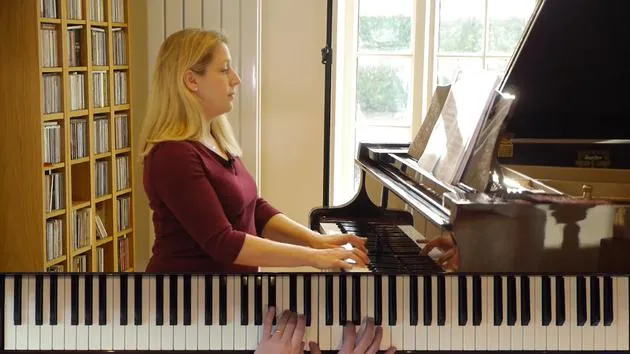
For example, a C major chord allows the fingers to fall naturally, and the hand rests comfortably on the chord.
Frederic Chopin's Favorite
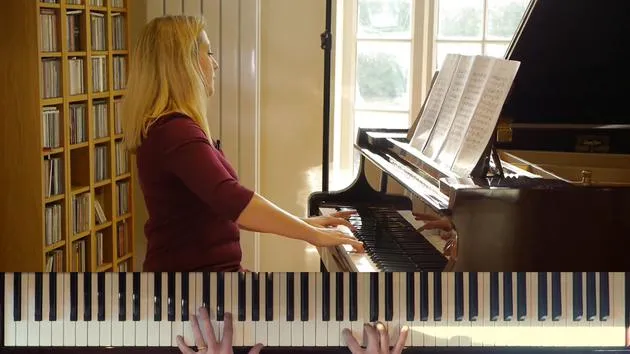
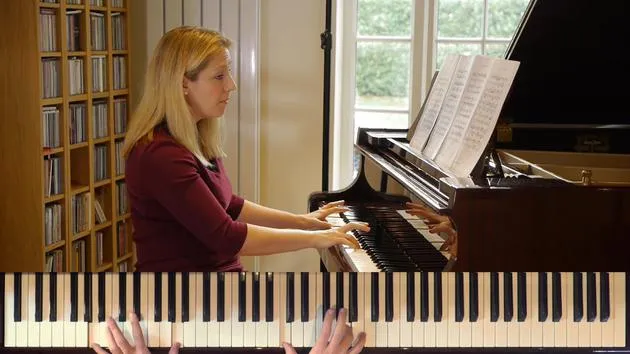
Frederic Chopin's favorite scale was actually B major in the right hand. Look at the natural kind of hand placement:
- You have this bridge
- A relaxed elbow
- Fingers falling naturally over the sharps
Fingering Passages
When fingering a passage, try to find the most natural way for the hand to move.
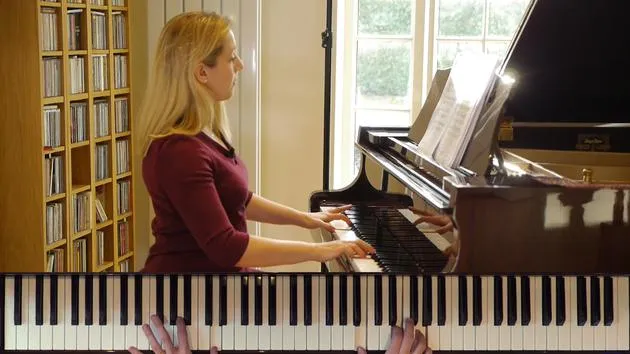
Example: G Major Scale
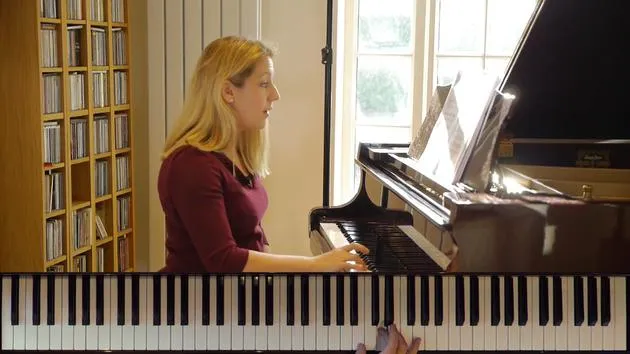
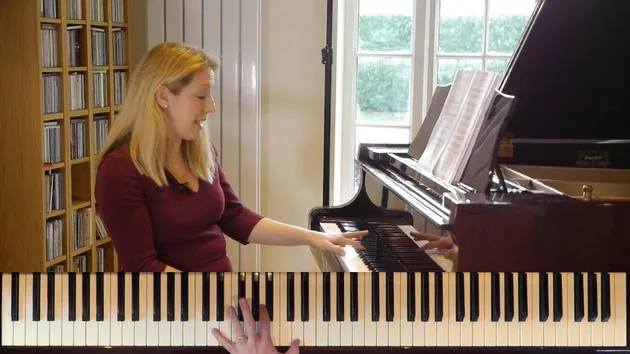
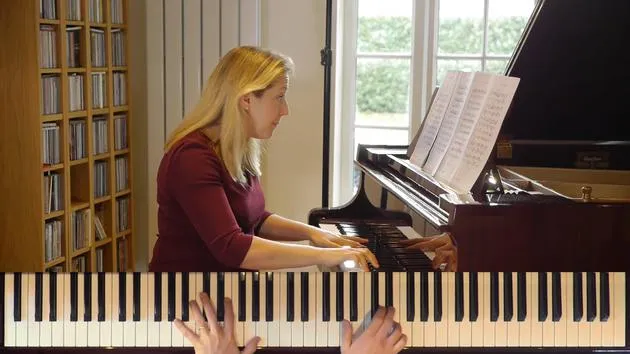
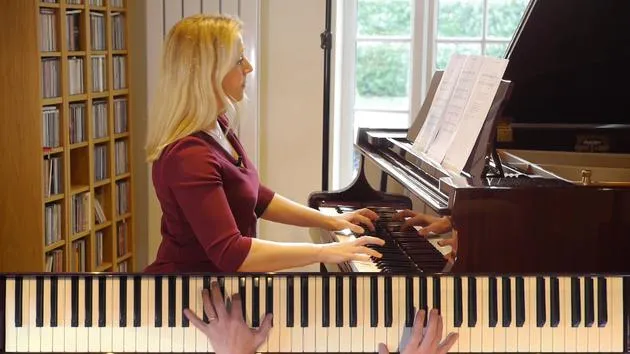
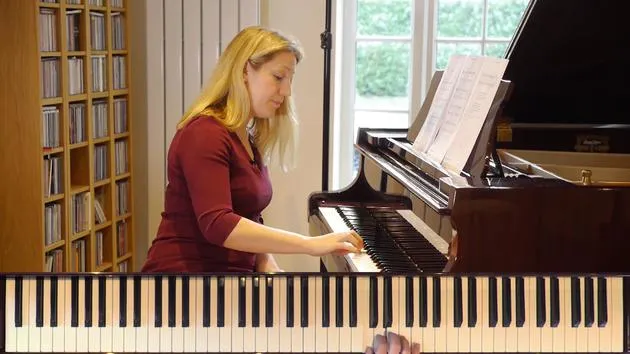
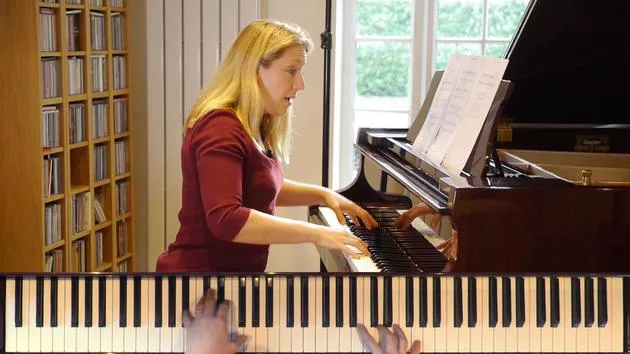
Let's take a G major scale. We want to transition from this position to another as evenly as possible.
- We could group four and three, but that would be odd since we'd end on a four, which is quite a weak finger at the top of the scale.
- The most natural approach is to do a group of three, then a group of four, and end with a five.
If working with another octave, note that the thumb has the flexibility to go underneath and move easily without creating any bumps.
Patterns for Scalier Passages
If you have a big scalic passage, aim for a simple pattern. For instance:
- Group of five
- Group of three
- Group of four
Avoid complicated sequences like 2, 2, 3, 4, 1, 3, 2. The fingering should be something your brain can easily grasp.
Fingering Arpeggios
For arpeggios, my hand loves the pattern 1, 2, 3, 5. I have quite small hands, so I avoid stretching too much between the fourth and fifth fingers, as it wouldn't be comfortable.
Comfort Check
When fingering, consider:
- How does it look?
- Does it feel comfortable?
The Cheater's Guide to Fingering
We all have our nemesis in fingering. For example, I tend to avoid using 5 and 4 or sometimes even 4 and 3 to utilize my stronger fingers.
- If you were trilling on 3 and 4, it might be easier for you to trill on 2 and 3, or even 1 and 3.
- Use your strengths to your advantage.
Committing to Your Fingering
Finally, once you've settled on fingering, stick to it, really stick to it.
- Practice and practice it.
- If it's still not working after about two weeks or after the 20th time, revisit it.
- However, avoid constantly changing between fingerings.
Stick with one, see if it works, practice it, solidify it, and then move on.
Comparison to Dance Routine
It's like learning a dance routine. You must learn the moves before you embark on improvisation.
21 lessons
0h 57m of structured video lessons
Advanced video features
Slow down, loop a passage, follow along
Mobile, tablet & desktop
Practise wherever you are
100% satisfaction guarantee
30-day money-back guarantee
Meet your guru
Meet your guru
Recognised as one of Britain's most versatile and charismatic pianists, Annabel Thwaite enjoys a diverse career as a soloist, chamber musician, recording artist, educator and examiner, and has won all the major accompanying prizes, including the prestigious Kathleen Ferrier, Gold Medal, and Richard Tauber Piano Prizes. She has collaborated with renowned artists such as Roberto Alagna, Bryn Terfel, David Kempster and "Only Men Aloud!"
Annabel has recorded for Universal records with the "Scottish Tenor", whose album was nominated for a Classical Brit Award and is regularly played on Classic FM. Twice the accompanist for the Festival of Welsh Male choirs, her performances at the Royal Albert Hall were recorded by Sain and have been aired on S4C. She is also a film session pianist, having recorded at Abbey Road the music for the film "Awake", the BBC Jane Austen series "Emma", "The Secret Diaries of Miss Anne Lister" and, most recently, she has appeared on both Blue Peter and "The Rob Brydon Show".
"...no doubt helped by the obviously brilliant piano accompaniments from Annabel Thwaite...highly enjoyable."
In her MusicGurus courses - Learn Christmas Classics on Piano, Learn Classical Favourites on Piano, and Growing Chamber Groups and Small Ensembles - Annabel shares the musicianship behind that versatile career. You will learn how to bring well-loved Christmas and classical pieces to life at the piano, develop your touch and phrasing, and, drawing on her award-winning experience as an accompanist, discover how to listen, lead and play together when making music with other musicians in chamber groups and small ensembles.







