



Ornaments and Rhythms

With
Annabel ThwaiteAnnabel Thwaite teaches the ornaments and steady Baroque rhythm that give 'Air on a G String' its character.
What's in the course
21 lessons (0h 57m) · 1 free
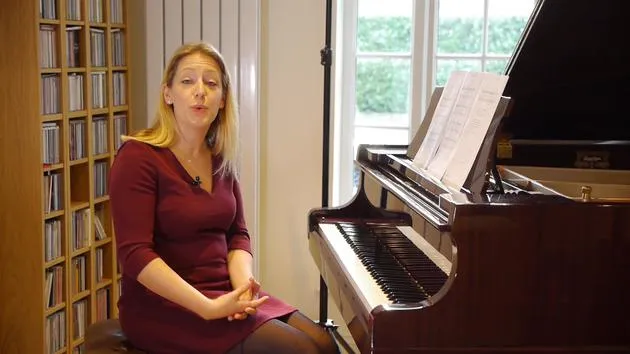
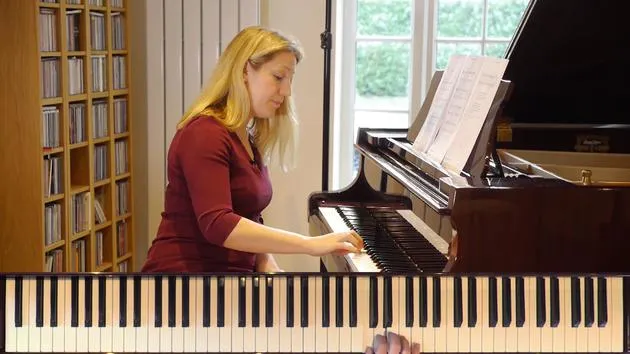
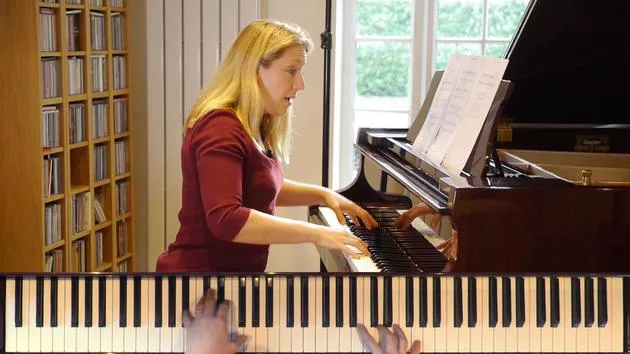
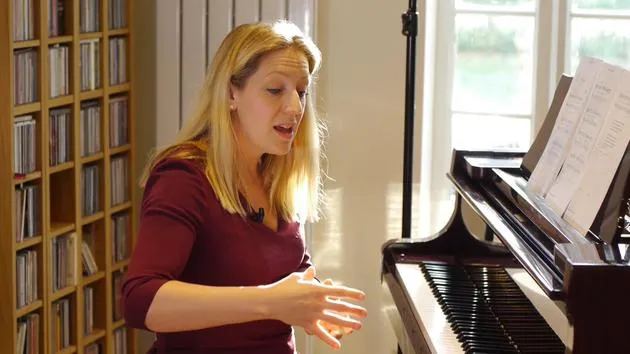
Lesson transcript
Understanding Rhythm and Ornaments in Music
Let's look at rhythm.
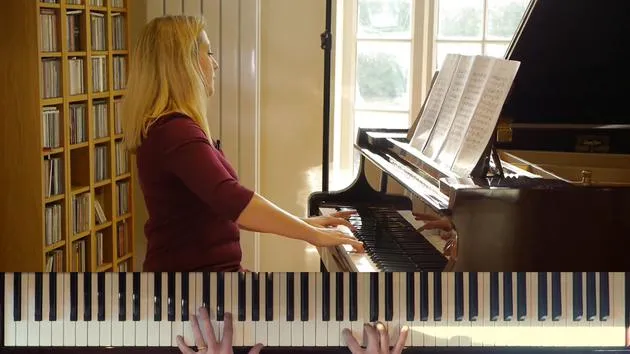
Now, rhythm is really important here because we don't want much rubato. This was very Baroque, the Baroque era was quite fixed, specifically the French Baroque. We need:
- Real pulse
- A steady pulse
- Correct rhythm
However, we have all these demisemiquaver notes, tied notes, and for somebody who first looks at this, they might think, "Oh, look at all those weird, complicated rhythms."
Analyzing Bar Six
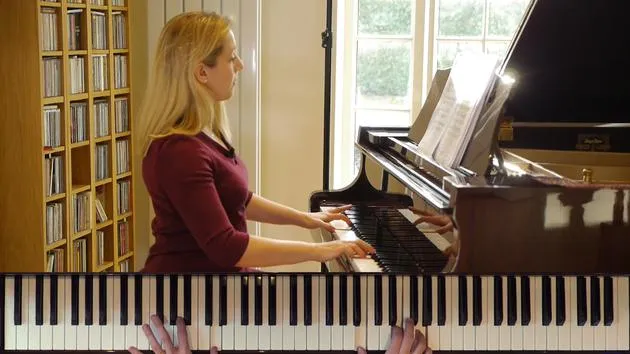
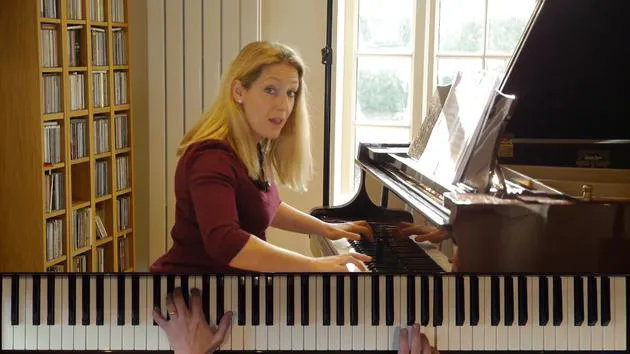
For example, look at bar six. It is actually quite simple if you structure it according to the quaver beats in the left hand. Sometimes I even put lines on to line them up to know where each right-hand melodic note fits with the accompaniment.
So looking at bar six, it's:
- 1 and
- 2 and
- 3 and
- 4
It's always a structure, and those rhythms are not as free as you think. I believe that they should be very, very exact and precise. Then the whole thing will flow much more organically.
Exploring Ornaments
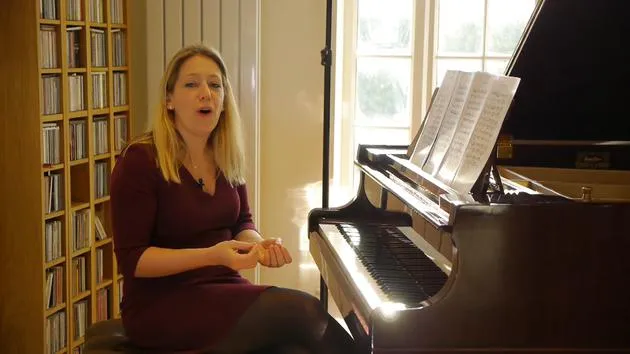
Let's have a look at ornaments. The word is there as a decoration. It literally is there as a little sort of spontaneous or semi-spontaneous idea of the composer.
- To ornate
- To decorate
- To flourish a little phrase just a little further
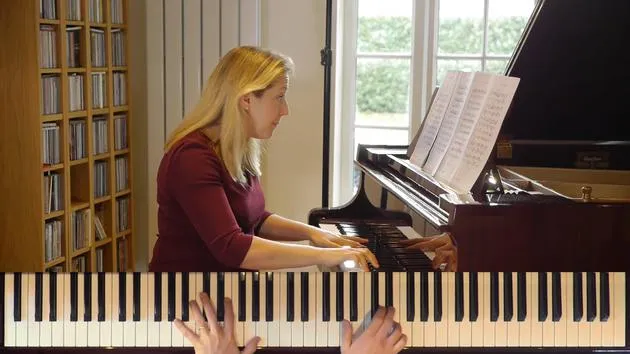
For example, in bar two, the composer could have just written a straightforward phrase, but he adds that little extra spice by incorporating a very brief acciaccatura. My Italian isn't as fluent as I'd like!
You want to have it very free. It needs to be:
- Very buoyant
- Nothing is attacked
It's just literally as if you were cooking and you were just sprinkling a few more garlic granules into something to give it a bit more flavor. That's all it is.
Some of the rhythms as well are ornaments themselves, but they're sort of written out ornaments. For example, in bar 13 we have a rhythm that serves this purpose.
Final Thoughts on Ornaments
In effect, the composer has included a few more notes to add a little bit of flavor.
Lastly, in the final bar, there's one that is written as quavers. However, I think that can be very free, imagining what kind of ritenuto (slowing down) you are doing there.
Whatever it is, remember:
- It's not very present
- The ornament is just a little idea
You always want to have this idea that it's improvised right there on the spot.
21 lessons
0h 57m of structured video lessons
Advanced video features
Slow down, loop a passage, follow along
Mobile, tablet & desktop
Practise wherever you are
100% satisfaction guarantee
30-day money-back guarantee
Meet your guru
Meet your guru
Recognised as one of Britain's most versatile and charismatic pianists, Annabel Thwaite enjoys a diverse career as a soloist, chamber musician, recording artist, educator and examiner, and has won all the major accompanying prizes, including the prestigious Kathleen Ferrier, Gold Medal, and Richard Tauber Piano Prizes. She has collaborated with renowned artists such as Roberto Alagna, Bryn Terfel, David Kempster and "Only Men Aloud!"
Annabel has recorded for Universal records with the "Scottish Tenor", whose album was nominated for a Classical Brit Award and is regularly played on Classic FM. Twice the accompanist for the Festival of Welsh Male choirs, her performances at the Royal Albert Hall were recorded by Sain and have been aired on S4C. She is also a film session pianist, having recorded at Abbey Road the music for the film "Awake", the BBC Jane Austen series "Emma", "The Secret Diaries of Miss Anne Lister" and, most recently, she has appeared on both Blue Peter and "The Rob Brydon Show".
"...no doubt helped by the obviously brilliant piano accompaniments from Annabel Thwaite...highly enjoyable."
In her MusicGurus courses - Learn Christmas Classics on Piano, Learn Classical Favourites on Piano, and Growing Chamber Groups and Small Ensembles - Annabel shares the musicianship behind that versatile career. You will learn how to bring well-loved Christmas and classical pieces to life at the piano, develop your touch and phrasing, and, drawing on her award-winning experience as an accompanist, discover how to listen, lead and play together when making music with other musicians in chamber groups and small ensembles.







