



Articulation Right Hand

With
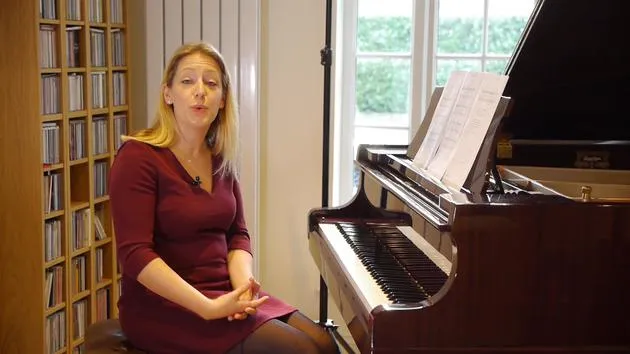
Annabel ThwaiteAnnabel Thwaite shows how to coax a warm, singing tone from the right hand in Bach's Air on the G String, treating each note like a bowed violin line.
What's in the course
21 lessons (0h 57m) · 1 free
Lesson transcript
Exploring Tone in Violin and Piano
Introduction to Tone
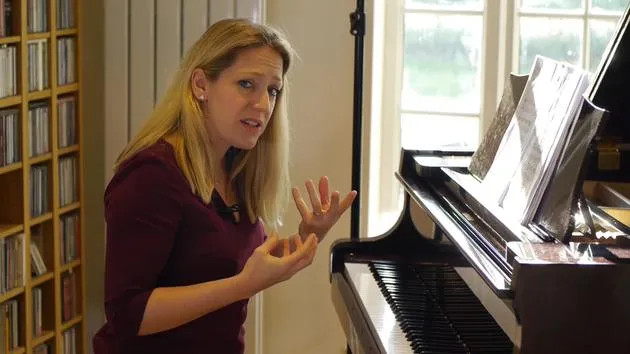
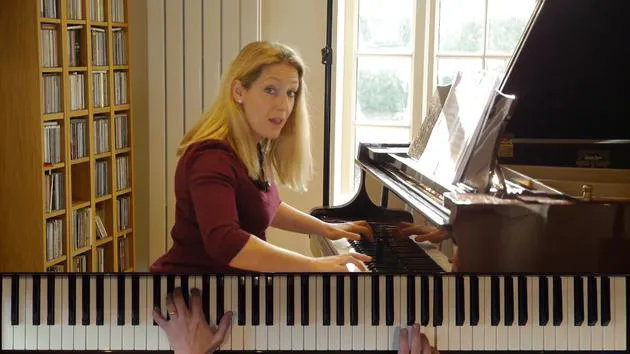
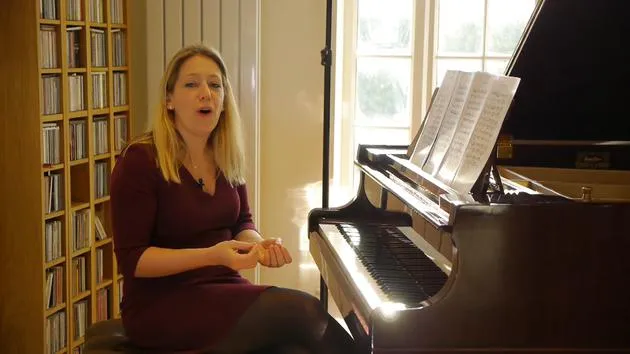
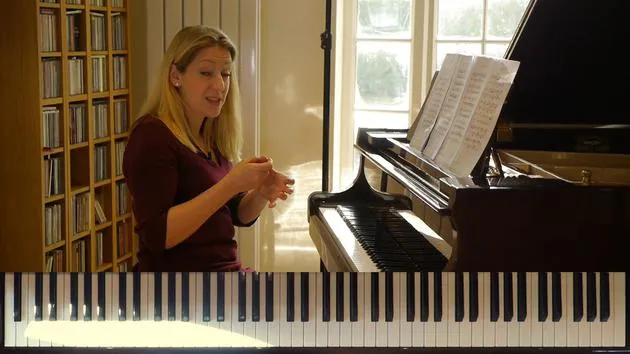
Let's look at tone. Imagine you were playing this on a violin. You would hopefully have a beautiful resonant sound, very cantabile, very ringing.
- Warm and Refined: Like the sweetest dessert rather than a rough mud pie or rocky railroad cake.
We always want to have this beautiful tone. If we make the decision to play on a modern piano, we can truly achieve great tone production.
The Concept of Attack
I believe that tone is produced by how you attack the notes. However, consider the word attack very carefully:
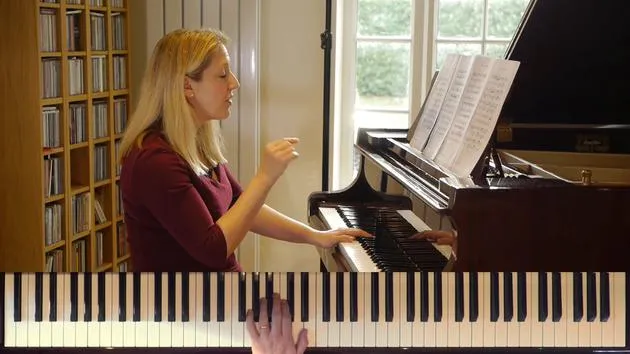
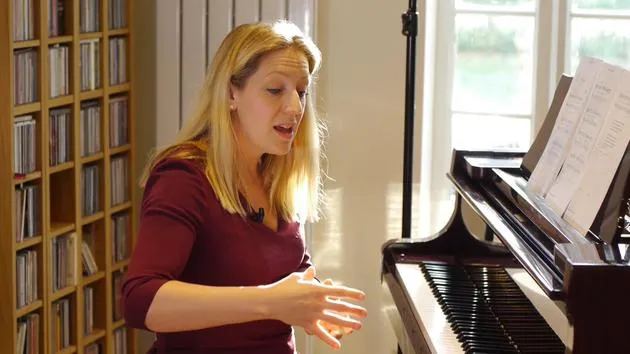
- Gentle Coaxing: Don't attack it just downward aggressively; instead, coax it out. Imagine you're stroking it out.
Visualization Techniques
- Skin on Your Arm: Think about pulling the skin on your arm gently.
- Tarantula Limbs: Picture the many digits of a tarantula's legs and how they interact delicately.
- Ballet Dancer on Points: Imagine the grace with which a ballet dancer draws out sound.
Practical Application
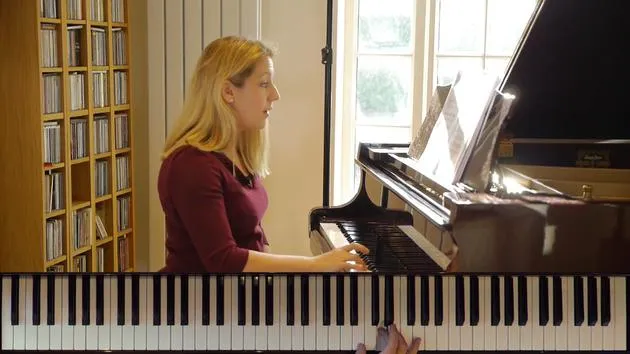
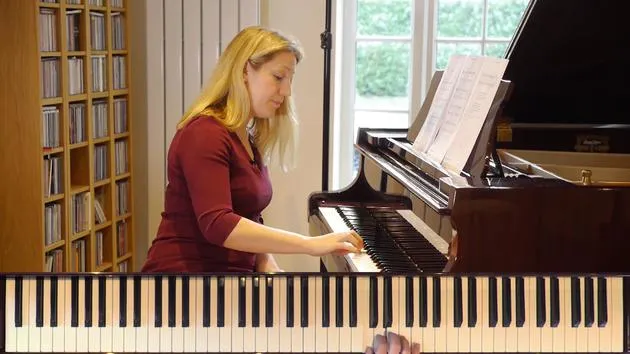
For example, let's have a look at Round Bar 10:
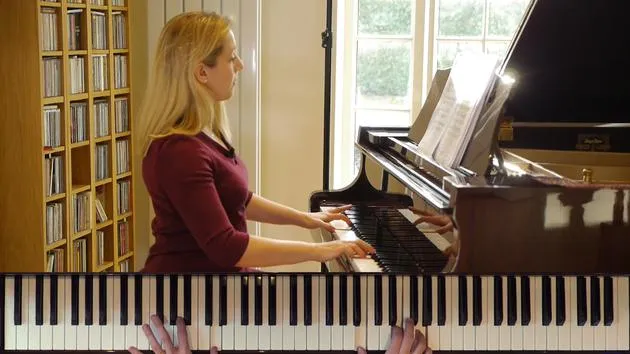
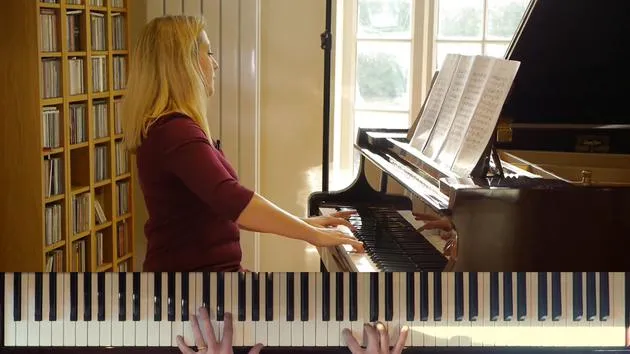
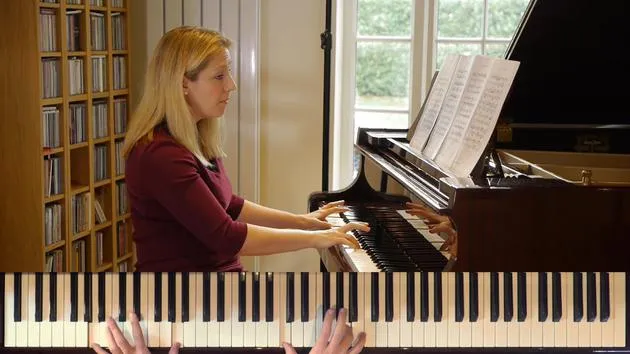
- Legato Playing: I'm playing very legato, linking and overlapping my fingers.
- Sound Production: Focus on drawing the sound out rather than just playing it.
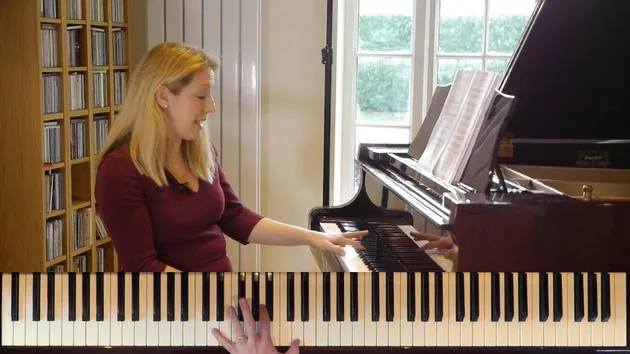
D Major Scale Practice
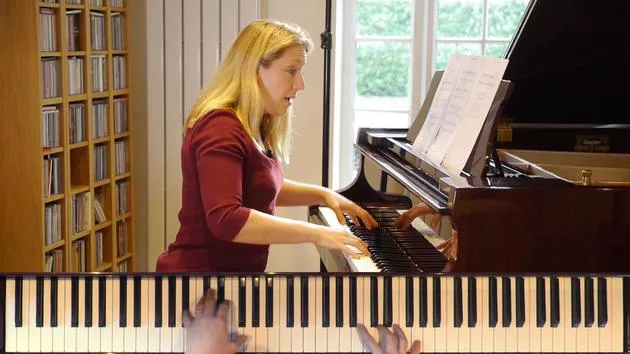
- Legato Focus: When practicing the D major scale, think of it as linked and overlapping notes.
Try to draw the sound out beautifully rather than opting for a more abrupt sound. Remember, with slow music, every single note must have a beautiful quality.
Melodic Interactions
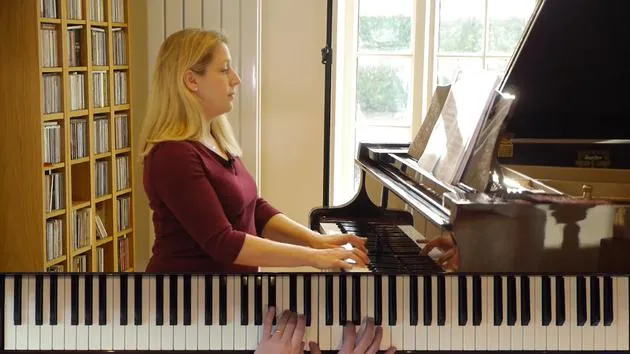
Let's look at some of the melodies:
-
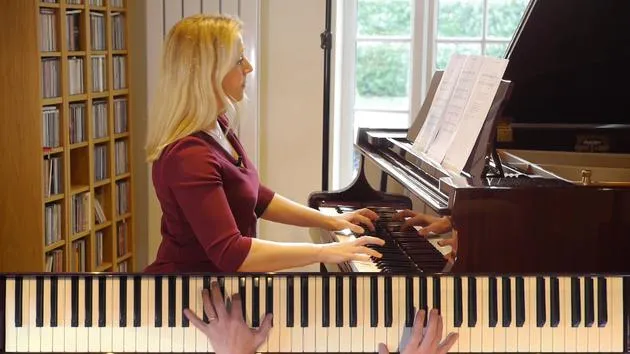
Left Hand Importance: The left hand plays a continuous bass line, which moves the harmonic phrase.
-
Conversational Dynamics: There are moments when the right hand and left hand can have a conversation.
Example from Bar 10
- Intervallic Tension: Examine the leap of the octave, moving down a tone, then to an octave down, and finally to a semitone up.
- Rising Melodic Line: This contrasts with the rising melodic line in the right hand, which revolves around semitones.
Soprano and Alto Interaction
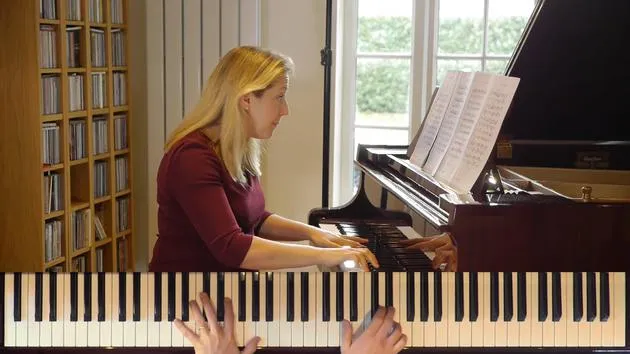
Later, we have a wonderful conversation between the soprano and alto parts, perhaps reminiscent of the two-violin version in Bar 14.
-
Practice Techniques: You can practice by:
- Focusing on just the top line with the bass
- Working on just the middle line with the bass
This allows you to concentrate on each part individually, giving each its own distinct character.
21 lessons
0h 57m of structured video lessons
Advanced video features
Slow down, loop a passage, follow along
Mobile, tablet & desktop
Practise wherever you are
100% satisfaction guarantee
30-day money-back guarantee
Meet your guru
Meet your guru
Recognised as one of Britain's most versatile and charismatic pianists, Annabel Thwaite enjoys a diverse career as a soloist, chamber musician, recording artist, educator and examiner, and has won all the major accompanying prizes, including the prestigious Kathleen Ferrier, Gold Medal, and Richard Tauber Piano Prizes. She has collaborated with renowned artists such as Roberto Alagna, Bryn Terfel, David Kempster and "Only Men Aloud!"
Annabel has recorded for Universal records with the "Scottish Tenor", whose album was nominated for a Classical Brit Award and is regularly played on Classic FM. Twice the accompanist for the Festival of Welsh Male choirs, her performances at the Royal Albert Hall were recorded by Sain and have been aired on S4C. She is also a film session pianist, having recorded at Abbey Road the music for the film "Awake", the BBC Jane Austen series "Emma", "The Secret Diaries of Miss Anne Lister" and, most recently, she has appeared on both Blue Peter and "The Rob Brydon Show".
"...no doubt helped by the obviously brilliant piano accompaniments from Annabel Thwaite...highly enjoyable."
In her MusicGurus courses - Learn Christmas Classics on Piano, Learn Classical Favourites on Piano, and Growing Chamber Groups and Small Ensembles - Annabel shares the musicianship behind that versatile career. You will learn how to bring well-loved Christmas and classical pieces to life at the piano, develop your touch and phrasing, and, drawing on her award-winning experience as an accompanist, discover how to listen, lead and play together when making music with other musicians in chamber groups and small ensembles.







