



Right hand patterns

Lesson time: (3min 10sec)
Avram Siegel introduces the basic bluegrass right-hand patterns on banjo, the boom-chick roll and the pinch, and why connecting the notes keeps your timing tight.
Course preview
This lesson is part of the course Beginning Banjo with Avram Siegel
Watch a preview of the full course below.
Lesson transcript:
Right Hand Patterns in Bluegrass Rhythm
Now let's talk about some right hand patterns. We're going to do some very simple rhythm patterns.
Basic Bluegrass Rhythm
The basic bluegrass rhythm is:
Boom Chick Boom, Chick Boom Chick Boom.
So that's the first thing we'll learn. Notice I played a single note followed by a pinch.
What is a Pinch?
- A pinch is the fifth string and the first string played together.
- It could be different strings, but usually, it's the fifth and the first string.
This gives us our simple rhythm pattern of a bass note followed by a pinch. We can use different bass notes if we want; for example, we could use the third string and the second string.
Another Rhythm Pattern
Let's learn another rhythm pattern that's a little more complicated, but not too bad.
This one is: Chicka Boom, Boom, Chicka Boom, Chicka Boom.
Important Aspects of Rhythm
There's a really important aspect about this:
- You want to ensure that it really has the sound of Chicka Boom.
- The way notes connect up is crucial to how the banjo sounds.
This concept is true across all kinds of music, but it's especially important with the banjo. If your notes don't connect properly, the rhythm won't sound right, and nothing you play will sound quite right.
Troubleshooting Timing
If you've been playing for a while and having a hard time getting your songs to sound like they're in time, this may very well be the problem.
- You need a connected sound like that.
- If you separate the notes, it just doesn't flow.
Understanding Music Notation
When you look at the music written on the page, it will appear separated by bar lines. This is one of the challenges in how music is written.
- Just to clarify: it ends up being divided by its bar lines.
- Keep this in mind as you're learning tunes, especially when you learn tunes by tab.
This principle applies to nearly every instrument.
If you treat the bar lines as your points of separation, the elements you're learning will never come together. Therefore, ensuring those connections are in place is vital.
Conclusion
So, that's some basic rhythm to focus on as you develop your skills!
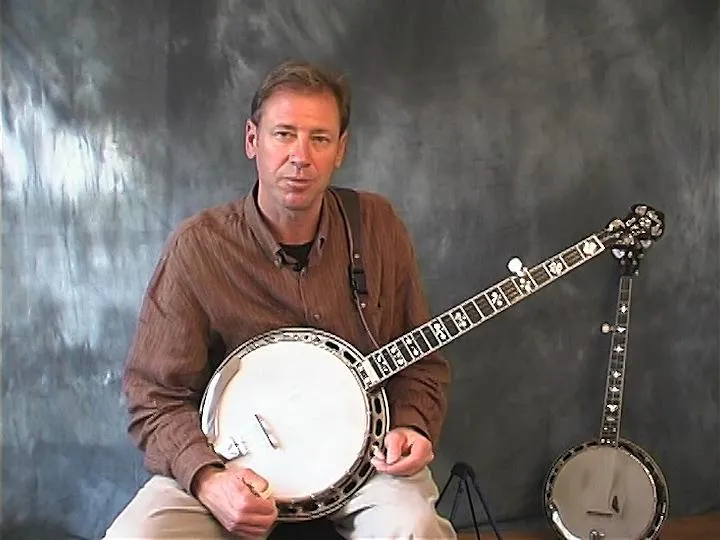
About the instructor
Avram Siegel is a banjo player and a mainstay of the California bluegrass scene. He has played with the Kathy Kallick Band and True Blue, among many others, and has taught for decades - his step-by-step method has turned out some of the state's most respected young players. In his courses he breaks down three-finger Scruggs rolls, backup and melodic playing so you can build clean timing and tone at your own pace. read more