



Exercice chromatique d'octaves aléatoires
Avec
Gerard PresencerDeux petits exercices bonus pour recentrer ta colonne d'air et ouvrir l'ouverture de ton embouchure afin d'obtenir un son plus chaud et plus plein, créer la sensation de flux d'air et sentir le mouvement de la position centrale de la langue.
Le contenu du cours
12 leçons (1h 49min) · 1 gratuites
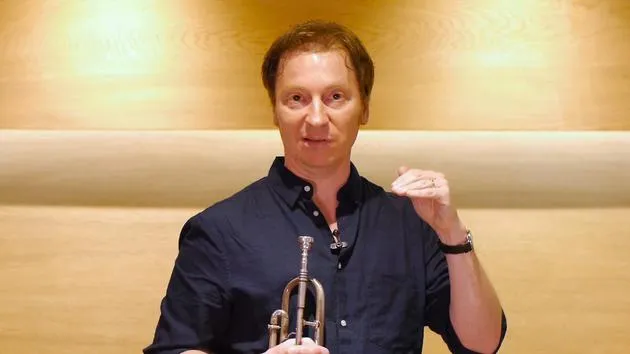
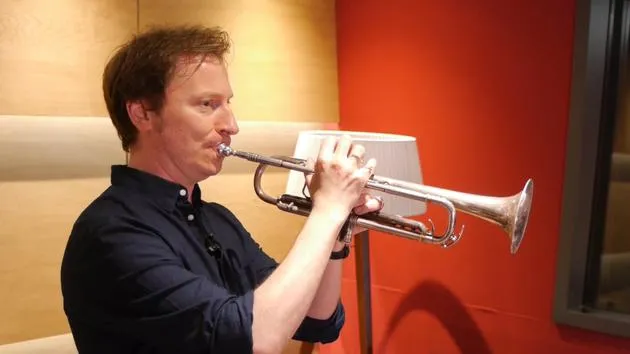
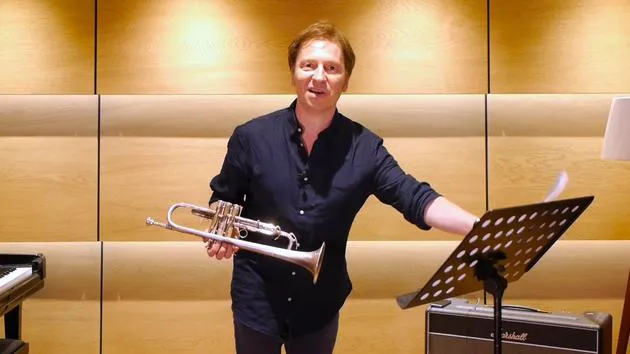
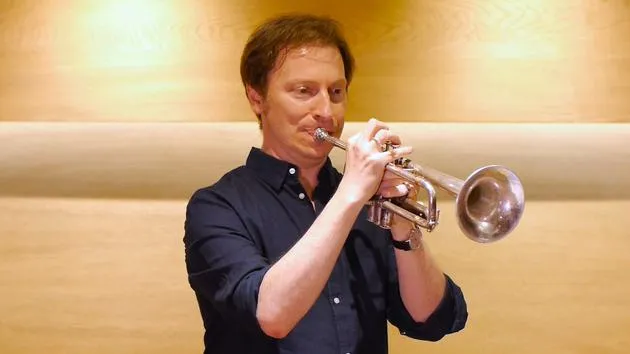
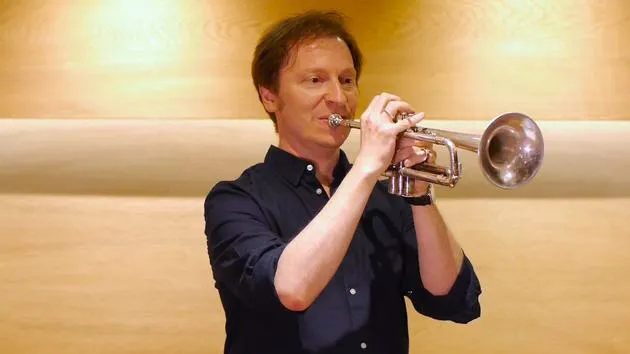
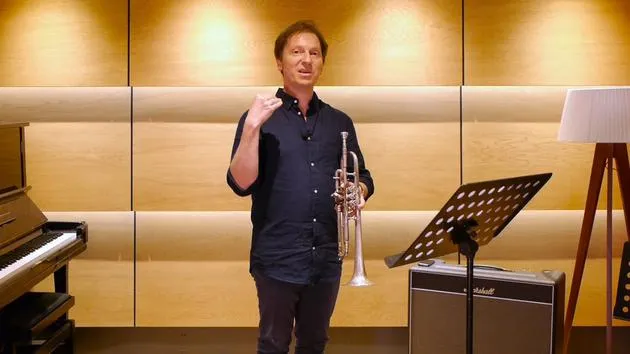
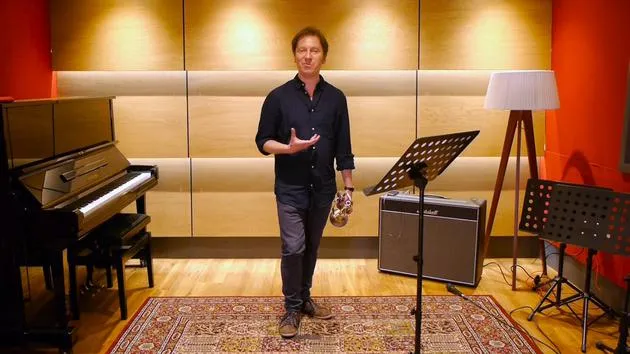
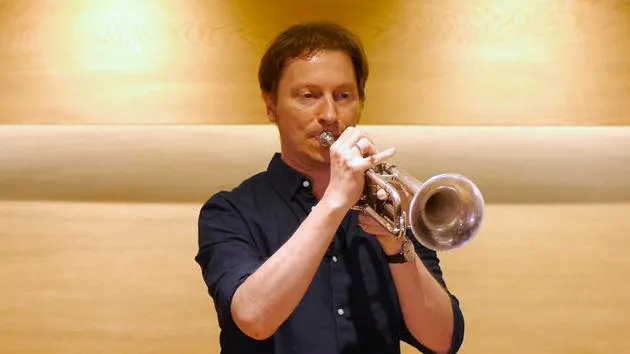
Transcription de la leçon
Soft and Legato Approach to Trumpet Playing
Something I spoke about earlier in the course of lessons is the idea that everything is part of a soft and legato approach, a breathing approach to playing the trumpet.
The Role of the Trumpet in Rhythmic Music
In rhythmic music, such as pop and jazz, where drums are involved, the trumpet can often be used like a member of the percussion section. You hit things. This is really something that I've noticed in my life: the most injuries I've sustained as a trumpet player come from feeling that I have to get things right, particularly not missing high notes.
A Painful Experience
I was doing a gig, playing an outdoor event last year, where I had to keep playing a top C every eight bars or so. It was really painful. After a while, I realized, this is wrong. I'm not practicing how to handle this at home; I'm just showing up every week and punching myself in the mouth a little bit, going home feeling like I'm letting myself down.
- I probably was using my throat to regulate the airstream.
- I would stop the air before letting it out, which led to discomfort.
I felt stressed; my heart raced, my throat felt a bit closed and sore. Sometimes I'd walk away from that gig with a sore throat.
Finding a Solution
I began thinking, how can I make this easier on myself? This ties back into the legato concept. If your airspeed is correct, your central tongue position is right, and the airstream is fast enough, everything will work much better.
Development of an Understanding
The next exercise will help you develop an understanding of where every note really is. It shouldn't just be about pushing out high notes and hoping for the best. Instead, we will:
- Play every note on the trumpet with the same approach.
- Go back to the basics of 1, 2, 3 placement.
The Chromatic Scale Exercise
I'll play the chromatic scale in different octaves, meaning each time I go up a half step, it will be in a different octave.
- As trumpet players, we often think it's all about playing as high as we can.
- However, the way you play the low notes greatly affects how you play the high and middle notes.
Consistency in Approach
What I don't want you to notice is a change in approach when I go for a high note. It should look the same whether I'm playing a bottom F sharp or a top C.
Starting with Bottom F Sharp
- Remember: It's all about the 1, 2, 3.
- I want to show you how to play it well.
The reason my previous attempt wasn't good was because it did not have the necessary control at the beginning.
- We start with bottom F sharp, and we don't want to drop our embouchure.
- We need to maintain the same approach as if we were playing an octave higher.
Implementing Faster Air
This time, after I complete the 1 and 2, I'll tell myself, just before initiating the 3, to use faster air.
- The length of the note doesn't matter.
- Sometimes I vary the dynamics to test myself, but today we will aim for a polite mezzo forte.
Note Progression
Now, let's play through the exercise format:
- Bottom F sharp
- Bottom G
- Bottom B flat
- Middle C
- Middle C sharp
- Bottom D
- Bottom E
- Middle F
- Bottom F sharp
- High G sharp
- Middle B flat
- High B
- Middle C sharp
- High D
- Bottom E flat
- High F
- Bottom F
- Middle G
- High G sharp
Overcoming Fear
This exercise is brilliant because it helps eliminate fear. You get to know where the notes are and think more in terms of the speed of air and tongue position, rather than just hitting notes in a stressful way.
Short Staccato Notes
We've been working on playing short staccato notes. For example, when you have an offbeat eighth note hit:
- Count: 1, 2, 1, 2, 3, bap.
You could play it the wrong way, like this:
- One, two.
Now imagine doing it correctly:
- A one, a two.
Just like that! It's much easier because I have the trumpet on my face and I'm also using fast air.
Reflecting on Playing Approaches
This exercise reveals weaknesses in your playing, especially in the lower register:
- A common approach to achieving high notes might not be necessary.
- What you need to do is bring the lower register approach upstairs.
Conclusion
It should not look different when you play high notes versus low. The main goal is to maintain that fast airstream and central tongue position further forward.
Good luck with that! I have found that these techniques have made potentially nerve-wracking situations, like live television performances, much easier because I really feel like I know where the notes are more than I ever have before.
Enjoy your practice!
12 leçons
1h 49m de leçons vidéo structurées
Fonctions vidéo avancées
Ralentissez, bouclez un passage, suivez la partition
Mobile, tablette et ordinateur
Pratiquez où vous voulez
Satisfaction garantie à 100 %
Garantie remboursement 30 jours
Rencontrez votre guru
Rencontrez votre guru
Au cours des 25 dernières années, Gerard Presencer s'est forgé une formidable réputation comme l'un des trompettistes les plus respectés de la scène européenne. Il a fait irruption sur la scène internationale à 18 ans, lorsque US3 lui a demandé de jouer la partie solo sur Cantaloupe Island de Blue Note (réinventée en Cantaloop Flip-Fantasia), qui est devenu l'un des disques de jazz les plus vendus des années 1990. Depuis, il s'est produit avec un who's who des artistes de jazz internationaux, et continue de se pousser lui-même et son instrument, sortant de sa zone de confort afin d'évoluer comme instrumentiste et comme compositeur.
Dans d'autres genres, Gerard a enregistré comme musicien de studio avec des artistes tels que Sting, Jamiroquai, Zero 7, James Brown, Ray Charles, Joni Mitchell et Jonny Greenwood.
Gerard a également été un membre essentiel des différents groupes de jazz de Charlie Watts au cours des 25 dernières années, tournant à travers le monde et publiant plusieurs albums avec ce Stone amoureux du jazz.
En tant que pédagogue, Gerard a été responsable des études de jazz à la Royal Academy of Music de Londres de 1999 à 2010, et il est actuellement responsable du département des cuivres au Jazz Institut de Berlin. Dans ce cours, il partage son approche intérieure du jeu de la trompette - les habitudes mentales et physiques qui se cachent derrière une belle sonorité - afin que tu puisses développer la sonorité, le contrôle et la musicalité de l'intérieur.







