



S'échauffer à l'articulation jazz
Lesson time: (11min 48sec)
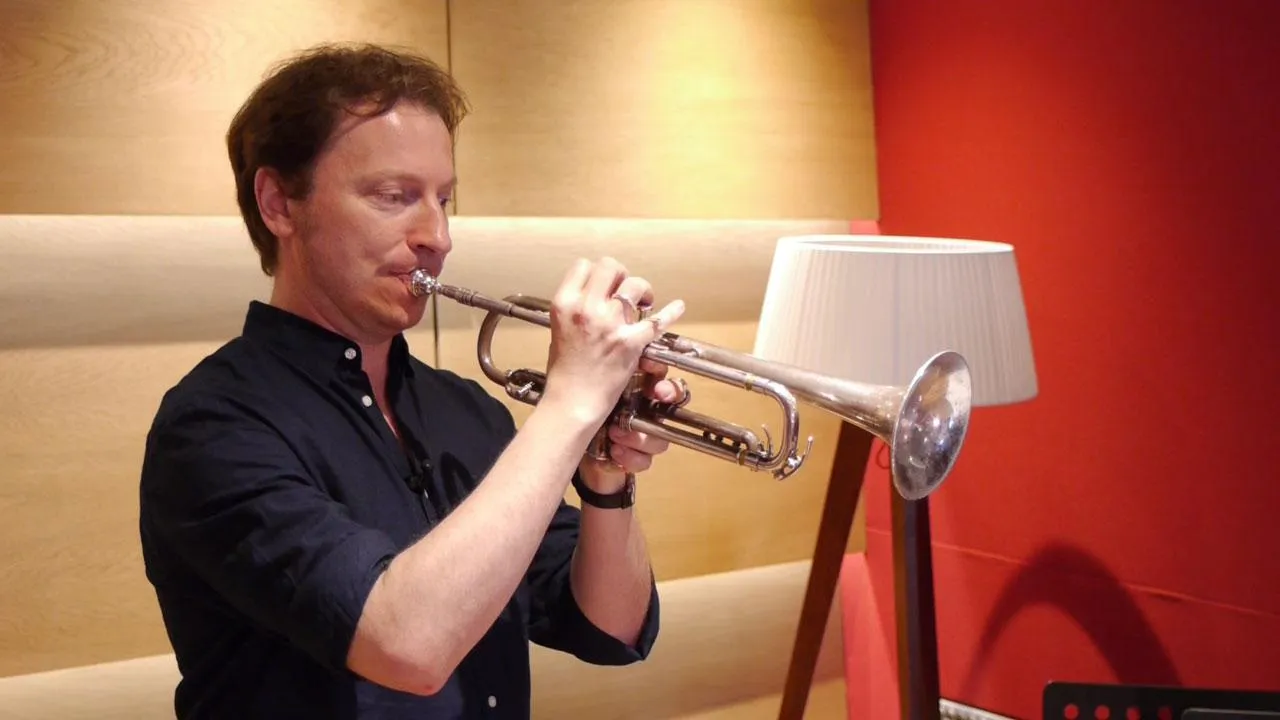
Gerard Presencer échauffe son articulation en simple coup de langue, la base du système 'Dah Di Yah' qu'il utilise pour un son jazz legato et groovy.
Course preview
This lesson is part of the course Approche intérieure de la trompette
Watch a preview of the full course below.
Lesson transcript:
Exploring Articulation in Music
In these next few lessons, we're going to look at moving into music a little more specifically. One of the things in my book, A Modern Approach to Playing, is the concept of "dad," a type of articulation I use when I play my jazz eighth note language. Recently, I've discovered that my "dad" articulation is very useful in other styles of music as well because it creates the illusion of legato.
The Importance of Legato
This, of course, is the best way to continue playing with your airstream, mainly in your tongue position. The central tongue position should be moving, but the incorporation of an articulation system, using the tip of your tongue with a simple single tongue, does not disturb the legato airstream. Instead, it can reinforce the legato and introduce a strong rhythmic approach into your legato lines.
So, when you're going "da da ya da ya," what you don't want to do is disrupt the airflow. Your single tongue involved in "dadaya" should not stop the air. Therefore, we need to develop a single tongue that fits into the articulation system, which will differ a bit from classic trumpet playing.
Warming Up
To develop this, we will practice warm-up exercises that lead to "da da ya da ya." If you jump straight into exercises from my book without warming up, there's a strong possibility that you'll disrupt the airstream. Often, this can sound quite good, which is problematic. Many of our hero trumpet players do some very fundamental wrong things. It's okay when they are strong, but when they stop practicing, the articulation can become more brutal, leading to unnecessary strain.
Focus on Breath Accent
Before I dive into "da, da, da, da, da," let's warm up the components that fit into this articulation system. The first thing we'll work on is the single tongue, known as "hadar." This may be groundbreaking for some trumpet players.
Let's develop a breath accent, which will speed up the air behind the single tongue, resulting in a fast and gentle "da." Here's how we'll do this:
-
Breath Accent Exercise:
- I'll refer to my book for the first exercise from Exercise 4, which is only in one key.
- We will play it out of tempo to really emphasize the breath accents.
"When I say belt out, I'm not talking about volume; I'm talking about fast air."
As we practice, just before each note, use a fast breath accent. Slow down on the note just before where you'll apply the breath accent.
- Example: At every punchy note, that's an F. That's your fast "H."
Moving to Single Tongue
Next, we will focus on saying "H" followed by "D" (the single tongue). This should sound like this:
"So do that a few times to get used to that feeling."
This fast breath accent will help propel the tip of your tongue to the back of your top teeth.
Applying the Exercise
Now, let's apply this with the trumpet:
- Middle C Exercise:
- Start by doing a crescendo on the C note.
- At about 75% of the way through the crescendo, go "hada."
This helps ensure proper contact from the breath accent with your tongue. The idea is not just doing the "d" but also ensuring your tongue fires out of the way of the airstream, allowing minimal interruption.
"A strong, steady stream of air, with pulses of fast air, is the goal."
This ensures that your interaction with the airstream does not stop it altogether.
Conclusion of the Warm-up
We can now move on to the next lesson, which will introduce the use of "dadaiya daya." Before that, I'll show you some "chop relaxers," which are essential for changing directions when exercises become tiresome.
Chop Relaxers
- Exercise Variations:
- Fast, gentle articulation.
- Triple tonguing exercises.
- Use false fingerings to keep the air flowing faster and slower.
"Use these relaxers between the exercises we've done. They help keep everything loose before returning to whatever exercise you're working on."
Good luck!
About the instructor
Au cours des 25 dernières années, Gerard Presencer s'est forgé une formidable réputation comme l'un des trompettistes les plus respectés de la scène européenne. Il a fait irruption sur la scène internationale à 18 ans, lorsque US3 lui a demandé de jouer la partie solo sur Cantaloupe Island de Blue Note (réinventée en Cantaloop Flip-Fantasia), qui est devenu l'un des disques de jazz les plus vendus des années 1990. Depuis, il s'est produit avec un who's who des artistes de jazz internationaux, et continue de se pousser lui-même et son instrument, sortant de sa zone de confort afin d'évoluer comme instrumentiste et comme compositeur. Dans d'autres genres, Gerard a enregistré comme musicien de studio avec des artistes tels que Sting, Jamiroquai, Zero 7, James Brown, Ray Charles, Joni Mitchell et Jonny Greenwood. Gerard a également été un membre essentiel des différents groupes de jazz de Charlie Watts au cours des 25 dernières années, tournant à travers le monde et publiant plusieurs albums avec ce Stone amoureux du jazz. En tant que pédagogue, Gerard a été responsable des études de jazz à la Royal Academy of Music de Londres de 1999 à 2010, et il est actuellement responsable du département des cuivres au Jazz Institut de Berlin. Dans ce cours, il partage son approche intérieure du jeu de la trompette - les habitudes mentales et physiques qui se cachent derrière une belle sonorité - afin que tu puisses développer la sonorité, le contrôle et la musicalité de l'intérieur. read more