



Introduction à Dah Di Yah (hors tempo)

Avec
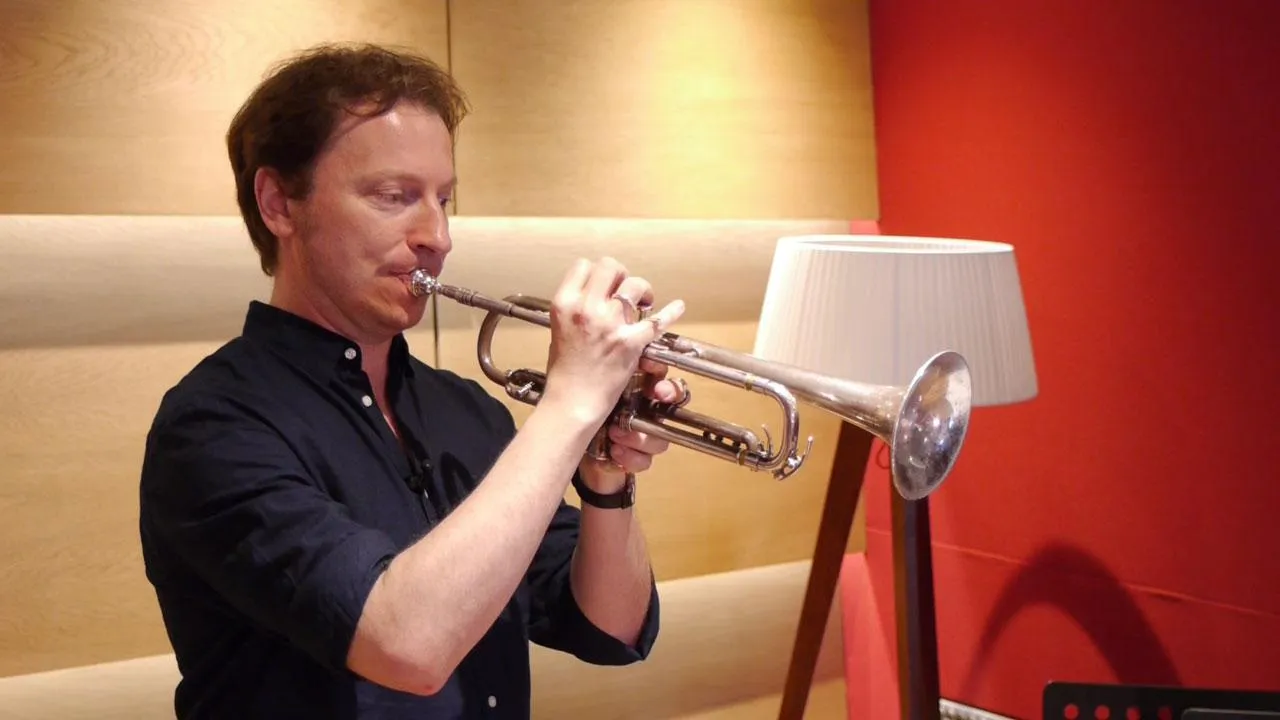
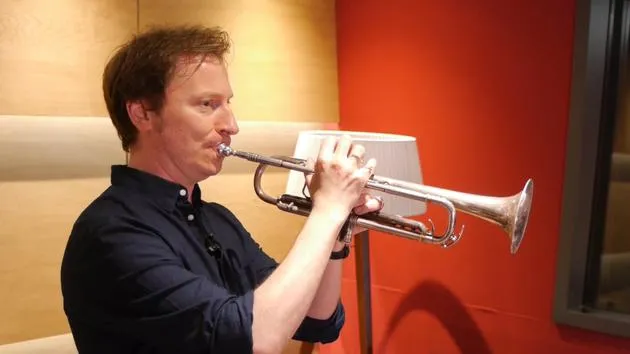
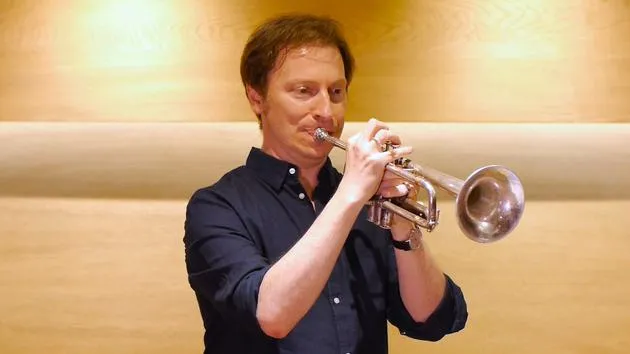
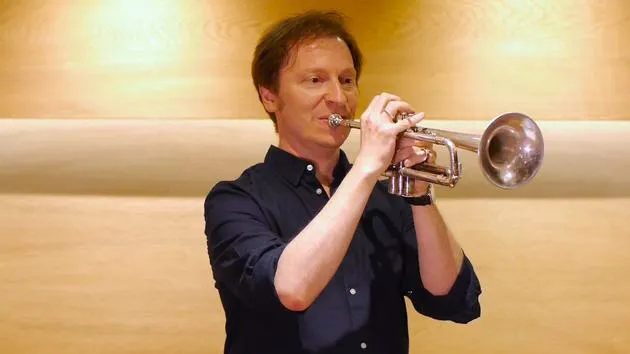
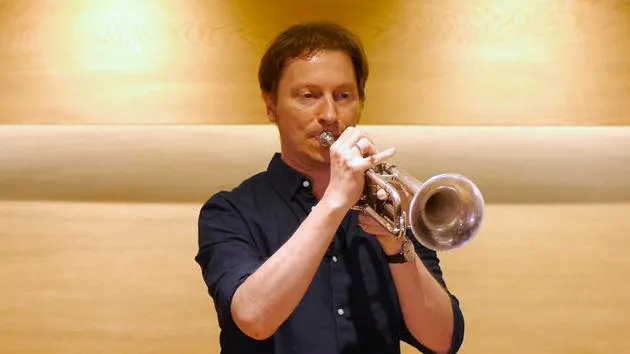
Gerard PresencerGerard Presencer présente l'articulation « Dah Di Yah » hors tempo, en soufflant les notes sur un flux d'air legato pour que la langue soutienne l'air plutôt que de le pousser.
Le contenu du cours
12 leçons (1h 49min) · 1 gratuites
Transcription de la leçon
Music Lesson: Dadai Daya Articulation
Moving on from our previous lesson, we've warmed up the single tongue that needs to go into the articulation system of Dadaiyadaya.
Rubato Practice
This gives us the time to actually work on the Dadai daya out of tempo before we start to give it some musical meaning.
- We're going to play something rubato.
- Like with the earlier exercises in the course, we'll put a fermata on the first note so that we can crescendo into it.
- So we speed up our air.
Even though we're now going to start to think about using an articulation, we're still considering legato to be the best way of doing things.
Legato Exercise
- First of all, let's play this legato four times.
- As I crescendo, just before I hit the peak of the volume of the crescendo, I move off.
- This means I peak in crescendo on the G.
You can hear what I'm doing with my dynamics.
Articulation Practice
Now, I'm going to do the same thing using da da ya da ya, maintaining the same dynamics and approach as the legato.
- Let's join those two together.
Moving Forward
Now we're going to do another one, this time playing up a little bit further.
- Although we're starting on an F, this is actually something that I would play over G dominant, similar to a G7.
- This gives you an idea of how we're starting to think about relating this to music and harmony.
Structured Exercises
For this exercise:
- I'm going to play it two times legato
- Then two times with the articulation, really trying to emulate the feeling of the airspeed control that I've worked on within legato.
Now we are ready to use tempo!
12 leçons
1h 49m de leçons vidéo structurées
Fonctions vidéo avancées
Ralentissez, bouclez un passage, suivez la partition
Mobile, tablette et ordinateur
Pratiquez où vous voulez
Satisfaction garantie à 100 %
Garantie remboursement 30 jours
Rencontrez votre guru
Rencontrez votre guru
Au cours des 25 dernières années, Gerard Presencer s'est forgé une formidable réputation comme l'un des trompettistes les plus respectés de la scène européenne. Il a fait irruption sur la scène internationale à 18 ans, lorsque US3 lui a demandé de jouer la partie solo sur Cantaloupe Island de Blue Note (réinventée en Cantaloop Flip-Fantasia), qui est devenu l'un des disques de jazz les plus vendus des années 1990. Depuis, il s'est produit avec un who's who des artistes de jazz internationaux, et continue de se pousser lui-même et son instrument, sortant de sa zone de confort afin d'évoluer comme instrumentiste et comme compositeur.
Dans d'autres genres, Gerard a enregistré comme musicien de studio avec des artistes tels que Sting, Jamiroquai, Zero 7, James Brown, Ray Charles, Joni Mitchell et Jonny Greenwood.
Gerard a également été un membre essentiel des différents groupes de jazz de Charlie Watts au cours des 25 dernières années, tournant à travers le monde et publiant plusieurs albums avec ce Stone amoureux du jazz.
En tant que pédagogue, Gerard a été responsable des études de jazz à la Royal Academy of Music de Londres de 1999 à 2010, et il est actuellement responsable du département des cuivres au Jazz Institut de Berlin. Dans ce cours, il partage son approche intérieure du jeu de la trompette - les habitudes mentales et physiques qui se cachent derrière une belle sonorité - afin que tu puisses développer la sonorité, le contrôle et la musicalité de l'intérieur.







