



Licks de Charlie Parker
Lesson time: (3min 54sec)
Course preview
This lesson is part of the course Approche intérieure de la trompette
Watch a preview of the full course below.
Lesson transcript:
Music Lesson
Thank You!
Thank you very much for joining me over the course of lessons. You are now ready. If you've worked carefully and considered the exercises, they're often very simple but have very specific instructions.
Moving Forward
Now, we will move forward into my book with a modern approach to playing.
Preview: Bebop Head by Charlie Parker
I want to show you a bebop head by Charlie Parker called Au Privave. The goal is for you to listen and think about all the different things I'm incorporating. Not too carefully, but certainly in a way where you get an idea of the potential for everything that we've worked on and how it translates into my approach to playing, particularly in bebop and this great composition by Charlie Parker.
Playing Process
I'm going to turn on Philly Jo Jones.
- To get that really good sound, I will do this in phrases.
- This time, I played through the whole melody to save time.
- However, what I should do is take each phrase and:
- Work on legato
- Breathe it
- Make sure I'm really breathing it
- Then move on into articulation, again out of tempo, and finally play it in tempo.
Maintaining Legato
What happens once you go into tempo is crucial. If you start to change your physical approach, you may get tense or stop flowing air, making it become much punchier. You may find yourself stopping and starting the air because you're using articulation. That means you're doing it wrong.
Key Point:
You need to maintain this legato approach throughout your whole body when you're playing the trumpet. It's not just about your lips; it's really about the larger air support we need to think about.
Another Tune: Donnelly
Another tune that I enjoy is Donnelly, also by Charlie Parker. This piece is somewhat easier because it doesn't have so many short stopping notes.
Focus on Last Eight Bars
I like to play the last eight bars because it consists of a line of eighth notes. It's also essential to talk about using the descent where you're crescendoing into the descent. This is where the notes can tend to break up, causing the line to falter and forcing things to come out.
Let's play the finale:
The last eight bars of Donnelly.
Final Thoughts
What I feel there is I need to do more of a crescendo on the descent.
Great! And goodbye.
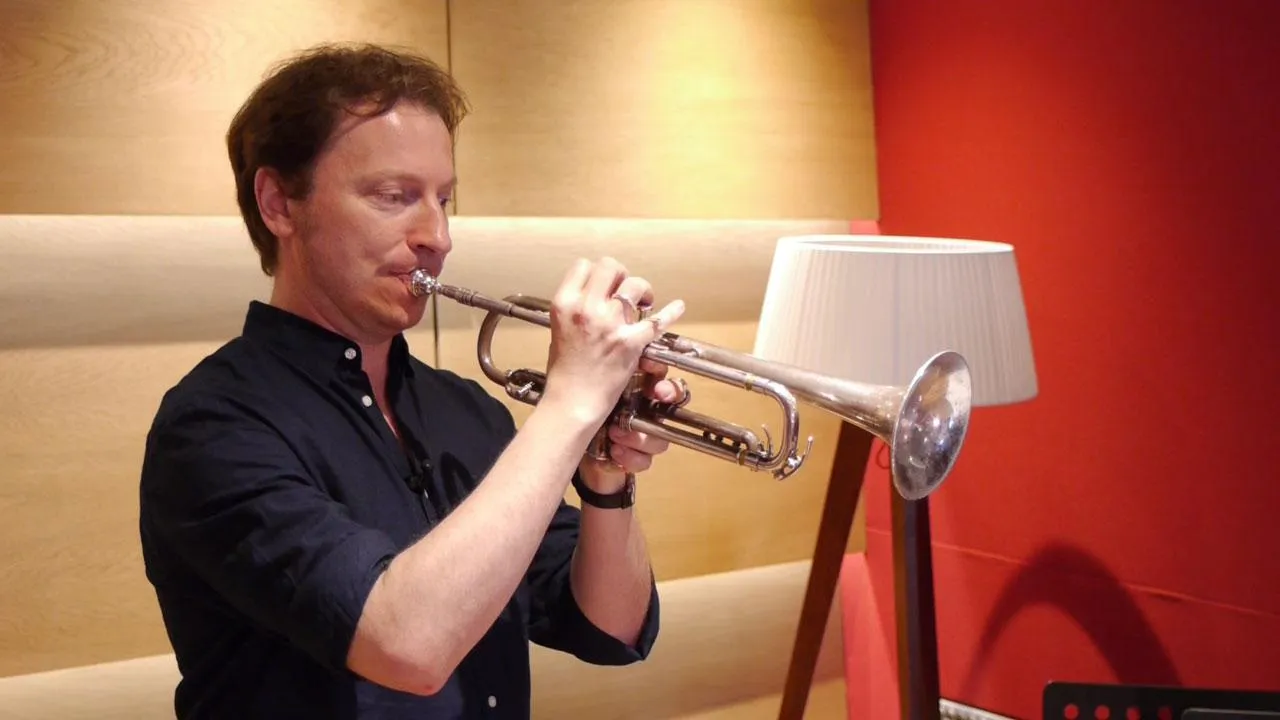
About the instructor
Au cours des 25 dernières années, Gerard Presencer s'est forgé une formidable réputation comme l'un des trompettistes les plus respectés de la scène européenne. Il a fait irruption sur la scène internationale à 18 ans, lorsque US3 lui a demandé de jouer la partie solo sur Cantaloupe Island de Blue Note (réinventée en Cantaloop Flip-Fantasia), qui est devenu l'un des disques de jazz les plus vendus des années 1990. Depuis, il s'est produit avec un who's who des artistes de jazz internationaux, et continue de se pousser lui-même et son instrument, sortant de sa zone de confort afin d'évoluer comme instrumentiste et comme compositeur. Dans d'autres genres, Gerard a enregistré comme musicien de studio avec des artistes tels que Sting, Jamiroquai, Zero 7, James Brown, Ray Charles, Joni Mitchell et Jonny Greenwood. Gerard a également été un membre essentiel des différents groupes de jazz de Charlie Watts au cours des 25 dernières années, tournant à travers le monde et publiant plusieurs albums avec ce Stone amoureux du jazz. En tant que pédagogue, Gerard a été responsable des études de jazz à la Royal Academy of Music de Londres de 1999 à 2010, et il est actuellement responsable du département des cuivres au Jazz Institut de Berlin. Dans ce cours, il partage son approche intérieure du jeu de la trompette - les habitudes mentales et physiques qui se cachent derrière une belle sonorité - afin que tu puisses développer la sonorité, le contrôle et la musicalité de l'intérieur. read more