



Exercice de flexibilité rapide
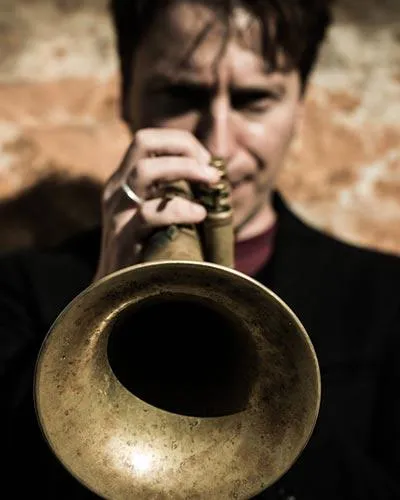
Avec
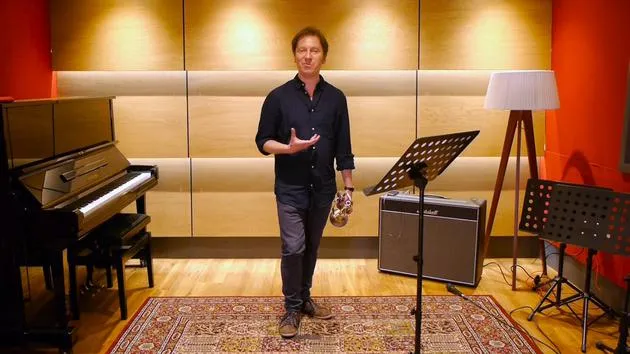
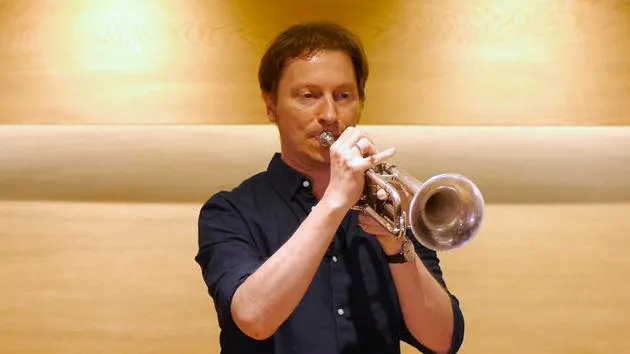
Gerard PresencerCe qui compte pour développer et travailler une bonne approche technique, c'est de varier. Cet exercice s'appuie sur le multi-vitamine et te donnera l'occasion de sauter d'un registre à l'autre, en jouant fort et doux, en utilisant le legato et le staccato, le tout dans le même exercice.
Le contenu du cours
12 leçons (1h 49min) · 1 gratuites
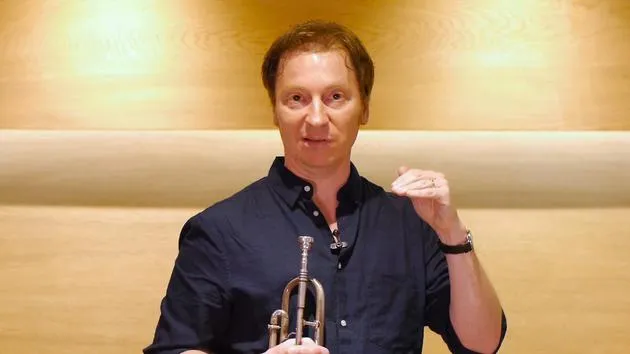
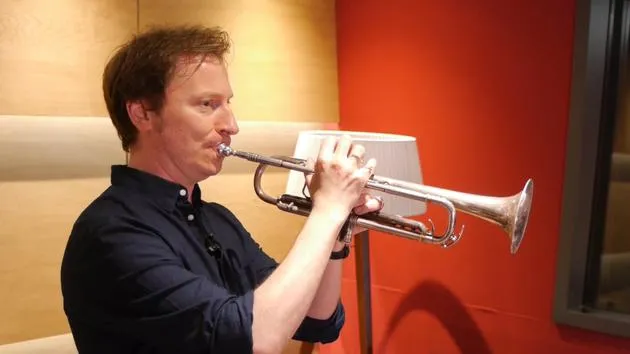
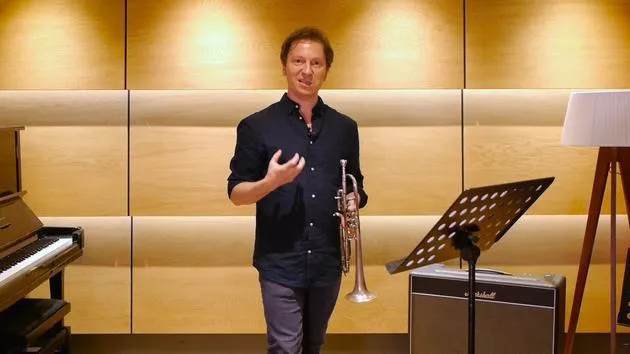
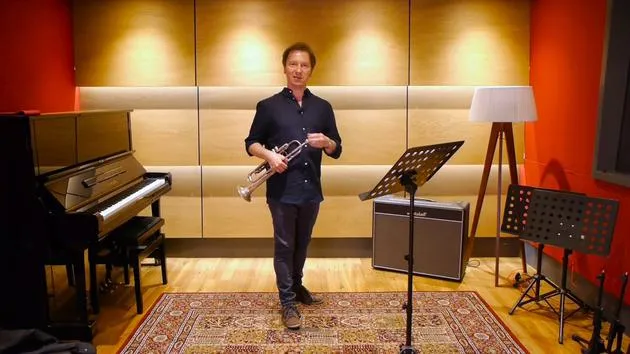
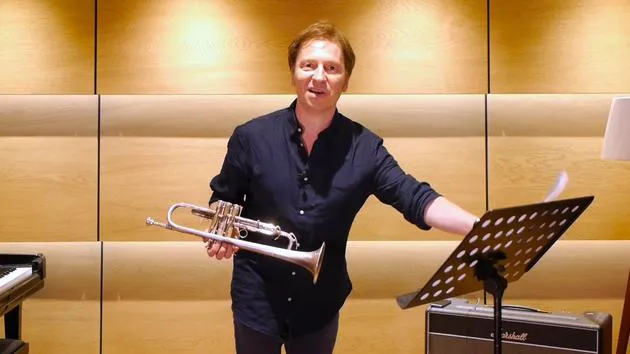
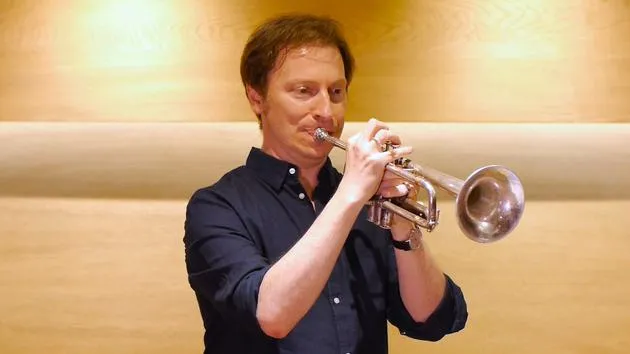
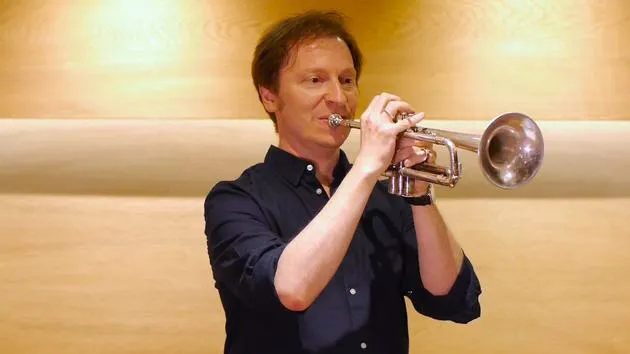
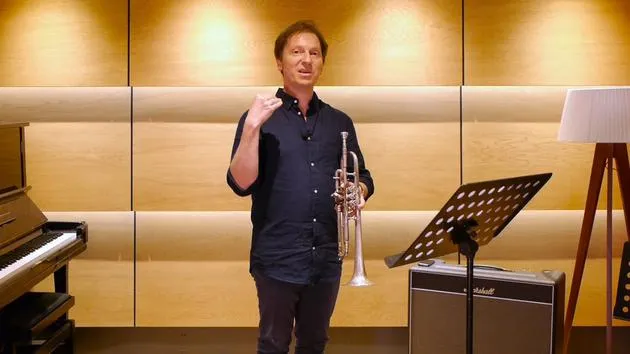
Transcription de la leçon
Music Lesson: Technical Approaches
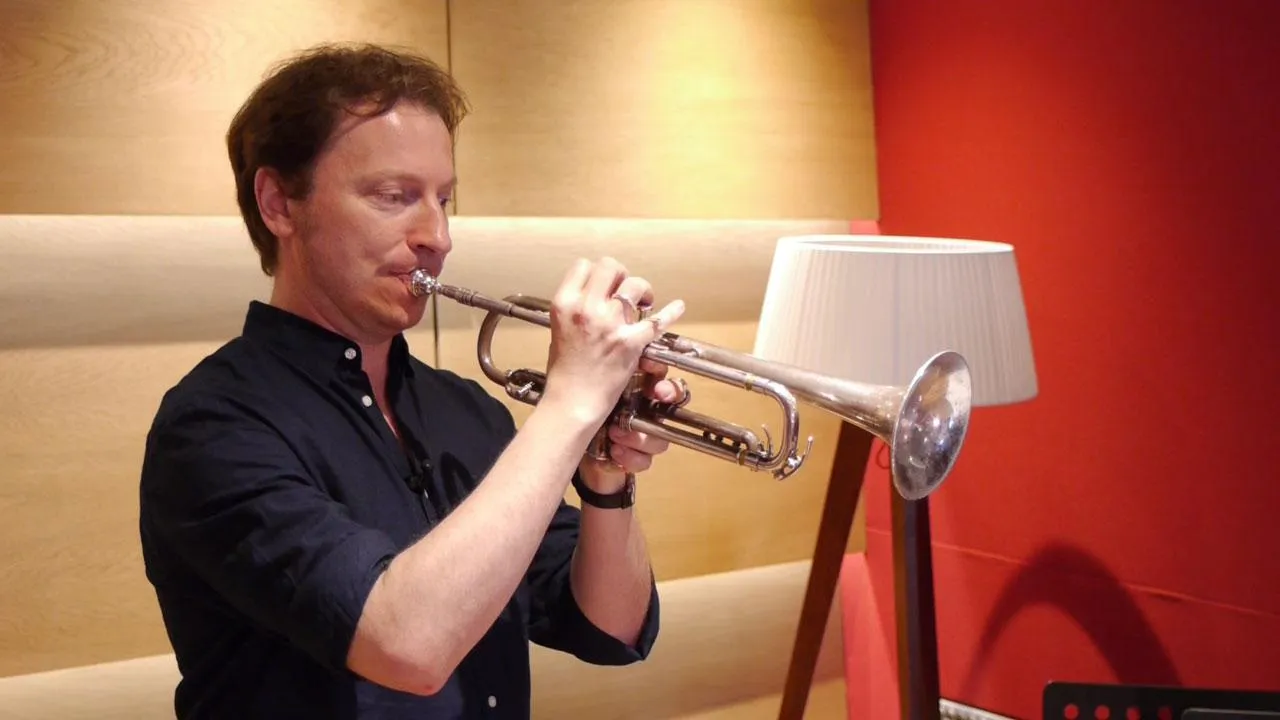
In this next exercise, we're moving on from the multivitamin in a similar vein. We feel it's important to develop a good technical approach, and practicing different techniques is crucial to that.
Mixing Techniques
- Jumping Between Registers
- Playing Loud and Soft
- Using Legato and Staccato
All these elements will be incorporated into the same exercise.
Key Concepts to Remember
-
Staccato Focus:
- When performing staccato, pay attention to the central bell part.
- This applies to legato as well.
-
Exercise Goals:
- Start by playing legato to familiarize yourself with the constant air stream and central tongue position.
- Control pitch in coordination with the speed of the air.
-
Articulation:
- Mix in short staccato.
- Define staccato using your central tongue position instead of the tip.
Remember: Legato is king! Often in pop or big band music, the single tongue is more crucial than the air.
Exercise Demonstration
-
Start playing entirely legato.
- Maintain consistent air speed and a slight crescendo on descents.
- Play at a moderate pace for better comfort.
-
Repeat the exercise.
- This time, play the descending moving arpeggios with short staccato.
- Notice how focusing on the center of your bell aids in your playing.
-
Keeping It Light:
- If you need to take a breath, do not do so in tempo.
- It might sound in tempo but it's not, so breathe then resume as if starting anew.
Opposite Technique Application
- Play the top static C arpeggio staccato while the moving one becomes legato.
Observation:
- While doing legato on the moving arpeggio, you may need to slow down a bit on the 5:1 and descent to achieve a comfortable crescendo.
Flexibility Exercise
- Add an extra note on the top (up to an E), traveling a tenth in range.
Final Steps
-
Practice Variations:
- Continue with legato on the top and staccato on the bottom.
- Finally, try staccato at the top and legato on the bottom.
-
Troubleshooting:
- If staccatos don't come out, repeat between the C and the bottom F sharp until successful.
- Focus on airflow, keeping it short without over-tensing.
Self-Development
- These exercises are designed for you to troubleshoot your own technical development.
- Each version of the same exercise will present different issues to address.
Takeaway:
- Speed things up or slow things down as needed.
- Always remember to focus on airspeed and a fluid tongue motion.
Good luck, and start listening to yourself as I would if I were in the room with you!
12 leçons
1h 49m de leçons vidéo structurées
Fonctions vidéo avancées
Ralentissez, bouclez un passage, suivez la partition
Mobile, tablette et ordinateur
Pratiquez où vous voulez
Satisfaction garantie à 100 %
Garantie remboursement 30 jours
Rencontrez votre guru
Rencontrez votre guru
Au cours des 25 dernières années, Gerard Presencer s'est forgé une formidable réputation comme l'un des trompettistes les plus respectés de la scène européenne. Il a fait irruption sur la scène internationale à 18 ans, lorsque US3 lui a demandé de jouer la partie solo sur Cantaloupe Island de Blue Note (réinventée en Cantaloop Flip-Fantasia), qui est devenu l'un des disques de jazz les plus vendus des années 1990. Depuis, il s'est produit avec un who's who des artistes de jazz internationaux, et continue de se pousser lui-même et son instrument, sortant de sa zone de confort afin d'évoluer comme instrumentiste et comme compositeur.
Dans d'autres genres, Gerard a enregistré comme musicien de studio avec des artistes tels que Sting, Jamiroquai, Zero 7, James Brown, Ray Charles, Joni Mitchell et Jonny Greenwood.
Gerard a également été un membre essentiel des différents groupes de jazz de Charlie Watts au cours des 25 dernières années, tournant à travers le monde et publiant plusieurs albums avec ce Stone amoureux du jazz.
En tant que pédagogue, Gerard a été responsable des études de jazz à la Royal Academy of Music de Londres de 1999 à 2010, et il est actuellement responsable du département des cuivres au Jazz Institut de Berlin. Dans ce cours, il partage son approche intérieure du jeu de la trompette - les habitudes mentales et physiques qui se cachent derrière une belle sonorité - afin que tu puisses développer la sonorité, le contrôle et la musicalité de l'intérieur.







