



Pratique créative des gammes
Avec
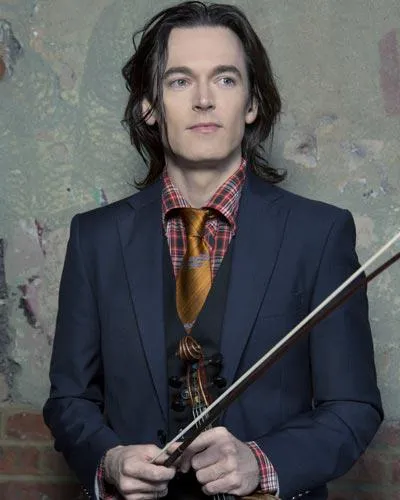
Zach BrockZach Brock repense les gammes et les arpèges comme des outils harmoniques - en les jouant verticalement et horizontalement à travers les cordes - pour développer une vraie aisance dans l'improvisation.
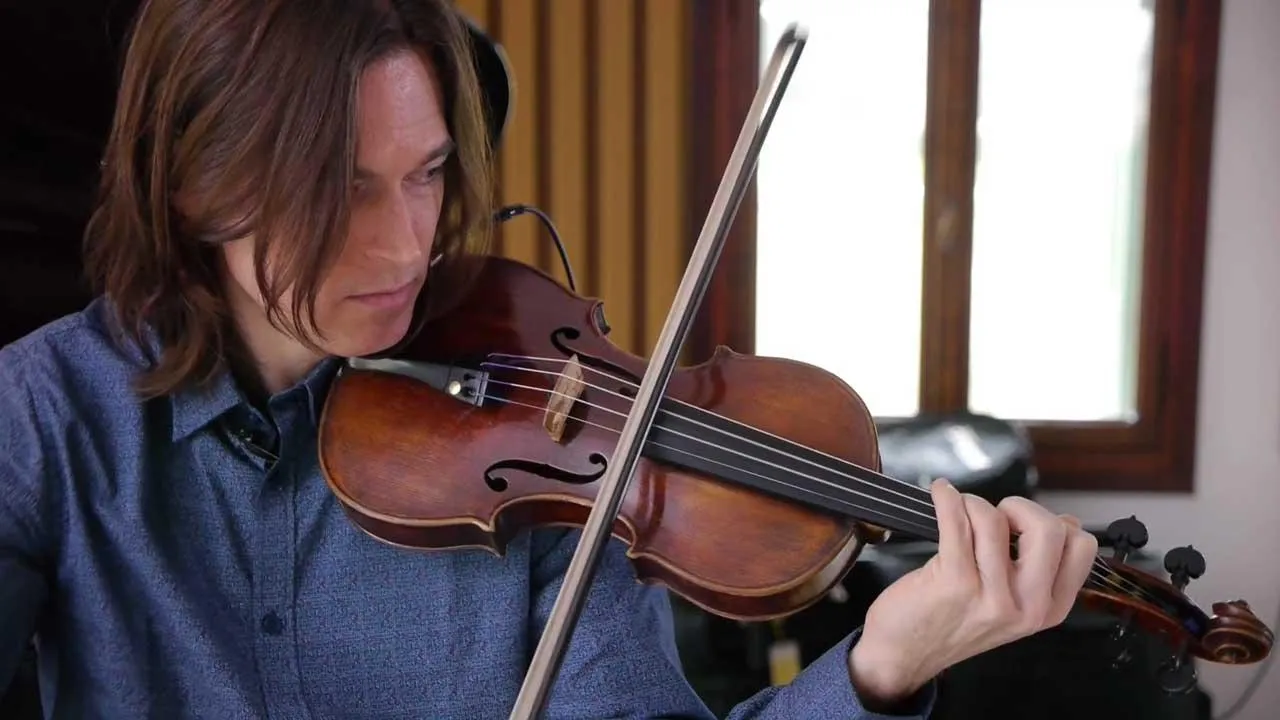
Le contenu du cours
24 leçons (2h 32min) · 1 gratuites
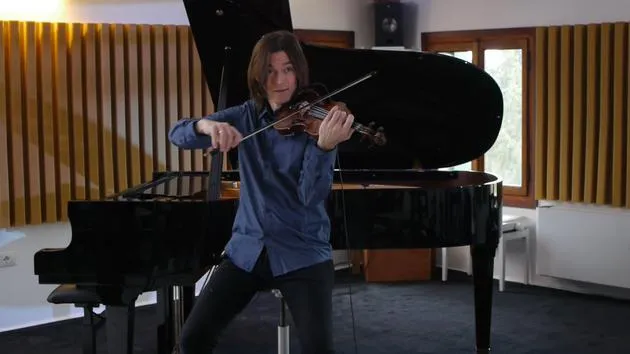
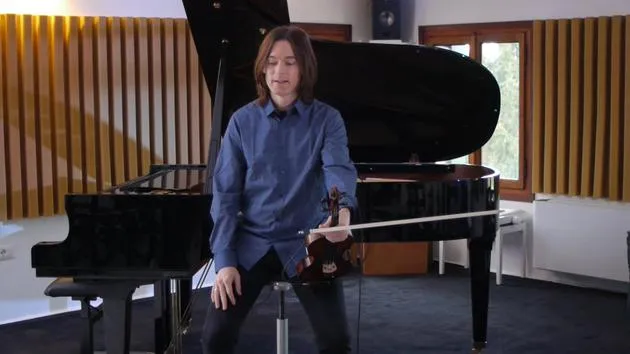
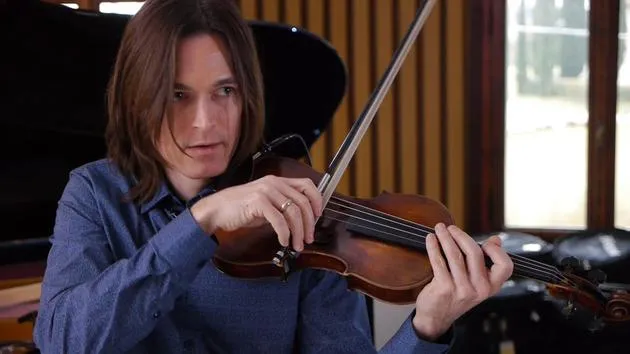
Transcription de la leçon
Understanding Music Fundamentals
Everything that we're going to do from a technical standpoint with our string instrument will deal with the three areas that make up music:
- Melody
- Harmony
- Rhythm
I won't get into aspects like vibe and atmosphere, as that can all be part of those three fundamental areas.
The Importance of Scales
Let's talk about scales. We will be playing scales in ways that you may not have practiced before. It's important to think about the direction and the container of the scale you're playing on your instrument while practicing.
-
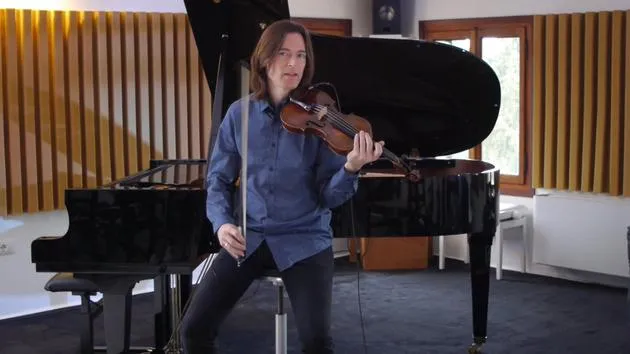
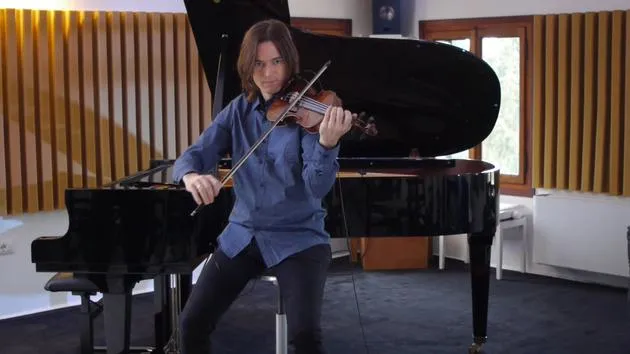
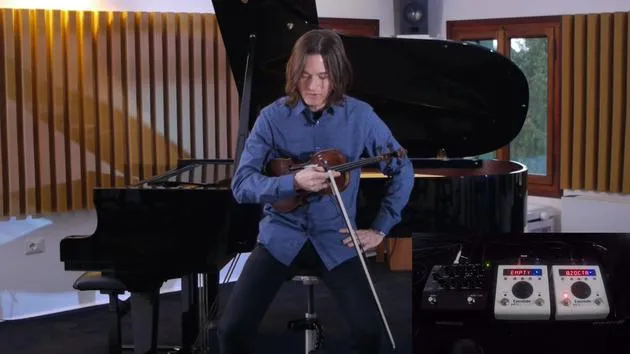
Vertical Playing: For me, if I play a scale on one string, I call that completely vertical.
-
Horizontal Playing: Playing in position, whether I'm in first, second, third, etc., refers to horizontal playing.
When you combine these two approaches, that's essentially what you are doing. For example, if you're playing your three-octave scales and arpeggios, etc., this combination is crucial.
Exploring Modes and Container Techniques
Additionally, there's another useful way of playing scales: focusing on modes. This is a great way to open up your creative spirit and explore what you're already playing on your instrument.
Two-String Octave Containment
On the violin and viola, we are fortunate to have the ability to contain one octave across two strings. For cello players, I know it gets a bit more complicated. And bass players, well, you're on your own!
When thinking about scales within the one-octave container:
- This also applies to arpeggios.
- For example, playing an A flat octave: A, B flat, C, F.
- I'm simply moving the frame to each root and playing within it.
Of course, this could also be an arpeggio:
- A B major triad
- An E flat major triad
- A G major triad
Understanding Seventh Chords
We will discuss seventh chords, which are extremely useful for improvisation across all styles when talking about harmony.
After mapping out your arpeggios, if you're playing in the key of E flat, for instance, adding the D natural, the seventh tone, will be key.
I should also mention that, while discussing arpeggios, I will refer to them as voicings. On instruments like the piano or guitar, you can play all of those sounds simultaneously. We can also play those voicings in a more linear way.
Basic Forms of Harmonic Information
You want to first focus on the most basic forms of these pieces of harmonic information. You will come back to this foundational knowledge regularly.
- As you advance, you will realize the importance of understanding the basic structure of chords:
- A major triad
- A minor triad on top of that
- Perhaps another minor triad
Starting to think about harmony in this way will help you avoid getting stuck. Skipping the basics and jumping straight to more complex voicings, like a C7, can leave you feeling lost if you're unaware of the underlying structures.
Fun Scale Exercise
Here's a fun scale exercise you can try:
-
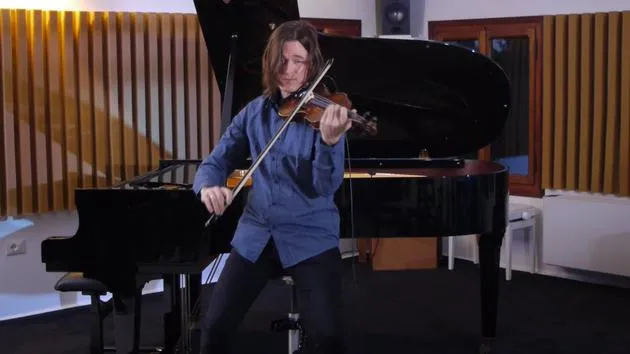
Pick one particular fingering and practice moving that around the instrument.
-
Next, try playing a G major scale, starting on the open G.
-
Move that up to the next pair of strings (you'll get a D major scale).
-
Then, move it up to the next set of strings, up a fifth.
Let's also talk about making variations or creating a little melody within that frame. Play a scale, then challenge yourself to create a melody assignment using the notes you have right there.
That's the first thing I want you to do before we transition into more advanced techniques.
24 leçons
2h 32m de leçons vidéo structurées
Fonctions vidéo avancées
Ralentissez, bouclez un passage, suivez la partition
Mobile, tablette et ordinateur
Pratiquez où vous voulez
Satisfaction garantie à 100 %
Garantie remboursement 30 jours
Rencontrez votre guru
Rencontrez votre guru
Salué comme « le violoniste improvisateur prééminent de sa génération », Zach Brock est un violoniste et compositeur dont la musique puise dans les traditions du jazz, de la musique classique, des musiques du monde et de la musique populaire.
Zach a reçu son premier Grammy Award en 2017 pour son travail sur l'album Culcha Vulcha de Snarky Puppy. Sa reconnaissance en tant que leader s'est accrue grâce à des concerts dans des salles comme le Carnegie Hall et des festivals tels que « Tudo e Jazz » au Brésil, tandis que sa réputation de sideman s'est répandue à travers ses collaborations avec le légendaire bassiste Stanley Clarke, le super-groupe instrumental contemporain Snarky Puppy et les maîtres du jazz Phil Markowitz et Dave Liebman.
Zach a réalisé dix enregistrements en tant que leader ou co-leader et est le premier violoniste à enregistrer pour le vénérable label de jazz néerlandais Criss Cross. Il a également représenté le Département d'État américain en tant qu'ambassadeur musical aux îles Salomon, s'est produit comme soliste invité pour les bandes originales de deux longs métrages du Festival de Sundance et est actuellement artiste en résidence à la Temple University de Philadelphie.
Dans son cours, tu apprendras à improviser au violon directement à la source : comment Zach aborde la mélodie, le rythme et l'harmonie, et comment commencer à trouver ta propre voix comme il l'a fait aux côtés de Snarky Puppy et au-delà.







