



Enregistrer et sauvegarder ton travail
Avec
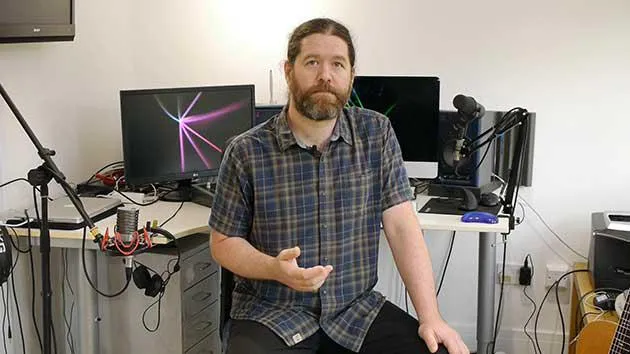
Ciaran RobinsonCiaran Robinson explique comment enregistrer des sessions dans Pro Tools et configurer l'Auto Backup pour ne jamais perdre ton travail en cas de plantage.
Le contenu du cours
31 leçons (2h 41min) · 1 gratuites
01. Aperçu de la section 1
0:25
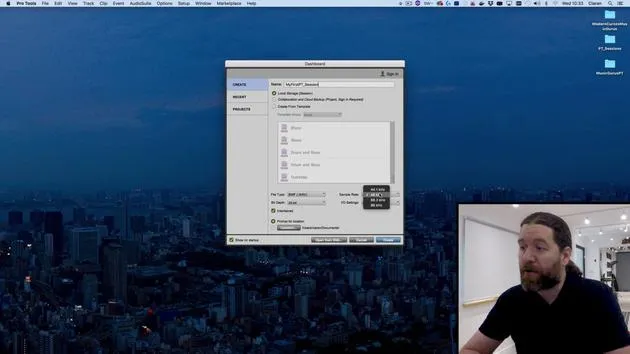
02. Ouvrir une session Pro Tools et réglages
Leçon gratuite4:37
03. Configuration des E/S et interface audio
8:12
04. Aperçu de la fenêtre d'édition
9:35
05. Zoom et hauteur des pistes
11:00
06. Types de pistes et création de pistes
9:47
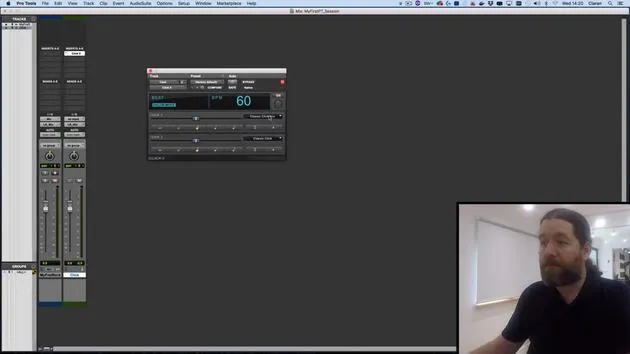
07. Configurer une piste de clic
5:11
08. Réaliser ton premier enregistrement
4:01
09. Configuration d'enregistrement
6:11
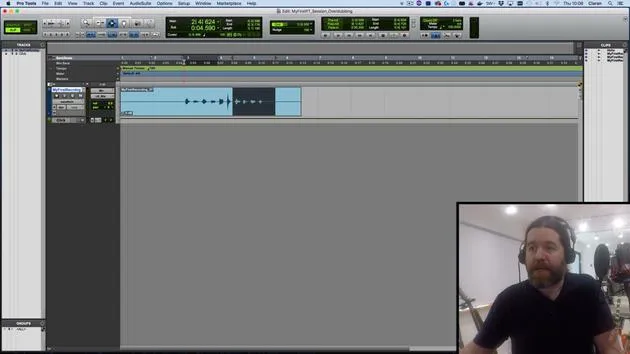
10. Punch in & punch out
9:10
11. Playlists et enregistrement en boucle
4:28
12. Enregistrer et sauvegarder ton travail
Tu es ici5:04
13. CHALLENGE #1 : RÉALISE TON PREMIER ENREGISTREMENT
0:27
01. Vue d'ensemble de la section 3
0:24
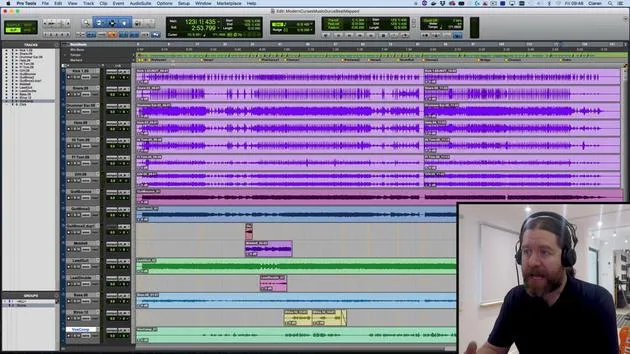
02. La fenêtre de mixage
6:17
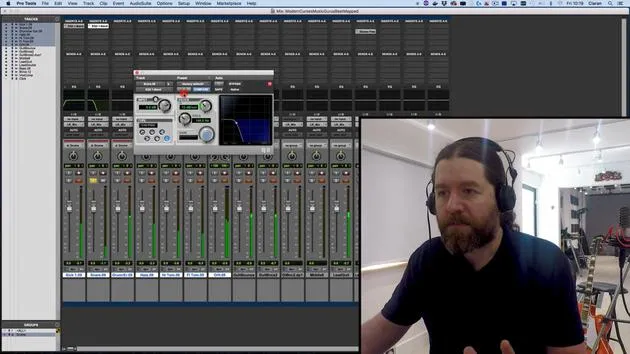
03. Commencer ton mixage : nettoyer le bas du spectre
5:17
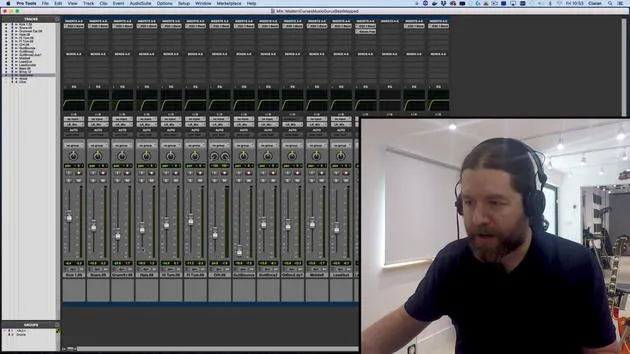
04. Démarrer ton mix : équilibrage des niveaux
8:51
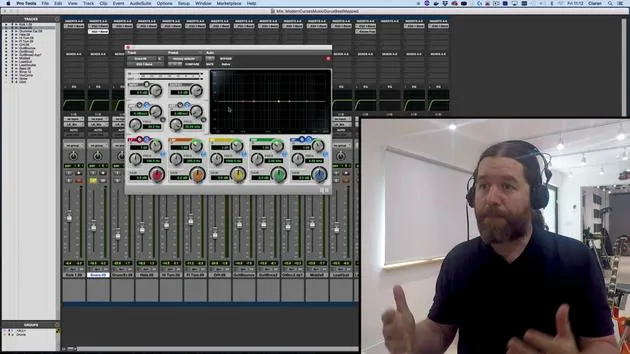
05. EQ soustractif
6:53
06. Traitement de la dynamique
9:46
07. Routage AUX
6:41
08. Le bouncing
4:58
09. Félicitations, mais ce n'est que le début !
0:23
Transcription de la leçon
Saving and Backing Up Your Work in Pro Tools
In this video, we're going to quickly talk about saving and backing up your work.
Regular Saving
- On a regular basis, you want to go up to File and choose Save.
- Like myself, many users develop a command-S left-hand twitch after you pretty much do anything at all.
If it crashes, it's not necessarily the end of the world:
- Any audio you've recorded will still be there somewhere.
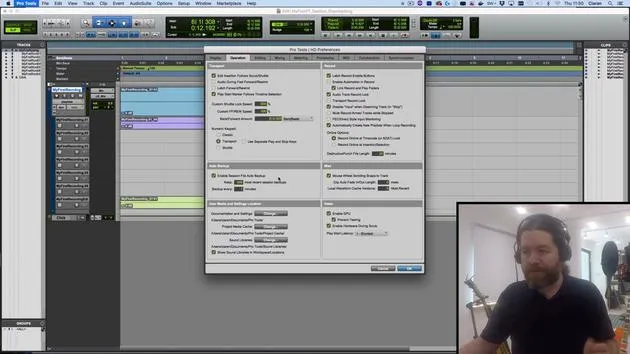
- If we check in the Pro Tools preferences under Operation, we can see that Auto Backup has been turned on.
- I've set this to its maximum value: 999 most recent session backups, at most every minute.
If you make no changes over that minute, it doesn't create another backup.
So, it's fairly safe.
Understanding Pro Tools Session Files
Now, what happens with the Pro Tools session?
- If I go back here and right-click on the file name, here's the session folder, and it has a lot of things inside.
- These are the PTX files.
Now, this is the one that we just were using, and you can see that this is 45 kilobytes. This should be a clue that it doesn't actually contain everything we need, it's just what we know, an EDL (Edit Decision List).
If you just save this, you have thrown away a lot of the stuff you still need.
For example, the Audio Files folder is the bulk of your file sizes.
Other Important Folders
- Audio Files: This is your actual audio.
- Bounce Files: You might have something here.
- Clip Groups: We won't cover that in this course.
- Session File Backups: These are for emergencies.
- Video Files: We haven't used any of these.
- Wave Cache: You can get rid of it; it will just take a little longer for Pro Tools to open up each time.
It's how the waveform is displayed.
Proper Backup Procedures
You want to make sure that you take everything inside this folder, as well as any audio files that your Pro Tools session is referencing.
Now, when you are moving things or backing them up, do things in a slightly different way:
- Take the Audio Files folder and the PTX session. Just to be safe, take the entire Pro Tools session.
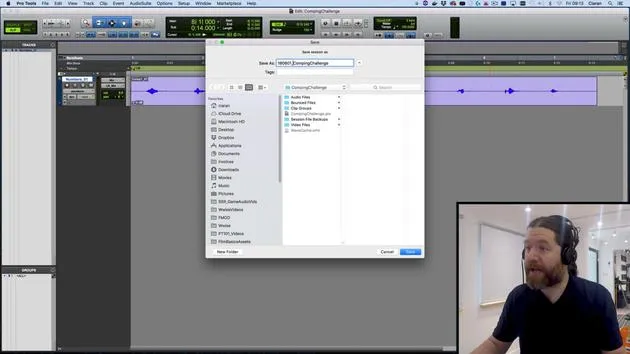
- When working on a project, go to File and do a Save As. I will call this "Demo Backup."
After doing this, you can see I now have a new PTX file. This still references the same audio files that I was working on earlier.
If I make mistakes, it's not unusual when doing a mix to spend a couple of hours and suddenly realize, "You know what? This was better before I started working on this."
Since I've done a Save As, I can always go back to the previous version. This is worthwhile!
Understanding File Sizes
As you can see, they're pretty small, only 45 kilobytes. These files are never going to get that huge unless you bring in loads and loads of automation.
Another option to be aware of is File > Save Copy In.
This allows us to make a copy and place it somewhere else:
- You can check the file size, sample rate, and bit depth.
- Import all audio files: Not just the main playlist but all of them.
- Generally, leave all settings in default, except for audio files.
Don't include the root plugin settings folder, you can end up with enormous files because you're saving all of your presets.
Archiving Your Session
I'll save this on the desktop, which usually takes longer. This just happens to be a very small session.
If we go back to the desktop, you'll see I now have this folder that doesn't contain all of the other bits and pieces:
- It doesn't have the bounce files.
- It doesn't have the video files folder.
These will exist when I first open this up.
Remember:
- We are not currently working on this "Save Copy In."
- If I make any changes to this Pro Tools session here, the copy I just made will be unaffected.
This is essentially what you do when backing up and archiving a session. Because I checked the audio files box, it will bring in any audio files that it was accessing but weren't in the audio files folder.
This consolidates everything into one location. If you're going from one computer to another, this is a way to guarantee you have everything you need with you.
Conclusion
So, that's Save, Save As, and Save Copy In. All of these are very important, whether it's Pro Tools or any other system you're using.
That's it for this session. In the next session, we'll start looking at editing audio.
See you then!
Bye!
31 leçons
2h 41m de leçons vidéo structurées
Fonctions vidéo avancées
Ralentissez, bouclez un passage, suivez la partition
Mobile, tablette et ordinateur
Pratiquez où vous voulez
Satisfaction garantie à 100 %
Garantie remboursement 30 jours
Rencontrez votre guru
Rencontrez votre guru
Ciarán Robinson est un ingénieur du son fort de plus de 25 ans d'expérience dans l'ingénierie live, le mixage, l'enregistrement, la conception de studios et le son pour le cinéma, la télévision et les jeux vidéo. Il dirige actuellement le master Music Producer de Tileyard Education à Londres et a enseigné dans des écoles de musique contemporaine telles que BIMM, SSR et SAE.
Il enseigne la production audio depuis plus de 20 ans et a conçu des cours sur Pro Tools, le son pour jeux vidéo, l'ingénierie de studio et la postproduction ; certains de ses anciens élèves travaillent aujourd'hui avec des artistes comme Coldplay et Biffy Clyro.







