



Placement de la main
Avec
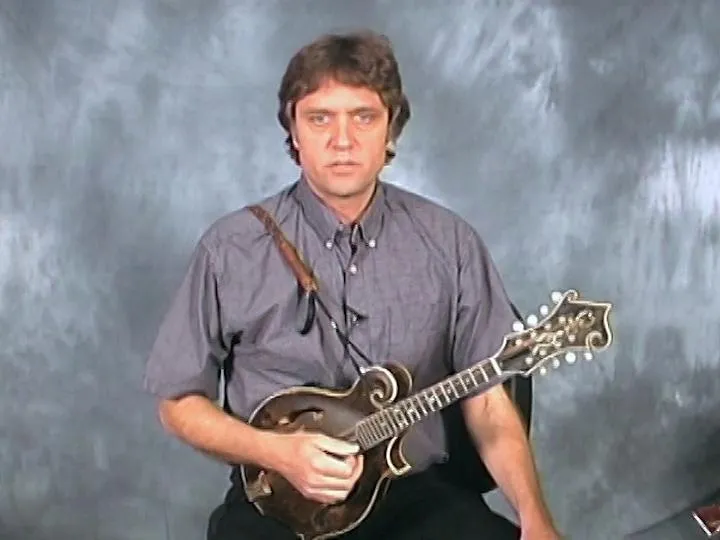
Tom BekenyTom Bekeny montre comment tenir la mandoline, tenir le médiator et caler ta main de jeu : la position qui rend tout ce que tu joues ensuite plus facile.
Le contenu du cours
20 leçons (1h 18min) · 1 gratuites
Transcription de la leçon
Mandolin Basics: How to Hold the Pick, Mandolin, and Brace Your Playing Hand
Okay, let's continue on with some basics before we actually start playing something. I'd like to show you how to:
- Hold the pick
- Hold the mandolin
- Brace your playing hand
Not your fretting hand, but your playing hand. In my case, I'm right-handed, so it's this hand, the hand I hold the pick with.
Holding the Mandolin
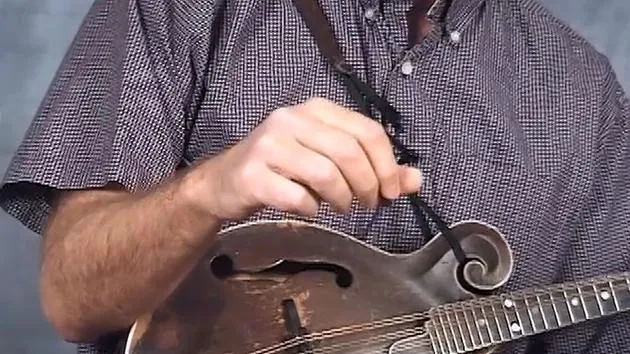
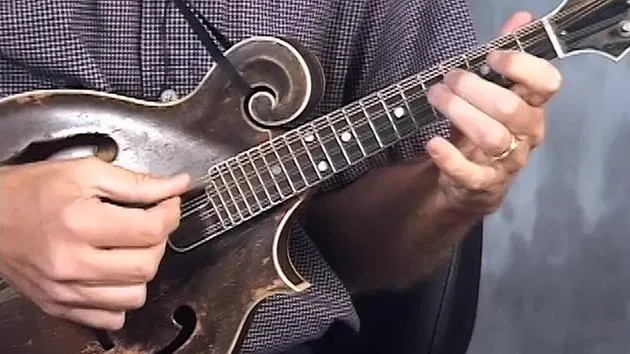
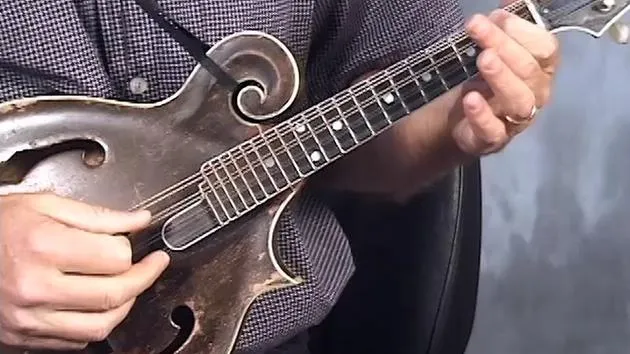
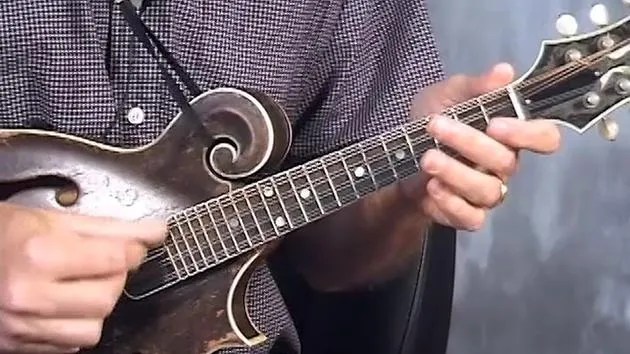
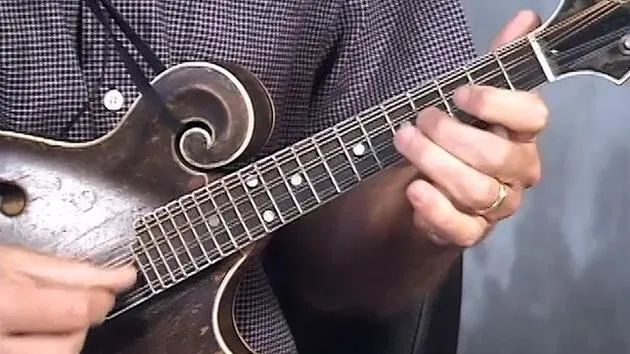
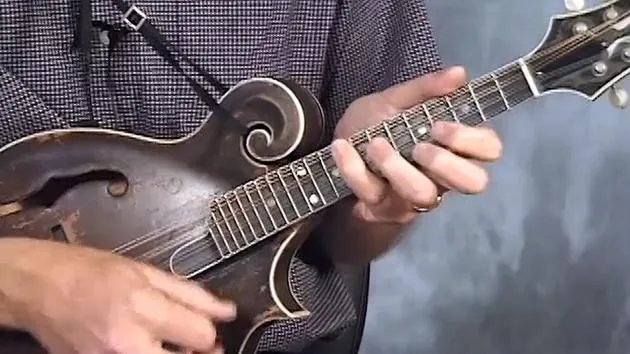
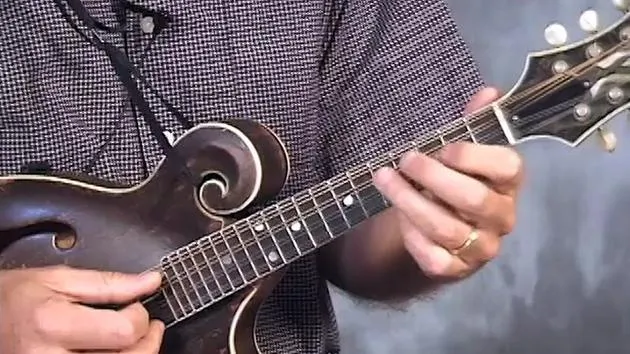
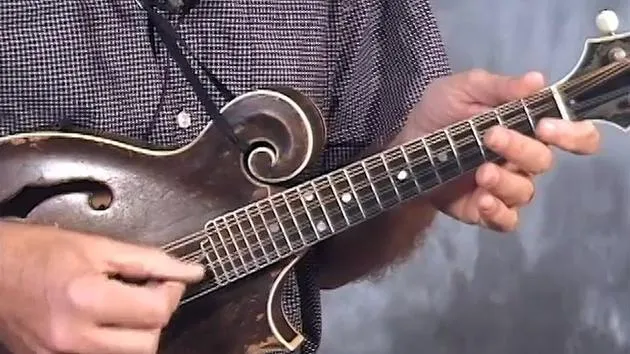
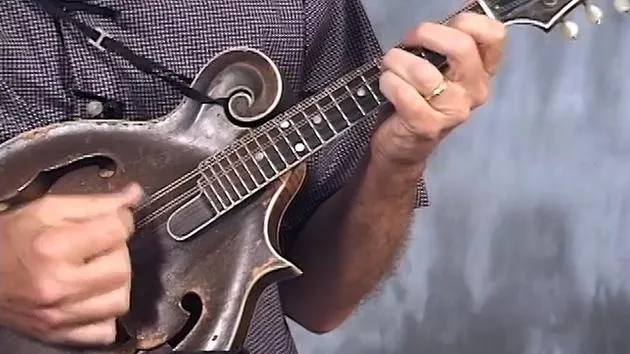
First of all, let's start with holding the mandolin. I rest the neck of the mandolin between these two joints of my index finger. You can kind of see I've got a big callus here in my left hand from doing that for so long. The neck kind of rests right in there. I hope you can see that.
Then, my thumb comes up a little bit over the side of the mandolin. It looks like this:
- Notice my thumb isn't all the way up over the neck.
- If I were doing that, the neck would be resting right here.
The reason I don't do that is that if my thumb is all the way up there and the neck is resting all the way in, it's hard for me to slide up and down and change positions on the neck.
Additionally, if I'm in that position, I find it hard to get my fingers around to achieve the proper angle onto the strings.
Holding the Pick
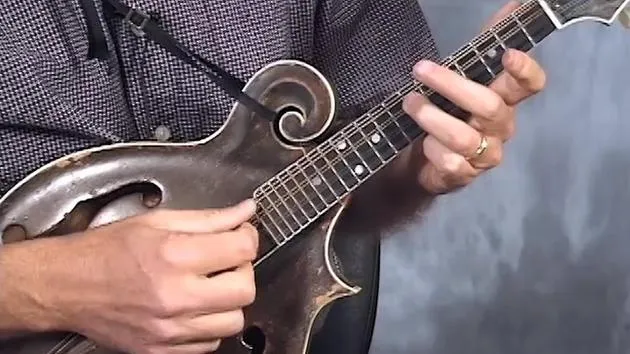
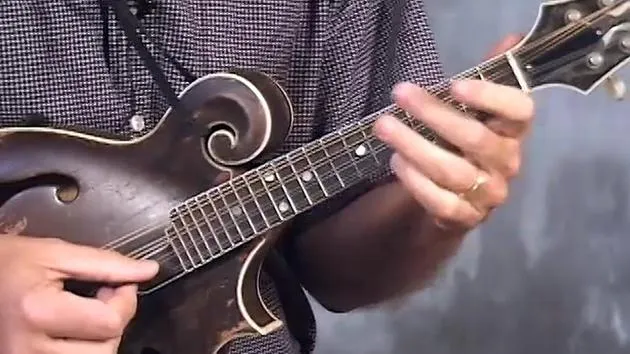
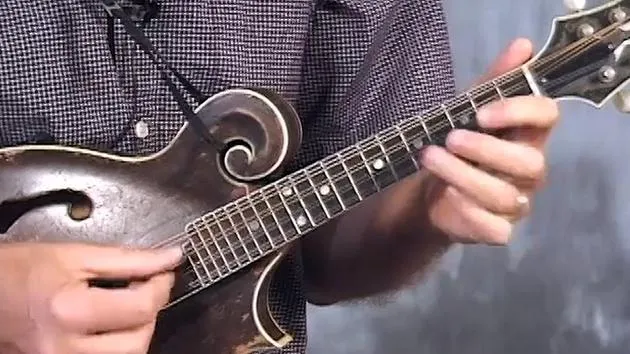
Now, let's discuss holding the pick. If you line up the pick with the tip, imagine a line from the tip to the top of the pick.
- My thumb comes across at about 90 degrees.
- If you'll notice, it goes back to the joint and then slightly over.
This will vary since everybody has different sized fingers, but that's where things line up for me. In the back:
- My index finger comes down roughly at a 90-degree angle to the thumb, with the index just slightly bent at that joint.
I use quite heavy picks, this one is 1.5 millimeters, and for me, that's a preferable sound. I find I get more of the warm end of the sound from the mandolin, which is a fairly trebly instrument to begin with. So, I get a little more of the bass response and maybe even some more of the mid response.
This is a teardrop-shaped pick. There are all sorts of different shapes, and I play with the pointed side of it. I've experimented with:
- Rounded shoulders
- Different shaped picks
If you play with a round edge, this sound is even warmer and a little bassier. However, I find that playing tremolo, that technique, is a little hard to dig in with the rounded side, so I prefer the pointed side of the pick.
It's really important for you to try different things. Try this basic grip and then experiment from there to see what works for you. You may change things at different points.
A Personal Tip
What I came around to a few years ago is changing from this basic grip to one where I actually bring this finger down. Nowadays, that's the way I'll hold the pick when I'm playing lead solos. I found that this gives a little more resistance and provides a better tone on the upstroke of the mandolin.
Bracing with the Right Hand
Now, let's focus on bracing with the right hand.
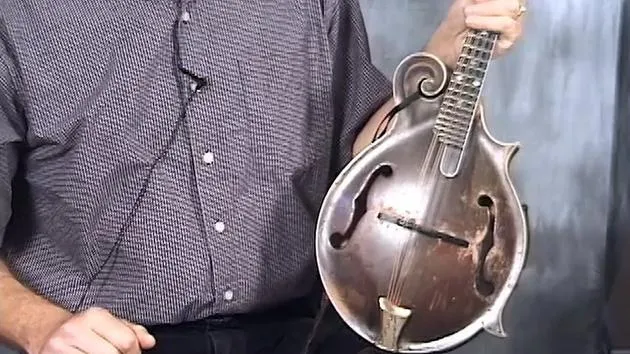
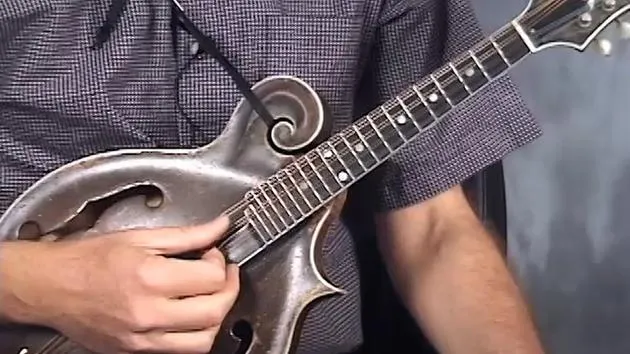
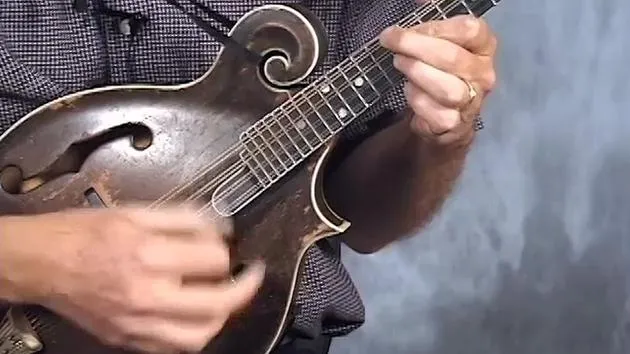
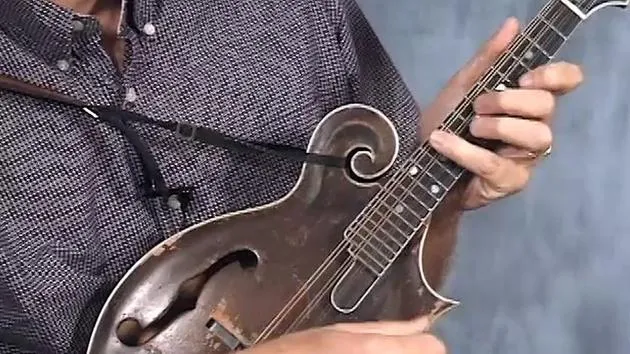
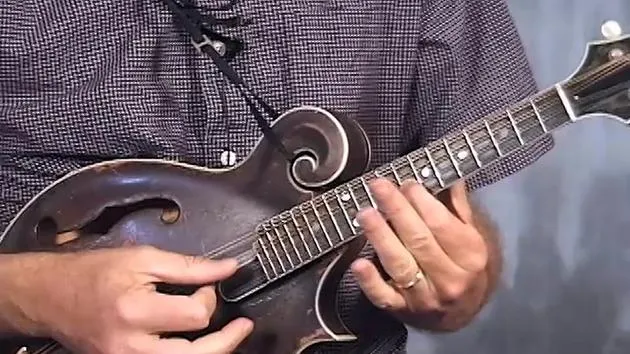
- Get a shot of the mandolin here. You can see where it's really worn right here, I've had this mandolin since 1978 and played it a lot.
- It's almost a little embarrassing how beat up it looks.
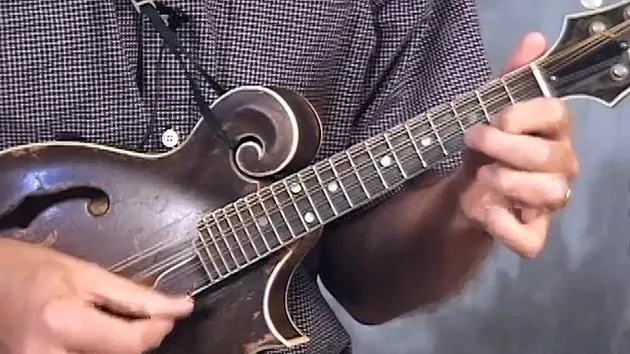
This wear is where my arm comes across. What I do is come across between the tailpiece and the F hole there. I lightly, very lightly brush from the middle of the bridge down to the bottom with this part of my wrist. This helps me stay oriented to the strings.
I don't plant this really hard. One important thing about your right hand when playing mandolin is to keep your wrist very loose.
Common Technique
Basically, there's no right and wrong, just standard techniques. There are some great players, mandolin and guitar players. If you watch them, they're often playing from the elbow, but I think that's the exception rather than the rule. The first thing you should learn is to try to play from the wrist.
- I'm positioned just behind the bridge on the strings, but again, I'm not pushing down hard.
A Cautionary Tale
A story I like to tell about keeping your wrist loose involves a mandolinist by the name of Frank Wakefield, one of the greatest players ever. When I was in my early 20s, I had a chance to play in a jam session with him. He was playing at phenomenally fast speeds and trying to get all of us laid-back West Coast players to play faster.
I was trying to keep up with him all day at a jam in someone's kitchen. The faster he played, the looser he was, but the faster I tried to play, the tighter my wrist became.
Actually, I injured my wrist trying to keep up with Frank Wakefield that day. I had to soak my wrist and couldn't play for quite some time. So, remember: it's crucial to keep that wrist very, very loose.
20 leçons
1h 18m de leçons vidéo structurées
Fonctions vidéo avancées
Ralentissez, bouclez un passage, suivez la partition
Mobile, tablette et ordinateur
Pratiquez où vous voulez
Satisfaction garantie à 100 %
Garantie remboursement 30 jours
Rencontrez votre guru
Rencontrez votre guru
Tom Bekeny est mandoliniste, violoneux (fiddle) et professeur de mandoline chevronné, qui s'est produit et a enseigné aux États-Unis et à l'étranger pendant plus de 40 ans - alors quand il décompose la façon de jouer, tu apprends de quelqu'un qui a passé toute une vie aussi bien sur scène que dans la salle de cours.
Il a été le mandoliniste de groupes de la région de la baie de San Francisco tels que Done Gone, Tenbrooks et une première version du Grant Street String Band avec Laurie Lewis. Il s'est produit avec Peter Rowan, les Rowan Brothers, David Grisman, George Cole, la chanteuse Lua Hadar et Jerry Garcia. Tom a joué de la mandoline avec le très acclamé Kathy Kallick Band pendant près de 20 ans et occupe le poste de fiddle au sein de High Country, le meilleur groupe de bluegrass traditionnel de Californie, depuis 1988. Il a enregistré avec beaucoup de ces formations et a été mis à l'honneur dans le numéro de l'été 2009 de Mandolin Magazine.
Tom joue aussi dans le très populaire groupe de "jam" bluegrass traditionnel Bangers and Grass, aux côtés de sommités du bluegrass de la côte ouest comme Jim Nunally, Steve Pottier, Bill Evans et Chad Manning.
Au-delà du bluegrass, Tom joue de la mandoline jazz avec son trio The Missing Man Quartet (MM4), qui interprète un jazz direct avec des arrangements originaux puisant leur matière dans l'univers du jazz et les standards du Great American Songbook. Il a sorti un projet de CD solo ("Jazzolin") en 2013, sur lequel il joue de la mandoline et du fiddle, accompagné de batterie et de basse.







