



Hallelujah I Love Her So, Ray Charles (Lección)

Qué incluye el curso
29 lecciones (2h 21m) · 1 gratis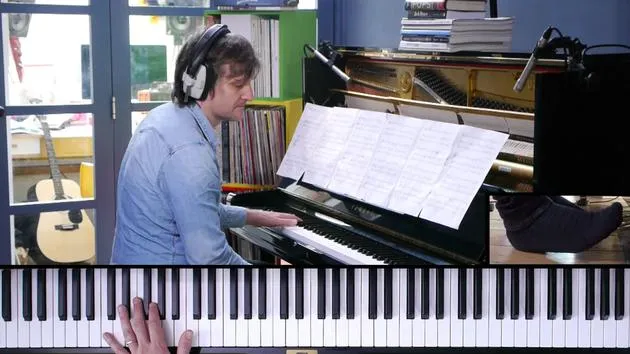
01. Hallelujah I Love Her So, Ray Charles (Interpretación)
Lección gratis2:39
02. I See Fire, Ed Sheeran (Interpretación)
2:40
03. Your Song, Ellie Goulding (interpretación)
3:35
04. Funkometer, Kit Morgan (Interpretación)
2:21
05. Crop Duster, Kit Morgan (interpretación)
2:10
06. Circus Experience, Joe Bennett (Interpretación)
2:19
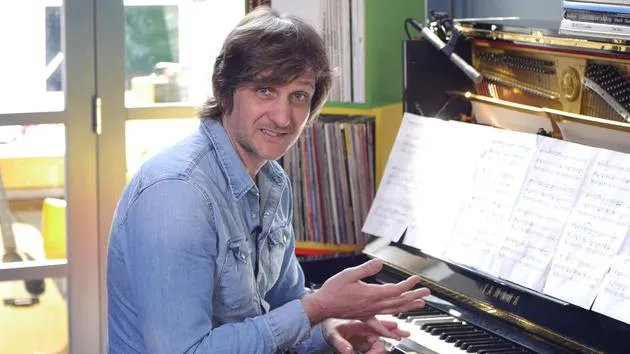
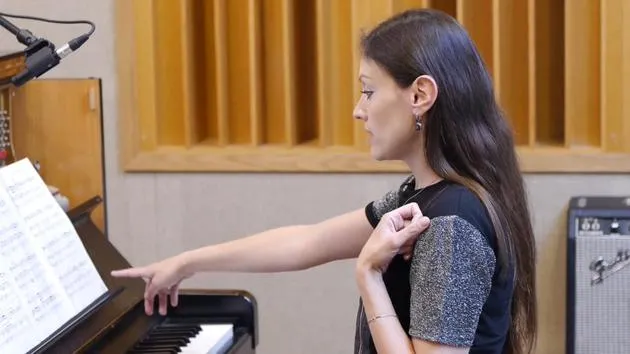
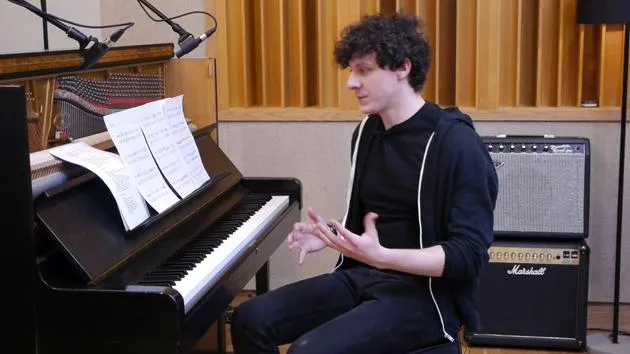
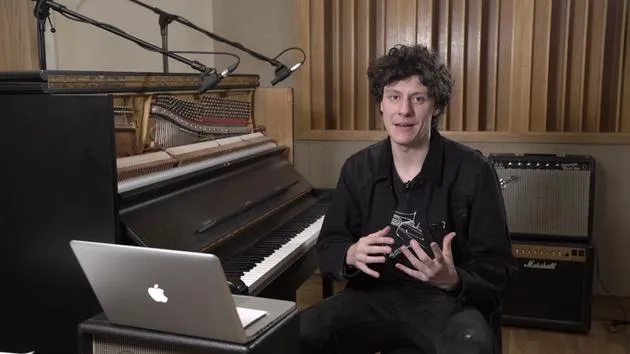
Transcripción de la lección
Hallelujah, I Love Her So ? Music Lesson
Introduction
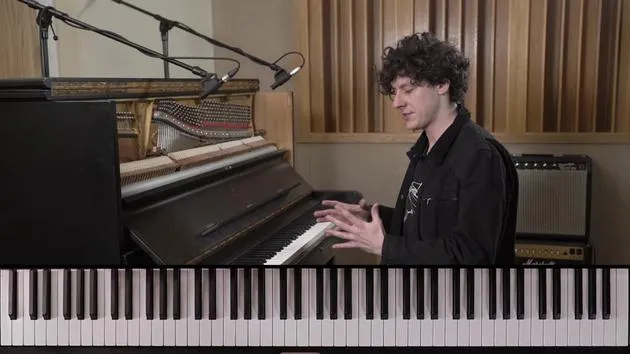
Hi, I'm Paddy. Let's look at "Hallelujah, I Love Her So" by the great Ray Charles. What an amazing performer! Phenomenal piano player and singer, definitely one of my favorites, for sure.
There's so much soul and depth in his voice and music. It's quite staggering, really. So, let's dive into this tune!
Genre Characteristics
This piece is a great example of rhythm and blues meeting soul, with blues-inflected lines and chords.
The Fundamental Element: Swing
The fundamental thing here is swing, it's all about rhythm. From the outset, his piano part is sweet and swinging hard.
- When you're learning this song, the best thing you can do is listen to Ray Charles' original.
- It's crucial to absorb his feel and way of playing the piano, as well as the feel of the band.
You can have so many different degrees of swing. For example:
- Playing the intro as written (straight eighth notes) might sound very square and lacks that essential ingredient of swing.
- On the other extreme, playing the notes very dotted can also sound square but in a different way.
Listen closely to Ray's piano playing; he plays on the straighter end of swing.
Introduction Playing Technique
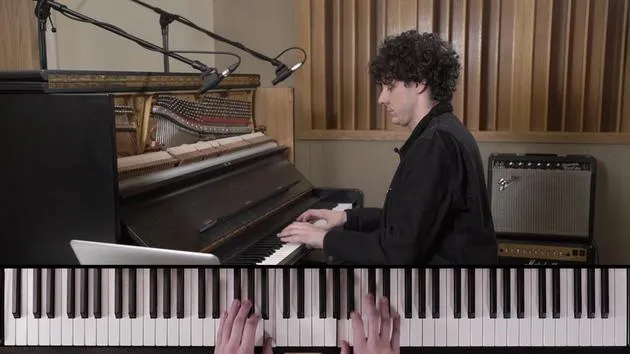
Let's look at how to play the introduction. Use your little finger and thumb (fifth and first fingers) for those octaves.
- Some of you may be used to playing octaves using classical fingering, but for that punchy, funky swinging feel, just use your left hand and thumb.
- There's a bit of a stretch going up to the 9th, but that hand position is key.
In the chart at bar 6, it says "more swing feel." You can hear when the band kicks in, they play a more dotted feel, though not to the extreme I demonstrated earlier.
Importance of Articulation
Pay attention to how Ray articulates his notes, especially in bars 14 and 15 where you'll see the dotted notes:
- Short, then a long one at the end of bar 15, then a short one at 16.
- Reference the score for those staccato notes and tenuto held notes and listen to the recording as well.
Chords and Harmony
Let's discuss the chords in this piece.
- It's essential to understand different types of chords: major, minor, dominant seventh, diminished, augmented, and extended chords.
- For instance, instead of just a B flat, you could have a B flat major, a B flat 7, a flat 5, a sharp 5, and a flat 9.
Understanding harmony is critical, but we won't have time to cover all aspects in this tutorial.
Time and Swing
The concept of time and swing is crucial.
- Lock into the time and feel as quickly as possible. As soon as you hear the drummer counting "1, 2, a 1, 2, 3, 4," you should already be feeling the music.
- Feel free to move, clicking or tapping can help you feel the tempo, especially during gaps in the song.
For instance, at bar 40, there's a two-bar gap. Don't stay still; keep time in those gaps, too.
Practice Tips
- When practicing, it's recommended to use a metronome.
- If you find a passage tricky, set the metronome to a comfortable tempo and gradually increase it.
Dynamics
In terms of dynamics, the piece is fairly consistent, medium dynamics throughout.
- We're not hammering it, but we're also not being timid, somewhere in the middle, just a nice comfortable dynamic.
- The middle section, around bar 34, could be a little higher before easing back.
Form of the Piece
- Introduction: Starts with Ray's piano.
- Band kicks in: Around bar 6.
- Verse: Begins around bar 10 and carries on to bar 34.
- Middle 8: Comes in at bar 34.
- Back to Verse: At bar 42.
- Saxophone Solo: Starting at bar 54.
- DS Alcoda: At bar 65. This means you go back to the specified symbol that looks like an S with a line through it and some dots.
Outro (Coda)
The band fades out during the outro.
- In a recording studio, you would continue playing at the same volume, but this piece fades out.
- Gradually bring the dynamic down to match the backing track, using the left-hand pedal if desired to create softer dynamics.
Conclusion
This song follows a classic rhythm and blues structure with an AA BA form.
- You have two A sections (from bar 10 to 21 and then bar 22 to 31 with different lyrics).
- The B section (or middle section) kicks in at bar 34.
- Another A section follows at bar 42.
As you ease out, just reduce volume as the backing track decreases. Keep playing until you can no longer hear it for a clean finish.
I hope this video has been useful in learning this great tune by Ray Charles. One of my favorites, hope you like it too!
29 lecciones
2h 21m de lecciones en vídeo estructuradas
Funciones de vídeo avanzadas
Ralentiza, repite un pasaje, sigue la partitura
Móvil, tablet y ordenador
Practica donde quieras
Garantía de satisfacción 100%
30 días de garantía de devolución







