



Forma de blues intermedia
Una versión más avanzada de la forma de blues de 12 compases para piano, añadiendo acordes de paso y cambios adicionales para darte más sobre lo que improvisar.

Qué incluye el curso
29 lecciones (2h 21m) · 1 gratis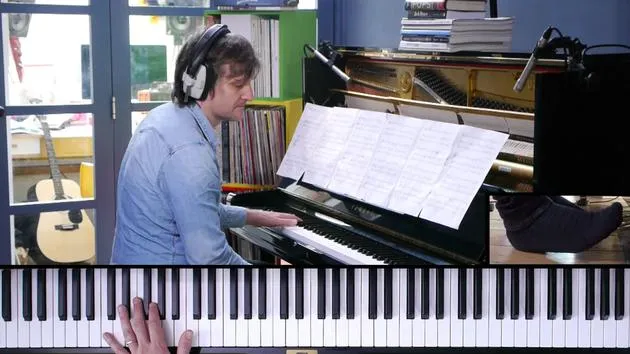
01. Hallelujah I Love Her So, Ray Charles (Interpretación)
Lección gratis2:39
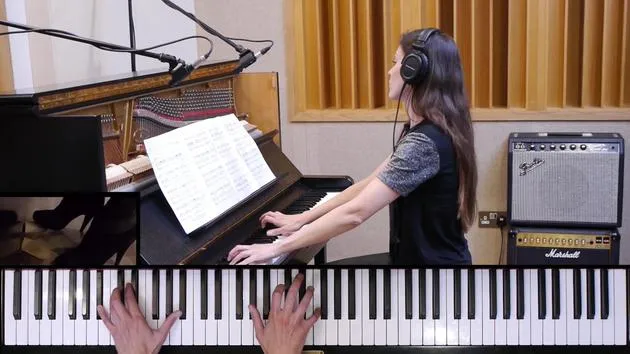
02. I See Fire, Ed Sheeran (Interpretación)
2:40
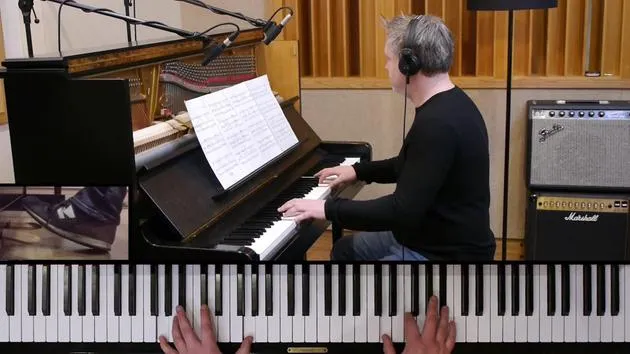
03. Your Song, Ellie Goulding (interpretación)
3:35
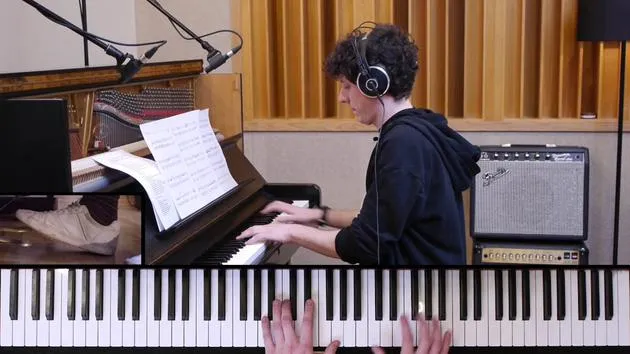
04. Funkometer, Kit Morgan (Interpretación)
2:21
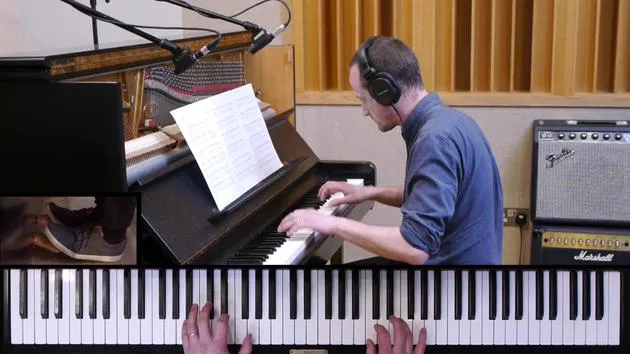
05. Crop Duster, Kit Morgan (interpretación)
2:10
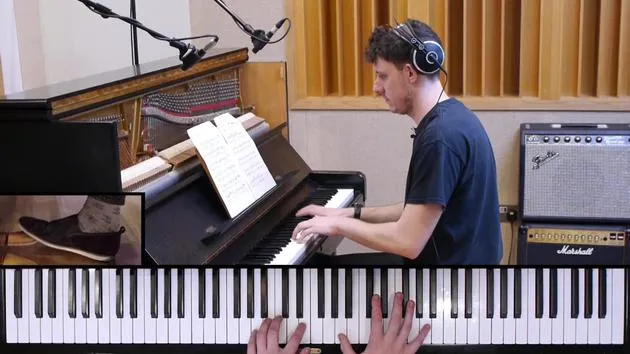
06. Circus Experience, Joe Bennett (Interpretación)
2:19


Transcripción de la lección
Improvisation for Piano Players
If you're doing the Rock School exams, you'll find that there isn't actually that much improvisation for piano players. We thought we'd create this extra content to show you how to become an improviser yourself as a piano player, as this is really important when playing with other musicians in your own projects or developing your own sound as a musician.
The Blues Form
I'm going to show you the blues form now in a slightly more complicated way:
- Standard Blues Chords:
- F7
- Bb7
- F7
- F7
- Bb7
- B diminished
- F7
- D7
- G minor 7
- C7
- F7
- D7
- G minor 7
- C7
This might all seem a little bit complicated, but really it's the same selection of chords happening throughout. So we have, like, the standard blues, the 1, the 4, and the 5.
Variations in the Blues
This format still exists within this more complicated blues, but we just have some extra things thrown in. We go to the four and back to the one in the beginning. This develops the form and makes it slightly more interesting. You're adding a bit more inventiveness, a bit more personality into the sound.
Now, if you're playing traditional blues music, where you're going, this doesn't tend to happen. You're normally just doing the 1, the 4, and the 5. However, when we're using blues in a jazz context, for example, we'll find we use these more interesting harmonies to add a bit more color and richness to the sound.
Playing the Form
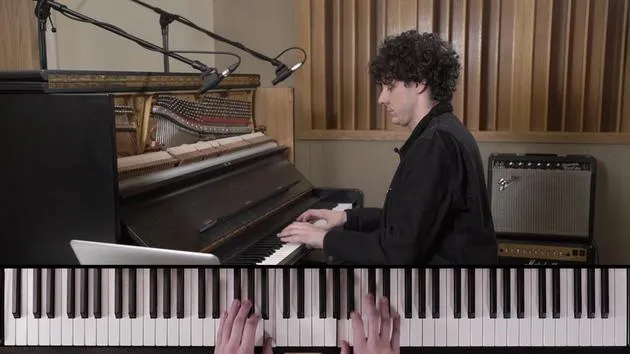
I'm going to play this form for you in time. One, two...
Now, you might have noticed within that form that I'm using slightly more interesting and varied chords. From the Rock School voicings, you'll find that:
Voicings in Different Ways
One of the things about being a piano player is learning how to approach and play voicings in different ways. For example:
- F7 can be played as:
- F7 (voicing 1)
- F7 (voicing 2)
- F7 (voicing 3)
- F7 (voicing 4)
And that's not even mentioning the extensions we can throw in, like the 9th. The ninth chord, or ninth note in the scale, gives it a slightly more interesting texture. This really starts to add a bit of juice and color to these chords, making things sound beautiful and interesting.
A nice F7 voicing, for example, might be:
- This is very similar to the original, but using the 9th and the 6th.
When we do this, what we're doing is adding more color, making things sound slightly more interesting and more fun to play over.
29 lecciones
2h 21m de lecciones en vídeo estructuradas
Funciones de vídeo avanzadas
Ralentiza, repite un pasaje, sigue la partitura
Móvil, tablet y ordenador
Practica donde quieras
Garantía de satisfacción 100%
30 días de garantía de devolución







