



Funkometer, Kit Morgan (Lección)

Qué incluye el curso
29 lecciones (2h 21m) · 1 gratis
01. Hallelujah I Love Her So, Ray Charles (Interpretación)
Lección gratis2:39
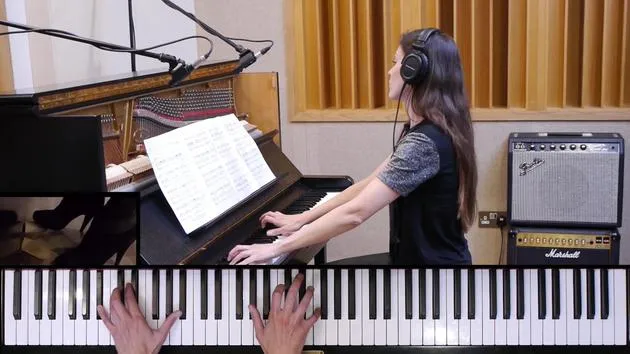
02. I See Fire, Ed Sheeran (Interpretación)
2:40
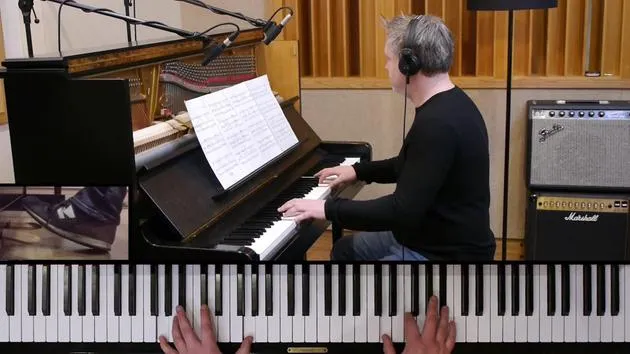
03. Your Song, Ellie Goulding (interpretación)
3:35
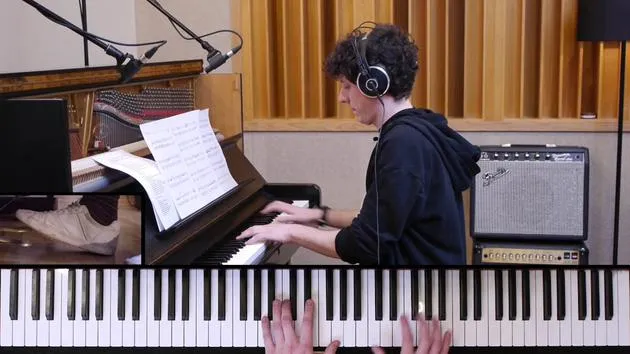
04. Funkometer, Kit Morgan (Interpretación)
2:21
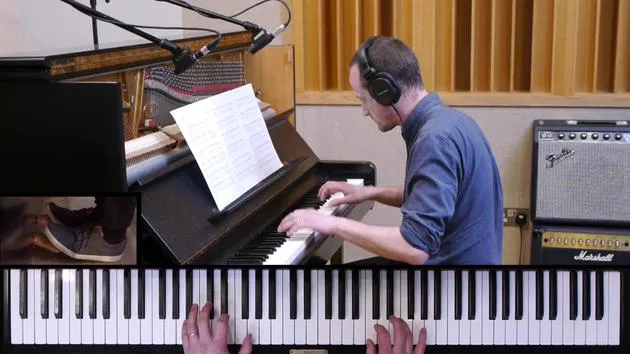
05. Crop Duster, Kit Morgan (interpretación)
2:10
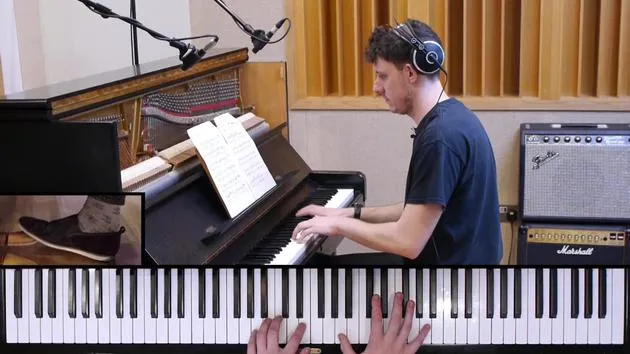
06. Circus Experience, Joe Bennett (Interpretación)
2:19
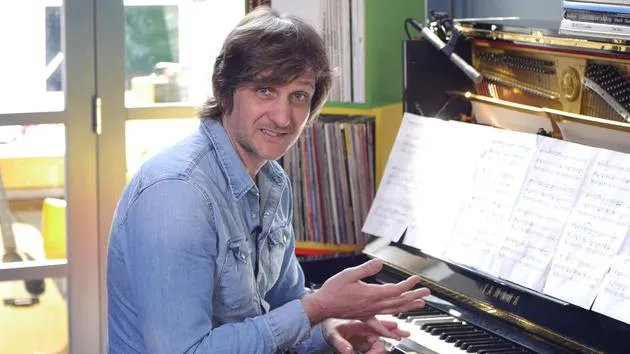
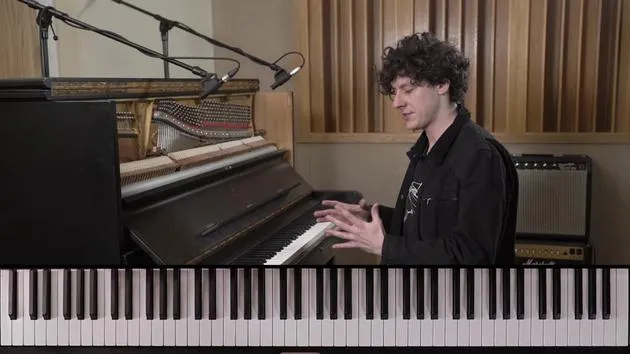
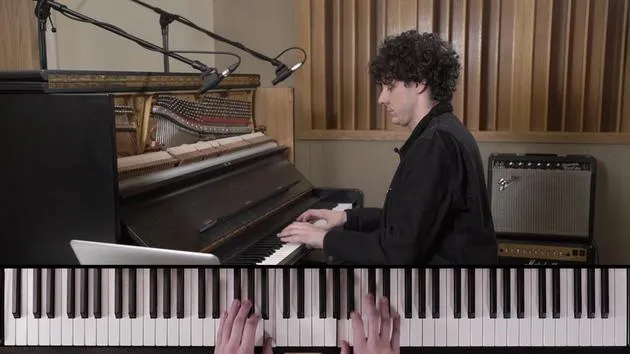
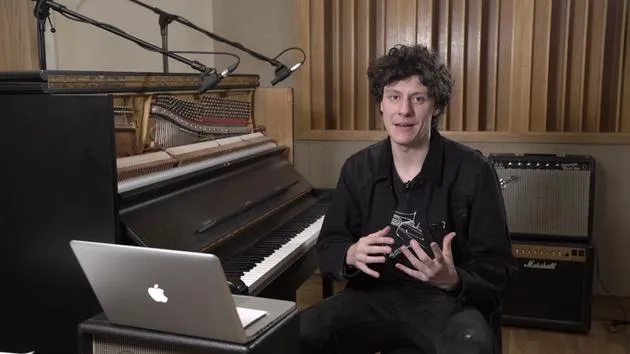
Transcripción de la lección
Funkometer Music Lesson
Introduction
Hey, how's it going? I'm James, and today we're looking at Funkometer, which is a grade four Rock School piece. Now, the tune's name says it all, Funkometer. It's funky!
Influences
We're playing funk music, drawing inspiration from artists such as:
- Sly and the Family Stone
- Bootsy Collins
- Parliament
- Funkadelic
- Herbie Hancock
Check out these guys because they are all incredible players, and the music is as funky as anything!
What Makes Funk Funky?
Funk music is a mixture of elements, including:
- Funky drums with straight eights
- A bass line that slaps and does all sorts of cool stuff
- Piano syncopation
Syncopation
Syncopation is the idea of playing notes that aren't on the beat.
"The left hand in this piece is filled with these."
Let's play the left hand from bar three, and you'll see how much of that is actually syncopated.
It's amazing! You've got some stuff on the beat and some off the beat.
Why Is This Funky?
I feel like syncopation is leading somewhere else. Being on the beat all the time can feel square. By taking off the beat, we make it really interesting and funky.
A and B Sections
The left hand in this piece kind of follows the same shape throughout the A section.
When we head to the B section, we switch to a very different feel.
B Section Characteristics
- All semi-breves
- A more laid-back vibe
"In a lot of funk tunes, you have this B section, which is a lot more chilled out."
This adds diversity and makes the piece more interesting. When you're playing B, it's all about:
- Laying back
- Keeping the flow smooth
Then, of course, when you return to the A section or the C section (which is the solo), you're really thinking about making it funky and having a good time!
Melody and Blues Scale
The melody uses what we call the blues scale, derived from the minor pentatonic:
- C
- E flat
- F
- G
- B flat
- C
Adding the blue note is what gives it the blues quality. Most of the melody in this tune is based on this blues scale, especially in the A section.
"The blues is an amazing thing that has influenced music from jazz to funk to hip hop."
Knowing this scale is one of the easiest ways to become a good improviser.
C Section: The Piano Solo
In the C section, we have the piano solo. If you're doing the Rock School exams, you'll play the solo that's written on the page. However, if you're just playing for fun or with your band, I recommend trying your own solo.
Improvisation Tips
- Use the chords given and add a solo on top.
- This is the perfect place to try out the blues scale.
For example, you can develop your solos using:
- Arpeggios
- Scales
- Other sounds
You can even alter the sound by a semitone up or down for variety.
"This sounds really horrible."
An example of this occurs in the solo in bar 26, where we have a D flat scale over C. It sounds a bit out, but when you return to the main line, it sounds fantastic!
Practice
When practicing with the blues scale, experiment with taking notes out and bringing them back in to discover what sounds good to you.
Tips for the Written Solo
If you're playing the written-out solo, remember:
- It's quite tricky.
- Slow it down, get it right, then speed it up.
When doing the solo for Rock School exams, note that the left hand remains similar rhythmically and harmonically throughout. The one difference occurs in bar 30 where the music changes.
Important Transition
- Bar 29 to Bar 30 is a subtle change but makes a significant difference in finger positioning.
Instead of using one shape, you'll need to use another. This can be a little tricky, but with practice, you'll get it right, and it will sound great!
Coda
One thing to watch out for in this piece is the coda. The DS that precedes it is very short. The DS section happens at the end of the solo and takes you right back from the third page to page one, but it's only four bars until you reach the coda.
Key Reminder
Make sure you don't mistakenly carry on reading on page three or even page one, as it's really short compared to usual.
When transitioning, your hands do basically the same shape using the same fingers. However, descending chromatically can be tricky.
"Keep it slow, keep the articulation nice and crisp, and it will sound super funky in no time."
29 lecciones
2h 21m de lecciones en vídeo estructuradas
Funciones de vídeo avanzadas
Ralentiza, repite un pasaje, sigue la partitura
Móvil, tablet y ordenador
Practica donde quieras
Garantía de satisfacción 100%
30 días de garantía de devolución







