



Vibrato
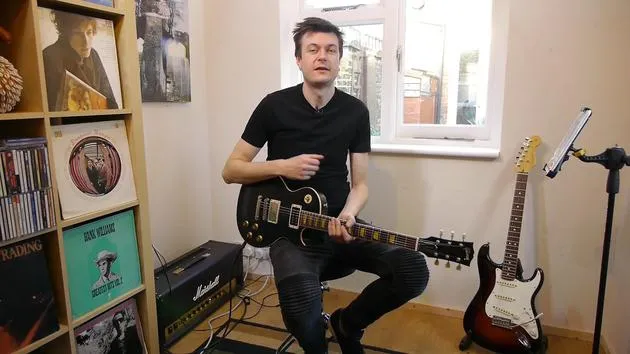
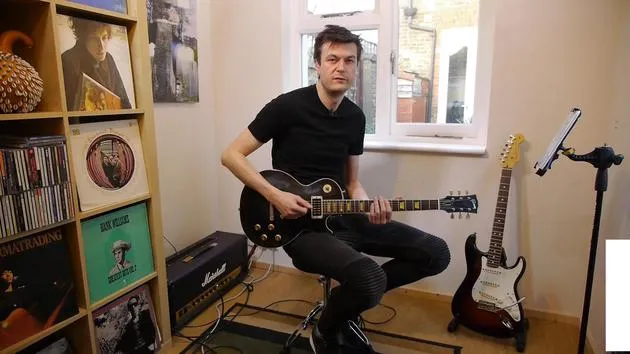
El guitarrista James Barratt desglosa el vibrato, una de las técnicas más expresivas de la guitarra, y muestra dónde aplicarlo en las notas sostenidas.

Qué incluye el curso
44 lecciones (3h 49m) · 1 gratis
01. Introducción a los enfoques de la improvisación
1:00
02. Adornar una melodía
5:36
03. Reto: Envía tu melodía
0:26
04. Acordes de séptima
6:38
05. Componer tu solo
8:53
06. Más extensiones y acordes sus
4:19
07. Acompañar en dos estilos musicales diferentes
Lección gratis8:36
08. Combinar el comping rítmico y melódico
4:24
09. Improvisación rítmica y comping
9:55
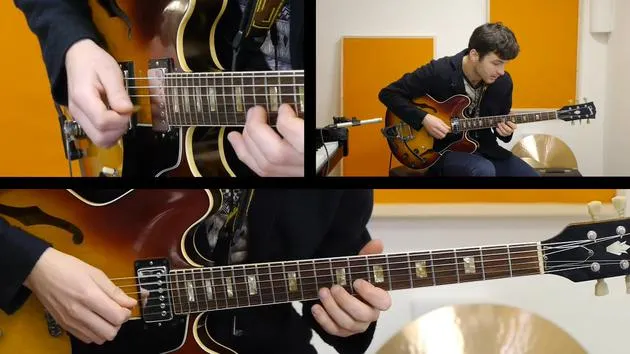
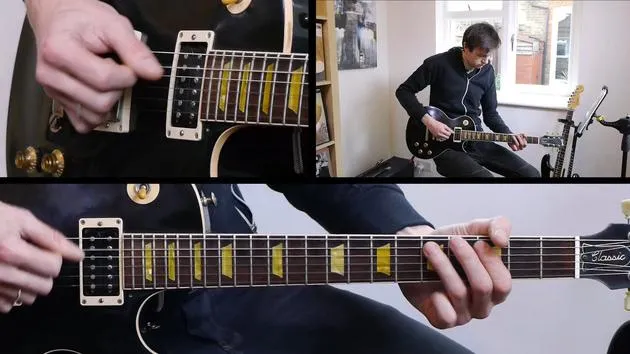
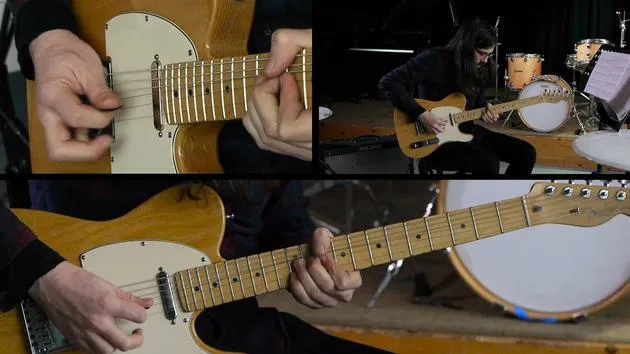
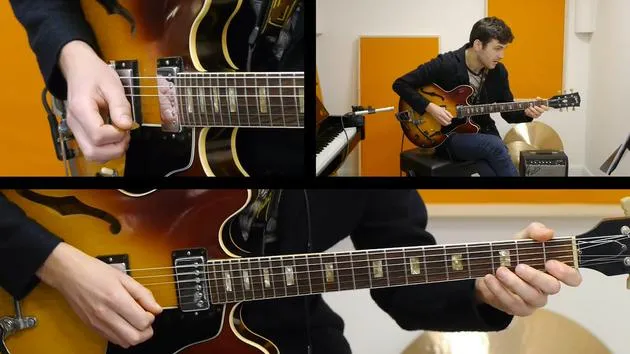
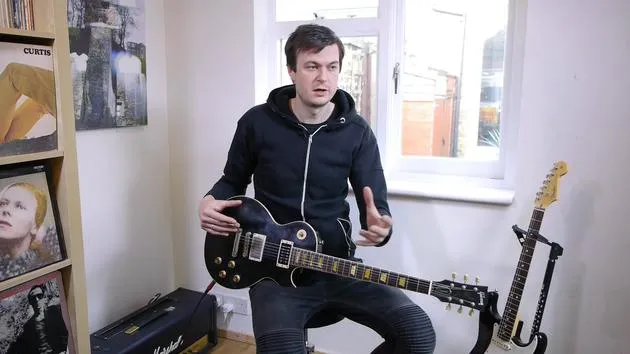
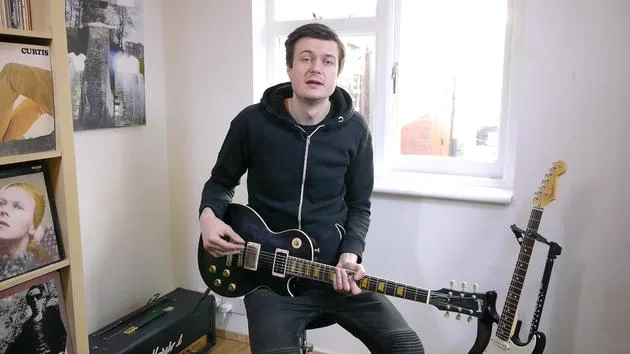
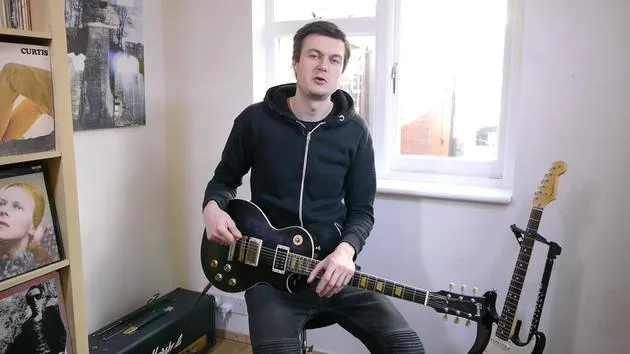
Transcripción de la lección
Understanding Vibrato: An Expressive Guitar Technique
Okay, so I'd like to talk to you now about one of perhaps the most expressive techniques that guitar has to offer, and that's vibrato.
Where to Apply Vibrato
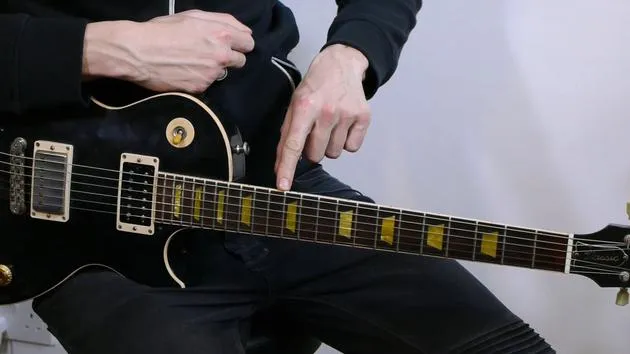
Firstly, I'd just like to discuss where you might apply vibrato within a melody.
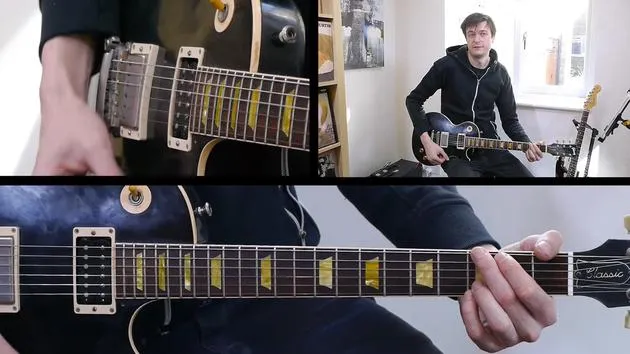
- Sustained Notes: Typically, you would apply vibrato over a sustained note in a melody.
- If you've got a really busy melody with lots of notes passing by quickly, applying vibrato to every single note isn't necessary.
- Vibrato shines in moments where a note rings out and breathes for a little bit, allowing you to finesse it with some shine at the end.
Example
A really simple phrase might be something like this:
Example phrase
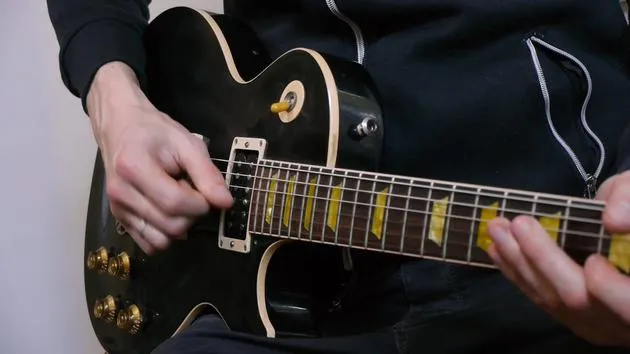
- I'm not applying vibrato to every one of those notes. That would sound terrible, and I don't think I can even do it quickly enough.
- It sounds out of tune.
We've picked our moment, which is often at the end of a phrase.
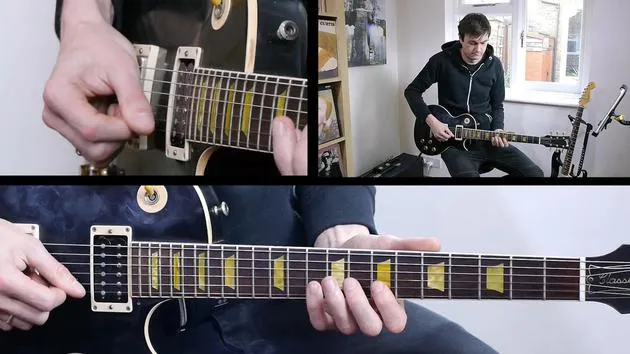
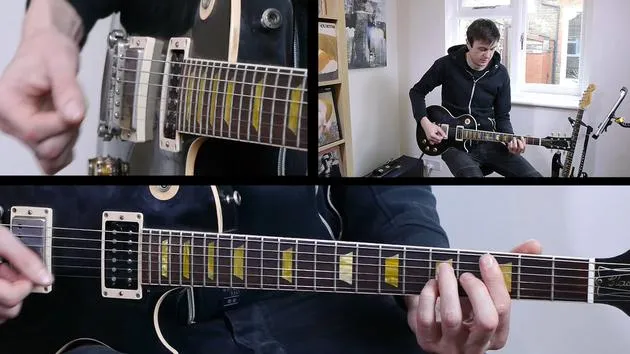
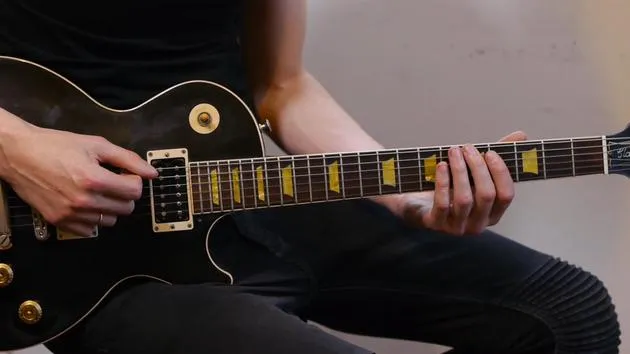
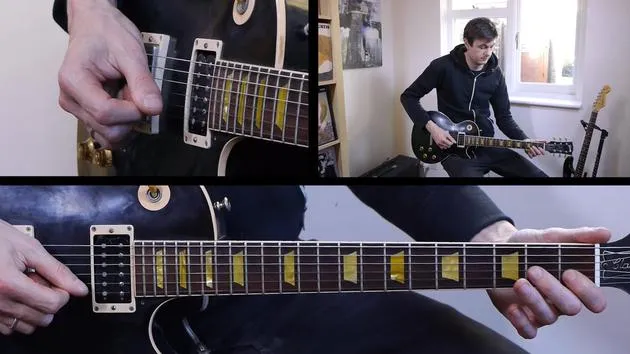
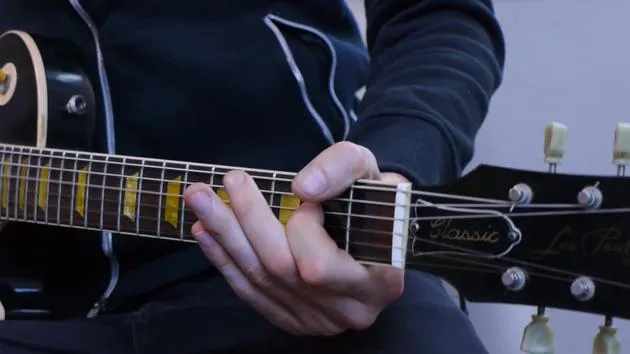
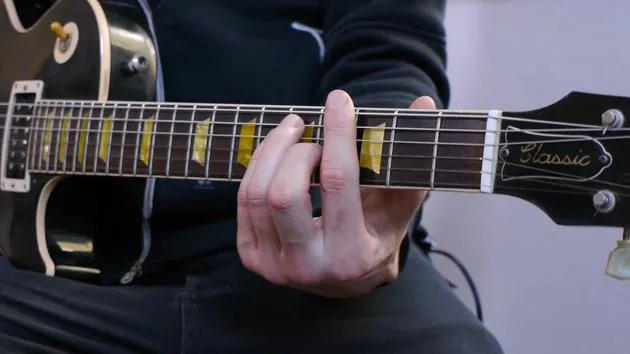
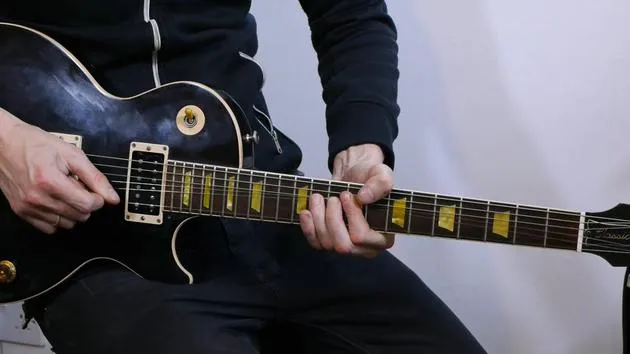
- Actually, I'm just applying vibrato there with my first finger only.
Key Considerations for Vibrato
When you're working on adding some vibrato, consider the following:
- Style of the Piece
- Tempo of the Piece
- Feel of the Piece
For example, in a chilled-out slow ballad, it wouldn't make sense to apply a massive, aggressive vibrato. Instead, you'd want something more subtle and refined.
Variations in Vibrato
Two aspects you can easily vary are:
- Speed: How fast or slow you vibrate the string.
- Width: How far you're displacing the string.
Examples
- A great example of wide vibrato is Zakk Wylde, known for his huge vibrato.
- For a more subtle approach in a chilled-out song or blues piece, you might opt for a gentler vibrato.
Developing Your Own Vibrato Style
Vibrato is very personal and unique to each guitarist.
- Spend time exploring your own personality in vibrato, focusing on both placement and technique.
Techniques to Practice
- Circular Vibrato: Some players use this for subtle effects.
- Classical Approach: Go with the grain of the string by moving your finger side to side rather than up and down to create a subtle vibrato.
Common Misconceptions
A common misconception is that vibrato goes both ways.
- For demonstration:
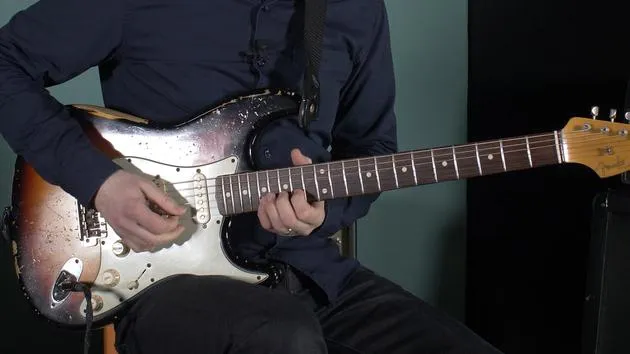
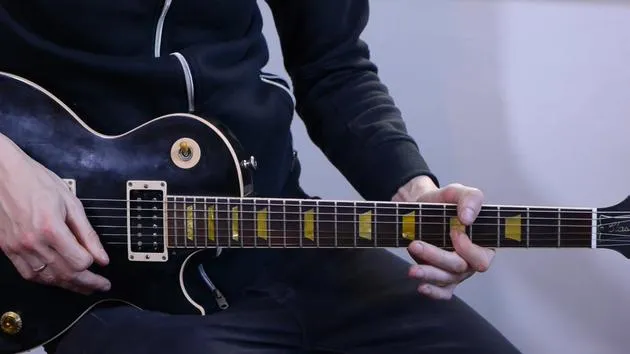
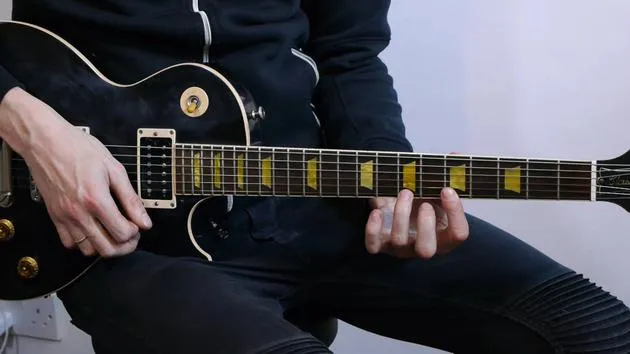
- When I play this note now, my vibrato goes towards the floor and then returns to center.
- It's not going to the floor, to the ceiling, and then to the center.
Here's how it should be done: Vibrato should either just go down or just go up.
Demonstration
- You can see it just doesn't work when attempted both ways.
- You can tell when you do it that it doesn't sound quite right, but I get why people think that's what you need to do.
Experimenting with Vibrato
Choose your direction wisely.
- If I'm doing vibrato with my first finger, I usually go towards the floor, as it sounds more controlled for me.
- Experiment with different speeds and widths of vibrato by starting slowly, then gradually increasing the speed and width.
Timing Your Vibrato
Another important aspect is how soon you introduce vibrato to the note.
- Going back to that earlier phrase, listen to the difference:
- The first time, I'll start applying vibrato as soon as I play that last note.
- The second time, I'll let the note breathe for not even half a second before introducing vibrato.
Which Sounds Better?
First example vs. Second example
- It's often nicer to let the note breathe a bit before decorating it with vibrato rather than applying it too quickly.
Finger Technique for Vibrato
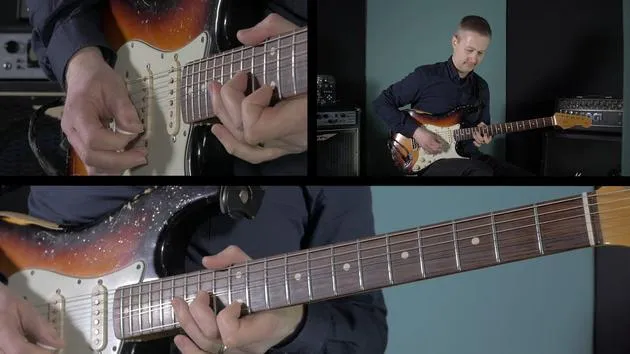
You can use any finger for vibrato; it doesn't have to be your first finger.
- For more control and width:
- Treat it much like a bend and support the leading finger.
- For instance, if using your third finger, add another finger behind it on the string for added control.
Practical Tips
- Rest your first finger across the strings if you have a lot of overdrive to keep unwanted noise quiet.
- This will stabilize the vibrato and enhance control.
Conclusion
I hope you find this information useful! Vibrato is definitely worth incorporating into your playing as soon as possible.
- It doesn't matter how basic you feel your abilities are; it's a really expressive tool that can elevate your playing.
So, do check it out!
44 lecciones
3h 49m de lecciones en vídeo estructuradas
Funciones de vídeo avanzadas
Ralentiza, repite un pasaje, sigue la partitura
Móvil, tablet y ordenador
Practica donde quieras
Garantía de satisfacción 100%
30 días de garantía de devolución







