



Armónicos pellizcados

Qué incluye el curso
44 lecciones (3h 49m) · 1 gratis
01. Introducción a los enfoques de la improvisación
1:00
02. Adornar una melodía
5:36
03. Reto: Envía tu melodía
0:26
04. Acordes de séptima
6:38
05. Componer tu solo
8:53
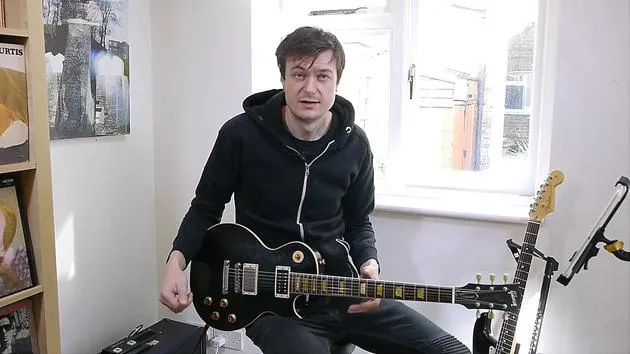
06. Más extensiones y acordes sus
4:19
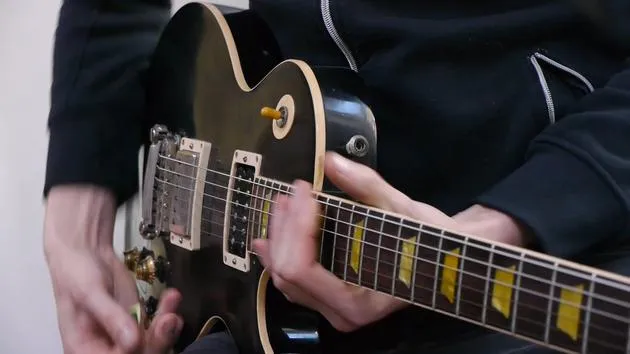
07. Acompañar en dos estilos musicales diferentes
Lección gratis8:36
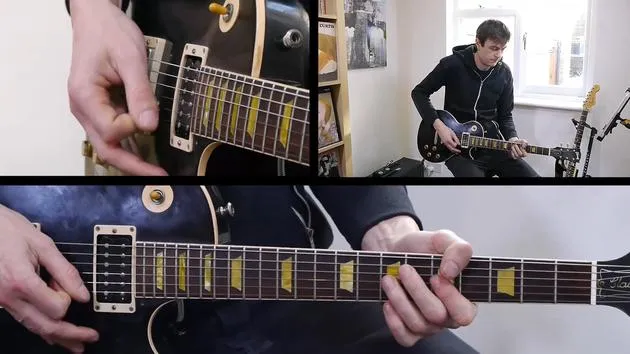
08. Combinar el comping rítmico y melódico
4:24
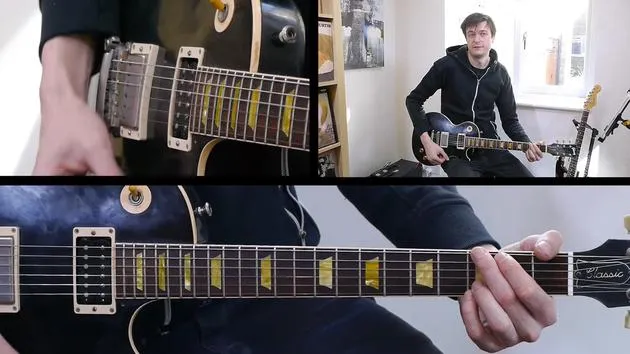
09. Improvisación rítmica y comping
9:55

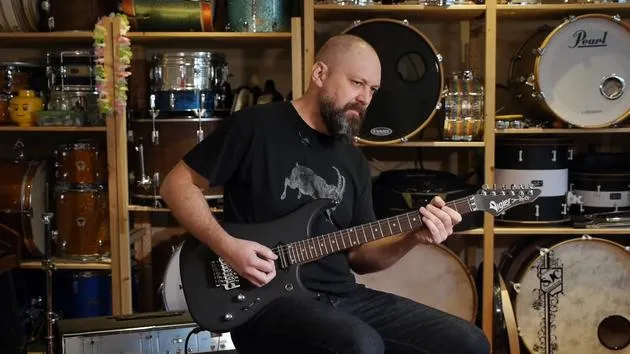
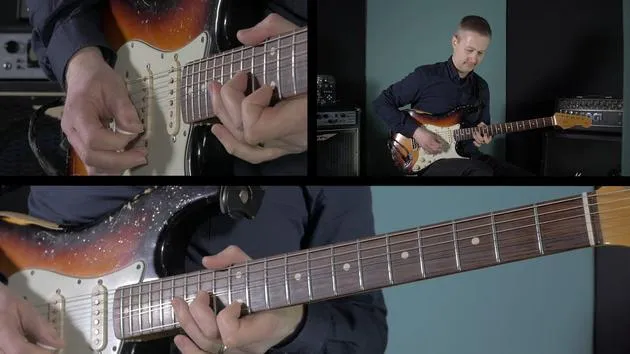
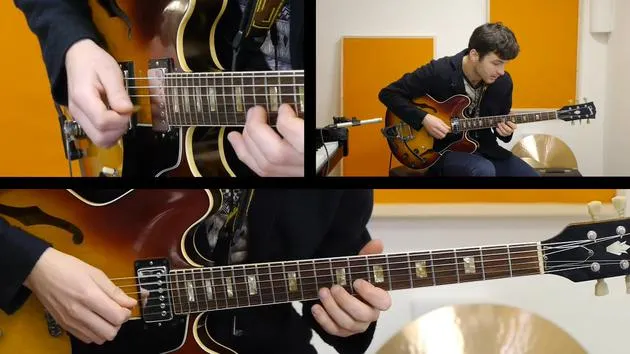
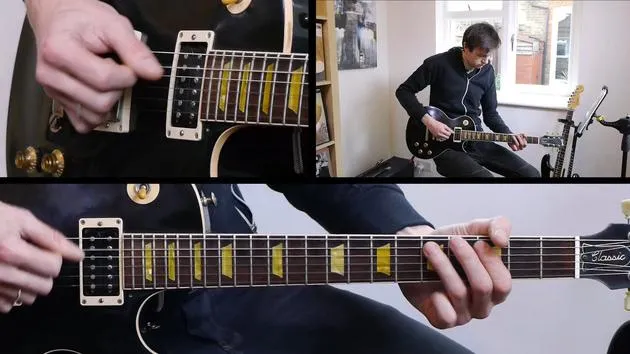

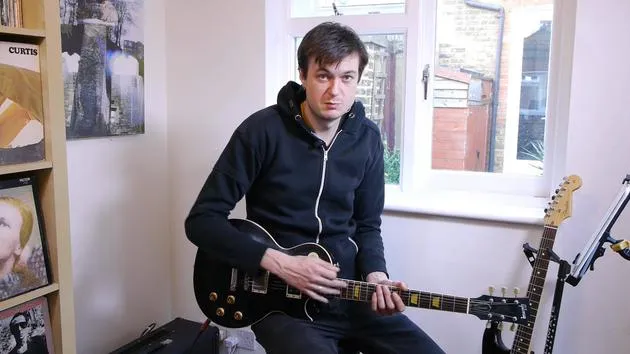


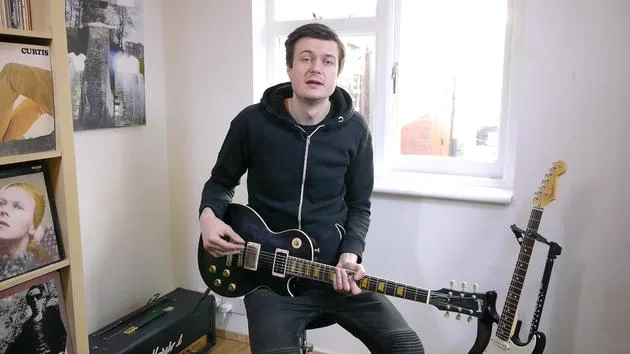
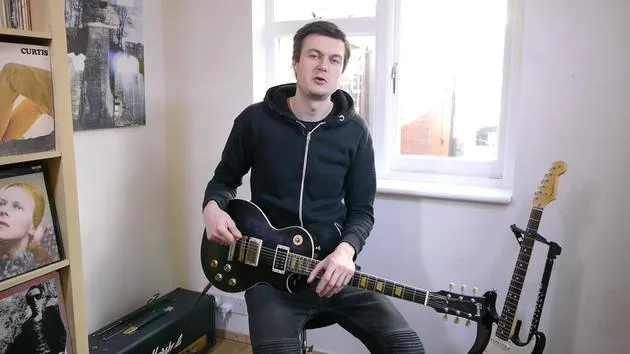
Transcripción de la lección
Pinched Harmonics
The next one is the pinched harmonic. You'll see this crop up in any kind of heavy rock context.
What is a Pinched Harmonic?
This is that sound. If you've ever listened to a recording and heard a guitar make a real squealing sound, you might have thought, "Oh, how's he done that?"
We're going to talk about that now. It's a pinched harmonic.
- Symbolization: This is symbolized by the triangle shape around the note head or the tab's note.
- Diamond = Natural Harmonic
- Triangle = Pinched Harmonic
Technique Differences
- The natural harmonic was predominantly a left-hand technique.
- The pinched harmonic is the opposite, it comes from the right hand.
How to Execute a Pinched Harmonic
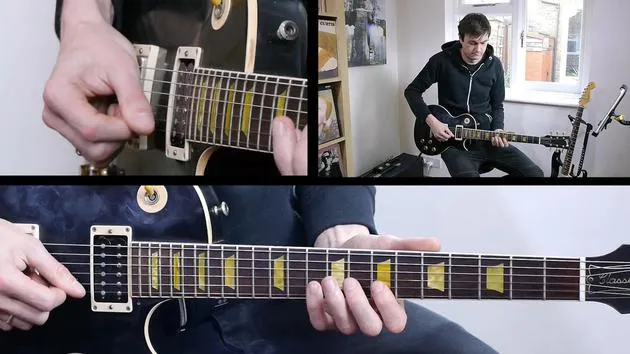
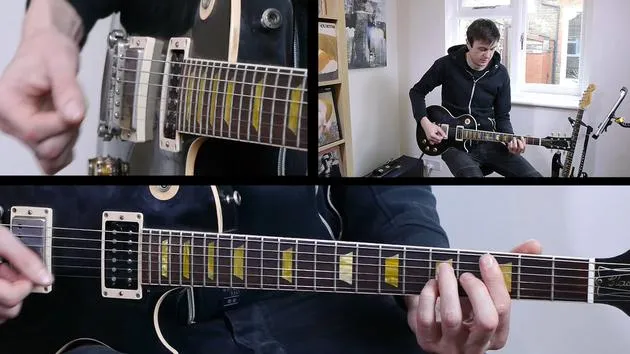
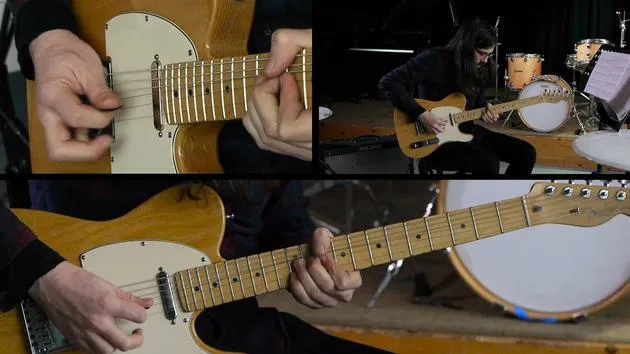
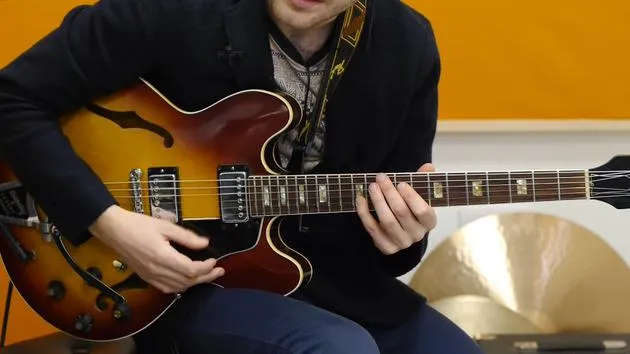
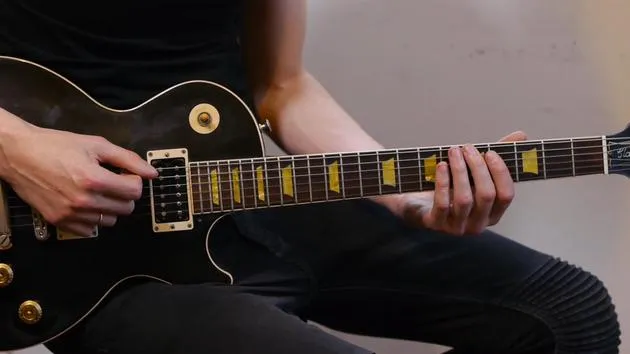
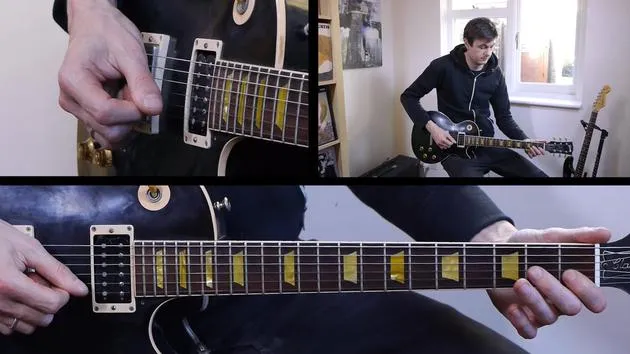
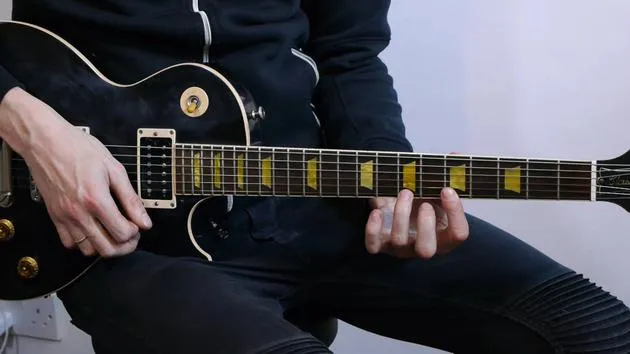
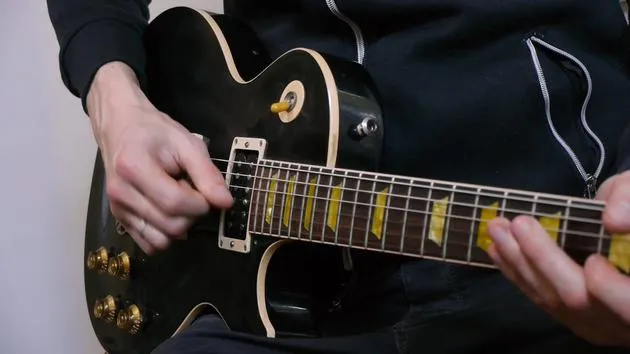
- Grip the Pick: Hold the pick nice and close to the tip. Typically, I might show this much pick to the strings for normal picking.
- Position Your Thumb: When you strike the string, make sure the side of your thumb catches the string as well. That's what creates the harmonic.
Gain Settings
You're going to need quite a lot of gain for this sound.
- Generally, practice with less gain to keep the technique clean.
- To actually catch a pinched harmonic, especially when you're new to it, you'll need a lot of gain.
Once you get a feel for how to catch them, you can start dialing it down from there.
Finding the Sweet Spot
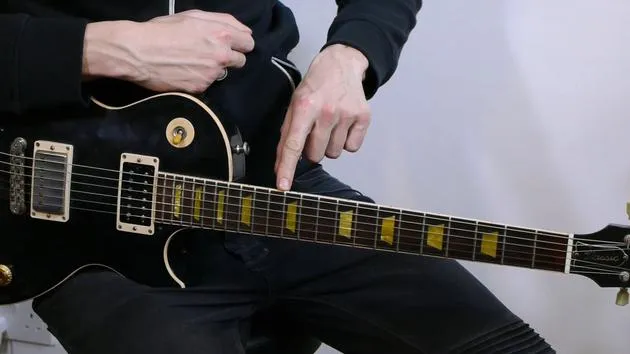
If you're struggling to get a real squeal, experiment with where you physically hit the string with your right hand. There will be a certain sweet spot on your guitar where the pinched harmonics really jump out.
Practice Exercise
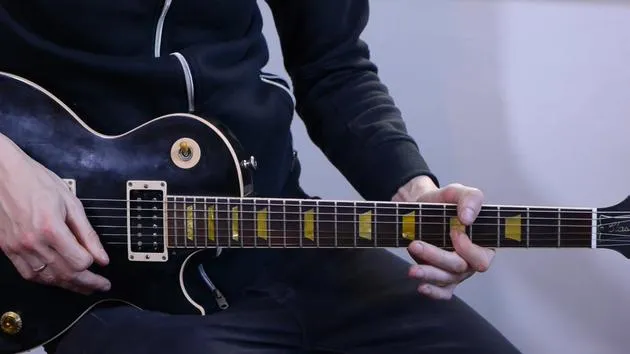
To demonstrate this technique, let's take an open G string.
- Play Downstrokes: I'm going to make sure I keep catching the string with the side of my thumb.
- Listen for Changes: As I move across this region, you'll hear the tone of the harmonic changing.
- Example: Here's me just picking the normal G. That's a normal picked note.
- Pinched Harmonic: If I really dig the side of my thumb into the string, you can hear the harmonic changing as you go.
Focusing on Proper Technique
I recommend that if you're new to pinched harmonics, focus on them without the left hand, just try to get that changing tone.
- If you don't have that side of the thumb technique, the sound will just get slightly warmer, and you won't hear the harmonic changing.
Moving to Fretted Notes
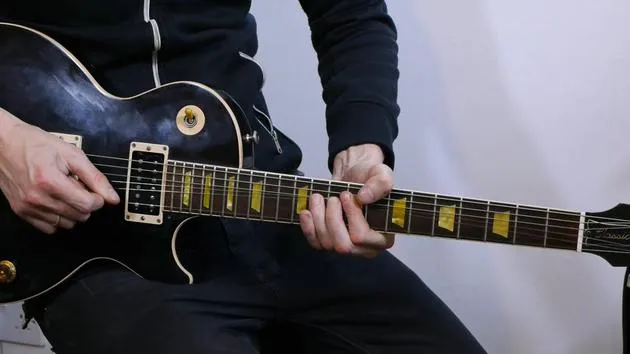
Once you've mastered that, we can start trying to get them on fretted notes.
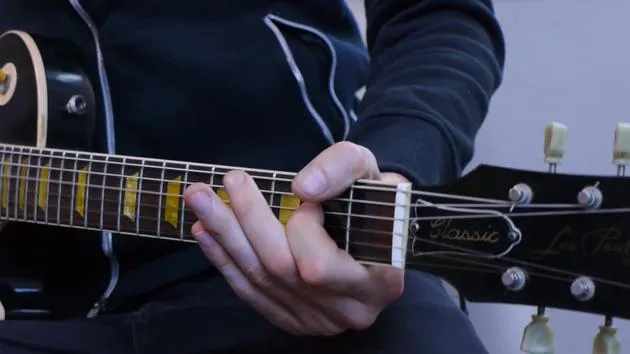
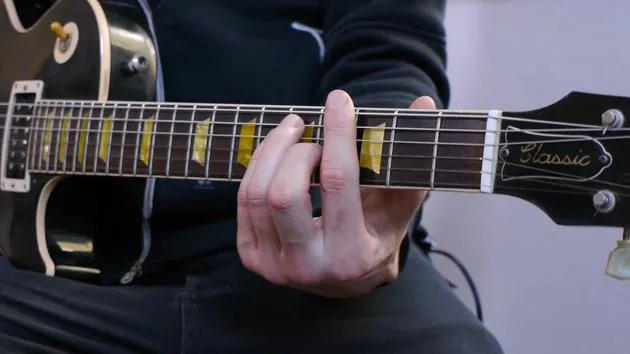
- Example: Let's take the second fret on the G string and try to get a real squeal out of this.
One technique I like is to mute the strings below it and really attack the string by raking into the harmonic. You'll hear the harmonic change as you move around.
- Alternative: You don't have to mute the lower strings; you can just attack the G string directly.
Listening Suggestions
For practice, check out songs like "Sounds Like Noise" (the grade six track) which has many pinched harmonics, or any track by bands like Extreme or Van Halen. You'll hear those squeals all over the place.
Caution
In my opinion, pinched harmonics can easily be overdone. Once you've got it, it's great fun, but be careful of where you use it; squealing every two seconds can get a bit much.
- A great player to check out is Zach Wild, who is a phenomenal guitarist but sometimes overdoes the pinched harmonics.
- Example Album: Check out "Live at Budokan" with Ozzy; there's a pinched harmonic going on every two seconds, and it's pretty phenomenal.
Final Thoughts
If you're not familiar with the sound, go check that out. Spend some time with the technique, it's tricky and takes time to perfect.
If you're struggling, chat with your teacher about how you're holding the pick. The side of the thumb technique just takes a little practice to get used to, but it will come!
You might accidentally get a squeal one time and think, "Ah, right! What did I do?" Then you can hone in on it and start getting it consistently.
Have fun practicing that, and let's take a look at the next technique!
44 lecciones
3h 49m de lecciones en vídeo estructuradas
Funciones de vídeo avanzadas
Ralentiza, repite un pasaje, sigue la partitura
Móvil, tablet y ordenador
Practica donde quieras
Garantía de satisfacción 100%
30 días de garantía de devolución







