



Acompañar en dos estilos musicales diferentes
Aprende a variar ritmos y voicings de acordes para acompañar en diferentes estilos musicales.

Qué incluye el curso
44 lecciones (3h 49m) · 1 gratis
01. Introducción a los enfoques de la improvisación
1:00
02. Adornar una melodía
5:36
03. Reto: Envía tu melodía
0:26
04. Acordes de séptima
6:38
05. Componer tu solo
8:53
06. Más extensiones y acordes sus
4:19
07. Acompañar en dos estilos musicales diferentes
Estás aquí8:36
08. Combinar el comping rítmico y melódico
4:24
09. Improvisación rítmica y comping
9:55
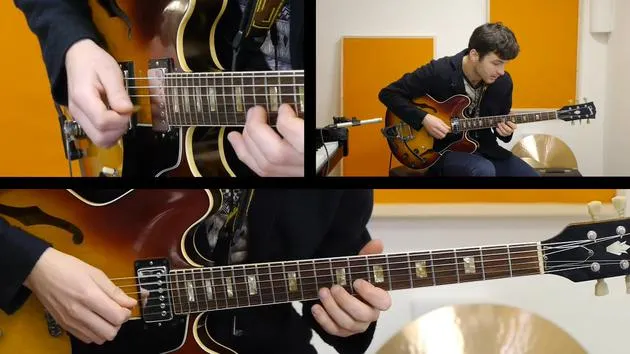
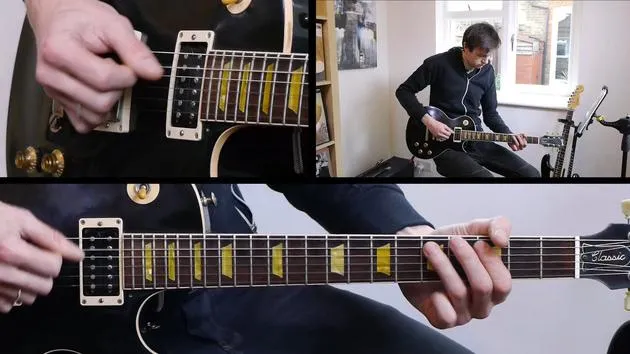
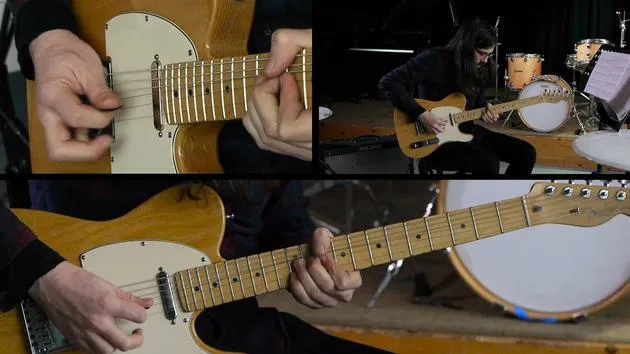
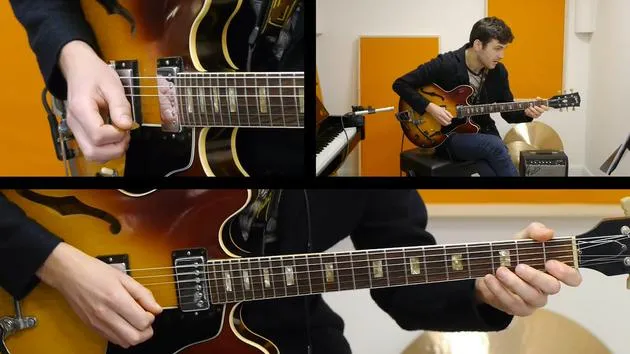
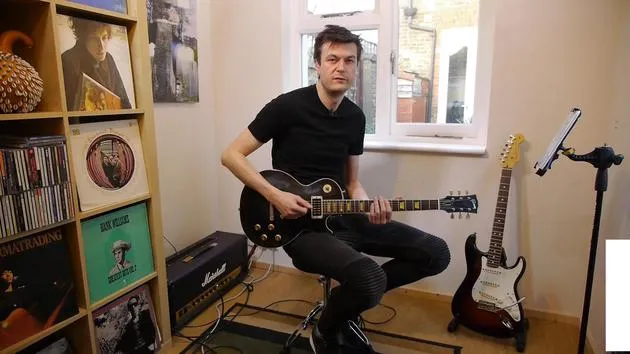
Transcripción de la lección
Understanding Comping Styles
Alright then, guys.
As you get more competent at this whole comping concept, the style of the music you're playing will dictate the types of chords and the routes you choose.
Example: Funk
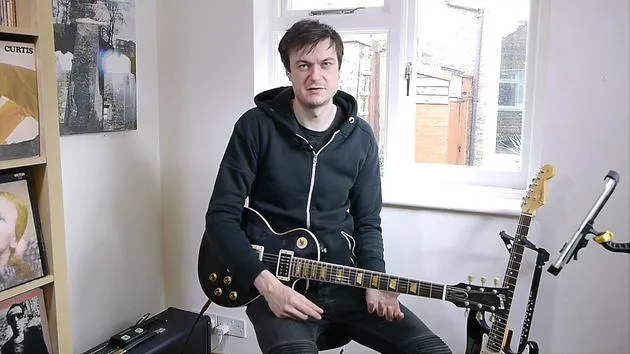
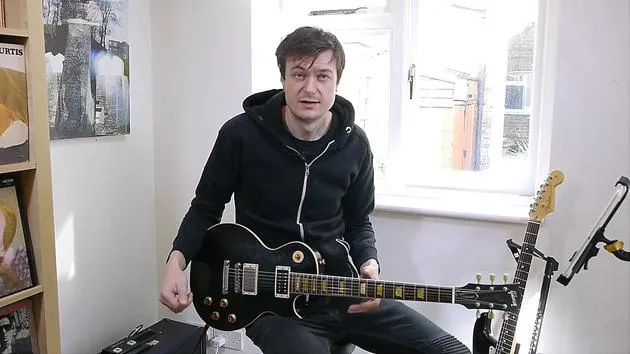
Let's take funk as our first example. If you're playing a funk piece, it probably isn't appropriate to base your rhythm part on open chords.
Chord Progression
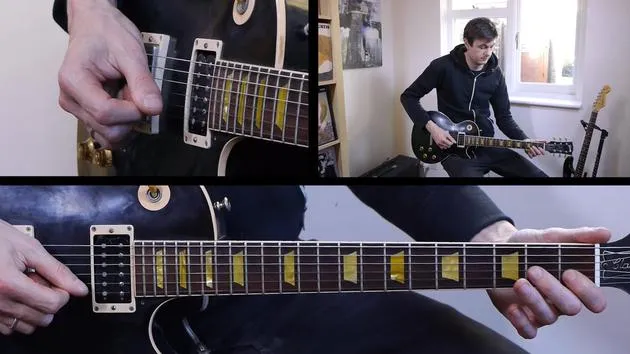
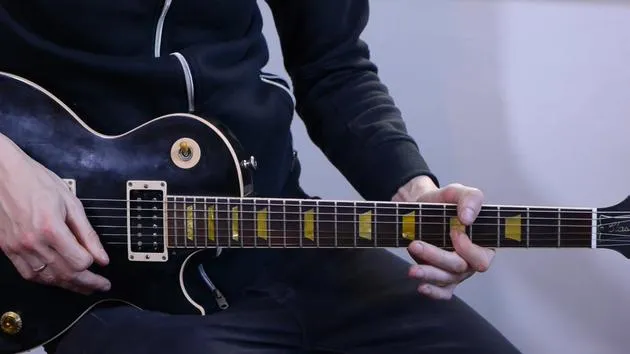
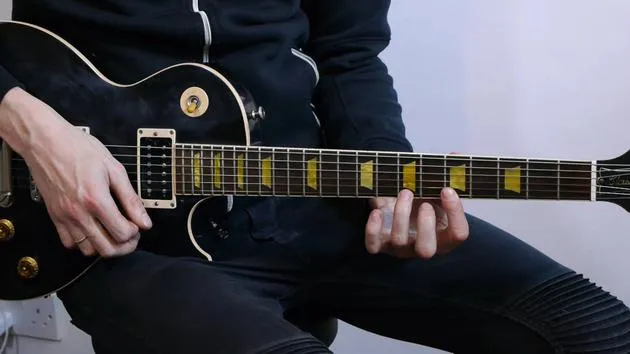
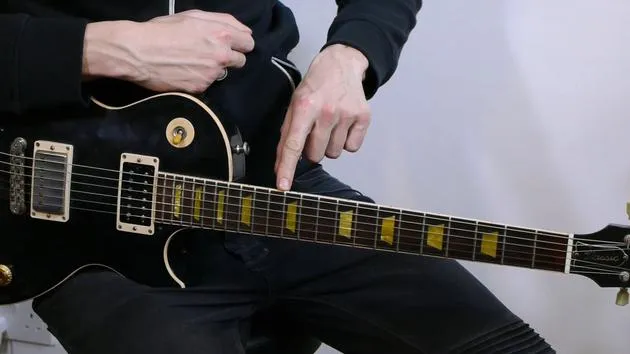
For instance, with a simple chord progression, A minor to D minor, it won't sound particularly funky in open position down here. Funk comping usually lives on the thinnest three strings: the G, B, and E strings. You play these little mini chunks of chords, and it sounds great.
Top Three Strings
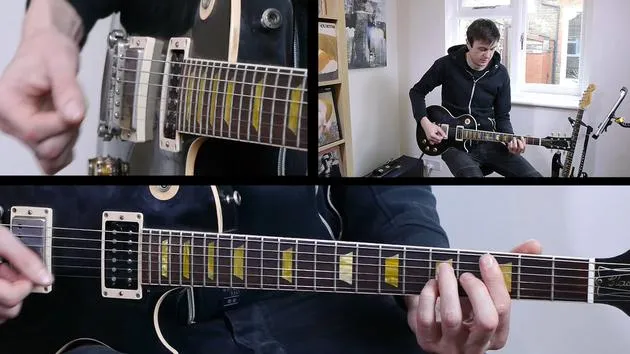
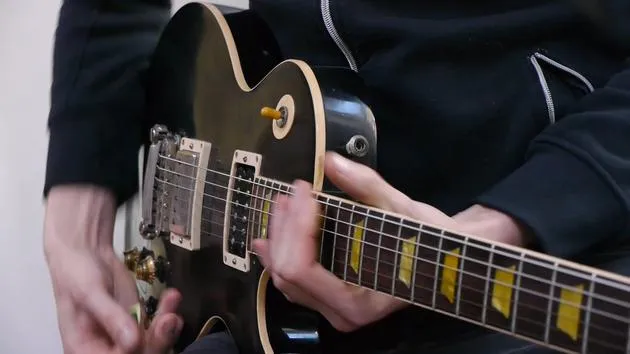
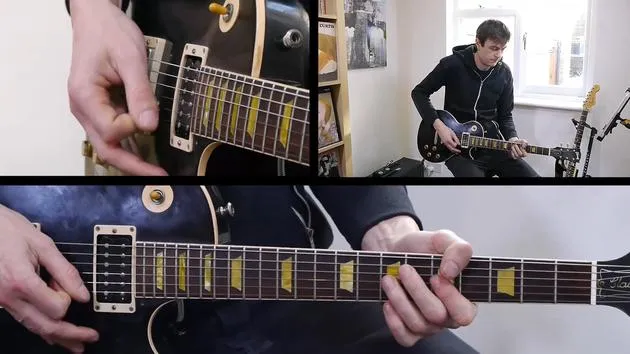
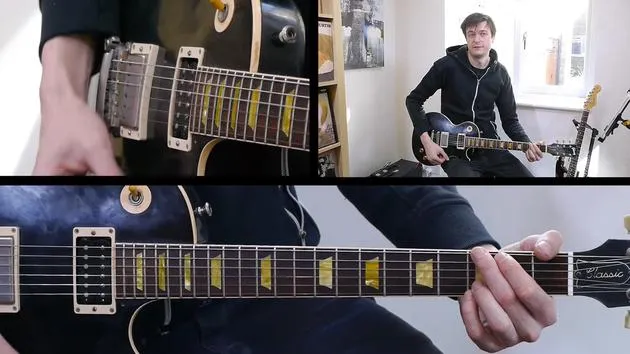
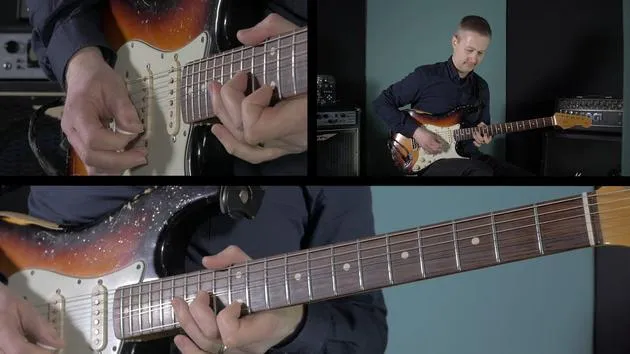
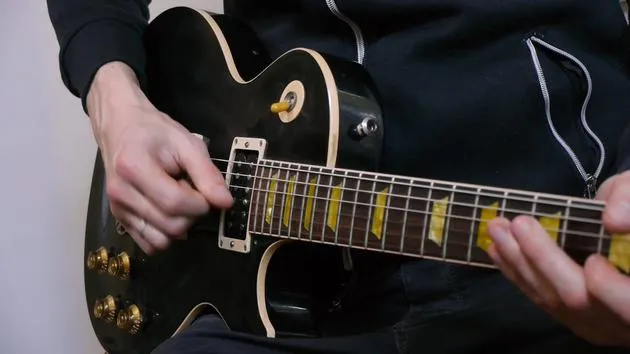
So why don't we try that here? We'll use the same strum pattern but with chord voicings on the top three strings.
-
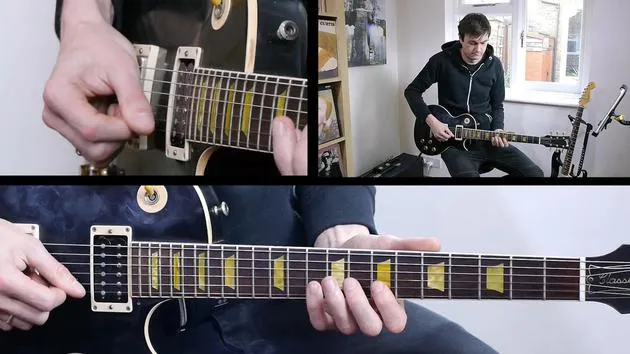
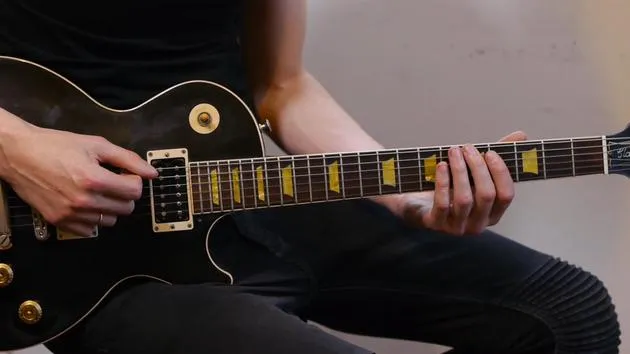
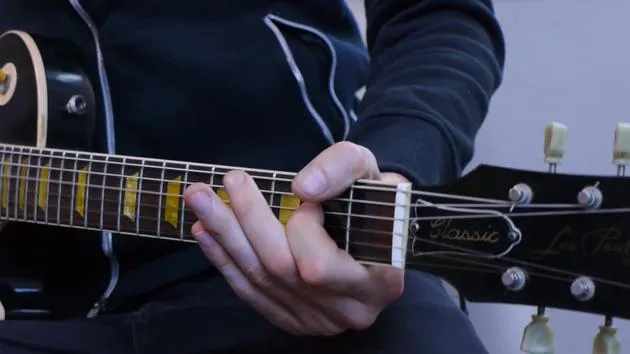
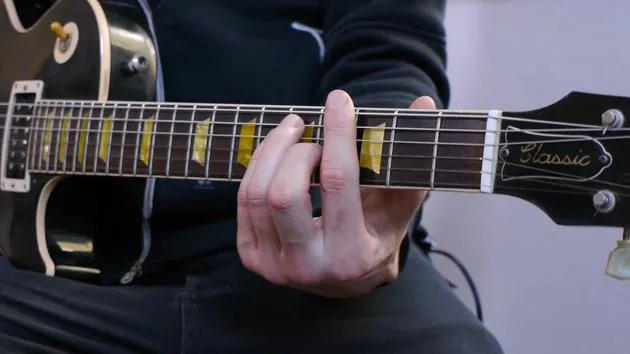
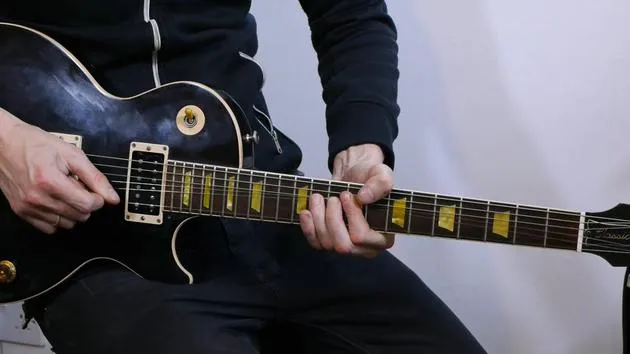
A Minor Chord Voicing: Bowing across the fifth fret on the G, B, and E strings. This is taken from the common barre chord shape but only using the top half.
-
D Minor Chord Voicing: For my D minor, I'll play a D shape here on the fifth fret (a D minor 7, which I'm sure you're all familiar with as well).
Let's try that instead.
- Two
- Three
- Four.
You can hear instantly how much more stylistic that sounded playing that funk part on the top three strings as opposed to the wrong place, either down here or on lower strings, where it sounds quite muddy.
Emphasis on Clarity
We want funk parts to cut through, which they do if you play them on the top three. It's also a good way to develop your chord library.
- Funk Benefits: You have to rethink all your chord voicings from full barre chords to those small voicings on the top three strings.
- This often leaves your fingers free to embellish those chords.
Simple Embellishments
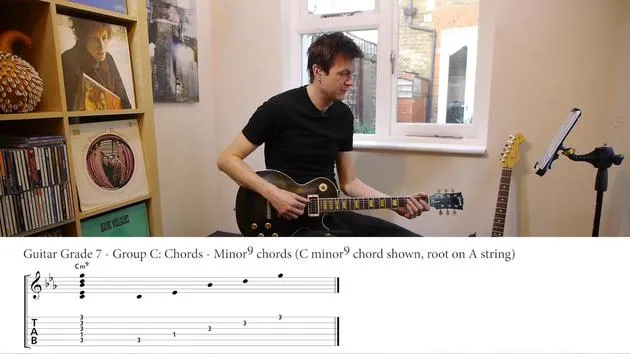
In the example I did, I used some simple embellishments. I added the same note over both chords, creating a minor 9 kind of idea on the A minor and then using that same note over the D minor 7 chord.
This creates movement within the parts without becoming a melodic line, giving that rhythm part some groove, bounce, and interest.
Avoiding Excess Movement
As a final point on funk, try to avoid moving too much between chord voicings.
- I intentionally chose this A minor and D minor 7 because they're very close to each other, there's only one note difference between those two chords.
- It's akin to the mindset of a piano player who keeps their voicings very close when changing chords.
Alternative Voicings
You could play something that sounds cool but involves a big jump between chords, like this:
- This sounds okay, but I think it sounds way cooler having that small movement.
- If I wanted to use that D minor 7 voicing up here, I would change my A minor voicing to perhaps be different.
Maintaining a Rhythm
When playing funk, we've talked about maintaining a 16th note driving right hand. Varying the pressure on the left hand is essential for achieving that percussive sound.
- Tip: Set yourself going with your right hand using a metronome and experiment on a single chord.
- Play with staccato, applying very light pressure, varying the duration of held notes, cutting them short, and maintaining a metronomic right hand.
Transitioning to Rock
Now, let's apply the same idea to a rock context.
Sound Differences
The first thing that changes would be the sound. The funk sound is clean, while the rock sound is typically driving and dirty.
Chord Voicings
In terms of voicings, instead of extending them out (like in funk), in a rock context, you often make them smaller and play power chords rhythmically.
- It might be less 16th based and more 8th note based.
- When you think funk, you think sixteenths; when you think driving rock, you think heavy eighths, all downstrokes.
Experimentation with Power Chords
For the same chord progression, instead of extending it, I might make it smaller and use power chords.
- Downstrokes are the way to go if the tempo allows.
- You can also play inversions with power chords; for example, keeping the A in the bass while playing a D power chord gives a grittier, aggressive sound.
Exploring More Styles
If you're looking for more stylistic ideas in either funk or rock, or any genre in the Rock School syllabus, check out the performance pieces.
- You'll find great ideas from tutors who conducted those pieces and analyses.
- Even pieces you might not be interested in playing can provide valuable insights for your improvisation and development as a guitarist.
Enjoy, have fun with it, and let's move on to the next topic.
44 lecciones
3h 49m de lecciones en vídeo estructuradas
Funciones de vídeo avanzadas
Ralentiza, repite un pasaje, sigue la partitura
Móvil, tablet y ordenador
Practica donde quieras
Garantía de satisfacción 100%
30 días de garantía de devolución







