



Fundamentos del piano rock 'n' roll de Paddy

Con
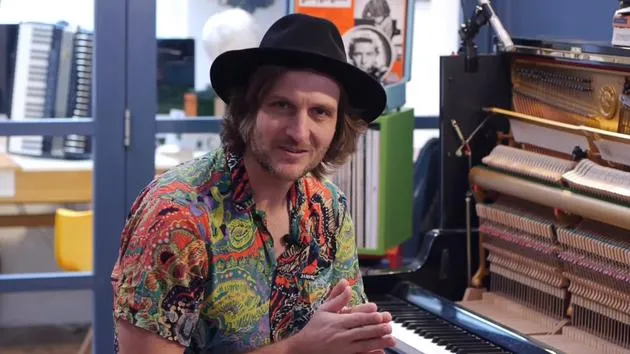
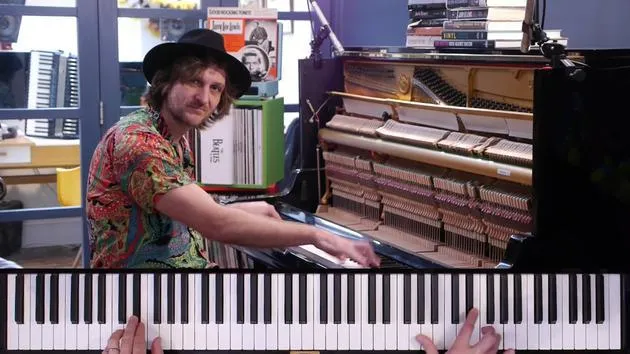
Paddy MilnerPaddy explica la forma del Rock 'n' Roll, tocando y enseñándote un 12-bar sencillo para empezar
Qué incluye el curso
25 lecciones (2h 34m) · 1 gratis
Transcripción de la lección
Introduction to Rock and Roll Music
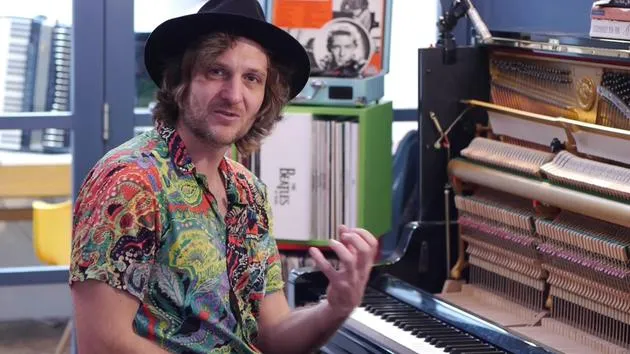
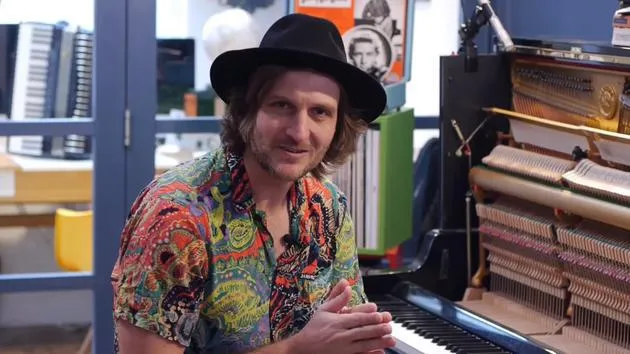
Cool! So before we jump in and look in depth at some Jerry Lee Lewis and other rock and roll ideas, let's briefly discuss what I mean by rock and roll in relation to this course.
Understanding the 12-Bar Blues Form
Essentially, we're looking at the 12-bar blues form, which, if you're not familiar with it, I'll give you a quick rundown:
- This form consists of 12 bars that repeat on a cycle.
- There are different variations, but let's use this basic structure as our foundation:
-
Four bars on chord I
- In the key of C, that would be four bars on the chord of C.
-
Two bars on chord IV
- This is the chord of F.
-
Two bars on chord I
- Back to C again.
-
One bar on chord V
-
One bar on chord IV
-
Two bars on chord I
Distinction Between Rock and Roll and Blues
Rock and Roll Piano Characteristics
So, what makes rock and roll piano different from blues and boogie woogie?
-
Simpler Palette: Rock and roll often features a simpler left hand.
- For example, you might play something straightforward like a basic rhythm pattern.
-
Right Hand Repeats: The right hand often has lots of repeated notes.
We will look at more complicated things later, but for now, think of this as the broad idea for rock and roll.
Influences
- We'll explore the style of Jerry Lee Lewis, and also get inspired by Johnny Johnson, the great piano player who accompanied Chuck Berry on all his notable tunes.
Demonstration
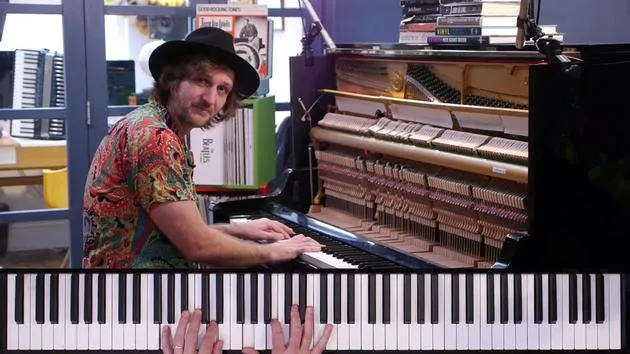
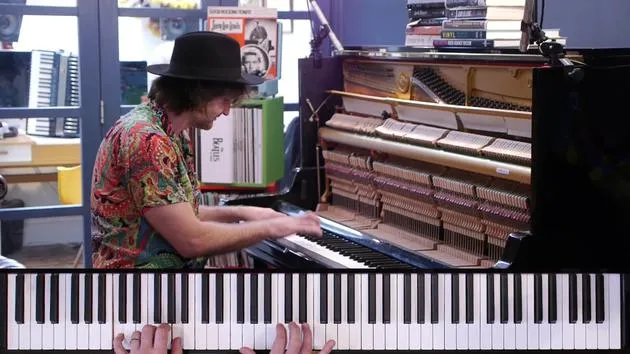
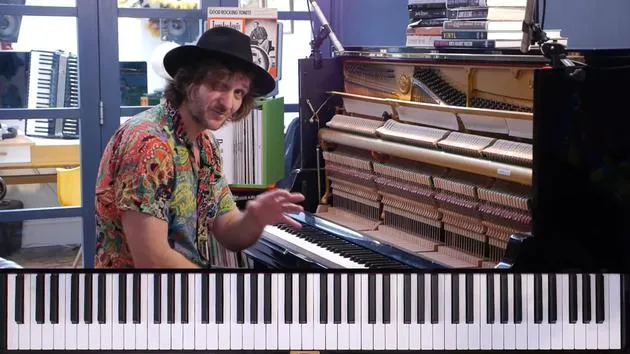
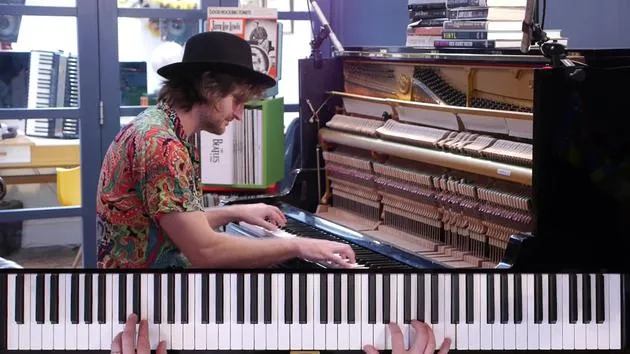
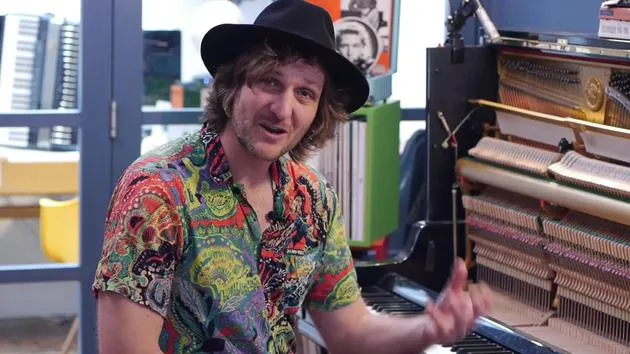
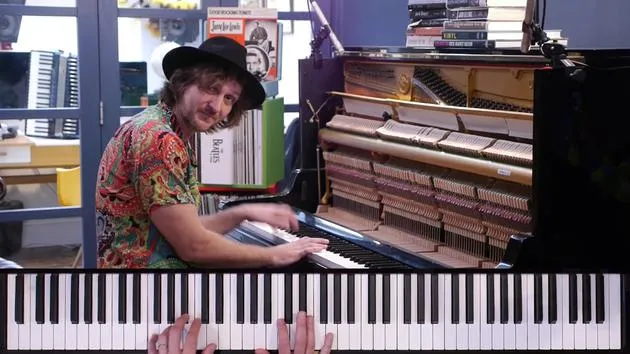
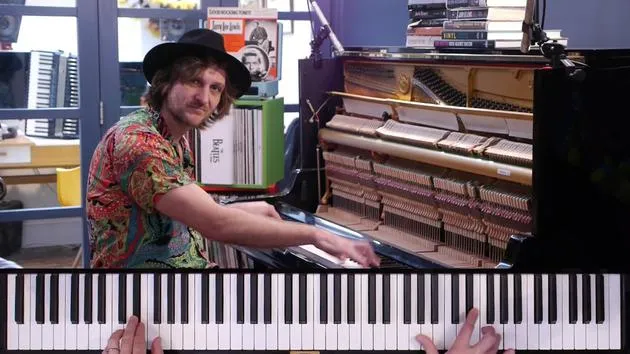
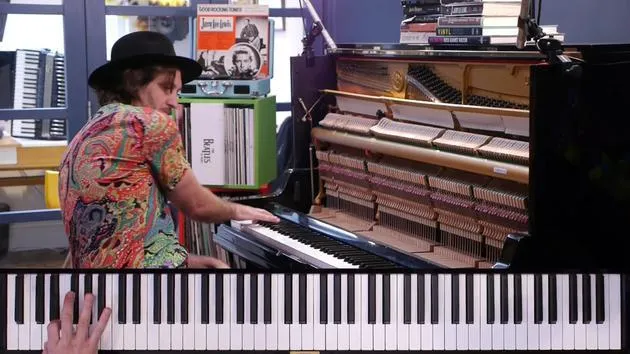
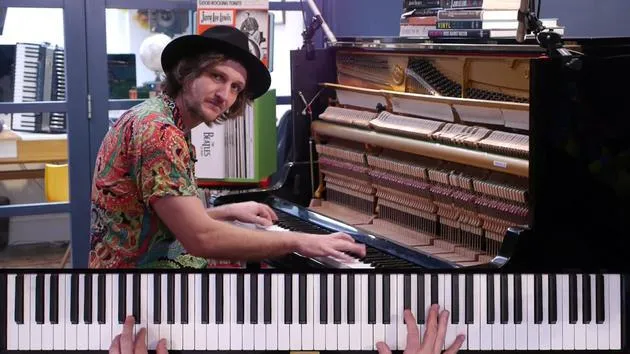
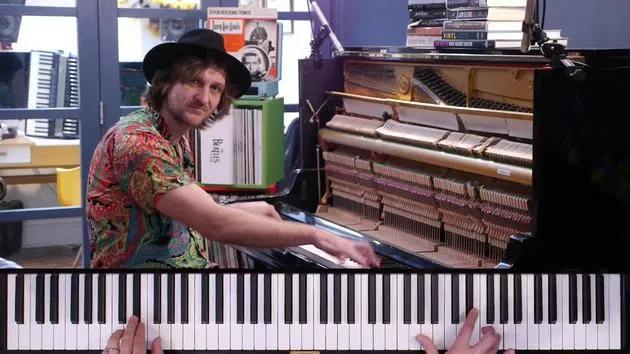
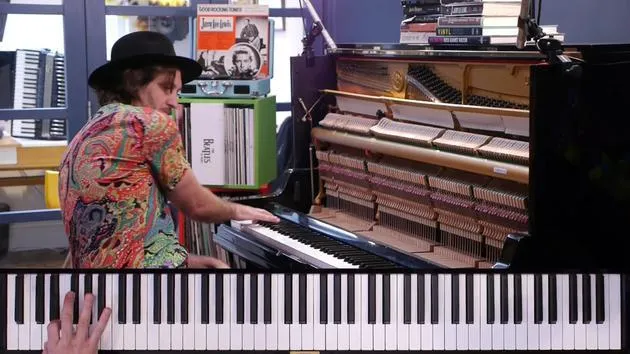
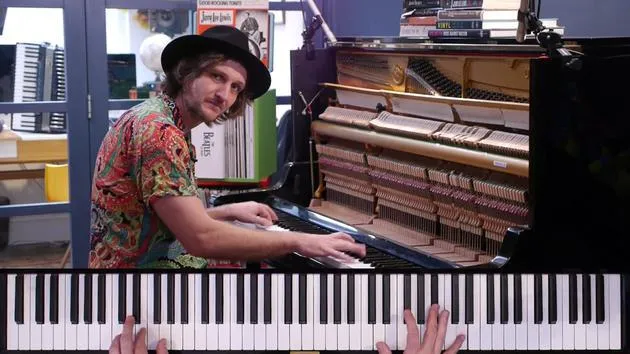
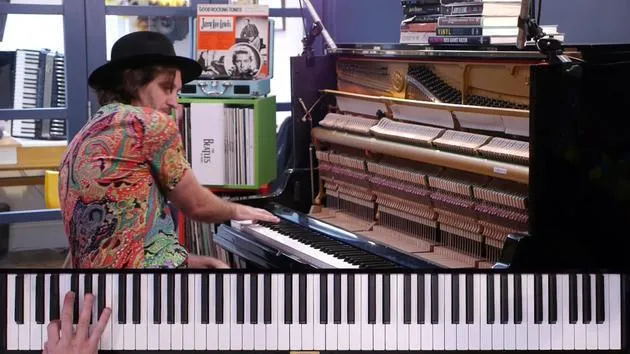
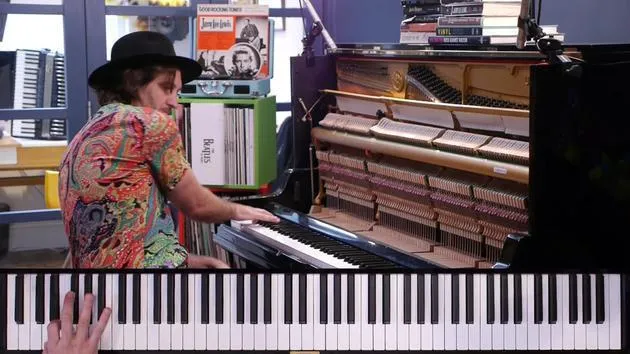
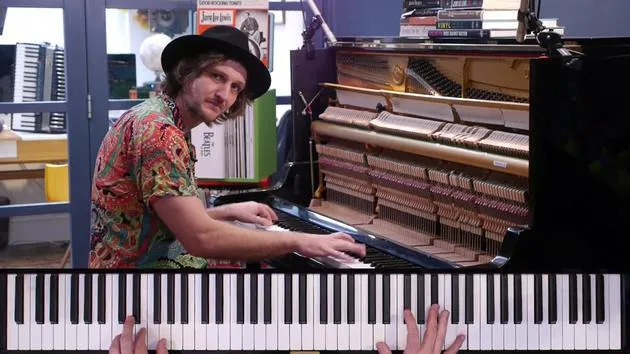
I'm going to play something now that captures the essence of rock and roll without doing anything too crazy.
- You'll hear lots of repeated notes in the right hand and a simple left hand pattern.
- If you can get your fingers around this, you'll have a good basis for exploring other ideas in the course.
Here we go:
"A one, two, a one, two."
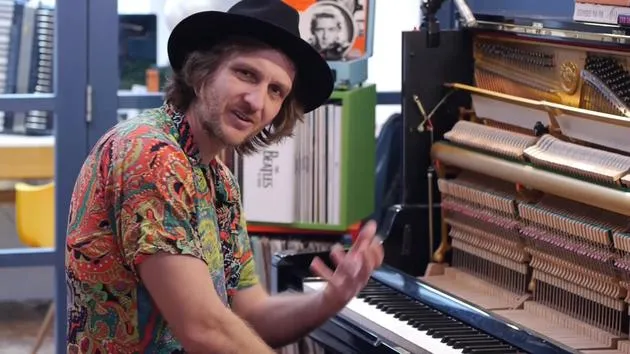
So there you go! There's something relatively simple with lots of repeated notes. I did add a few little embellishments, for example: those little runs. But don't worry if you can't get those down right now. Just concentrate on getting the repeated notes together with the left hand.
Conclusion
And remember, with that real rock and roll attitude, we're not just "pussyfooting" around. It's about hammering it out with that spirit of rock and roll.
So, yeah, let's dive into the course!
25 lecciones
2h 34m de lecciones en vídeo estructuradas
Funciones de vídeo avanzadas
Ralentiza, repite un pasaje, sigue la partitura
Móvil, tablet y ordenador
Practica donde quieras
Garantía de satisfacción 100%
30 días de garantía de devolución
Conoce a tu gurú
Conoce a tu gurú
Paddy Milner está reconocido como uno de los mejores pianistas de blues del mundo: actualmente es el teclista de confianza de Sir Tom Jones, tras varios años con el gran y ya desaparecido Jack Bruce, pero también es un magnífico compositor original y un cantante con personalidad propia. ¡Basta con leer los elogios de figuras como Dave Brubeck que aparecen más abajo! Su forma de tocar apareció en la banda sonora de la exitosa película de 2019 'Rocketman'.
Ha ganado dos veces el premio al Mejor teclista en los British Blues Awards, y mantiene una residencia de larga trayectoria como miembro fundador de la Ronnie Scott's Blues Explosion en el mundialmente famoso club Ronnie Scott's.
Su grupo actual LONDONOLA toca música británica de cosecha propia con una buena dosis de espíritu de Nueva Orleans, y su grupo colaborativo JAWBONE va de fuerza en fuerza tras la publicación de su álbum de debut homónimo.
- "Me encanta... hay un tipo que sabe tocar de verdad el piano" - Dave Brubeck
- "Lo recomiendo encarecidamente. ¡De algún modo las cosas empiezan a sentirse mucho mejor!" - Jack Bruce
- "El mejor pianista de blues de Europa..." - Blues Access, EE. UU.
- "Impresionante y original" - The Times
- "Deslumbrante" - The Independent
A lo largo de sus cursos, Paddy desglosa el auténtico shuffle de blues, el slow blues, el boogie-woogie, el rock 'n' roll y el piano de Nueva Orleans -incluidas tres canciones clásicas de boogie-woogie- para que aprendas estos estilos de uno de los mejores del oficio.







