



Otras ideas
Con
Paddy MilnerPaddy Milner explora más recursos de Jerry Lee Lewis en el tema, desde adornos de tríadas y crushed notes hasta glissandi y un riff de 'cha cha'.
Qué incluye el curso
25 lecciones (2h 34m) · 1 gratis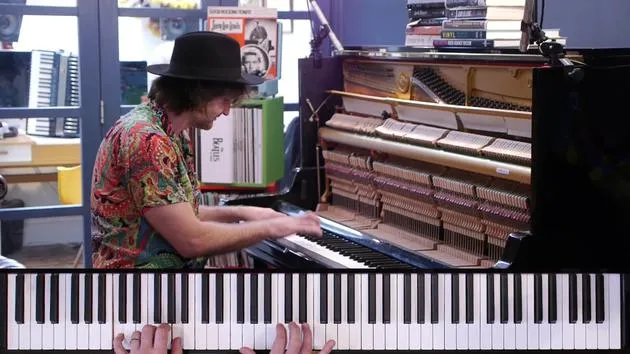
01. Cómo tocar la introducción
4:09
02. Melodía y mano derecha
9:26
03. Cómo tocar el solo
7:01
04. Mano derecha y turnaround
12:43
05. Otras ideas
Estás aquí5:42
06. Cómo tocar el final
1:38
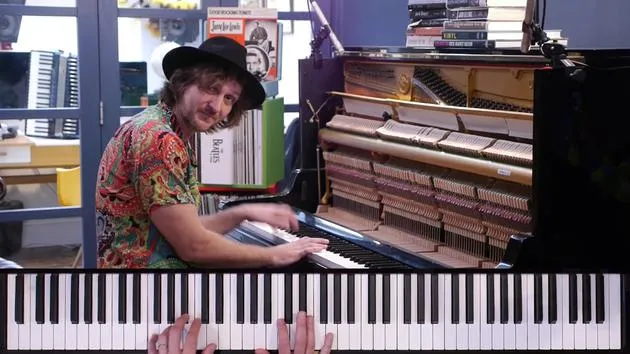
07. Ampliar la parte de piano de Jerry Lee
6:16
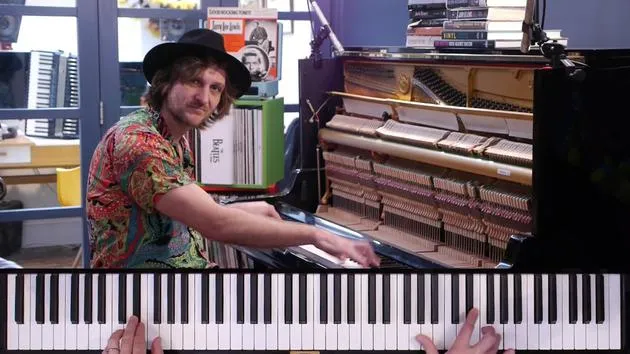
08. Ampliar las ideas del solo de Jerry Lee
11:49
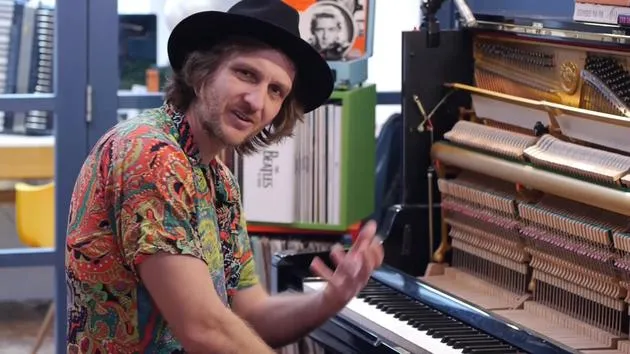
09. Usar las crushed notes
7:12
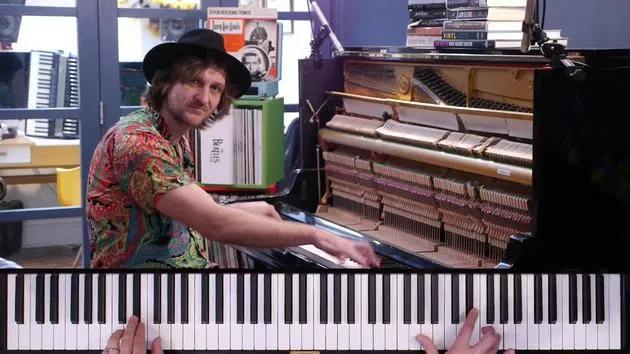
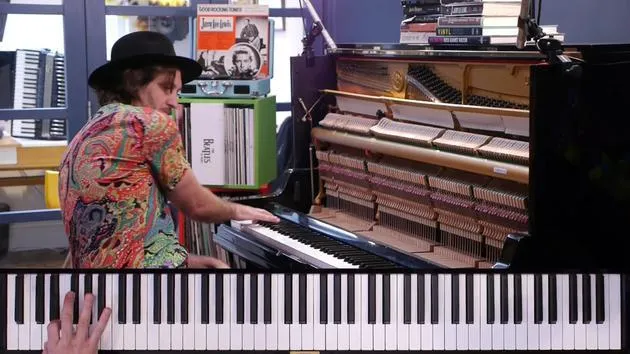
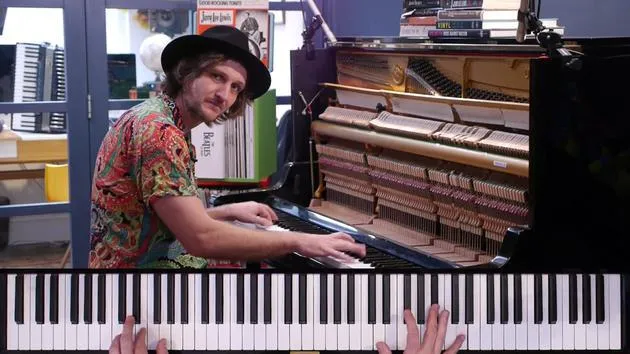
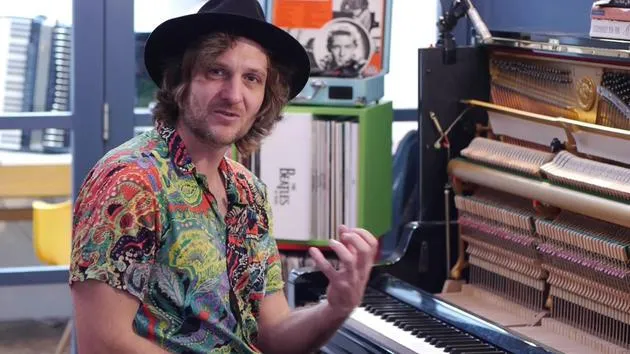
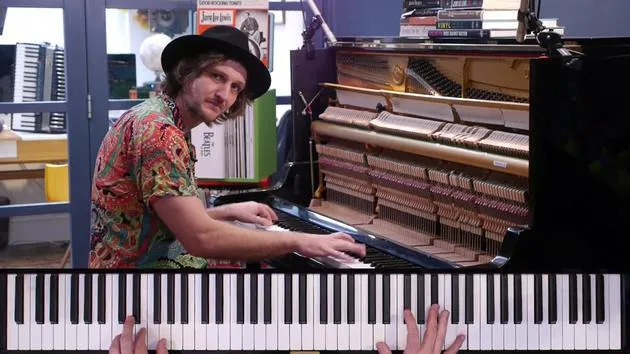
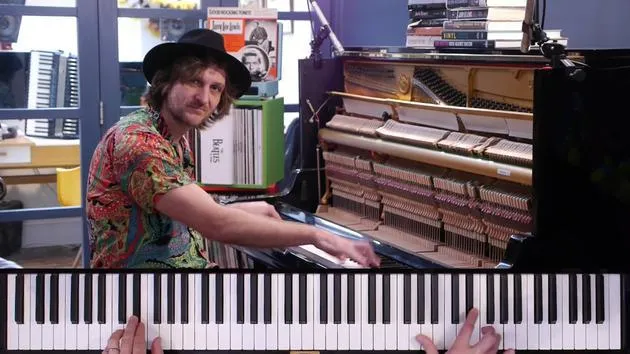
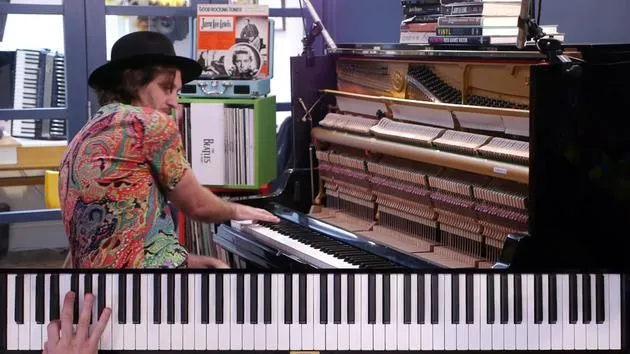
Transcripción de la lección
Exploring Jerry Lee Lewis's Techniques in "Whole Lotta Shakin'"
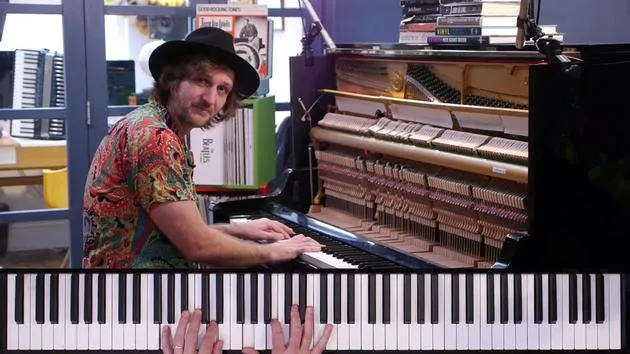
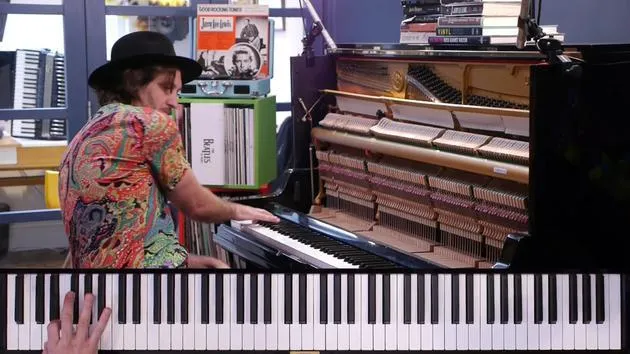
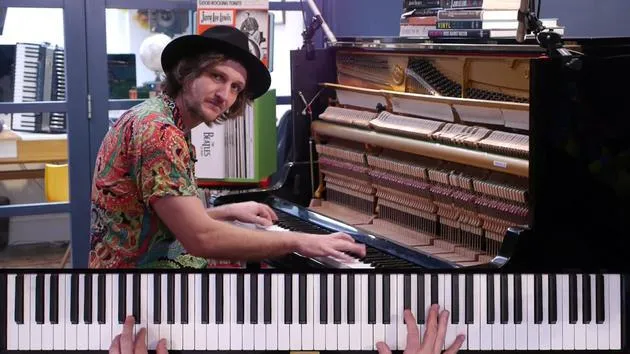
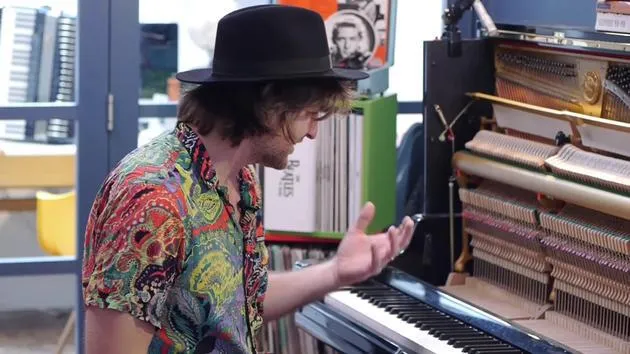
Okay, so let's look at a couple of other ideas that Jerry Lee brings out in "Whole Lotta Shakin'."
Guitar Solo Insights
- Just a little one in the guitar solo where Jerry Lee's kind of pumping away in the background.
- Then on the fourth bar, he does that nice little run up, which is something that musicians use a lot, actually.
- Often, it serves as a kind of musical joke or a musical witticism, if you like.
It's almost like the ending to Cha Cha Cha, which actually Jerry Lee does on, which show is it? I think it's the Dick Clark TV performance where at the end of "Great Balls of Fire," he actually finishes it with a cha cha cha ending rather than the typical ending.
I'm sure they included that as a bit of a musical joke.
Integration into Performance
So goodness agrees, "Great Balls of Fire" does that too, maybe not without the left hand going in the other direction, but they still do that ending.
- He uses that run in the guitar solo to lead up to the four chord, injecting a bit of energy going to that chord change.
- This technique can be applied to any song, particularly when you want to inject energy during a chord transition.
- You could even use it over various chord changes multiple times, allowing you to turn it into a bit of a theme that you develop.
Additional Techniques
Another little idea that Jerry Lee uses is in the verse after the guitar solo, perhaps, where he comes back down from the four chord.
- He includes a little figure, which is quite a hip thing to do: "Here we go!" and then back in.
This is an idea I've explored quite extensively in my shuffle and boogie courses. It's basically an embellishment of a triad, going between two notes.
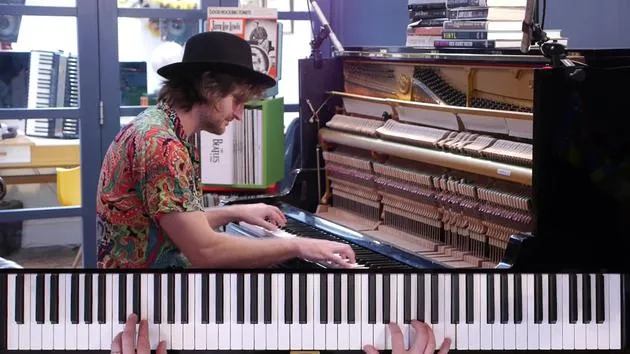
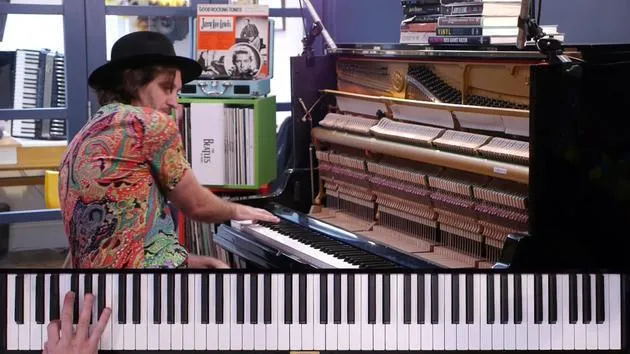
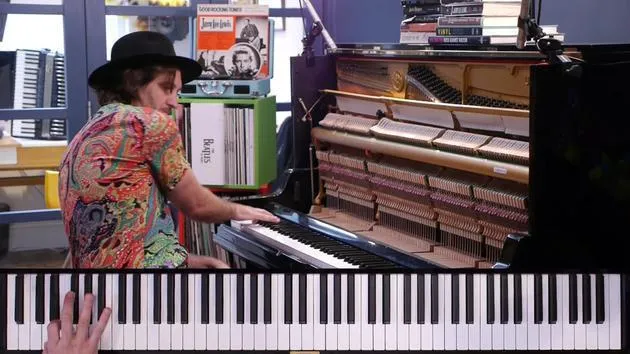
From the four chord, he adds the crushed note, then he sticks a glissando, a nice quick one, going all the way up to the top C.
Practice Tips
- Have a practice of that. You might find that getting into the glissando and back out of it could take a bit of practice to return to that hand position.
- There's so much you can do with this riff. For instance, you could add a top octave to make it sound a bit fatter.
Now, I'm slightly changing the rhythmic approach there.
- Rather than playing it at the same point in the bar:
1, 2, 3, 4. 1, 2, 3, 4.
I'm going:
1, 2, 3, 4. 1, 2.
This displacement creates a nice rhythmic effect.
Experimentation
Why not play it again? Adding that octave just makes it even fatter!
25 lecciones
2h 34m de lecciones en vídeo estructuradas
Funciones de vídeo avanzadas
Ralentiza, repite un pasaje, sigue la partitura
Móvil, tablet y ordenador
Practica donde quieras
Garantía de satisfacción 100%
30 días de garantía de devolución
Conoce a tu gurú
Conoce a tu gurú
Paddy Milner está reconocido como uno de los mejores pianistas de blues del mundo: actualmente es el teclista de confianza de Sir Tom Jones, tras varios años con el gran y ya desaparecido Jack Bruce, pero también es un magnífico compositor original y un cantante con personalidad propia. ¡Basta con leer los elogios de figuras como Dave Brubeck que aparecen más abajo! Su forma de tocar apareció en la banda sonora de la exitosa película de 2019 'Rocketman'.
Ha ganado dos veces el premio al Mejor teclista en los British Blues Awards, y mantiene una residencia de larga trayectoria como miembro fundador de la Ronnie Scott's Blues Explosion en el mundialmente famoso club Ronnie Scott's.
Su grupo actual LONDONOLA toca música británica de cosecha propia con una buena dosis de espíritu de Nueva Orleans, y su grupo colaborativo JAWBONE va de fuerza en fuerza tras la publicación de su álbum de debut homónimo.
- "Me encanta... hay un tipo que sabe tocar de verdad el piano" - Dave Brubeck
- "Lo recomiendo encarecidamente. ¡De algún modo las cosas empiezan a sentirse mucho mejor!" - Jack Bruce
- "El mejor pianista de blues de Europa..." - Blues Access, EE. UU.
- "Impresionante y original" - The Times
- "Deslumbrante" - The Independent
A lo largo de sus cursos, Paddy desglosa el auténtico shuffle de blues, el slow blues, el boogie-woogie, el rock 'n' roll y el piano de Nueva Orleans -incluidas tres canciones clásicas de boogie-woogie- para que aprendas estos estilos de uno de los mejores del oficio.







