



Cómo tocar la sección de solo
Con
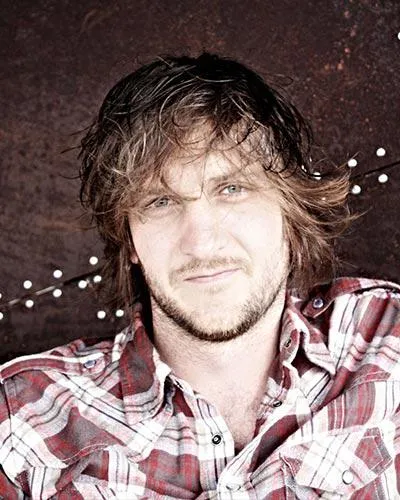
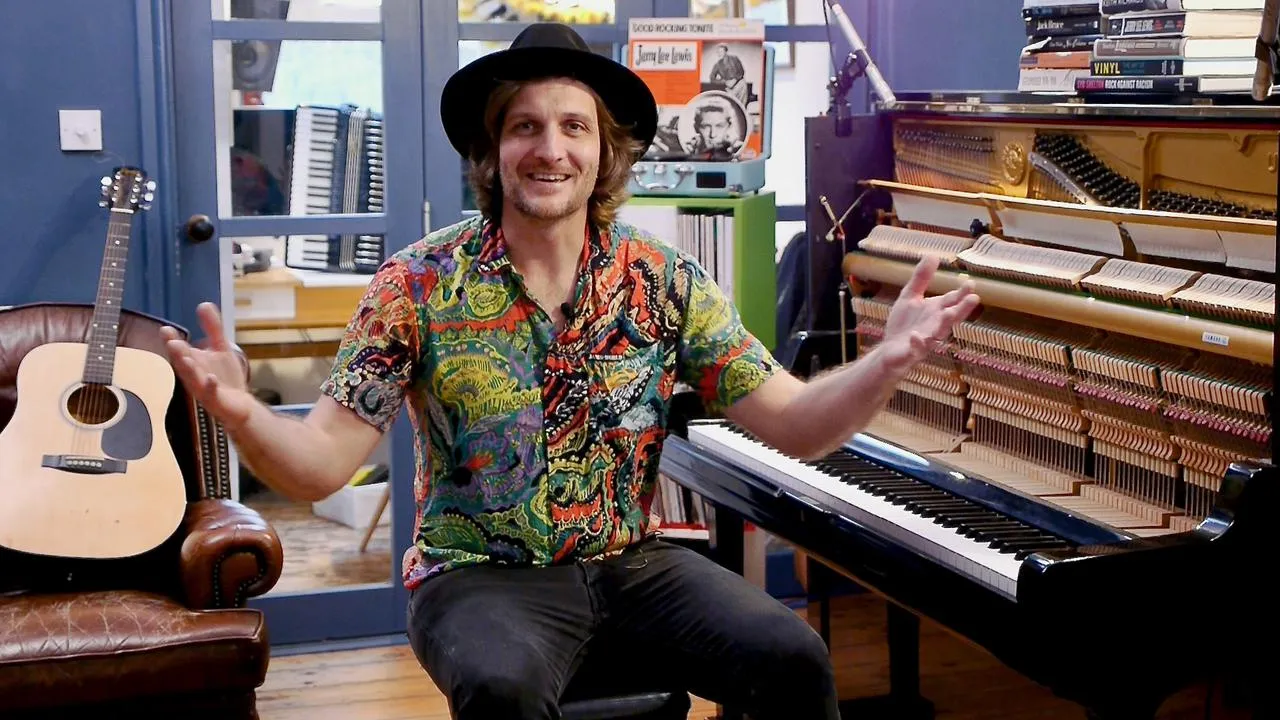
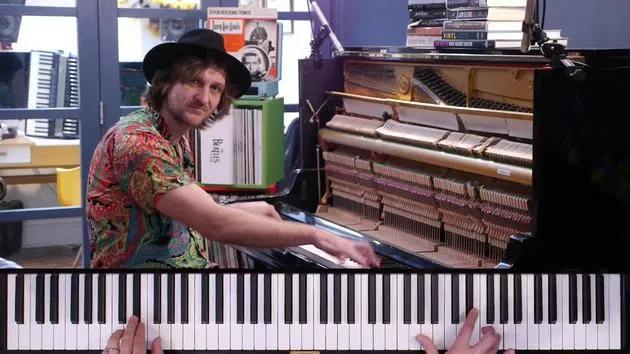
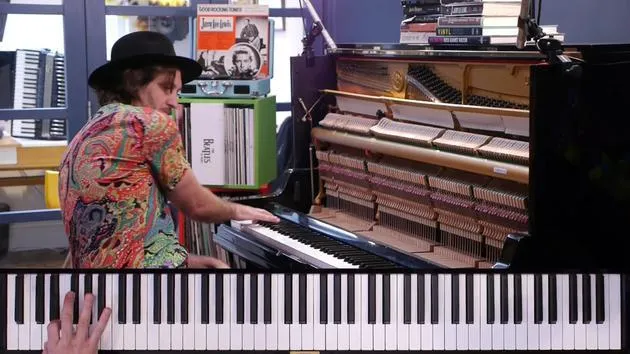
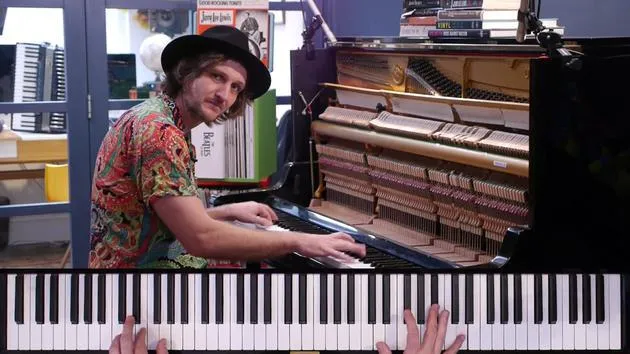
Paddy MilnerPaddy pasa a la sección de solo y explica las notas, las técnicas y la actitud que necesitas para tocar el tema con autenticidad
Qué incluye el curso
25 lecciones (2h 34m) · 1 gratis
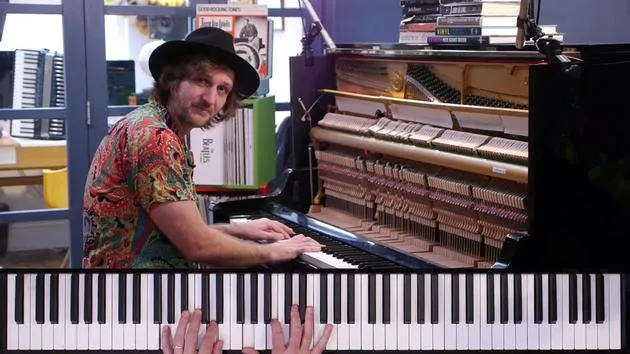
Transcripción de la lección
Solo Section Analysis
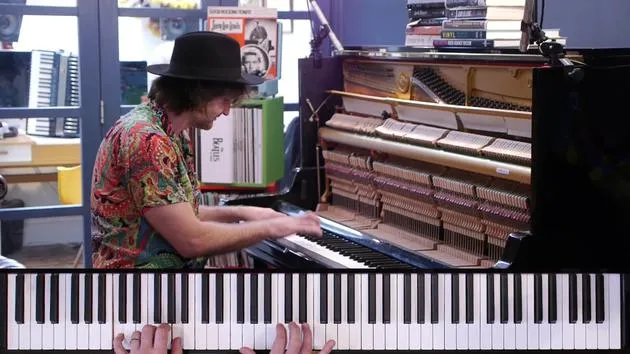
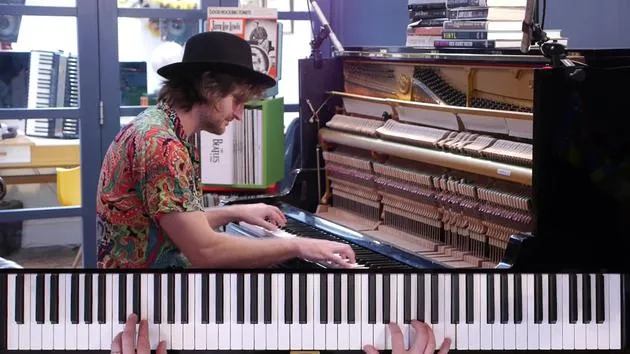
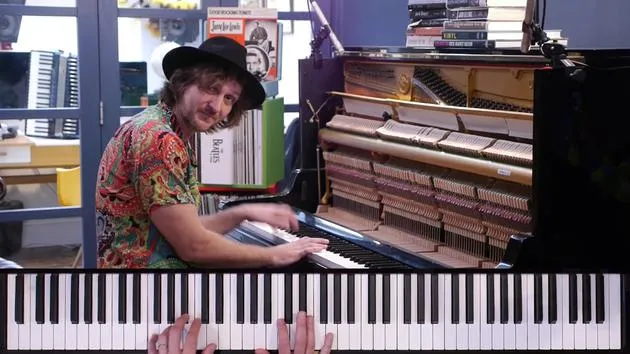
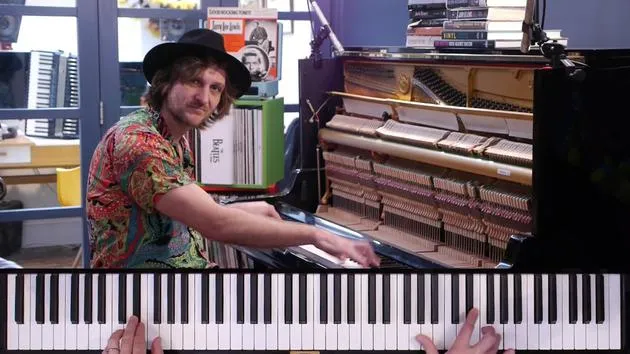
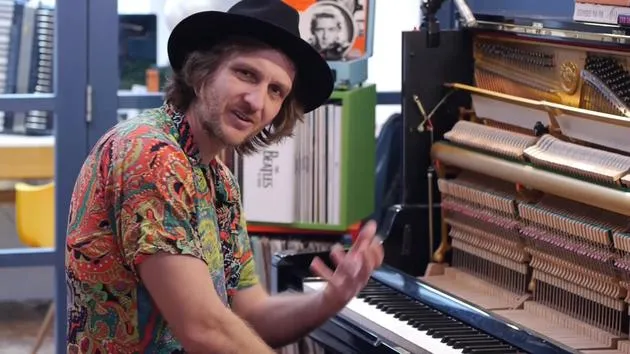
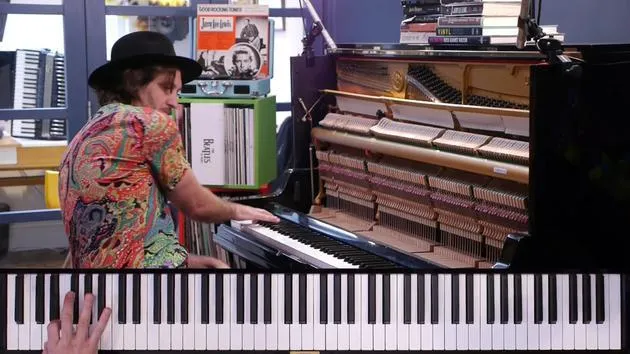
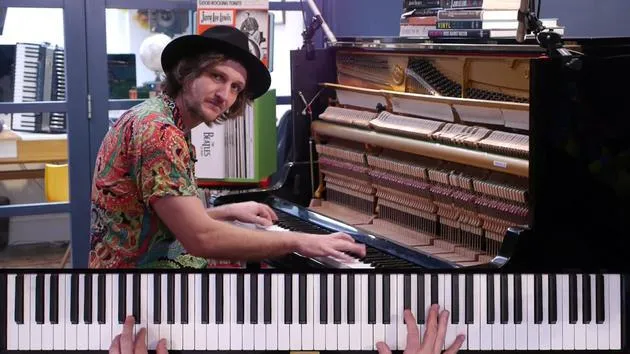
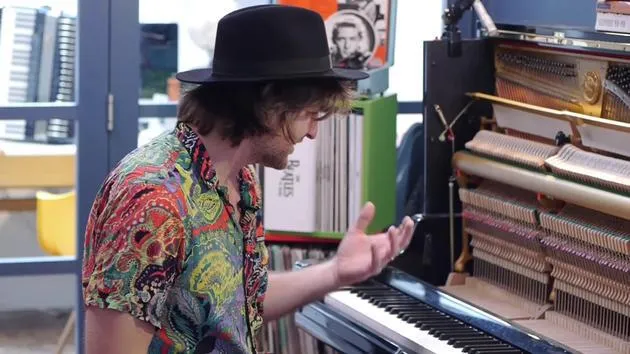
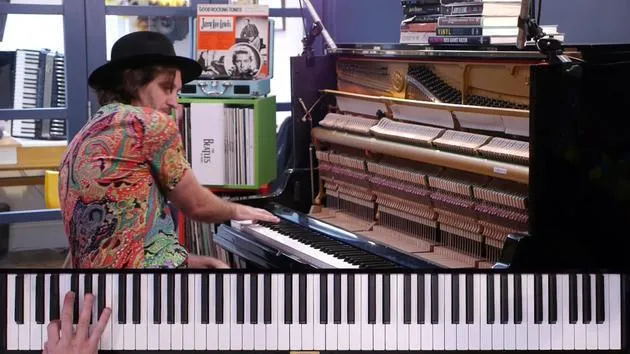
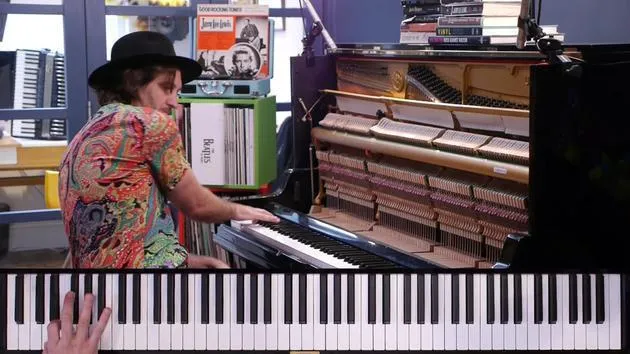
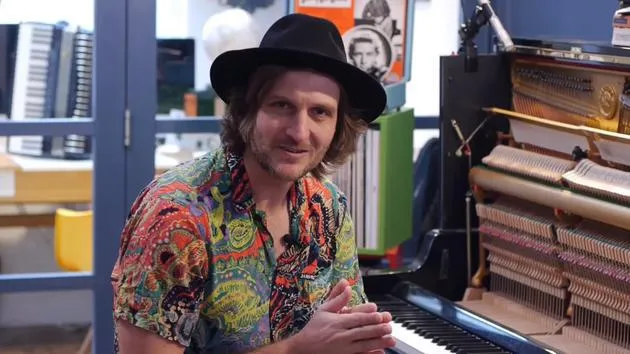
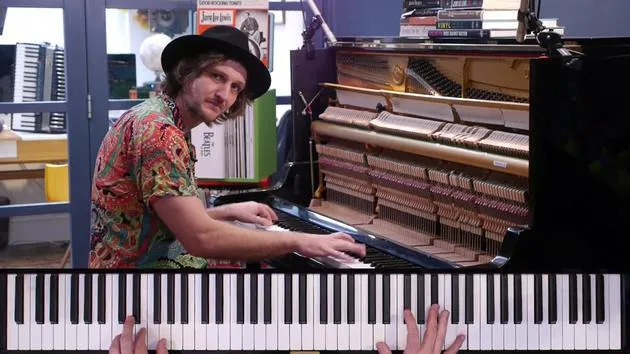
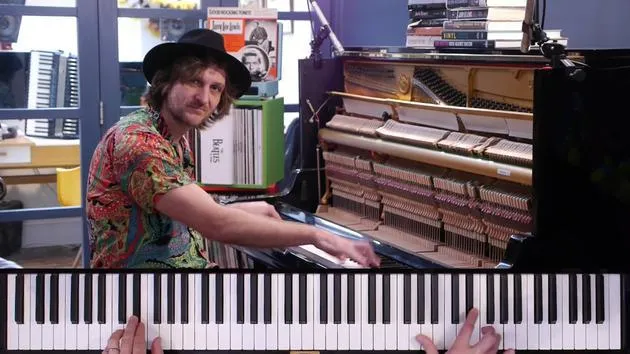
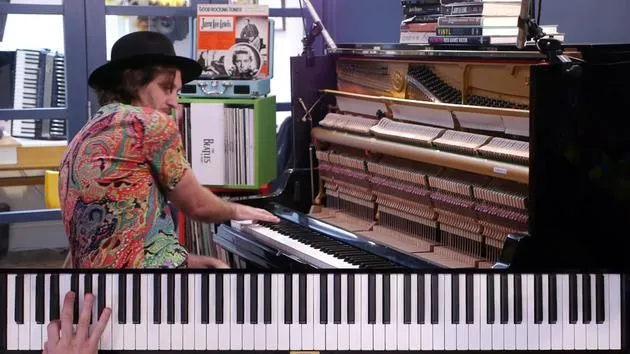
Let's move on to the solo section and see what he's doing.
Introduction
When he comes in, it sounds like this:
With that, and this is just a variation of the...
But he's got that kind of thing now.
Again, he might be playing that, or he might have the G on top.
It does sound like maybe the E flat is the top note.
But again, in terms of the intention of the solo and things, whether it's the G or just the E flat, I think is fine.
And, you know, feel free to use your own version.
Exploring Variations
So then he's back to that idea and we're going to explore lots of variations we can do with these things, how to fatten them up and do some different sort of ideas with them.
I think it sounds like he's doing a couple of crush notes before going into that.
Coming Out of the First Solo Section
Coming out of the first solo section, then the big bit in the right hand, he's just really hammering those notes, maybe with that fingering.
And he does that for pretty much the whole chorus.
He bridges the G and the A there, and then...
For me, that's the archetypal rock and roll riff right there, just really hammering away in the left hand.
Interesting Changes
This is where it gets interesting.
And again, it's something not many people pick up on when they play this tune.
He actually changes the bass line, although he only does it from bar two, actually, in this sequence on the record.
I imagine his intention was to start that bit of the solo with that classic sounding riff which Little Richard became associated with very strongly.
So it's essentially outlining a seventh chord.
He kind of does a couple of variations on the five; he goes...
But again, these are all small details, and the main thing here is that he's changing up that left hand to give it more intensity.
And that's the important thing.
Key Moments in the Solo
So, glisp, he came earlier in his solo, but that's it.
So, yeah, just listen out for that on the recording, the left hand, and you listen.
It really lifts the solo right there.
Then, yeah, it comes out of that with some more of these ideas based around that, and then we're back into the trills, and then...
And then back into another bridge with those chords.
This time he only puts that sharp five on the third time, which, again, doesn't really make a big difference in terms of the overall flow, but it's just a nice little difference.
Conclusion
Then he's back using that riff to end.
And, yeah, I'm not sure which octave he's finishing in, whether it's...
Or if he's playing...
He's definitely sort of down this end of the piano.
There's no way he's definitely not doing that.
So, yeah. Just remember this is just one version of the song he recorded.
And every time he plays this tune, and every time he plays every song, he plays it differently.
And that's, you know, testament to his artistry and his musicality.
Like I said previously, there is that ending he does on, I think, the Dick Clark show, where "Goodness of Gracious, Great Balls of Fire," where they do that sort of cha cha cha ending, which is, yeah, good fun.
So, yeah, we've been through the solo, loads of ideas.
I guess it's up to you to really try and learn each little technique, each little idea, and put them together.
Perhaps break it down into chunks like we did when we looked at it, get each thing down separately, and then try and link them together.
And again, just try and get it flowing throughout the solo.
Listen to the way he builds the intensity and has a nice sort of overall arc to his soloing.
25 lecciones
2h 34m de lecciones en vídeo estructuradas
Funciones de vídeo avanzadas
Ralentiza, repite un pasaje, sigue la partitura
Móvil, tablet y ordenador
Practica donde quieras
Garantía de satisfacción 100%
30 días de garantía de devolución
Conoce a tu gurú
Conoce a tu gurú
Paddy Milner está reconocido como uno de los mejores pianistas de blues del mundo: actualmente es el teclista de confianza de Sir Tom Jones, tras varios años con el gran y ya desaparecido Jack Bruce, pero también es un magnífico compositor original y un cantante con personalidad propia. ¡Basta con leer los elogios de figuras como Dave Brubeck que aparecen más abajo! Su forma de tocar apareció en la banda sonora de la exitosa película de 2019 'Rocketman'.
Ha ganado dos veces el premio al Mejor teclista en los British Blues Awards, y mantiene una residencia de larga trayectoria como miembro fundador de la Ronnie Scott's Blues Explosion en el mundialmente famoso club Ronnie Scott's.
Su grupo actual LONDONOLA toca música británica de cosecha propia con una buena dosis de espíritu de Nueva Orleans, y su grupo colaborativo JAWBONE va de fuerza en fuerza tras la publicación de su álbum de debut homónimo.
- "Me encanta... hay un tipo que sabe tocar de verdad el piano" - Dave Brubeck
- "Lo recomiendo encarecidamente. ¡De algún modo las cosas empiezan a sentirse mucho mejor!" - Jack Bruce
- "El mejor pianista de blues de Europa..." - Blues Access, EE. UU.
- "Impresionante y original" - The Times
- "Deslumbrante" - The Independent
A lo largo de sus cursos, Paddy desglosa el auténtico shuffle de blues, el slow blues, el boogie-woogie, el rock 'n' roll y el piano de Nueva Orleans -incluidas tres canciones clásicas de boogie-woogie- para que aprendas estos estilos de uno de los mejores del oficio.







