



Melodía y mano derecha

Con
Paddy MilnerEmpecemos a desglosar el tema y a mirar la parte de piano, en la tonalidad de Do. Familiarízate con el ritmo, la articulación y cómo tocar el tema de forma auténtica

Qué incluye el curso
25 lecciones (2h 34m) · 1 gratis
01. Cómo tocar la introducción
4:09
02. Melodía y mano derecha
Estás aquí9:26
03. Cómo tocar el solo
7:01
04. Mano derecha y turnaround
12:43
05. Otras ideas
5:42
06. Cómo tocar el final
1:38
07. Ampliar la parte de piano de Jerry Lee
6:16
08. Ampliar las ideas del solo de Jerry Lee
11:49
09. Usar las crushed notes
7:12
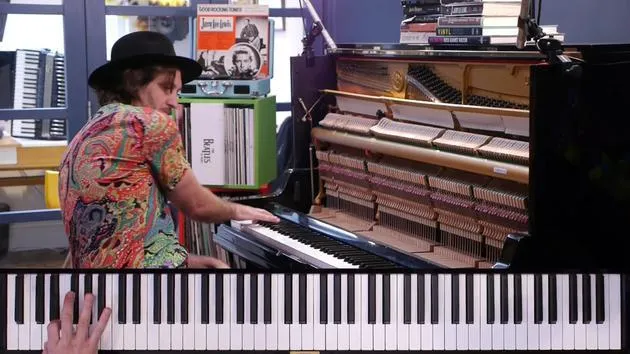
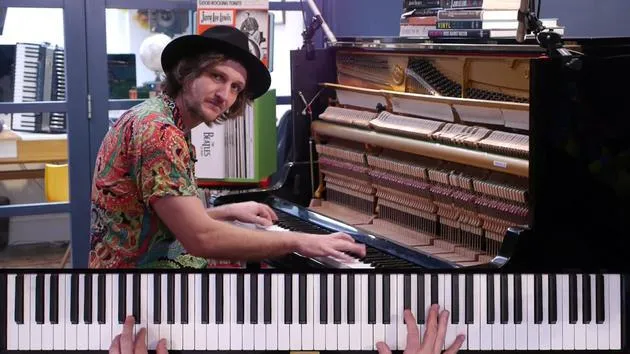
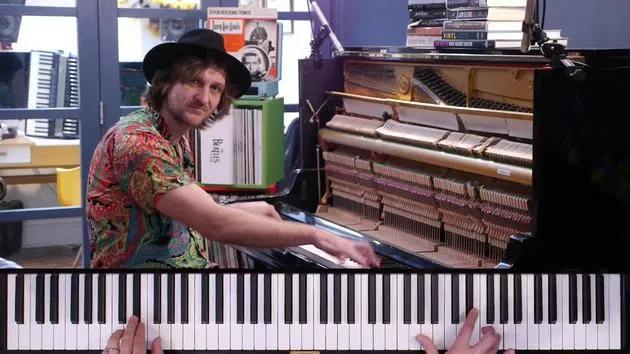
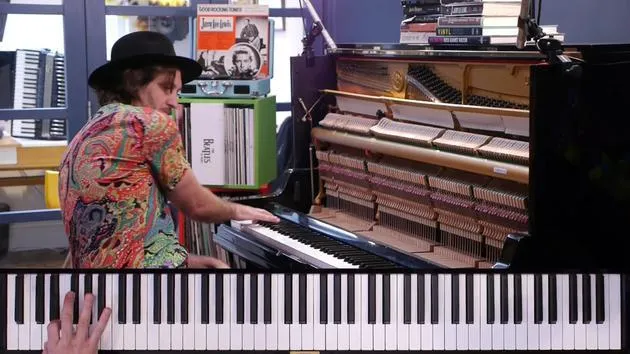
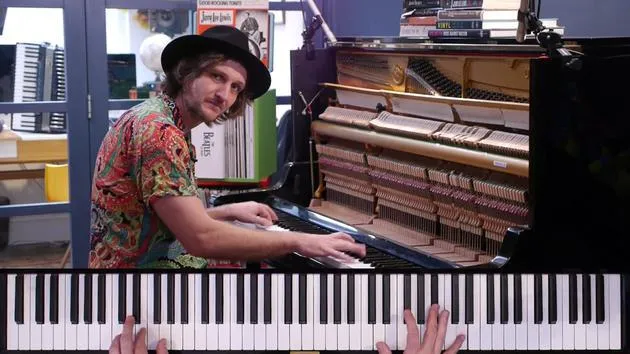
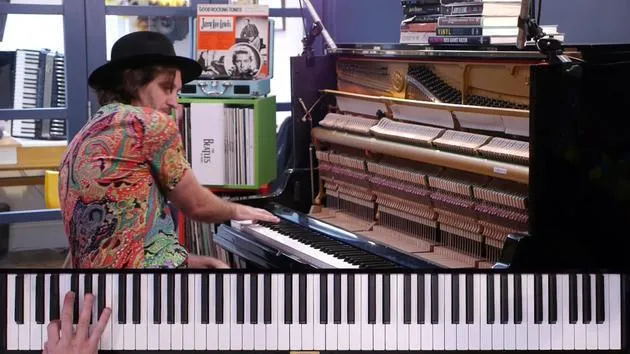
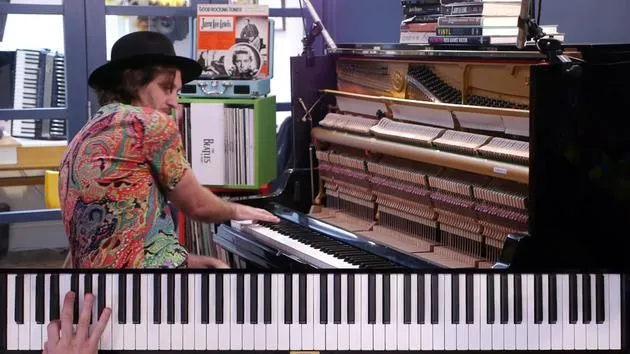
Transcripción de la lección
12-Bar Blues Piano Lesson
Introduction
So, I'm going to just play around the whole 12 bars so you can have a listen to the main feel of the tune.
Count: 2 1, 2, 3, 4.
Breaking It Down
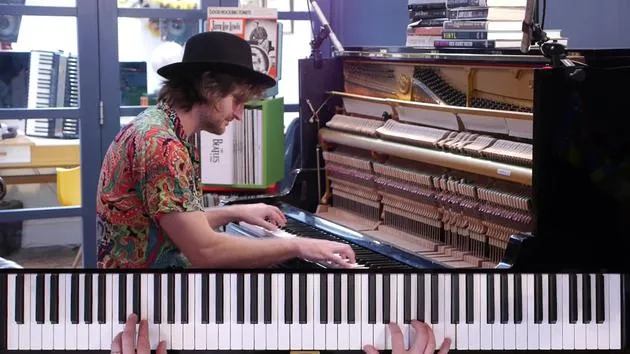
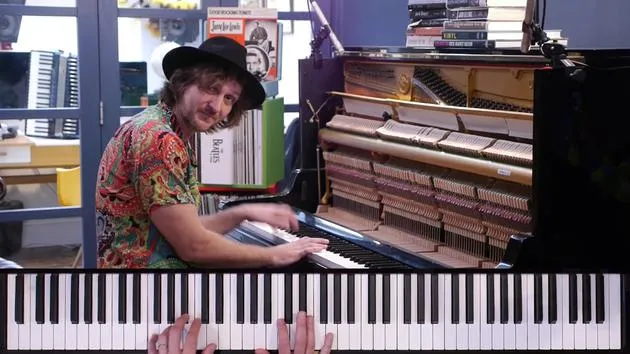
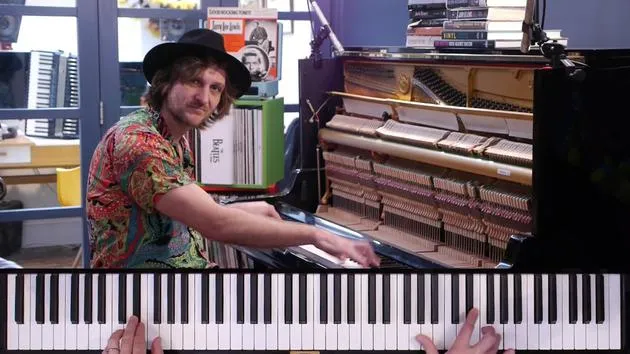
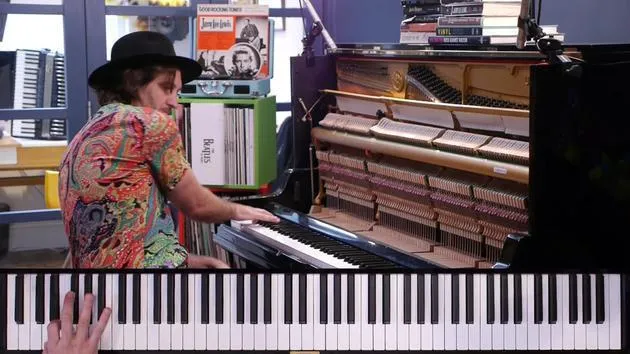
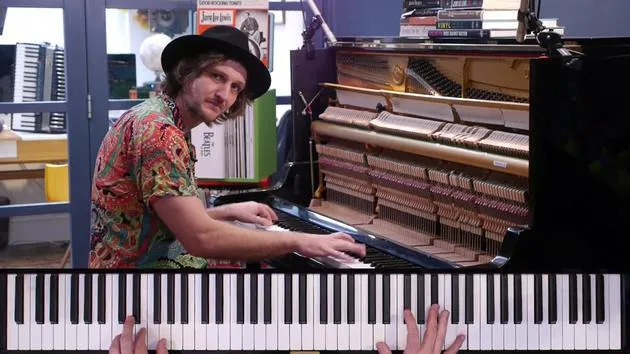
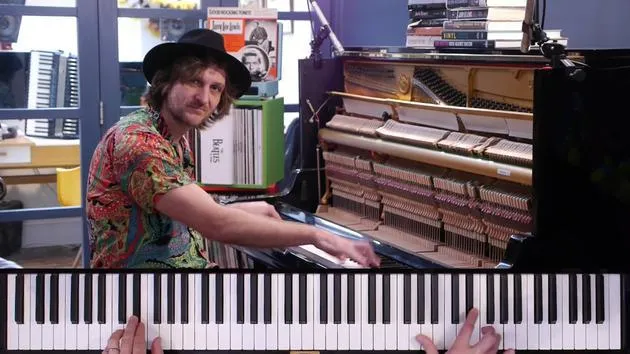
Let's start breaking it down and look at that piano part.
Right Hand
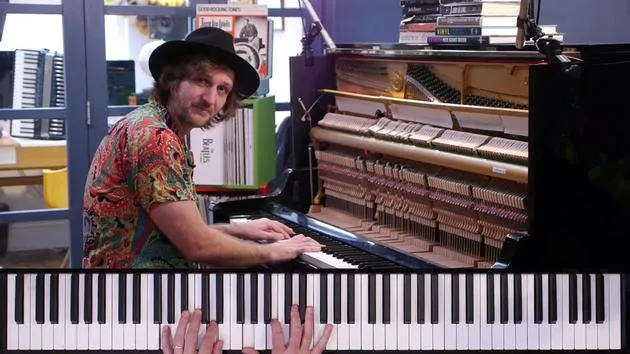
- In the right hand, we're simply playing triads with the third on the top.
Left Hand
- In the left hand, we are essentially outlining a kind of C6 chord, always playing the bottom C with it, which gives it a nice sort of weight.
- We play those chords on the downbeats, while the right hand plays on the upbeats (the off beats).
Chord Progression
When we move up to chord four:
-
The right hand plays the inversion of F, while the left hand continues as it had been on chord one (the chord of C).
-
There's a nice lead-up to chord 4, which adds direction.
-
Chord Progression Summary:
- Chord 1: C
- Chord 4: F
- Chord 1: C
- Chord 5: G (1 bar)
- Chord 4: F (1 bar)
- Chord 1: C (2 bars) with a turnaround (which we'll look at in due course).
Feel and Rhythm
Is It Straight or Swung?
So, there are a few things we should talk about regarding this feel.
- Question: Is it straight? Is it swung? Is it a shuffle?
Let's have a listen.
It's slightly swung, isn't it? It almost sounds a bit like ska or something. It's definitely swung, but not really dotted.
Listening Practice
- Have a listen to how Jerry Lee plays it and try to find that nice balance of how long or how dotted you make that feel.
- It's kind of a heavily swung feel, which I describe as somewhere in the middle:
- The bass is quite heavy, but it's not overpowering.
- Likewise, the right hand is quite solid, but it's not rigid.
Articulation
- Listen to how Jerry Lee articulates the notes:
- Is he playing long notes or short notes?
- He strikes a balance, embodying a smoothness with a nice fat bottom end.
The Importance of Original Recordings
This is crucial in rock and roll; it gives a solid foundation at the bottom end. I can't emphasize enough how important it is to listen to the original recordings and recreate those feels.
Anticipating Chord Changes
There's something quite interesting that helps propel the music along:
- Jerry Lee often anticipates the chord change with the right hand.
For example:
- If we are going from C to F, notice how it happens just before the beat.
Here's a quick demonstration:
- Two bars of C going up to F...
Practice Tips
- So, if you can try to practice that and get it down, that's a good starting point for playing this song.
- Essentially, all the verses are more or less the same with a couple of little embellishments we'll look at as we go along.
Using a Metronome
- If you're finding it difficult to play that figure at speed, use a metronome. Start at half speed.
- As you feel comfortable, you can increase the tempo gradually.
Identifying Trouble Spots
You might find that you come unstuck when changing chords.
- Practice going between two chord changes, like from 5 to 4.
Momentum and Flow
Notice when Jerry Lee moves from the I chord to the IV chord with that run-up, he plays it a little heavier, providing momentum to go.
- It's all about making the music flow; it's not just about mechanically playing the notes, it's about how the music is breathing.
Conclusion
This approach is a testament to Jerry Lee's all-around musicality. He is truly an incredible piano player and musician.
25 lecciones
2h 34m de lecciones en vídeo estructuradas
Funciones de vídeo avanzadas
Ralentiza, repite un pasaje, sigue la partitura
Móvil, tablet y ordenador
Practica donde quieras
Garantía de satisfacción 100%
30 días de garantía de devolución
Conoce a tu gurú
Conoce a tu gurú
Paddy Milner está reconocido como uno de los mejores pianistas de blues del mundo: actualmente es el teclista de confianza de Sir Tom Jones, tras varios años con el gran y ya desaparecido Jack Bruce, pero también es un magnífico compositor original y un cantante con personalidad propia. ¡Basta con leer los elogios de figuras como Dave Brubeck que aparecen más abajo! Su forma de tocar apareció en la banda sonora de la exitosa película de 2019 'Rocketman'.
Ha ganado dos veces el premio al Mejor teclista en los British Blues Awards, y mantiene una residencia de larga trayectoria como miembro fundador de la Ronnie Scott's Blues Explosion en el mundialmente famoso club Ronnie Scott's.
Su grupo actual LONDONOLA toca música británica de cosecha propia con una buena dosis de espíritu de Nueva Orleans, y su grupo colaborativo JAWBONE va de fuerza en fuerza tras la publicación de su álbum de debut homónimo.
- "Me encanta... hay un tipo que sabe tocar de verdad el piano" - Dave Brubeck
- "Lo recomiendo encarecidamente. ¡De algún modo las cosas empiezan a sentirse mucho mejor!" - Jack Bruce
- "El mejor pianista de blues de Europa..." - Blues Access, EE. UU.
- "Impresionante y original" - The Times
- "Deslumbrante" - The Independent
A lo largo de sus cursos, Paddy desglosa el auténtico shuffle de blues, el slow blues, el boogie-woogie, el rock 'n' roll y el piano de Nueva Orleans -incluidas tres canciones clásicas de boogie-woogie- para que aprendas estos estilos de uno de los mejores del oficio.







