



Escala y tonalidad
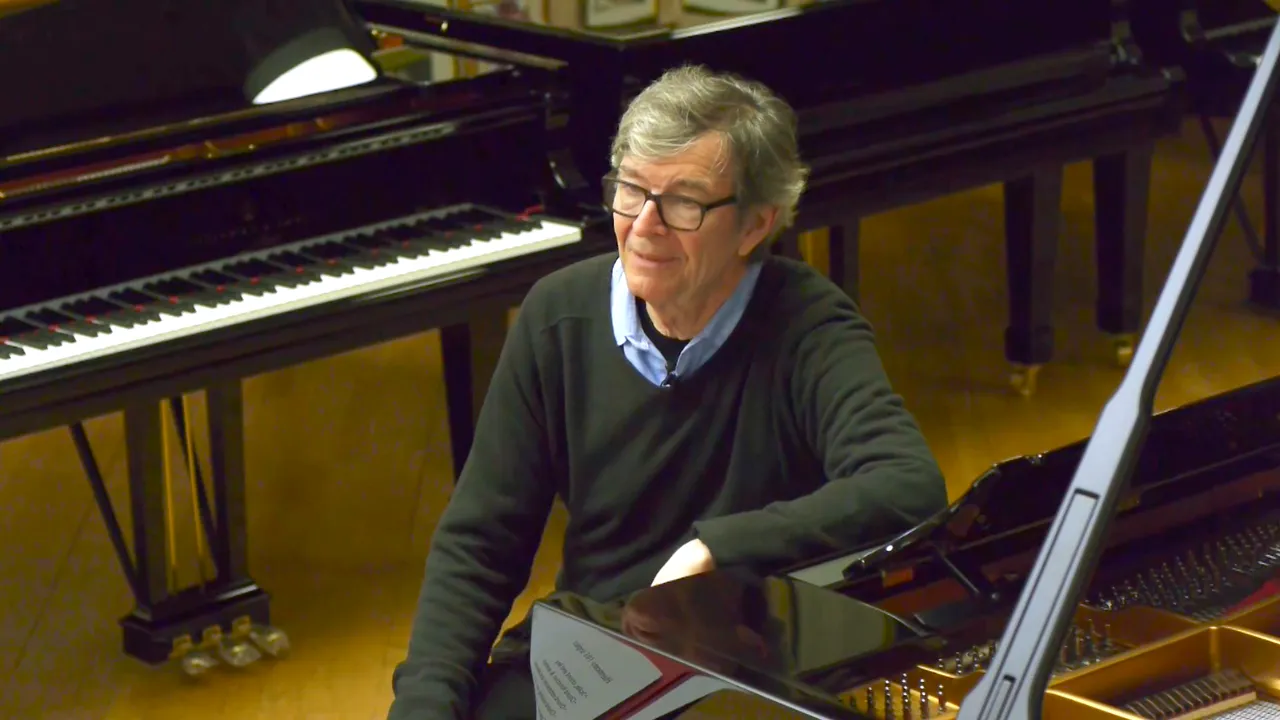
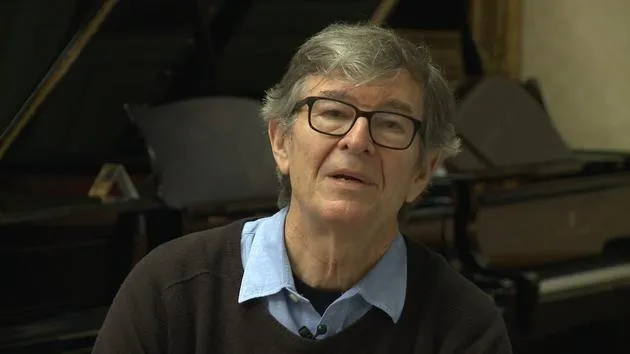
Darius Brubeck explica los intervalos y la escala mayor, y cómo la tónica le da su tonalidad a una pieza, con la armadura indicando cuántos sostenidos o bemoles intervienen.
Qué incluye el curso
11 lecciones (1h 48m) · 1 gratis
Transcripción de la lección
Harmony 101: Lesson 1
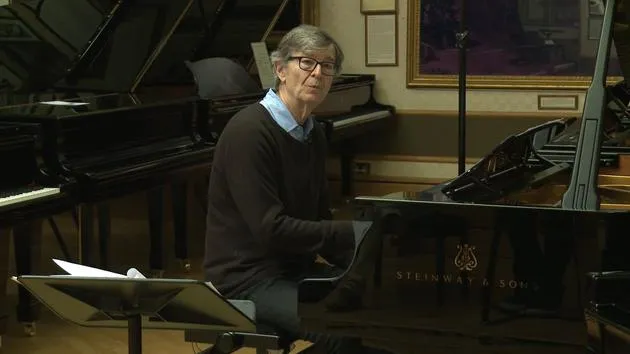
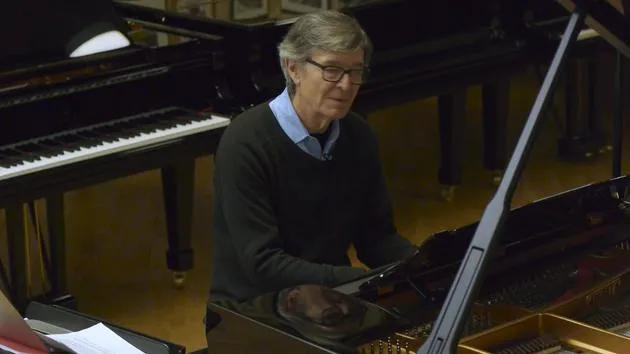
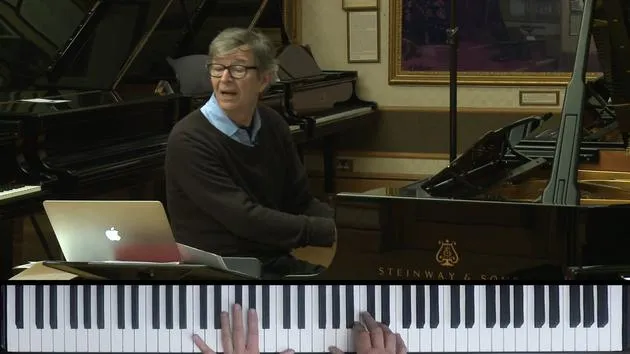
Welcome to the first lesson of Harmony 101 on Music Gurus. Here we are in Steinway Hall, surrounded by magnificent keyboards, and I'm going to use the piano to explain some basic concepts.
Overview of Key Concepts
Now, here are the most basic ideas you can get in studying music:
- Scale
- Chord
- Key
Just be patient because it will get complicated very soon. But to start with, I'll just talk about the scale.
Understanding Scales
We're surrounded by pianos, and we're going to use the piano as a reference to explain all of these concepts. However, it is not necessary to be a pianist at all. It would be useful, though, to have a keyboard for reference.
Suggested Instruments
It would be a good idea for you to get a cheap electric keyboard or a melodica, something where the notes are spelled out as they are at the piano keyboard. This way, you can see how these relationships work.
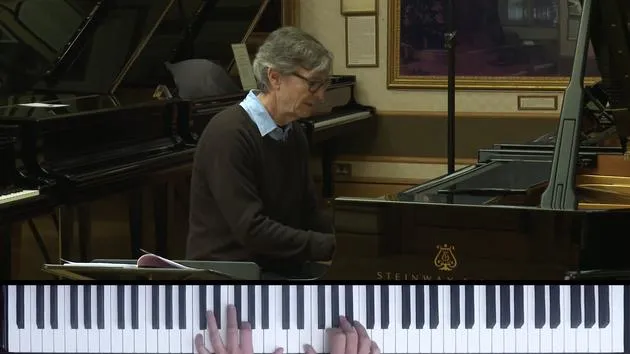
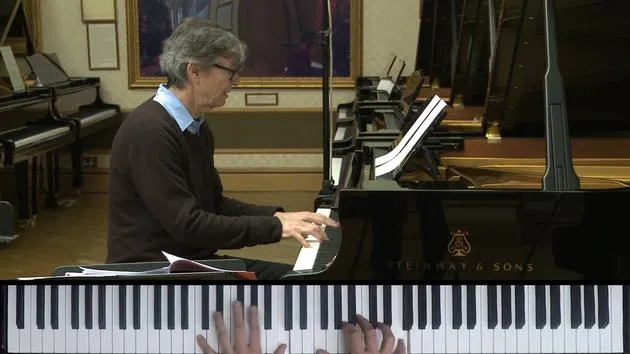
To start with a scale: from here to here, we have a scale.
The Major Scale
There are different possible scales, but right now we're talking about the major scale. This is a series of intervals you get just using the white keys between C and C.
The intervals of this scale are:
- Second
- Major Third (I'll explain why that term is used in a moment)
- Fourth (sometimes called a perfect fourth)
- Fifth (sometimes called a perfect fifth)
- Major Sixth
- Major Seventh
- Octave
When we refer to intervals of the scale (1, 2, 3, 4, 5, 6, 7), it's always just taking them in order from the root, or what's technically called the tonic note of the scale.
Altered Intervals
But these intervals can be altered. For instance:
- There's still a third, sixth, seventh.
- If you have a minor scale, you have a minor third.
This was called a major third because there's a little more distance between the root (the tonic note) and the third.
- Here is the minor sixth
- That's the major sixth
- That's the minor seventh
- That's the raised seventh
So you have a different scale, but the key is still C.
Consistency in Scales
The important thing is to understand that the scale may change, but the root of the scale can be the same. You could have:
- A minor pentatonic scale
- A major pentatonic scale
- A blues scale
The crucial point is to maintain the same relationship between the tonic and the other intervals in the scale.
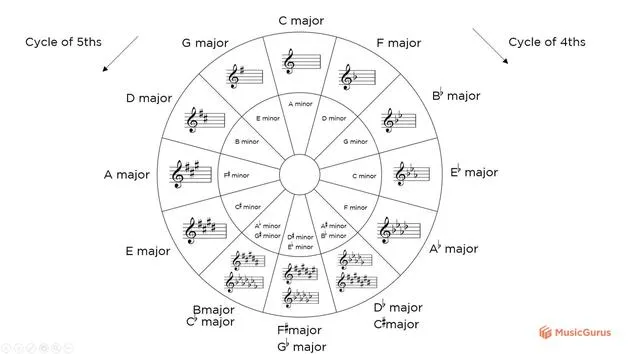
Key Signatures
And that's why we have key signatures.
- For example, if I start on F, there's the B flat in the key signature right there.
- If it weren't there, it would be quite a distinctly different sound.
To maintain the major scale, we need one flat in the case of F.
Further Example
Let's do one more example: there's one sharp in the key of G. All of this is just to keep that relationship constant.
11 lecciones
1h 48m de lecciones en vídeo estructuradas
Funciones de vídeo avanzadas
Ralentiza, repite un pasaje, sigue la partitura
Móvil, tablet y ordenador
Practica donde quieras
Garantía de satisfacción 100%
30 días de garantía de devolución
Conoce a tu gurú

Conoce a tu gurú
Darius Brubeck es un reconocido pianista de jazz y pedagogo. Ha publicado numerosos álbumes como líder, ha girado por todo el mundo con sus propias formaciones y ha colaborado con sus hermanos en Brubecks Play Brubeck.
Darius ha sido profesor visitante Fulbright en Rumanía y Turquía. Puso en marcha el primer título en jazz ofrecido por una universidad africana, en la University of KwaZulu-Natal de Sudáfrica, donde enseñó hasta 2005.
Darius colabora a menudo con Mike Rossi, saxofonista y profesor de música en la University of Cape Town. Entre los logros de Mike se cuentan numerosas grabaciones y apariciones en escenarios internacionales como líder, solista y acompañante junto a Tony Bennett, Dave Liebman, Winston Mankunku Ngozi, George Russell, Clark Terry y Alessio Menconi, entre otros.
Con Darius como guía, irás directo a lo esencial. En Harmony 101 desmitifica la armonía del jazz para que puedas empezar a aplicarla rápidamente, y en Mastering Odd Times desglosa cómo tocar e improvisar con confianza en compases irregulares.







